What is Taj Mahal Quartzite? (Origins, geology, appearance)
Natural formation & technical specs (hardness, porosity)
Taj Mahal quartzite is a metamorphic stone—originally sandstone transformed by heat and pressure into an interlocking mosaic of quartz grains. That mineralogy gives quartzite a Mohs hardness typically around 7, making it harder and more scratch-resistant than marble (3–4) and often denser than many granites. Because natural quartzite is predominantly quartz, it accepts high polish and develops a luminous surface that can visually mimic marble while resisting knife marks and routine wear.
Visual signature — color, veining, translucence
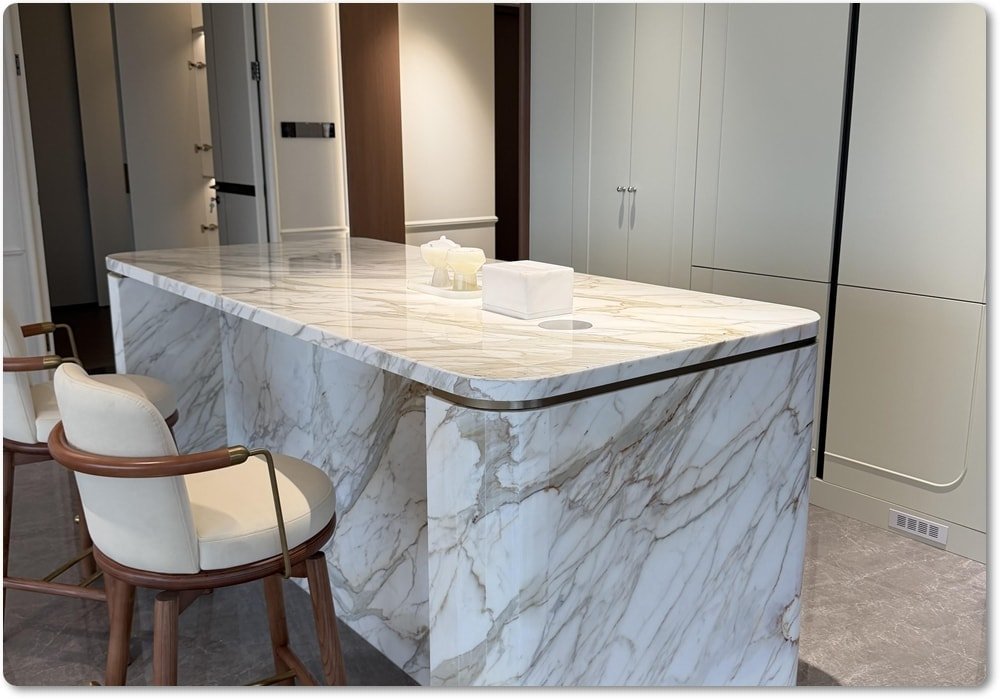
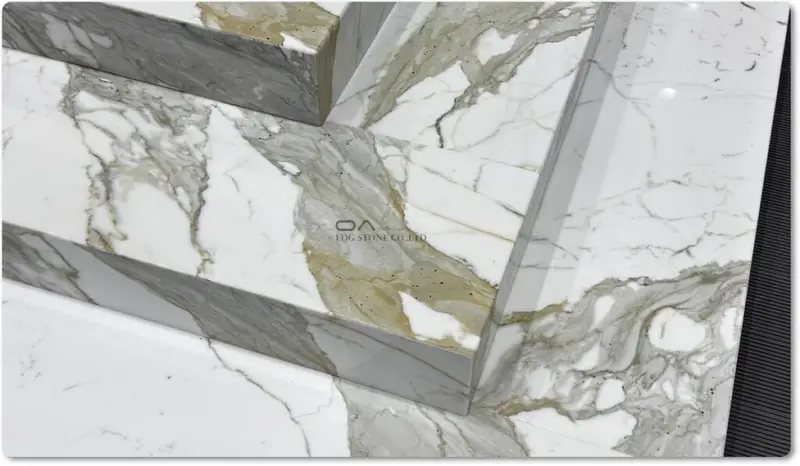
Visually, Taj Mahal quartzite usually shows a soft off-white to warm cream ground with subtle gold, beige, or grey linear veins and occasional clouding—an appearance that reads similarly to select Calacatta marbles in many lighting conditions. Slab variation is normal: movement, vein thickness, and background tone can shift from slab to slab, which is why lot-matching or book-matching is a common specification request.
Taj Mahal vs. “Taj Mahal” (Perla Venata and naming confusion)
In practice, the marketplace is messy: “Taj Mahal” is used by some suppliers as a trade name for a specific Brazilian quartzite; others sell visually similar stones labeled Perla Venata, Perla Bianca, or other collection names. Many fabricators and showrooms use the names interchangeably because the slabs are quarried from neighboring formations and display near-identical palettes. Ask for slab photos and quarry origin if exact provenance matters.
Taj Mahal vs Marble (Calacatta look): Appearance, performance, and maintenance
Why does it mimic Calacatta (mineralogy & patterning)?
The reason Taj Mahal reads like Calacatta is a combination of: (1) a pale ground colour with low background mineral impurities; (2) linear, high-contrast veining of accessory minerals; and (3) the ability to take a high polish that emphasizes translucence and depth. Marble’s veining is caused by calcite and impurities in limestone; quartzite’s veining often reflects mineral bands or healed fractures that produce comparable visual drama but are built on the far harder quartz matrix.
Durability & heat/scratch resistance compared to marble
Because quartzite is higher in quartz content and more tightly interlocked at the grain scale, it resists scratching and thermal shock better than marble. Marble is softer and more reactive to acids—kitchen spills like lemon juice or vinegar can etch marble, while quartzite is less susceptible. Nevertheless, quartzite still contains silica and some accessory minerals; it can stain if not sealed appropriately and may chip on edges if mechanically impacted. These practical differences make Taj Mahal a smart choice where marble’s look is desired, but durability is needed. (See installation & care below for sealing guidance.)
Real-world use cases — islands, vanity tops, bookmatched walls
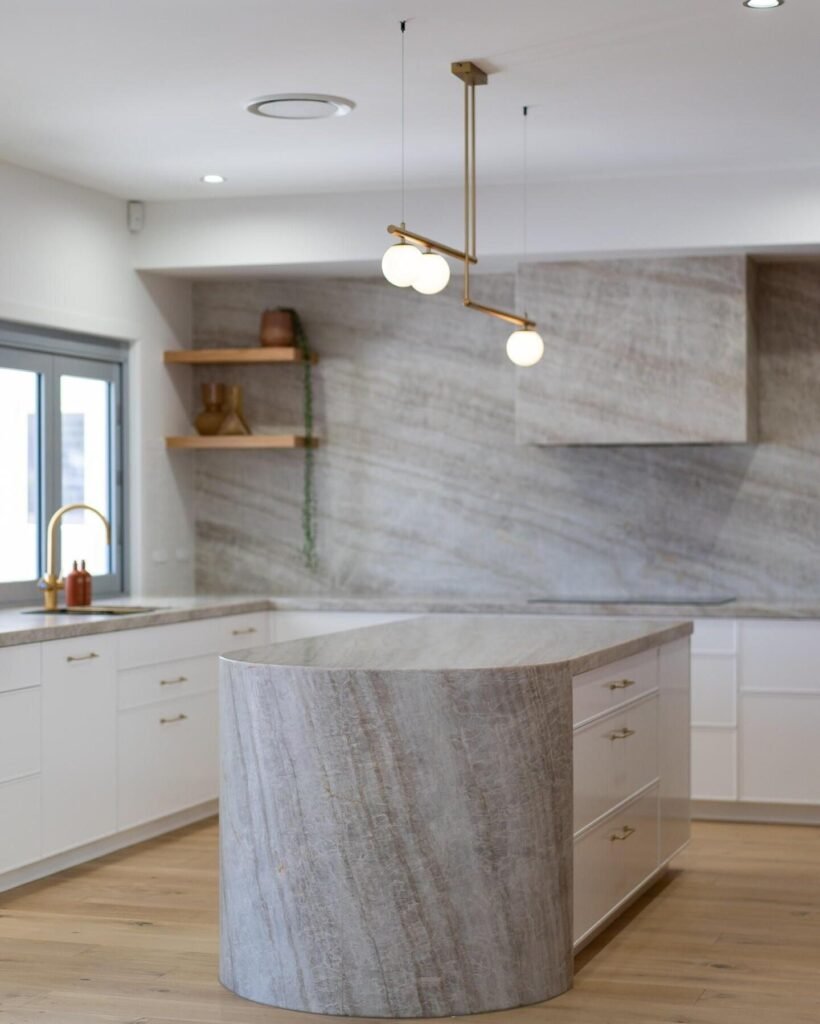
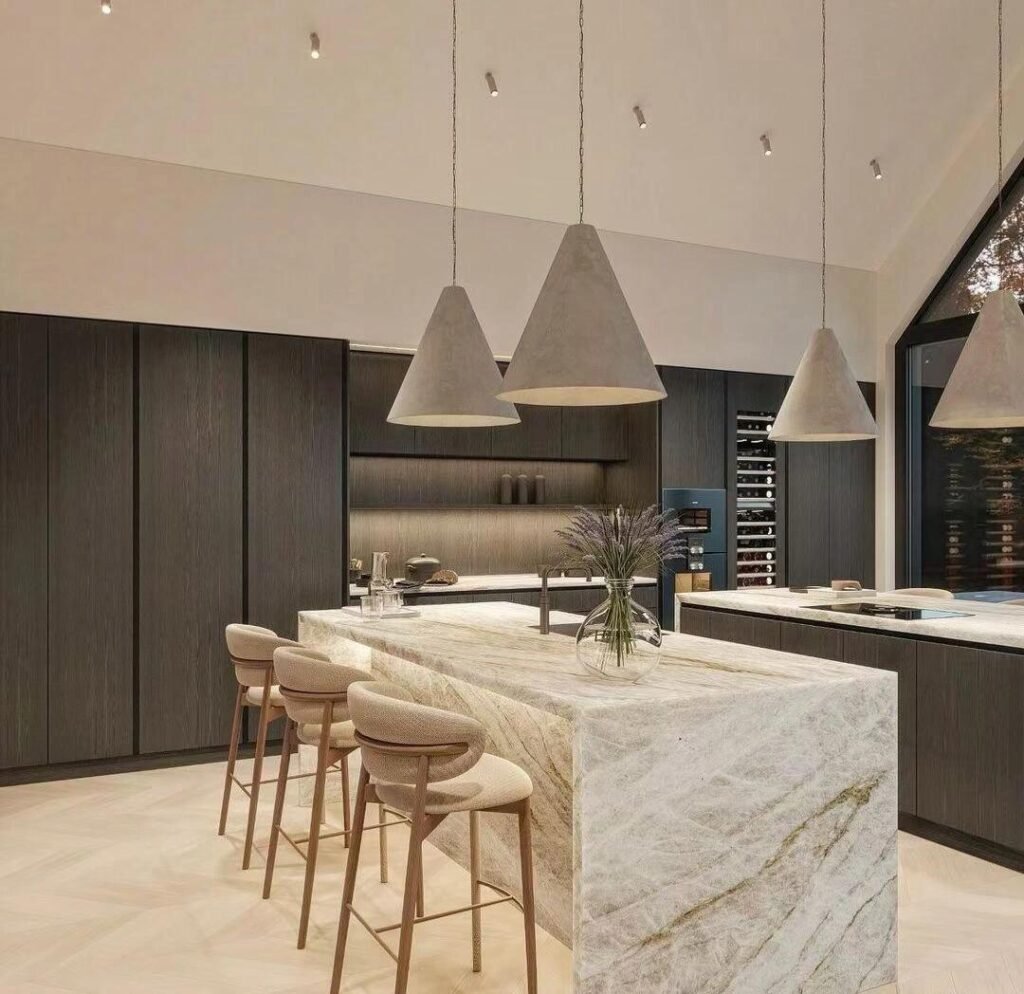
Taj Mahal quartzite shines in applications where visual impact and function meet: waterfall islands, full slab backsplashes, vanity tops in high-use bathrooms, and bookmatched feature walls. In residential kitchens, it allows homeowners to use heavy-use surfaces with fewer worries about daily wear than they would have with Calacatta marble.
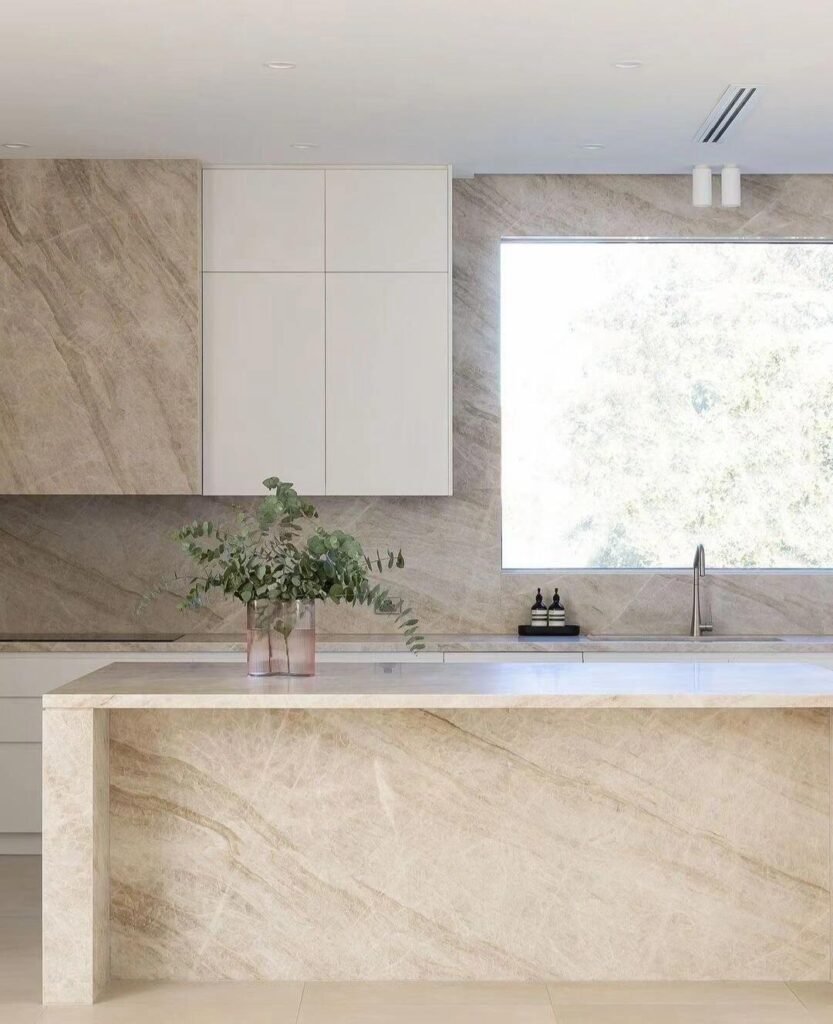
Alternatives & Look-alikes: Perla Venata, Perla Bianca, porcelain/sintered stone, engineered options
Natural quartzite alternatives (Perla Venata, Madreperola, Perla Bianca)
Perla Venata is frequently cited in trade literature and merchant catalogs as a near-identical visual match to Taj Mahal; many stone dealers treat them as variants from the same quarry banding. Other natural options—Perla Bianca and certain Madreperola slabs—offer similar warm-white backgrounds and restrained veining but vary in movement and price. These can be a perfect natural substitute when a specific slab marking or lot size pushes one option out of budget.
Budget & performance alternatives (sintered porcelain, engineered quartz)
If price or silica exposure concerns push clients away from natural stone, modern engineered alternatives deliver convincing marble aesthetics with predictable slab sizes and lower maintenance. High-quality engineered quartz manufacturers replicate marble veining and often offer thinner, lighter slabs with more consistent patterning—useful for large, matched panels. Sintered porcelain (large format sintered slab) now imitates marble and quartzite patterns with outstanding heat and stain resistance and lower silica dust issues in fabrication (because fabrication methods differ). These manufactured surfaces can be notably cheaper for large projects when factoring in fabrication yield and waste.
When to choose a manufactured look-alike vs real stone?
Choose natural Taj Mahal quartzite when slab uniqueness and natural variation are priorities; choose engineered quartz or sintered surfaces when uniformity, thinner panels, or potentially safer fabrication and lower onsite dust are higher priorities.
Sourcing & Buying: How to find Taj Mahal (factory/manufacturer/wholesale signals)
What to ask suppliers (slab photos, lot matching, finish options)?
When sourcing, request high-resolution slab photos from the exact lot, confirm the quarry or origin (Brazil vs other origins), and ask for full-slab measurements. Ask whether the supplier can provide bookmatching (if required), available finishes (polished, honed, leathered), and whether any treatments were applied. For manufacturers and wholesale buyers, ask about minimum order quantities, slab lead times, and freight logistics—these influence landed cost as much as the slab unit price.
Buying intent keywords & checklist (manufacturer, factory, whole slab, no-MOQ)
If searching online or giving a brief to a procurement team, use purchase-direct keywords such as: “Taj Mahal quartzite manufacturer,” “Taj Mahal quartzite factory slabs,” “Perla Venata wholesale slab,” and “whole slab Taj Mahal no MOQ.” These terms help filter suppliers who can sell full slab lots and offer factory pricing. For larger projects, require samples from the same lot and request an on-site visit where possible.
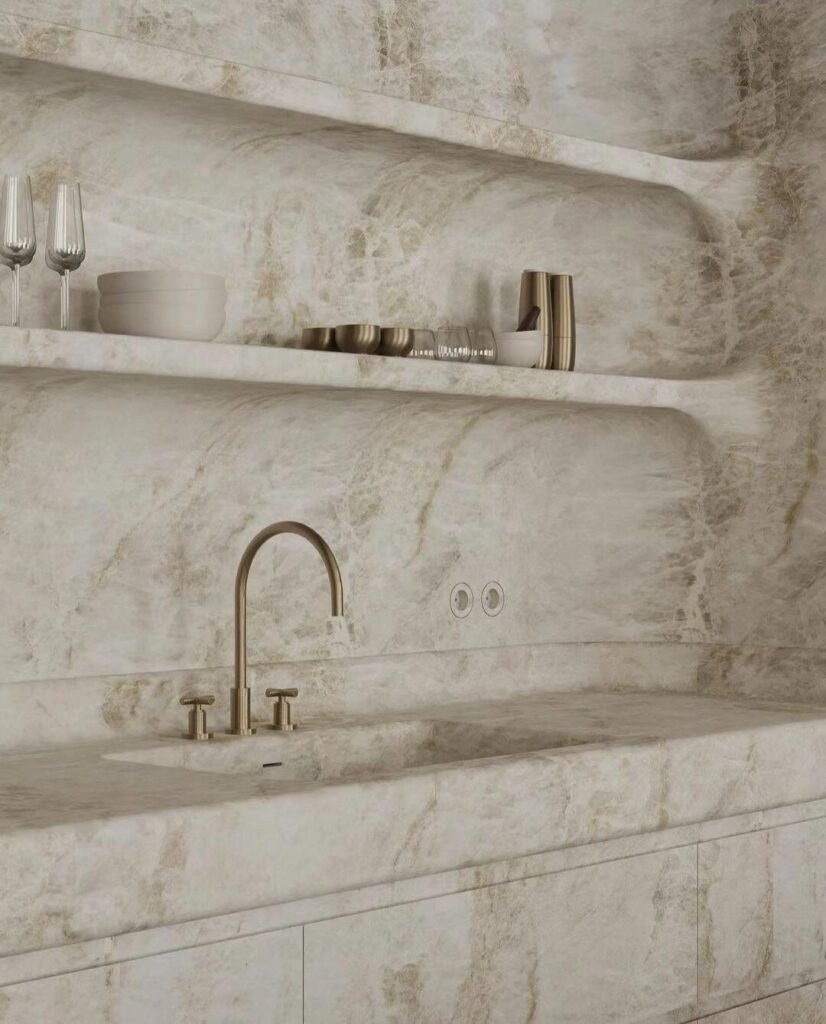
Cost, Value & Projecting ROI: Is the Taj Mahal worth the price?
Price drivers (rarity, bookmatching, finish, transport)
Price is driven by slab size, vein clarity, bookmatching needs, finish, and quarry logistics. Taj Mahal and Perla Venata slabs that present minimal movement and wide, desirable veins often command premiums because they yield more usable surface area for high-end islands and feature walls. Imported slabs can add freight and tariff costs depending on origin and current trade conditions.
Cost-saving strategies (prefab, porcelain matching, partial use)
To control budgets, consider using Taj Mahal as a focal surface (island or backsplash) while selecting a complementary, less rare stone for perimeter counters. Another tactic is to use engineered quartz or sintered panels for high-impact areas and natural stone accents where slab uniqueness is essential.
Regulations, Worker Safety & Industry Direction (Silica rules, environmental trends)
Why compliance matters to buyers & specifiers?
Fabrication of silica-bearing materials (both engineered quartz and many natural stones) produces respirable crystalline silica dust when cut, ground, or polished. Regulatory agencies have increased inspections and adopted targeted enforcement actions for stone fabrication shops in recognition of worker silicosis cases—this directly affects lead times, fabrication costs, and supplier practices. Buyers should work with compliant fabricators who document their controls and medical surveillance programs.
Recent regulatory developments (OSHA & Cal/OSHA)
U.S. OSHA has led focused inspections of engineered-stone fabrication shops and published guidance on respirable crystalline silica controls; meanwhile, Cal/OSHA adopted emergency and final RCS (respirable crystalline silica) rules aimed at reducing exposures in stone fabrication, with enforcement activity through 2023–2025. These moves have raised compliance costs for smaller shops and accelerated the adoption of safer wet cutting, local exhaust ventilation, and medical monitoring programs. When contractually specifying materials, require fabricator compliance statements and ask how silica controls affect cost and schedule.
Market trends driven by regulations — automation & material shifts
Regulatory pressure is one reason suppliers and fabricators are exploring automation, enclosed water-capture systems, and alternative materials (sintered stone, porcelain panels) that reduce silica emissions and, in some cases, cut fabrication time. The combination of safety rules and rising medical-surveillance costs makes transparent, well-documented supply chains more valuable to commercial specifiers and architects.
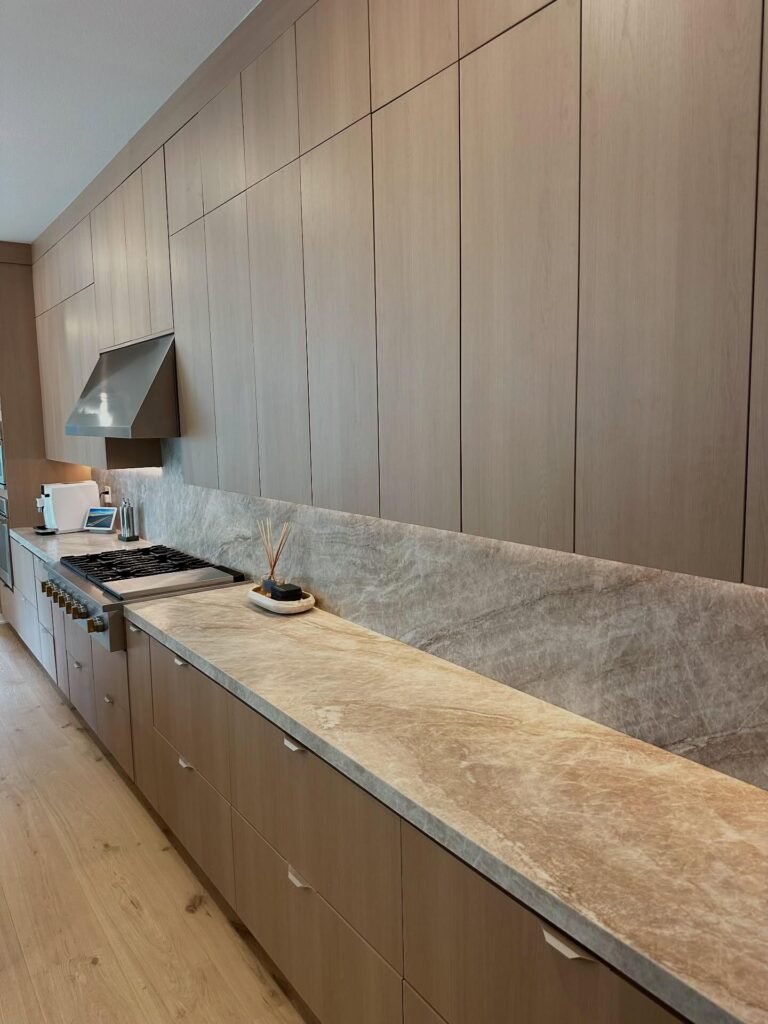
Design Guidance: Pairing Taj Mahal with cabinetry, backsplashes, and hardware
Taj Mahal with white cabinets vs warm cabinets — visual recipes
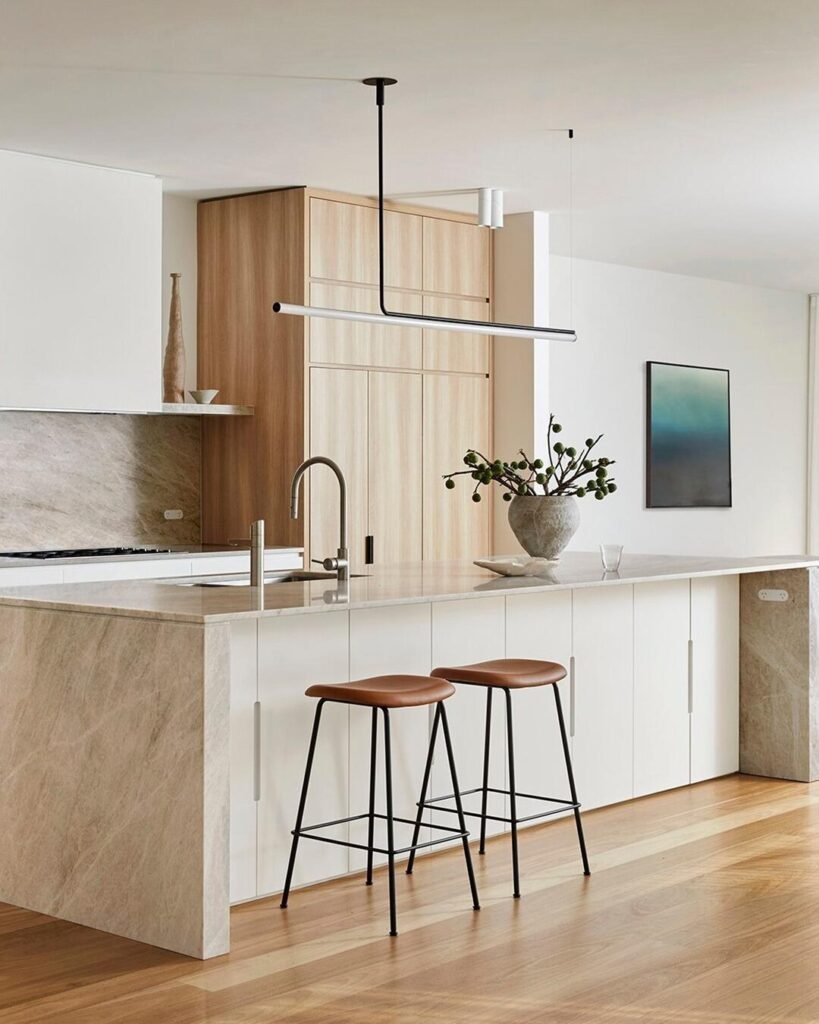
Taj Mahal pairs beautifully with crisp white cabinets for a bright, contemporary Calacatta-inspired aesthetic. The warm cream and gold undertones also harmonize with light to mid-tone warm wood cabinets for a softer, layered look. For true Calacatta drama, use full-height bookmatched slabs as a backsplash and choose thin shadow lines around cabinets to emphasize the slab’s natural movement.
Lighting, edge profiles, and finish recommendations (polished vs leathered)
Polished finishes maximize depth and veining contrast—ideal for showstopping islands. Honed or leathered finishes mute glare and conceal fingerprints for busy kitchens. Choose simple edge profiles (eased, mitred waterfall) to keep the visual focus on the slab pattern.
Installation, Care & Long-Term Maintenance (kitchen, bathroom, commercial)
Sealing, stain care, everyday maintenance
Although quartzite is less porous and more stain-resistant than marble, sealing is still recommended to reduce the chance of oil or wine stains—especially on honed surfaces. Routine cleaning with pH-neutral stone soap or mild dish soap and prompt blotting of spills prevents staining. Avoid prolonged exposure to acid cleaners, which can dull edges over time.
Repair & refinishing options
Small chips can often be repaired with color-matched epoxy resin; badly stained or damaged areas may be re-polished by professionals. Because quartzite is hard, refinishing usually requires stone-industry equipment—factor repair access into long-term ownership planning.
FAQ (Google Hot-Search FAQ entries)
What is the difference between Taj Mahal quartzite and Calacatta marble?
Taj Mahal quartzite visually mimics Calacatta with a white ground and linear veins, but is metamorphic and harder, resisting scratches and etching that commonly affect marble. Quartzite still needs routine sealin,g but typically performs better in heavy-use kitchens.Is Taj Mahal quartzite outdated or still on trend?
No—Taj Mahal and its close relatives (Perla Venata, Perla Bianca) remain popular for designers seeking a warm-white marble aesthetic with better durability. Trends favor natural materials with classic palettes, and Taj Mahal fits that demand.What materials look most similar to Taj Mahal quartzite?
Closest natural look-alikes include Perla Venata and Perla Bianca; engineered options like high-end quartz and large-format sintered porcelain are manufactured to mimic the same marble-like vein patterns at varying price points.How much does Taj Mahal quartzite cost, and are there cheaper alternatives?
Cost varies by slab quality, size, finish, and origin—bookmatched or premium lots cost more. Cheaper alternatives include visually similar quartzite variants and manufactured products (engineered quartz, sintered slabs) that can deliver the look for less.Do regulations about silica dust affect choosing Taj Mahal or other stones?
Yes. Fabrication of silica-bearing materials has attracted targeted inspections and stricter rules in many jurisdictions; buyers should confirm that their fabricator uses compliant dust controls, medical surveillance, and wet cutting or extraction systems.
Semantic Closure: How / Why / What / Options / Considerations
Why: Because quartzite’s high quartz content and interlocked grain structure offer superior scratch and heat resistance compared with marble, delivering a lower-maintenance, longer-life surface for culinary and commercial spaces.
What: If you need uniformity and lower fabrication dust risk, consider high-quality engineered quartz or large-format sintered porcelain panels as viable look-alikes.
Options (detailed): Full slab Taj Mahal for focal islands; Perla Venata or Perla Bianca for cost alternatives; engineered quartz/sintered slabs for uniformity and potential fabrication advantages.
Considerations (detailed): Verify quarry origin and lot photos; require fabricator silica-control statements; weigh up bookmatching premium vs budget; plan sealing schedule and long-term maintenance; for commercial projects, include compliance and medical surveillance costs in the bid.
References (Author — Article Title — Source)
U.S. Department of Labor OSHA — “Respirable Crystalline Silica: Focused Inspection Initiative” — OSHA technical memorandum.
California Department of Industrial Relations (DIR/Cal-OSHA) — “Silica Employer Fact Sheet / Emergency Silica Regulation” — Cal/OSHA publication.
National Institute for Occupational Safety and Health (NIOSH) / PubMed — “Respirable dust and respirable crystalline silica exposures in engineered stone fabrication” — Occupational health study.
AIHA (American Industrial Hygiene Association) — “OSHA previews findings from inspections focused on silica in engineered stone” — Industry news commentary.
Littler Mendelson LLP — “Cal/OSHA Approves Final Respirable Crystalline Silica Regulation” — Legal/industry analysis of regulations.