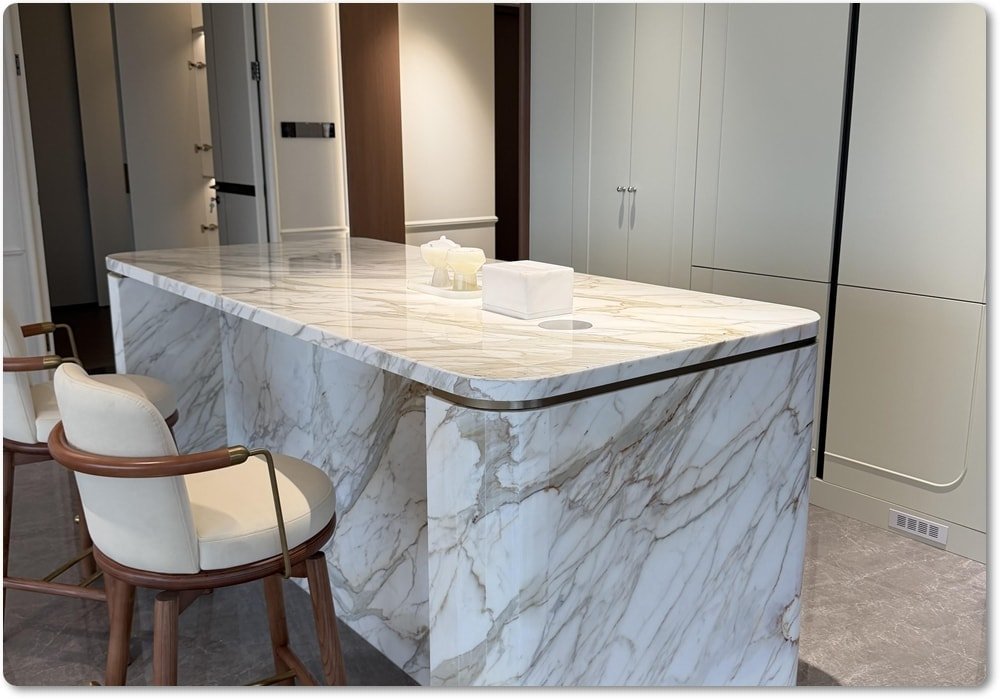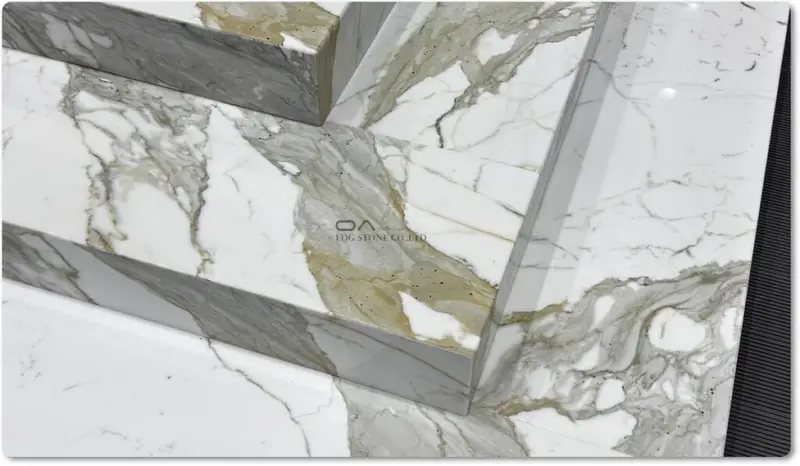
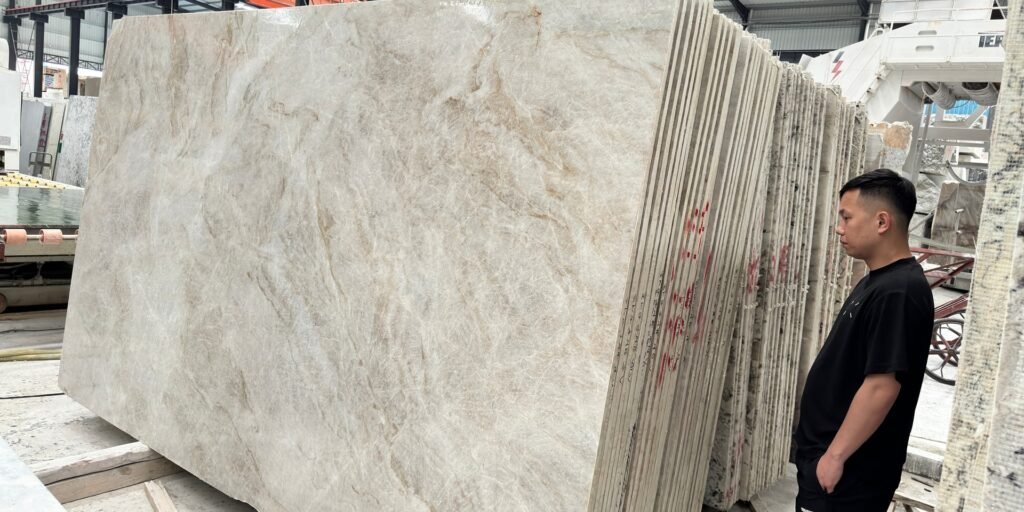
What are we comparing? Definitions & taxonomy
What is natural quartzite?
Natural quartzite is a metamorphic rock formed when quartz-rich sandstone is subjected to high heat and pressure, fusing quartz grains into an interlocked, dense stone. It typically ranks around Mohs 7 in hardness, which explains superior scratch resistance relative to marble and many granites. Natural quartzite slabs show variable porosity and require periodic sealing depending on the finish.
What is engineered quartz (man-made quartz)?
Engineered quartz (commonly called “quartz”) is a manufactured surface composed of roughly 90–95% ground natural quartz bound with polyester or polymer resins and pigments. Because of the resin binder, engineered quartz is effectively non-porous (no routine sealing required), exhibits highly consistent patterns and colors, and is offered with manufacturer warranties. However, the polymer content reduces high-temperature resistance compared with natural stone.
Marketplace naming — “Taj Mahal quartzite” vs “Taj Mahal quartz.”
Trade names add confusion: showrooms or manufacturers may use “Taj Mahal” to denote a visual family—either a natural quartzite slab or an engineered quartz pattern modeled on that natural look. Always confirm material type on the spec sheet (natural quartzite vs engineered quartz), check the technical data sheet (TDS), and request the exact slab or pattern sample before final acceptance.
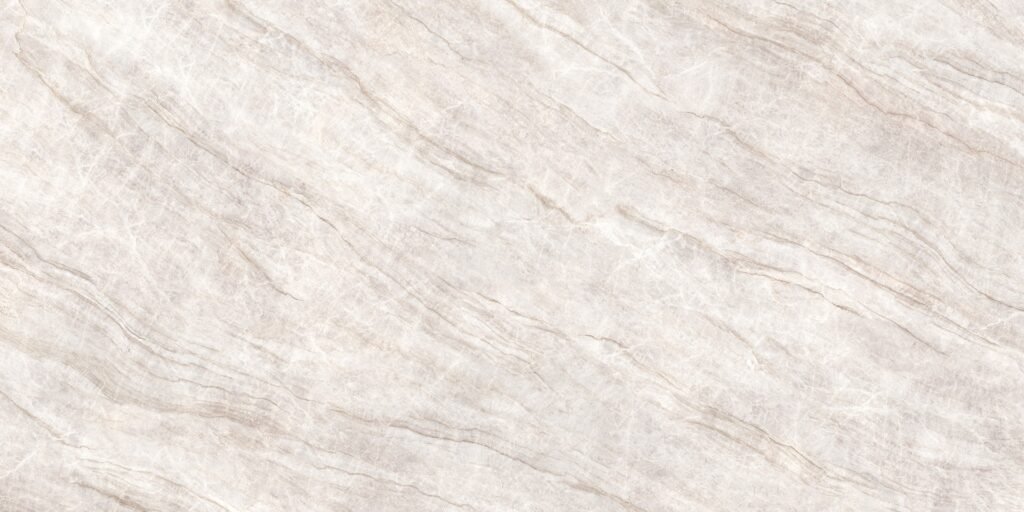
Appearance: visual differences and how to read slabs?
Natural variation in quartzite
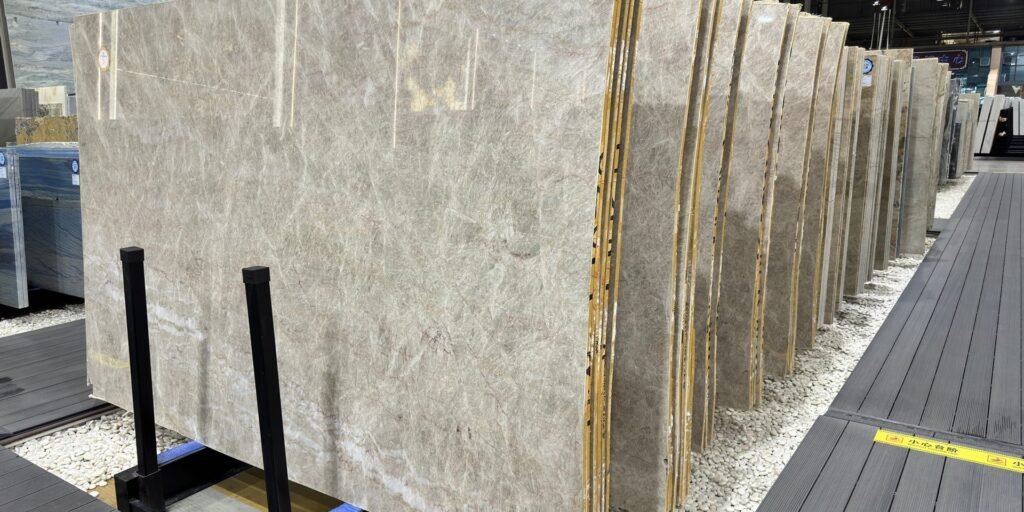
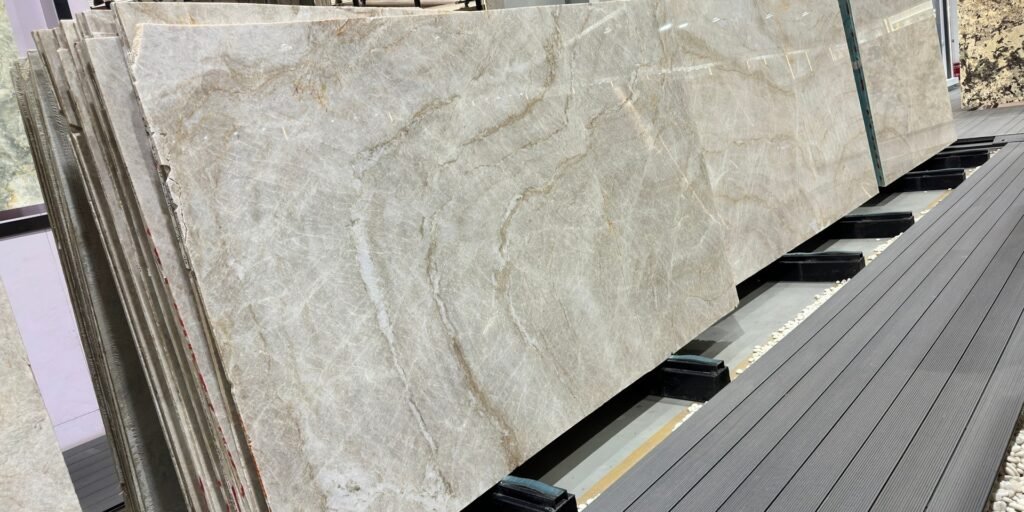
Quartzite’s appeal is its unique natural movement: veins, color clouds, and mineral streaks vary from slab to slab, and quarry-to-quarry differences are common. That uniqueness is the reason fabricators and designers often request bookmatching (pairing two sequential slabs to mirror the vein pattern) for dramatic feature walls and waterfall islands.
Pattern consistency in engineered quartz
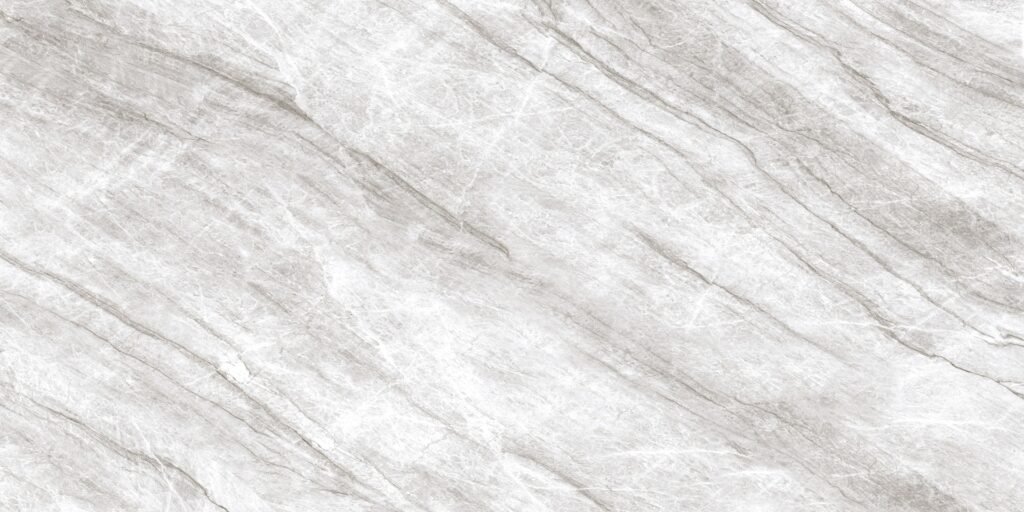
Engineered quartz offers predictable uniformity: colors and veining are controlled in production, so large projects can achieve consistent visual results across multiple panels. Repeating veins and pattern tiles can occur—something to watch for when a truly natural, non-repeating aesthetic is required.
Photographic vs real-life perception
Photos and small samples can mask differences: lighting, gloss, and finish affect perceived depth and translucence. A polished quartzite slab can appear more translucent than engineered quartz; conversely, some premium engineered patterns mimic depth through layered printing and aggregates. Always evaluate full slab photos under actual site lighting or request a mock-up when possible.
Performance & durability: scratch, heat, stain, and impact resistance
Comparative hardness and thermal tolerance
On hardness, quartzite generally outperforms engineered quartz: its natural quartz matrix resists scratching and abrasions better than resin-bonded slabs. Quartzite is also more tolerant of incidental heat (hot pans) because it lacks a polymer binder; however, thermal shock from extreme localized heat can still cause damage if the slab has micro-fractures. Engineered quartz’s resin content makes it vulnerable to discoloration or resin damage from prolonged or repeated high-heat exposure (hot cookware directly on the surface). Several trade guides summarize these practical performance gaps for homeowners and installers.
Stain and chemical vulnerability
Engineered quartz is effectively non-porous and resists most liquid staining—no routine sealing required. Natural quartzite, while often less porous than marble, can accept stains (especially oil-based) and typically benefits from sealing, especially in honed finishes. Acidic substances etch marble easily; quartzite is more resistant to etching, yet some quartzites with calcite inclusions may show etching, so stone testing and seller disclosure are prudent.
Edge behavior, seams, and repairability
Natural quartzite can chip on thin profiles but can be restored by stone professionals; engineered quartz seams are often tighter because controlled panel thickness helps fabricators produce consistent tolerances. Repair techniques differ: resin patches blend on engineered surfaces but are more visible on patterned slabs; quartzite repairs rely on epoxy and re-polishing techniques.
Health, safety & fabrication regulations: silica, OSHA/Cal-OSHA impacts and industry response
Why silica regulation matters?
Both natural quartzite and engineered quartz can generate respirable crystalline silica (RCS) dust during cutting, grinding, and polishing—RCS is linked to silicosis, lung cancer, and other severe diseases. Regulators have increased inspections of stone fabricators and urged controls to limit worker exposures. U.S. OSHA has issued guidance and focused inspection initiatives for stone fabricators because engineered stone has been associated with accelerated silicosis cases in some regions.
Recent regulatory developments and practical impacts
California’s emergency and final silica rules (and similar activities elsewhere) place obligations on fabricators to implement controls like wet cutting, local exhaust ventilation, medical surveillance, and documented exposure assessments—measures that affect lead times and cost. NIOSH and occupational hygiene bodies continue to publish detailed assessments of respirable dust generation and control strategies for engineered stone fabrication. For project buyers, expect to ask fabricators for written compliance statements and details on controls used.
Buyer checklist for compliance
Ask fabricators for: (1) written silica control procedures (wet cutting, LEV), (2) evidence of regular worker medical surveillance, (3) recent exposure monitoring results, and (4) documentation of training and respirator programs. These items are increasingly standard for reputable shops and can be contractually required in project specs.
Cost comparison & value proposition
Price drivers for Taj Mahal quartzite
Natural Taj Mahal quartzite pricing depends on slab quality, size, lot availability, bookmatching demand, and freight. Premium bookmatched lots and large usable slab yields will increase unit price; imported slabs carry additional logistics costs.
Engineered quartz pricing dynamics
Engineered quartz price varies by brand reputation, resin formula, pattern complexity, and panel size. Many engineered lines are available at multiple price tiers: from cost-effective standard colors to premium, marble-mimicking designs that command higher prices but may still undersell rare natural slabs.
Total cost of ownership (TCO)
Consider TCO: engineered quartz removes routine resealing costs and reduces stain risk; quartzite may need sealing and occasional professional restoration, but can outlast resins in thermal or abrasive scenarios. For commercial builds, factor in potential insurance or warranty differences and silica-control surcharges that fabricators might pass through.
Sourcing, procurement & purchase intent signals
How to source genuine Taj Mahal quartzite?
For wholesale or manufacturer sourcing, use purchase-intent search phrases and RFQs such as: “Taj Mahal quartzite whole slab supplier,” “Taj Mahal quartzite factory slabs,” or “Perla Venata wholesale slab manufacturer.” Request lot photos, origin certificates, and cut samples from the actual slab to avoid substitution.
Evaluating engineered quartz suppliers
For engineered products, ask for technical data sheets, warranty terms, sample slabs, and production batch IDs. Confirm the percent quartz by weight, resin type, and recommended adhesives/installation protocols.
Negotiation & contracting tips
Require proof of compliance (fabricator silicosis control), include slab approval clauses in contracts (approve slab photos before final cut), set acceptance criteria for seams and color match, and negotiate for remnant returns for warranty coverage.
Design guidance & application recipes
Pairing with cabinetry and finishes
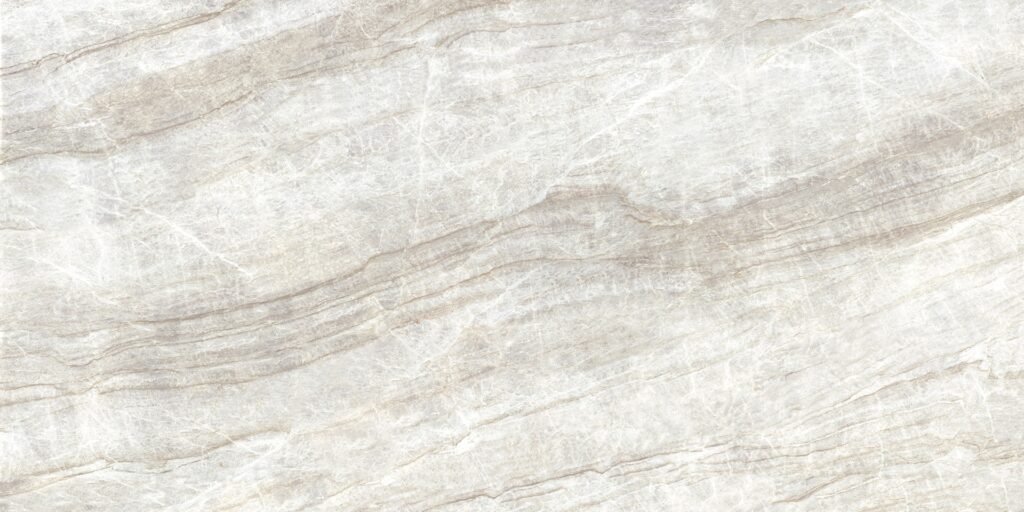
Taj Mahal quartzite pairs elegantly with white cabinetry for a crisp, classic look, or with warm wood tones for richer contrast. Engineered quartz’s consistent pattern makes it ideal when matching across multiple kitchens or units (multifamily projects) is a priority.
Finish and edge recommendations
Polished quartzite maximizes depth and veining; honed or leathered options soften glare and hide fingerprints. For engineered quartz, choose a finish to align with manufacturer guidance; avoid overly thin edge profiles in high-traffic areas.
Sustainability & environmental considerations
Quarrying vs manufacturing footprint
Quarrying and shipping heavy natural slabs have embodied carbon and habitat impacts; engineered quartz manufacturing consumes energy and uses resin (fossil-based materials), but often can incorporate recycled content. Ask suppliers for Environmental Product Declarations (EPDs) and recycled-content statements.
Certifications to verify
Look for third-party claims such as EPDs, ISO environmental management, or manufacturer sustainability reports—validate via documentation provided by the supplier.
Installation, care & maintenance (practical how-to)
Sealing and routine cleaning
Quartzite: seal upon install (especially honed finishes), and re-seal per product guidance. Clean with mild, pH-neutral soap and a soft cloth; avoid abrasive powders and prolonged acid contact. Engineered quartz: clean with soapy water; most brands advise avoiding high-pH cleaners and recommend the use of cutting boards and trivets.
Repair, warranty, and long-term care
Minor chips on quartzite are repairable by stone specialists; engineered quartz repairs may be visible if pattern matching is difficult. Always keep manufacturer paperwork and installation records for warranty claims.
When to choose quartzite vs engineered quartz: a decision framework?
Decision matrix (summary)
Choose Quartzite if: you value natural uniqueness, higher heat tolerance, and long-term natural stone character.
Choose Engineered Quartz if: you need uniformity, warranty-backed performance, low maintenance, or have tight multi-unit visual matching needs.
Consider Budget & Schedule: engineered quartz is often faster to source and install at scale; premium natural slabs can lengthen lead times and increase cost.
Buyer personas and tailored recommendations
Designer/Specifier: Use quartzite for bespoke focal points; reserve engineered quartz for consistent surfaces across units.
Homeowner: If you cook heavily, quartzite’s heat tolerance is attractive; if low maintenance is vital, engineered quartz is preferable.
Commercial Procurement: Engineered quartz simplifies procurement and reduces variation; ensure silica controls are considered for fabrication either way.
FAQ
What is the difference between quartzite and engineered quartz?
Quartzite is a natural metamorphic rock formed from sandstone and is hard, variable, and heat-tolerant. Engineered quartz is manufactured from crushed quartz and resins to create non-porous, consistent slabs that require less routine maintenance.Is quartzite a natural stone, and does it need sealing?
Yes—quartzite is a natural stone, and while it is generally less porous than marble, sealing is recommended (especially for honed finishes) to reduce the risk of oil or wine stains and to ease long-term maintenance.Which material is better for a busy kitchen: Taj Mahal quartzite or engineered quartz?
Both can work well: Taj Mahal quartzite offers greater heat and scratch tolerance, while engineered quartz offers superior stain resistance and minimal maintenance. Choose quartzite if heat and natural variation matter most; choose engineered quartz if consistency and no-seal upkeep are the priorities.Does the fabrication of these materials pose workplace safety risks?
Yes—fabrication generates respirable crystalline silica dust for both natural stone and engineered stone, and fabricators must use wet cutting, local exhaust ventilation, and medical surveillance to protect workers. Buyers should request fabricator compliance documentation as part of procurement.Are there cheaper alternatives that still achieve a marble-like look?
Yes—less expensive quartzite variants, some engineered quartz lines, and large-format sintered porcelain slabs can mimic marble aesthetics at lower cost while varying in performance trade-offs.
Semantic Closure: How / Why / What / Options / Considerations
Why: Because the two materials are built from different principles—one geologic and variable, the other industrial and repeatable—each brings different lifecycle costs, repair paths, and health/safety implications for fabricators. Regulatory trends around respirable crystalline silica are already shifting fabrication practices and costs, raising the value of transparent, compliant supply chains.
What (detailed): Ask suppliers for slab origin, lot photos, TDS, warranty, and evidence of silica control for the fabricator. Require acceptance clauses in contracts that allow for slab rejection before cutting when natural variance falls outside spec.
Options (detailed): Use quartzite as a focal material (island, backsplash) and engineered quartz for perimeters; or choose premium engineered slabs for multi-unit builds where matching is critical. Consider sintered porcelain when minimal onsite cutting is required.
Considerations (detailed): Factor in sealing schedules, repair access, warranty coverage, fabrication lead times, and possible compliance surcharges. For commercial procurement, include silica-control verification and ongoing maintenance plans in the RFP.
References (author — title — source)
U.S. Department of Labor, Occupational Safety and Health Administration — “Respirable Crystalline Silica: Focused Inspection Initiative” — OSHA technical guidance. OSHA
California Department of Industrial Relations (Cal-OSHA) — “Standards Board Adopts Emergency Temporary Standard to Protect Workers from Silica” — DIR/Cal-OSHA bulletin. CalDIR
National Institute for Occupational Safety and Health (NIOSH) — “Characterization of airborne dust from engineered stone fabrication” — NIOSH field/lab study report. cdc.gov
AIHA / NIOSH collaboration articles — “Protecting stone workers: engineering controls and best practices” — occupational hygiene commentary. The Synergist
Academic occupational exposure studies — “Characterization of emissions and crystalline silica exposures in stone grinding operations” — peer-reviewed occupational health research.