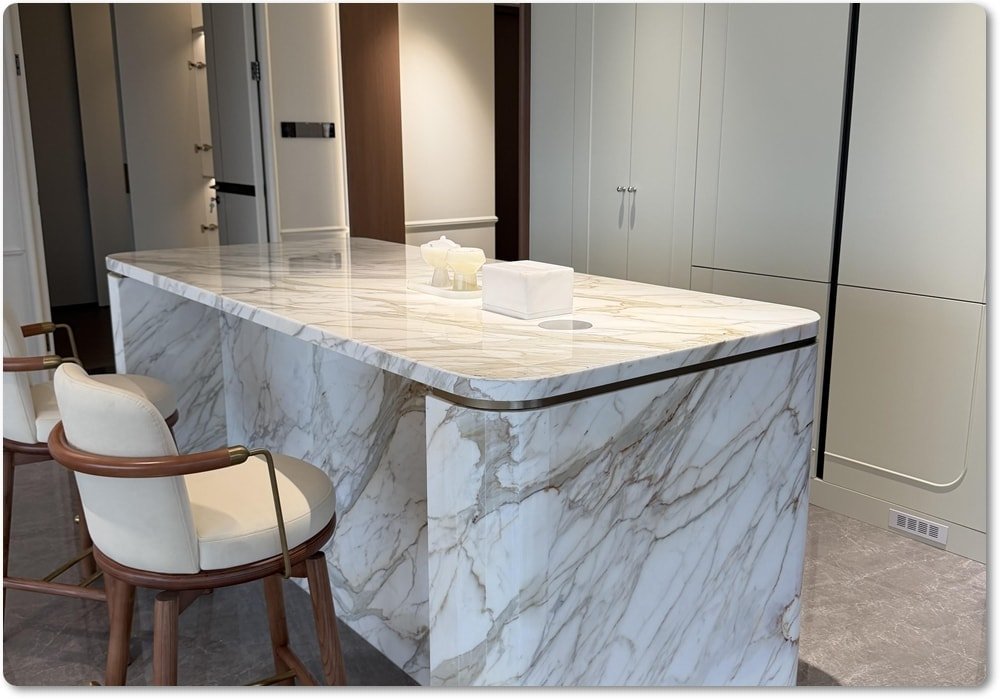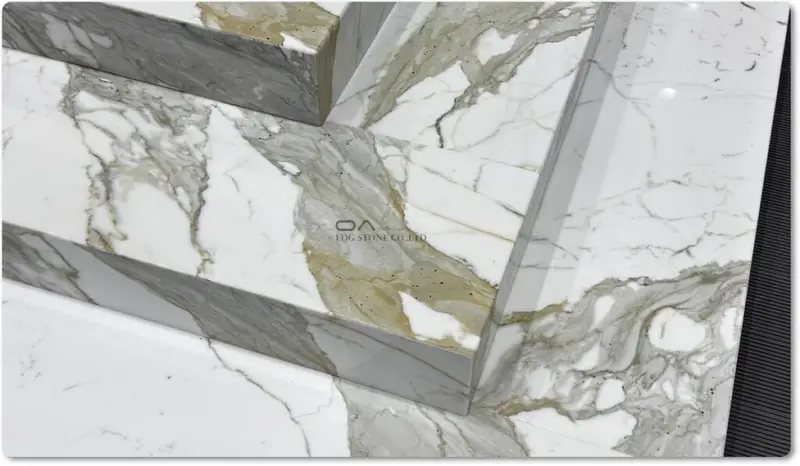
Introduction
Among all applications of Carrara White Marble, kitchen countertops are the most common—and the most prone to problems.
Unlike purely decorative uses, kitchen countertops must withstand:
- Food preparation
- Water exposure
- Heat from cooking
- Acidic substances
- Daily wear and cleaning
So, selecting a countertop is not just about aesthetics—it’s about performance.
👉 The key question is:
Can this Carrara White Marble perform reliably in a kitchen environment?
This guide breaks down the procurement logic from six critical aspects:
- Thickness
- Edge profiles
- Cutouts
- Sealing
- Durability
- Project execution strategy
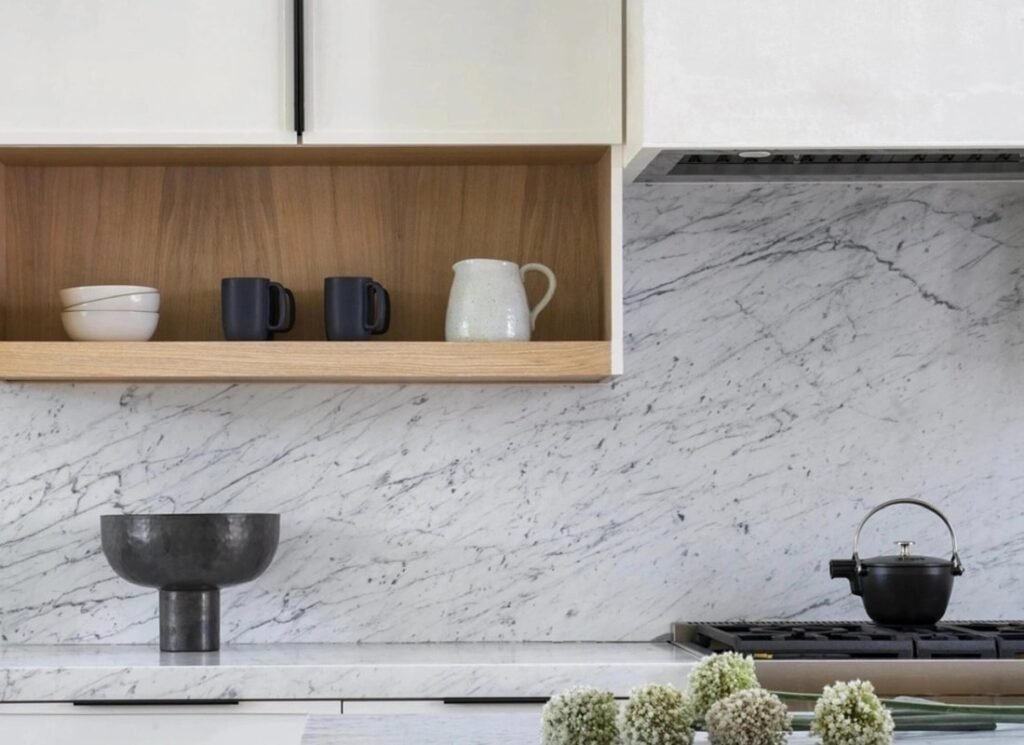
Why Choose Carrara White Marble for Kitchen Countertops?
The Core Value: Visual Elegance & Spatial Clarity
Carrara White Marble is not about extreme durability—it’s about:
- Soft white background
- Elegant gray veining
- Clean spatial feel
- Timeless luxury
It is especially suitable for:
- Modern kitchens
- Minimalist interiors
- Light luxury designs
- High-end residential projects
Best for “Controlled-Use” Kitchens
Carrara marble performs best in:
- Luxury residential kitchens
- Low to moderate usage kitchens
- Open-plan display kitchens
- Showrooms and model homes
❗ Not ideal for:
- Heavy-duty commercial kitchens
- High-acid or high-grease environments
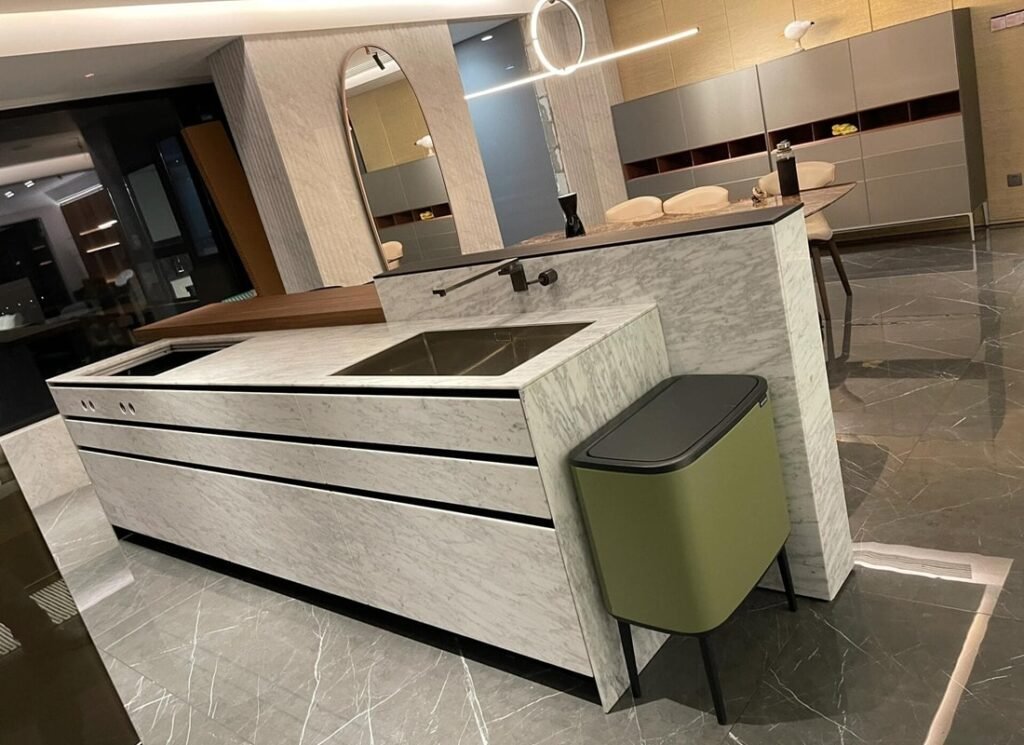
Key Advantages of Carrara Marble Countertops
1. Premium Aesthetic Appeal
White marble instantly elevates kitchen design, fitting styles like:
- Modern
- French classic
- Minimalist
- Contemporary luxury
2. Versatile Material Pairing
Pairs well with:
- White cabinetry
- Dark wood finishes
- Gray cabinets
- Metal hardware
- Matte walls
3. Timeless Design Value
Unlike trend-based materials, Carrara marble:
👉 Never goes out of style
This ensures long-term design relevance.
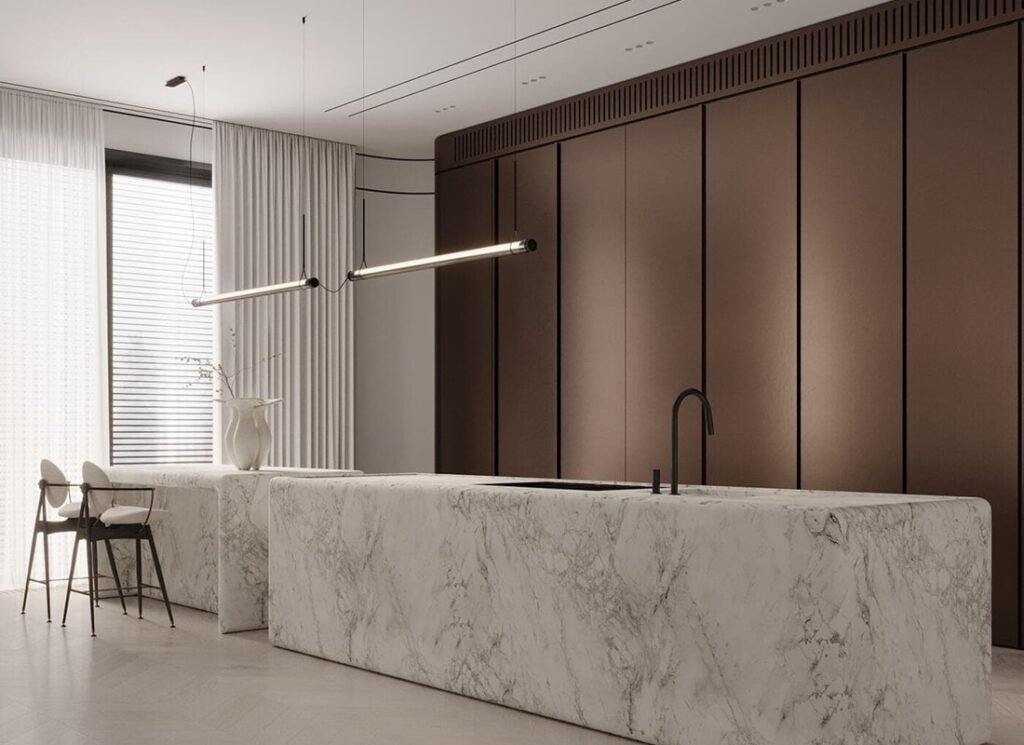
How to Choose the Right Countertop Thickness?
18mm Thickness
Best for:
- Lightweight applications
- Wall-mounted countertops
- Budget-conscious projects
Pros:
- Lower cost
- Easier installation
Cons:
- Less visual weight
- Requires strong substrate support
20mm Thickness (Industry Standard)
Best for:
- Most residential kitchens
- Standard projects
Pros:
- Balanced cost and performance
- Widely available
- Easy fabrication
30mm Thickness
Best for:
- Luxury kitchens
- Kitchen islands
- High-end visual impact
Pros:
- Strong presence
- Premium feel
Cons:
- Higher cost
- More demanding installation
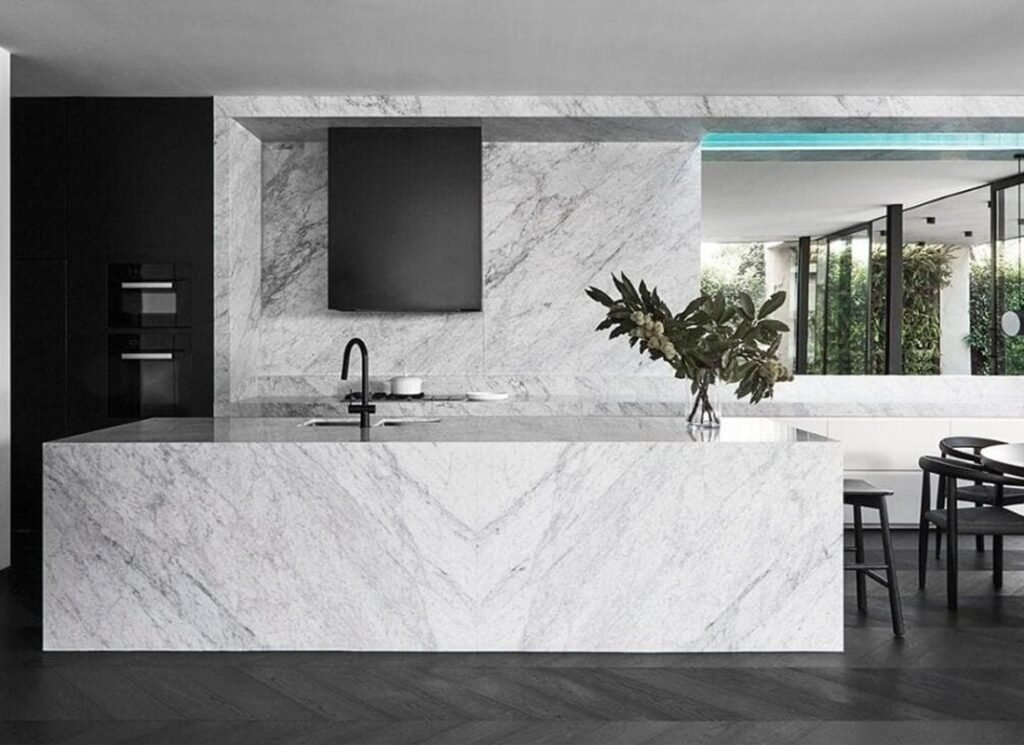
Why Edge Profiles Matter?
Edge profiles define the final look and usability.
Straight Edge
- Clean and modern
- Ideal for minimalist kitchens
Beveled Edge
- Softer visual transition
- Reduces chipping risk
Bullnose Edge
- Fully rounded
- Safer for families with children
Mitered Edge
- Creates a thicker visual effect
- Common in luxury islands
Critical Cutouts to Confirm Before Fabrication
1. Sink Cutout
Must define:
- Undermount or top-mount
- Exact dimensions
- Edge reinforcement
- Installation method
2. Faucet Holes
Clarify:
- Single or multiple holes
- Hole spacing
- Fixture compatibility
3. Cooktop Cutout
Requires:
- Appliance specifications
- Heat insulation planning
- Reinforcement
4. Functional Openings
Includes:
- Pop-up sockets
- Cable management holes
- Hidden accessories
👉 All must be finalized in shop drawings before production.
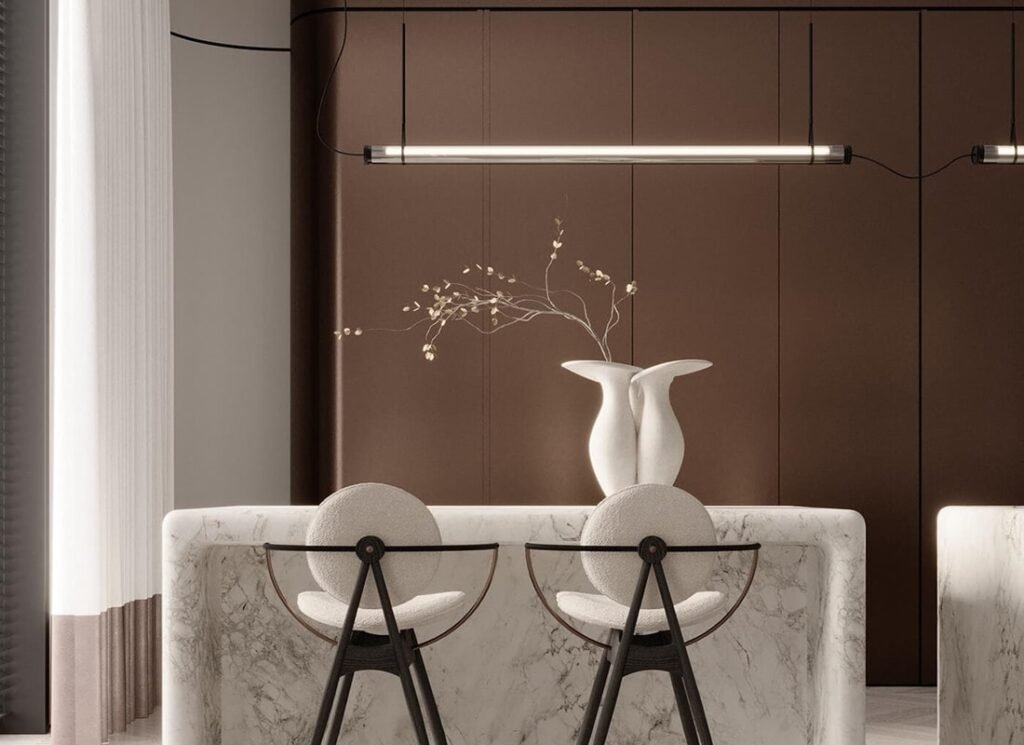
Key Performance Requirements
1. Stain Resistance
Marble is porous and vulnerable to:
- Wine
- Coffee
- Oil
- Lemon juice
- Vinegar
👉 Protection depends on:
- Surface treatment
- Sealants
- Maintenance
2. Heat Resistance
- Can tolerate moderate heat
- ❗ Avoid direct contact with hot cookware
3. Acid Resistance
Major limitation:
- Acid causes etching and dull spots
4. Structural Integrity
Ensure:
- Flat slabs
- No cracks
- Reinforced cutout areas
Surface Finish Options
Polished Finish
Pros:
- High gloss
- Enhances veining
Cons:
- Shows etching more easily
Honed Finish
Pros:
- Soft, natural look
- Less visible etching
Cons:
- More prone to a staining appearance
Leathered Finish
Pros:
- Unique texture
- Strong visual depth
Cons:
- Not suitable for all designs
- Higher fabrication requirements
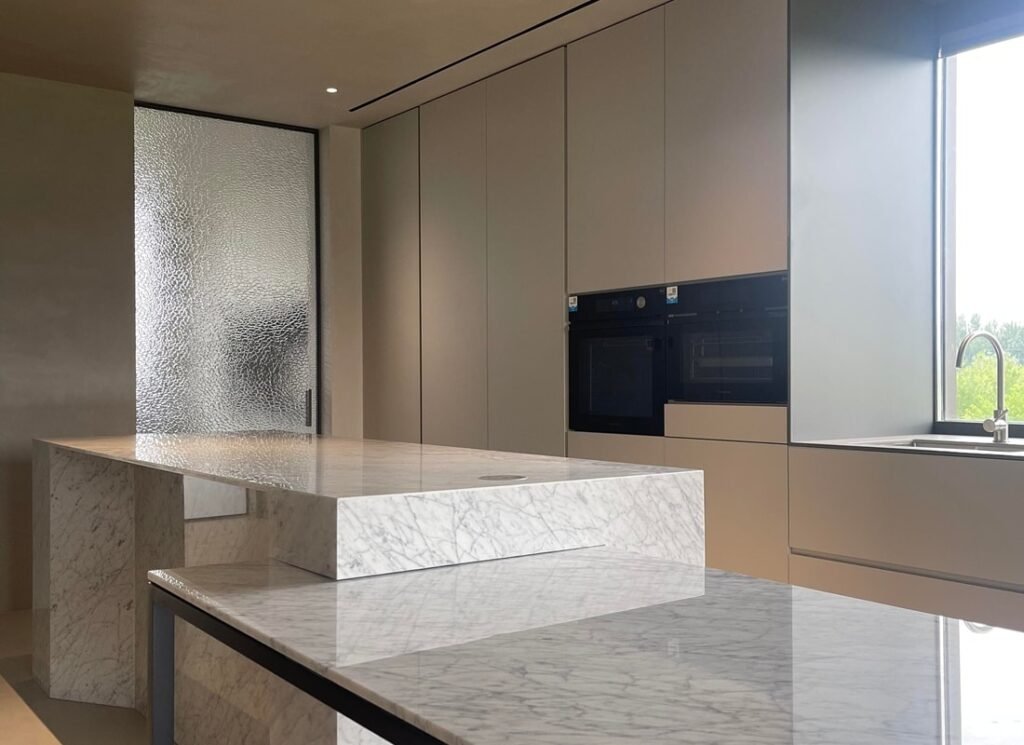
7 Must-Confirm Parameters Before Procurement
- Slab thickness
- Total dimensions
- Cutout specifications
- Edge profile
- Surface finish
- Batch consistency
- Installation method
Common Application Types
- Single-run countertops
- L-shaped layouts
- Kitchen islands
- Countertop + backsplash
- Full-height backsplash extensions
5 Common Procurement Mistakes
- Choosing based on small samples only
- Not confirming cutouts in advance
- Ignoring sealing requirements
- Underestimating material waste
- Overlooking installer expertise
How to Reduce Risk?
- Approve mockups before production
- Choose finishes based on usage
- Plan maintenance early
- Work with experienced fabricators
Advantages vs Limitations
Advantages
- High-end visual appeal
- Versatile design compatibility
- Timeless material
- Ideal for luxury projects
Limitations
- Sensitive to acids
- Requires maintenance
- High fabrication standards
- Not suitable for heavy-duty use
Procurement Recommendations
Carrara White Marble is ideal for your project:
- Prioritizes design aesthetics
- Has a mid-to-high budget
- Accepts regular maintenance
- Focuses on long-term visual value
Avoid or reconsider if your project requires:
- Low maintenance
- High stain resistance
- Heavy-duty performance
Conclusion
Carrara White Marble countertops are not the most durable—
👉 They are one of the most visually impactful materials in kitchen design.
Their true value lies in:
- Design sophistication
- Timeless beauty
- Architectural expression
For professionals, the real question is not:
❌ “Is it good?”
✅ “Is it suitable for this project?”
FAQ (Rich Snippets Ready)
Is Carrara White Marble good for kitchen countertops?
Yes, especially for high-end residential kitchens, but it requires sealing and regular maintenance.
What thickness is best for marble countertops?
20mm is standard, while 30mm is preferred for premium designs.
Can marble handle heat?
Yes, but direct contact with hot cookware should be avoided.
Are marble countertops hard to maintain?
They require more care than quartz or granite due to staining and etching risks.
What edge profile is best?
Straight, beveled, and mitered edges are the most commonly used options.
Internal Linking Strategy
- What is Carrara marble → Guide 01
- marble vs granite vs quartz → Guide 02
- Marble Quality Grading → Guide 03
- Marble Slab Buying Guide → Guide 04
- cut-to-size marble panels → Guide 05
- bathroom vanity tops → Guide 07
- Marble Fabrication Process → Guide 13