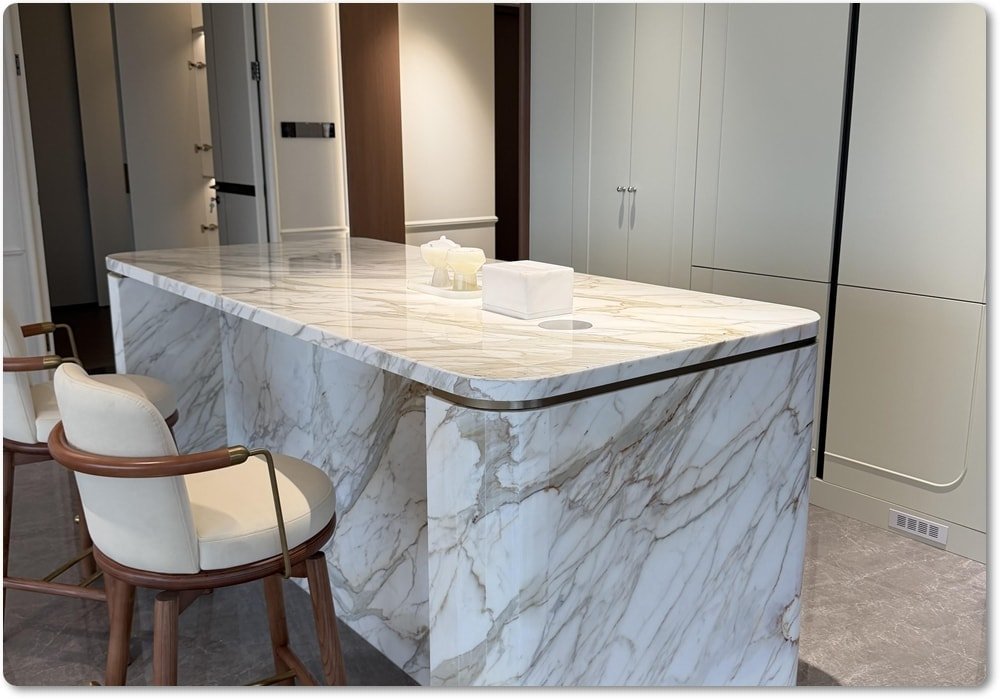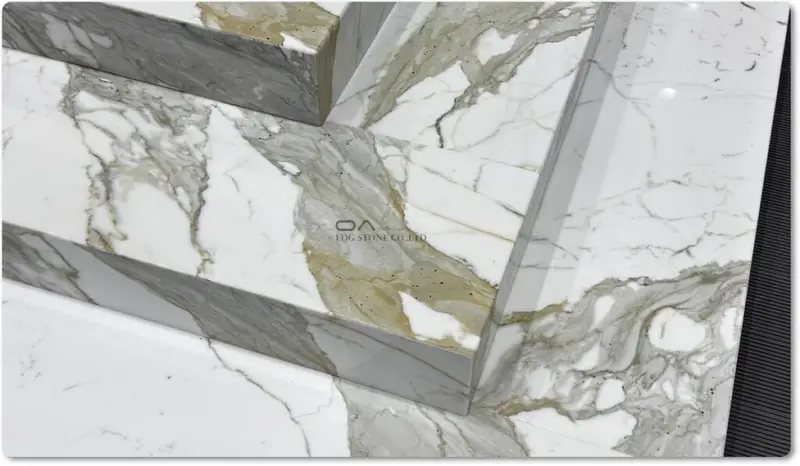
Introduction
If countertops represent the balance of function + aesthetics, then wall systems represent:
👉 Pure spatial expression + design language carrier
In luxury residences, hotels, and retail environments, Carrara White Marble wall cladding is not just a decorative material—it becomes:
- The visual centerpiece of a space
- A brand identity medium
- An interface between light and material
- A core driver of luxury perception
However, compared to countertops, wall systems are significantly more complex. They involve:
- Large-scale visual continuity
- Layout planning and slab sequencing
- Bookmatching and vein matching
- Structural installation and safety
- High-precision fabrication and joint control
This guide systematically explains how to source and execute Carrara marble wall panels from five key dimensions:
design logic, material selection, layout strategy, installation systems, and procurement planning.
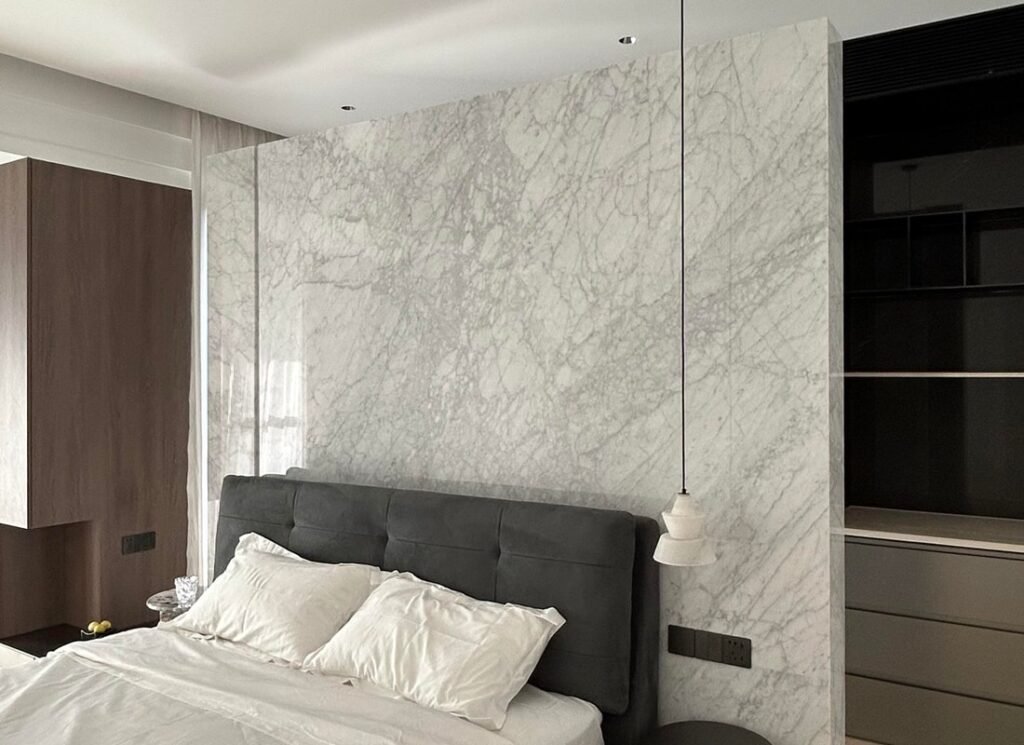
Why Carrara White Marble Is Ideal for Wall Applications?
1. Natural Veining Suited for Large Surfaces
Carrara marble features:
- Soft, flowing veining
- Low contrast with layered depth
- Non-dominant visual presence
👉 This makes it ideal for large, continuous wall applications without overwhelming the space.
2. Enhances Spatial Cohesion
Stone wall systems define the atmosphere instantly:
- Clean
- Bright
- Calm
- Sophisticated
Especially effective in:
- Living room feature walls
- Hotel lobbies
- Commercial display environments
3. Strong Interaction with Light
- Polished finish → Reflects light, increases brightness
- Honed finish → Softens light, creates a restrained luxury mood
👉 Lighting + marble = amplified spatial experience
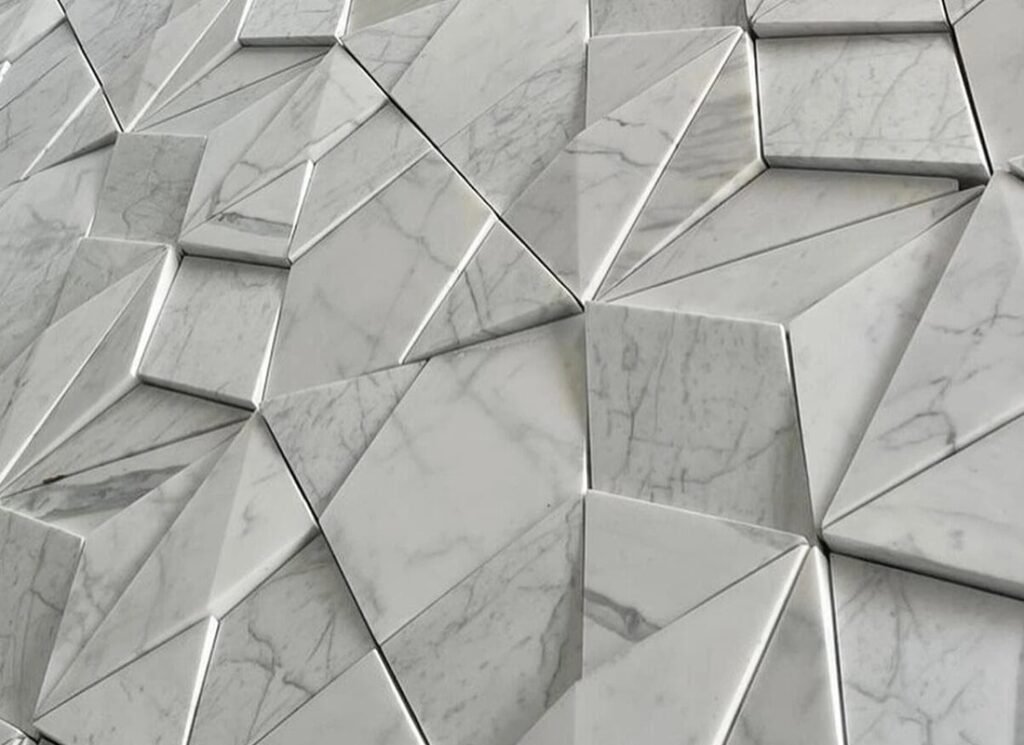
Common Applications of Carrara Marble Wall Cladding
1. Feature Walls (Living Room / Lobby)
Key characteristics:
- Visual focal point
- Bookmatched patterns
- Artistic expression
2. Hotel & Commercial Wall Systems
Used in:
- Reception backdrops
- Elevator lobbies
- Public corridors
Focus on:
- Luxury perception
- Continuity
- Durability
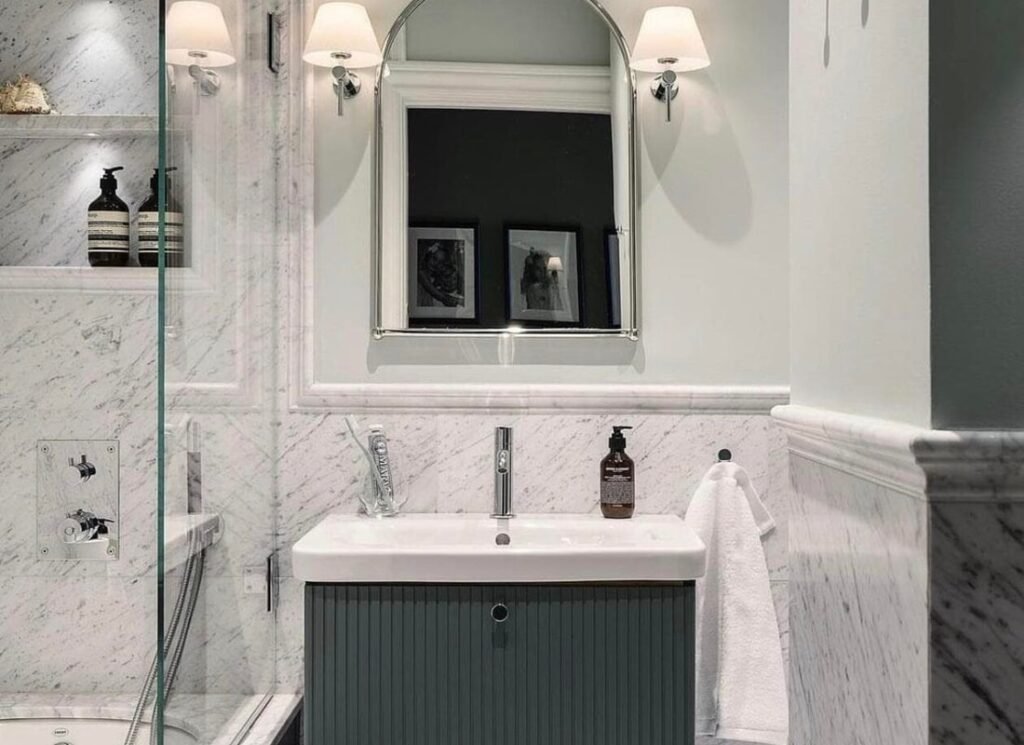
3. Bathroom Wall Systems
Typical forms:
- Vanity + wall integrated systems
- Full marble enclosure
Advantages:
- Waterproof
- Seamless visual effect
- Premium hotel-style experience
4. Retail & Showroom Walls
Applications:
- Brand display walls
- Product backdrops
- Exhibition features surfaces
👉 Strong emphasis on brand storytelling through material
Core Specifications for Wall Panels
Slab Selection: Always Prioritize Large Slabs
- Fewer joints
- Stronger visual continuity
- Better vein alignment
Common Thickness Options
- 18mm → Standard
- 20mm → Higher structural stability
- Composite panels (honeycomb/aluminum) → Lightweight solutions
Dimensional Planning
Must align with:
- Floor-to-ceiling height
- Modular layout
- Door/window positioning
- Lighting integration
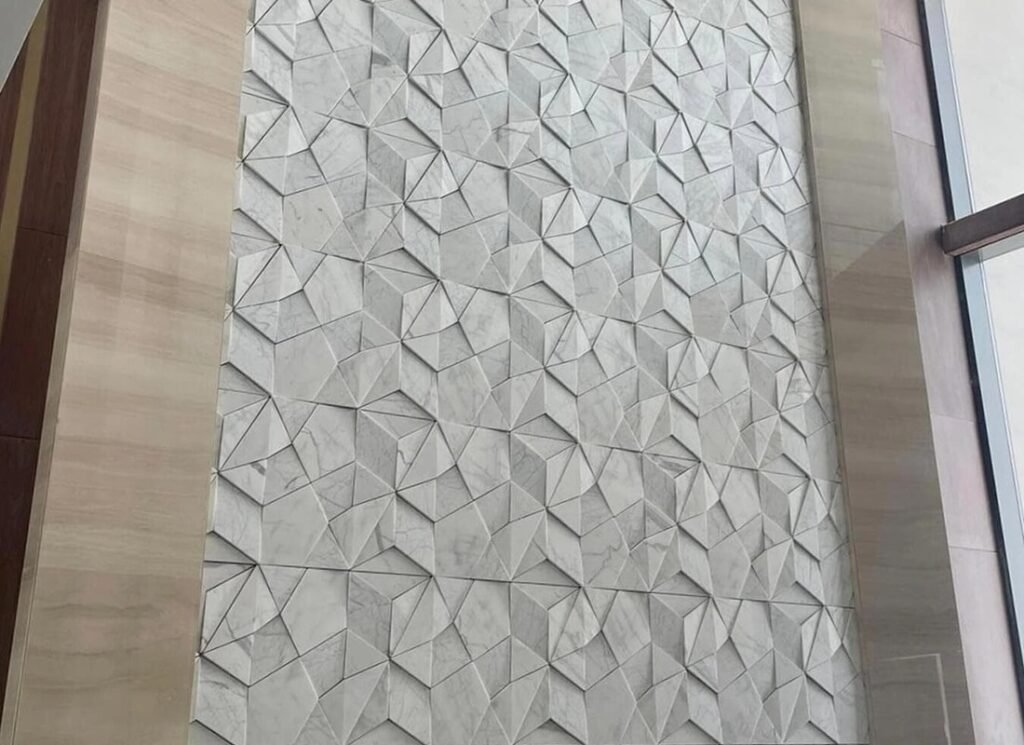
The Most Critical Factor: Layout & Bookmatching
What Is Bookmatching?
👉 Bookmatching mirrors adjacent slabs to create a symmetrical pattern.
Why It Matters?
In luxury projects:
- Bookmatched wall = high-end design language
- Random layout = standard construction feel
Common Layout Strategies
- Single slab continuity
- Symmetrical bookmatch
- Vein matching (flow continuity)
- Modular grid layouts
Procurement Checklist
Before production, confirm:
- Layout drawings
- Slab numbering system
- Cutting sequence
- Installation sequence
👉 Without this, design intent cannot be executed on-site.
Wall Installation Systems (Structural Core)
1. Dry Hanging System
- Metal framework + mechanical anchors
- Detachable system
✔ High safety
✔ Ideal for large-scale projects
2. Adhesive Fixing
- Suitable for small interior areas
✔ Lower cost
❗ Requires perfect substrate conditions
3. Composite Panel Systems
- Aluminum/honeycomb backing
✔ Reduced weight
✔ Increased structural stability
✔ Suitable for high-rise buildings
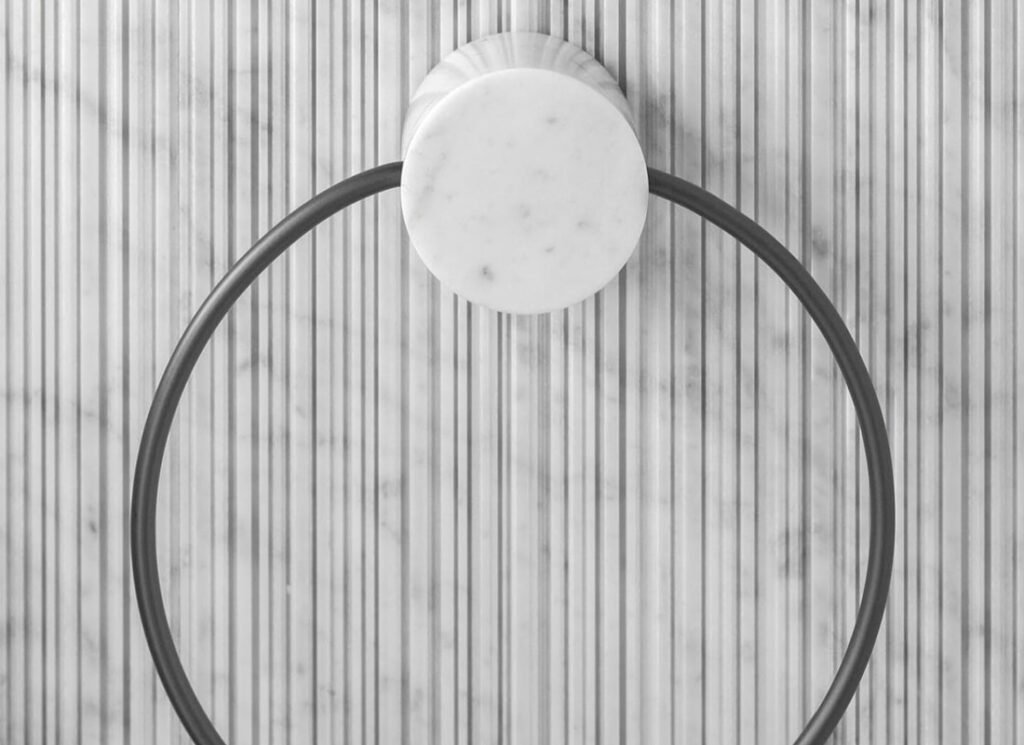
Finishing Details That Define Luxury
1. Corner Treatments
- 45° miter joints
- Open joint vs tight joint
- Metal trims or seamless finish
2. Joint Control
- Fewer joints = more premium
- Thinner joints = higher precision
3. Lighting Integration
- Backlighting
- Wall washers
- LED strip lighting
👉 Enhances marble texture dramatically
4. Material Transitions
Common combinations:
- Wood veneer
- Metal
- Glass
👉 Clean transitions = professional execution
Surface Finish Selection
Polished
- High reflectivity
- Strong luxury feel
- Brightens space
👉 Most widely used
Honed
- Soft, matte appearance
- Subtle elegance
👉 Preferred in high-end minimalist designs
Leathered
- Textured surface
- More tactile and unique
👉 Ideal for designer-driven projects
7 Key Procurement Parameters
- Wall dimensions & structure
- Slab size and quantity
- Layout strategy (bookmatch or not)
- Thickness & weight
- Installation system
- Surface finish
- Delivery & installation sequencing
Common Mistakes to Avoid
❌ No layout drawings
❌ Ignoring bookmatching logic
❌ Excessive joints
❌ Mixed slab batches
❌ Incorrect installation system
❌ Poor lighting coordination
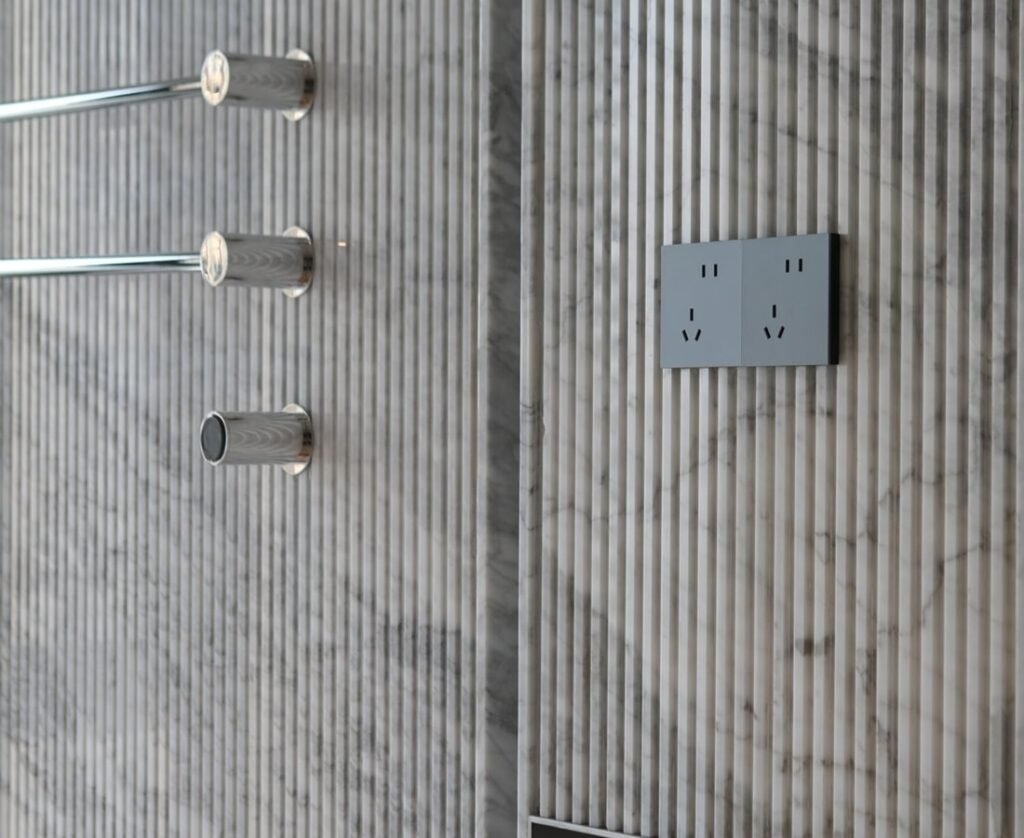
How to Achieve a “Luxury Marble Wall”?
The result is not defined by material alone, but by:
- Layout design
- Vein control
- Joint precision
- Lighting integration
- Finishing details
👉 Carrara marble is the medium — design execution is the outcome
Advantages & Limitations
Advantages
- Premium visual appeal
- Strong spatial cohesion
- Artistic expression capability
- Ideal for luxury projects
Limitations
- Requires high installation precision
- Higher cost
- Strong coordination between design & fabrication
- Complex logistics and installation
Conclusion
Carrara White Marble wall systems are not just decoration—they are:
👉 A spatial expression system
They can:
- Define architectural identity
- Reinforce brand positioning
- Amplify design value
But only when:
👉 Material + Design + Layout + Installation = One unified system
For professional procurement, the key is not how much stone you buy, but:
👉 How every slab is placed to create a coherent spatial language
FAQ (Google Featured Snippets)
Is Carrara marble good for wall cladding?
Yes, it is widely used for feature walls and luxury interiors due to its elegant appearance.
What is bookmatching in marble?
It is a technique where slabs are mirrored to create symmetrical patterns.
What thickness is used for marble walls?
18mm and 20mm are common, while composite panels are used for lightweight systems.
How is marble installed on walls?
Common methods include dry hanging systems and adhesive fixing.
Is marble wall cladding expensive?
Yes, but it delivers high visual impact and long-term design value.