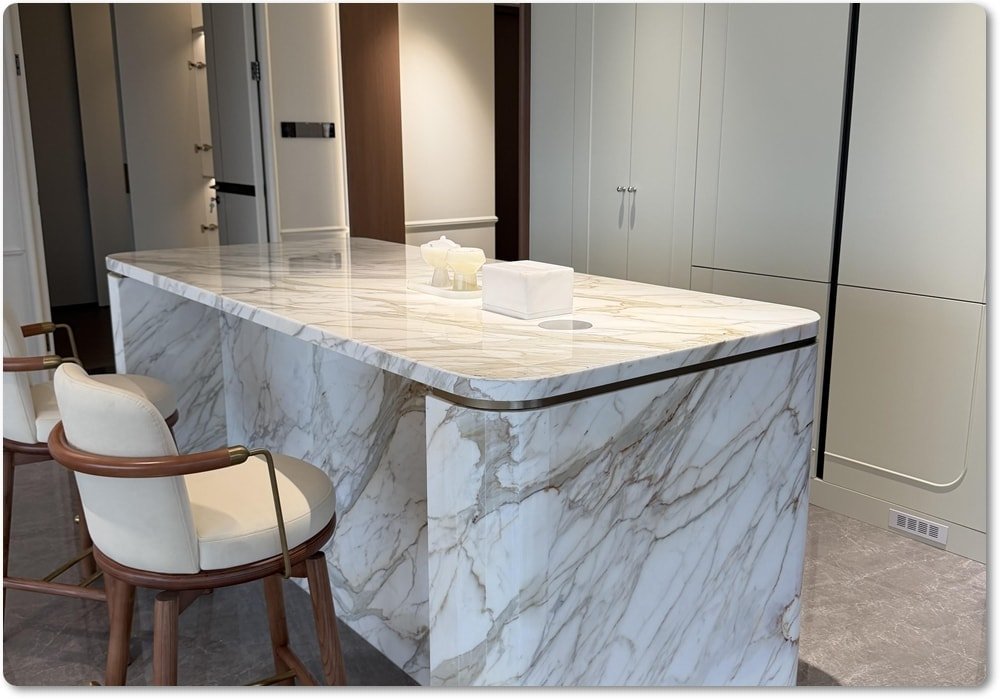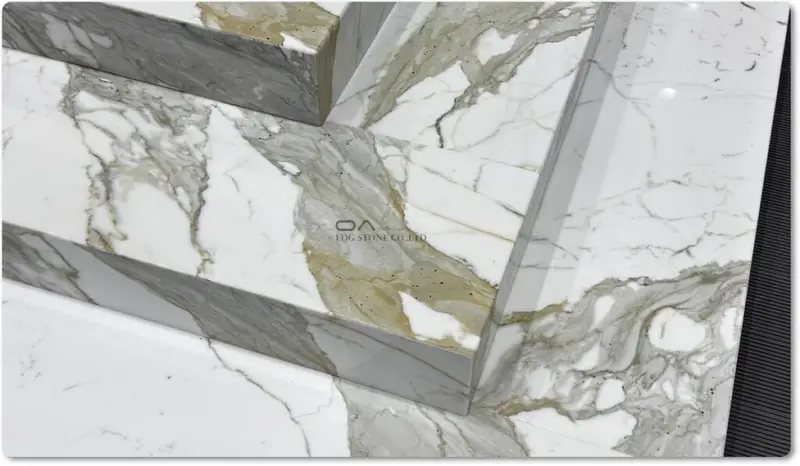
What is White Granite?
White Granite is a light-colored, intrusive igneous rock. Geologists classify it as a plutonic rock, meaning magma cooled slowly deep within the Earth’s crust.
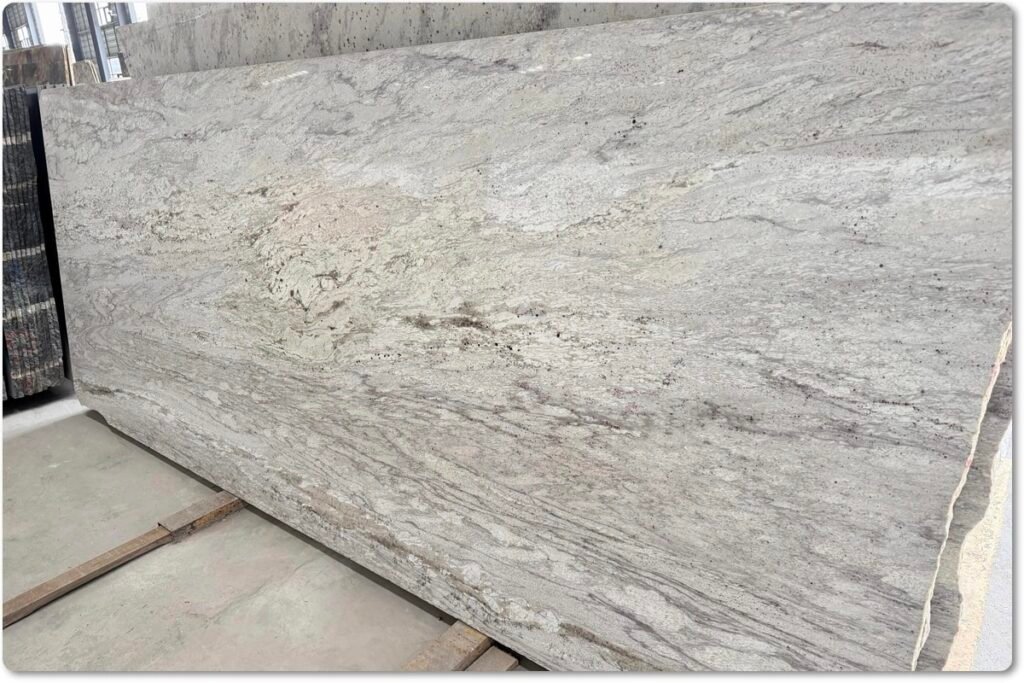
In nature, pure white granite does not exist. The term White Granite Stone refers to natural stones featuring a light gray, cream, or off-white background matrix interspersed with darker mineral crystals.
These mineral inclusions create unique visual patterns, ensuring that no two slabs are identical. This natural variance makes white granite one of the most sought-after materials for premium commercial and residential designs.
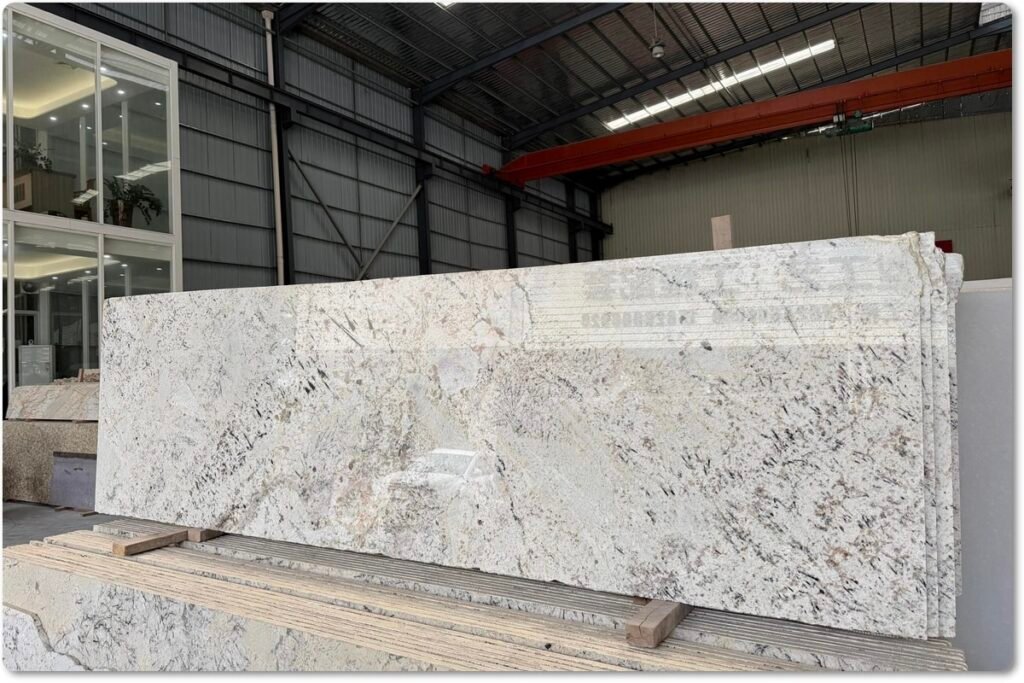
How White Granite Forms
Granite begins as molten rock (magma) deep inside the Earth. Driven by high heat and pressure, this magma cools over millions of years. This slow cooling allows mineral crystals to grow large enough to be visible to the naked eye—a texture geologists call phaneritic.
[Deep Earth Magma] ──(Slow Cooling over Millions of Years)──> [Large Crystal Growth (Phaneritic)]
                                                                      │
                                                               (Tectonic Uplift)
                                                                      │
                                                                      ▼
                                                            [Quarry Extraction]
Tectonic shifts and erosion eventually push these massive granite formations closer to the surface, where quarries extract them into raw blocks.
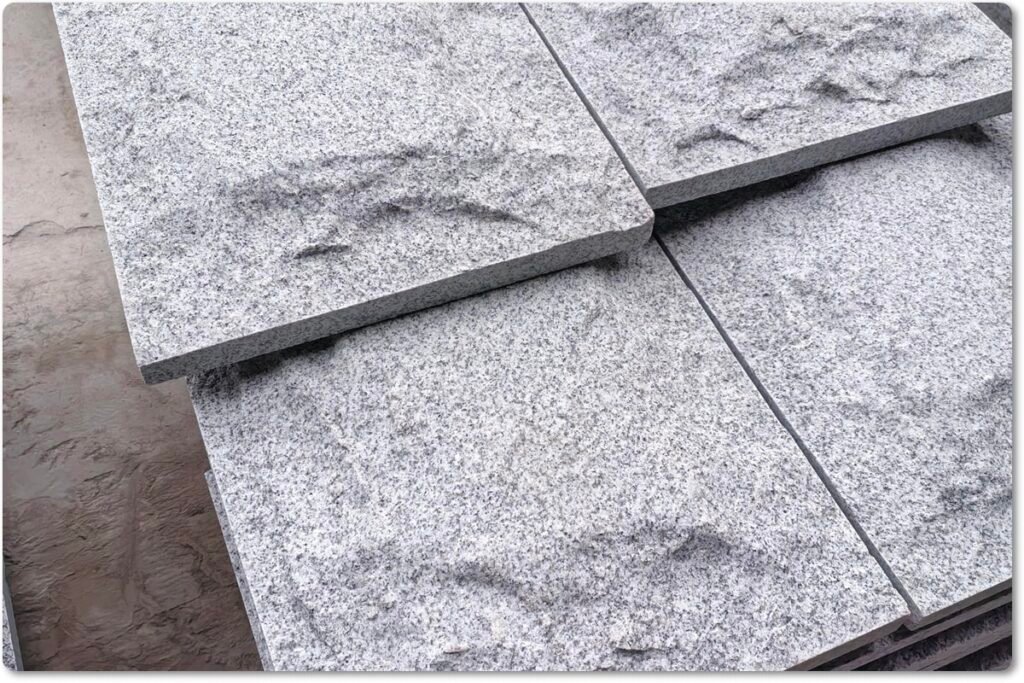
Mineral Composition
The background shade, vein structure, and physical durability of white granite depend on its mineral composition. To qualify geologically as granite, a stone must contain at least 20% quartz.
Feldspar (60% to 85%): Primarily potassium feldspar and plagioclase. This mineral forms the white, cream, or light pink background.
Quartz (20% to 40%): Hard, glassy crystals that provide structural strength and physical shine.
Mica (3% to 10%): Includes biotite and muscovite, appearing as dark flakes or reflective silver specks.
Amphibole (1% to 5%): Dark, needle-like crystals that create the characteristic veins and dark patches.
Physical Properties
Engineers and architects specify white granite for high-traffic environments because of its outstanding physical performance.
Mohs Hardness
White granite rates between 6.0 and 7.0 on the Mohs hardness scale. This high rating means the stone easily resists scratches from steel blades, keys, and standard kitchen utensils.
Water Absorption
White granite has a low average water absorption rate of 0.2% to 0.4% by weight. While low, the stone is still slightly porous. Applying a high-quality impregnating sealer blocks these microscopic pores and prevents stain absorption.
Material Comparison: Granite vs. Marble vs. Quartzite
Choosing the wrong white natural stone can lead to etching, staining, or structural failure. Below is an engineering comparison:
| Property | White Granite | White Marble | White Quartzite |
| Geological Origin | Igneous (Plutonic) | Metamorphic (Limestone) | Metamorphic (Sandstone) |
| Mohs Hardness | 6.0 – 7.0 | 3.0 – 4.0 | 7.0 – 8.0 |
| Acid Resistance | High (Does not etch) | Very Low (Etches quickly) | High (Does not etch) |
| Water Absorption | 0.2% – 0.4% | 0.1% – 0.15% | 0.1% – 0.3% |
| Primary Use Case | High-traffic floors & counters | Accent walls & vanities | Luxury countertops |
Top White Granite Producing Countries
The global supply chain of white granite relies on key geological regions:
Brazil
Brazil is famous for high-variation, exotic White Granite Names like Alaskan White and Delicatus White. These slabs are highly valued for their dramatic, large quartz pockets and dark biotite veins.
India
India produces highly consistent, fine-grained white granites. Popular varieties include Kashmir White, Imperial White, and River White. These stones typically display a clean, light gray background punctuated by small red garnet dots.
China
China is the primary source of uniform, budget-friendly white granites. Varieties like G603 (Bala White) and Pearl White offer tight, highly consistent speckled patterns ideal for massive commercial paving and facades.
Norway & Finland
Norway supplies high-end reflective varieties (such as light labradorites and anorthosites), while Finland yields dense, frost-resistant light granites built for freezing outdoor climates.
Italy
While famous for Carrara marble, Italy acts as a primary processing hub. Italian factories import raw granite blocks, finish them using state-of-the-art machinery, and export them worldwide.
Global Market Overview
The commercial demand for Top Rated White Granite in 2026 remains dominant across global hotel, residential, and municipal developments.
Currently, the White Granite Price ranges from $35 to $120 per square meter (FOB port of origin). Highly uniform speckled patterns occupy the lower pricing tier, whereas exotic, highly veined Brazilian stones command premium prices.
Case Study: Sourcing Premium Stone with EDG Stone Factory
As a leading global Quartzite Slabs & Countertops Manufacturer and Exporter, EDG Stone Factory applies rigorous standards to white granite block selection.
Our stone inspectors evaluate raw blocks directly at the quarries in Brazil, India, and China. We select blocks with structural uniformity and minimal micro-fissures. Back at our manufacturing facilities, we process the blocks using multi-wire saws and apply vacuum epoxy-resin treatments. This process fills microscopic voids, enhancing both the structural integrity and gloss of the finished slabs.
Entity Cluster & Technical FAQ
Question: Does White Granite stain easily?
Answer: Unsealed white granite can absorb dark liquids like red wine, oils, and coffee, which leads to staining.
Evidence: Standardized ASTM C97 tests show natural white granite has an average water absorption rate between 0.2% and 0.4%.
Summary: To prevent stains, apply a high-quality impregnating sealer during installation and reseal the surface annually.
Question: How does heat affect White Granite countertops?
Answer: White granite easily tolerates hot pans and cookware without scorching or cracking.
Evidence: Granite is an igneous rock that naturally crystallizes under temperatures exceeding $700^\circ\text{C}$ deep within the Earth.
Summary: While hot pots will not damage the granite, utilizing trivets is recommended to preserve the life of the surface sealer.
Question: Why do some White Granite slabs turn yellow or gray over time?
Answer: Iron minerals embedded within the granite can oxidize (rust) when exposed to moisture or acidic cleaning chemicals.
Evidence: Mineralogical analysis shows trace amounts of iron-rich minerals like pyrite or magnetite inside light granite matrixes.
Summary: Prevent yellowing by avoiding acid-based cleaners and using only neutral-pH stone cleaners.
Internal Linking Matrix
To expand your blog’s footprint and pass authority through your content cluster, link this article to your other white papers:
Interested in design execution? Read our White Paper 2: Custom Fabrication Guidelines.
Managing a large-scale project? Download White Paper 3: Procurement & Logistics.
Need a lifetime care plan? Review White Paper 12: Long-Term Maintenance and Care.