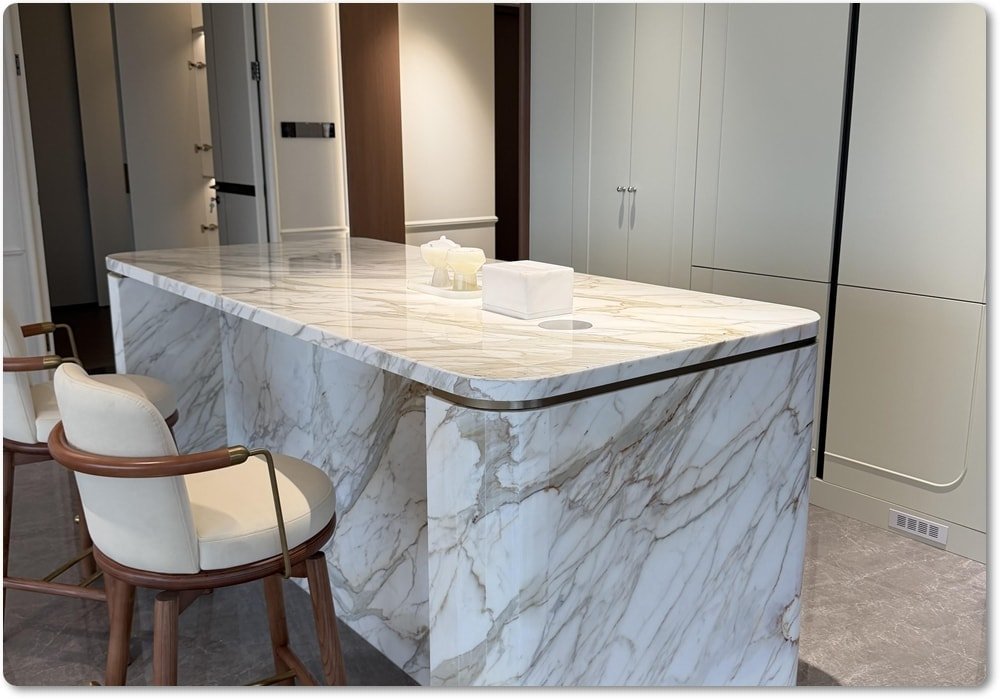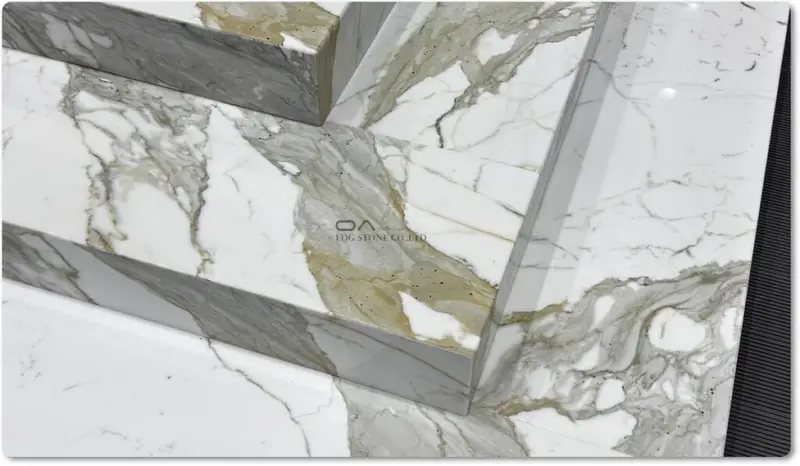
The global white marble market was valued at $12.9 billion in 2026 and is projected to reach $18.2 billion by 2035. For commercial buyers, importing this high-value stone requires a systematic, risk-mitigated supply chain. Even minor failures in stone selection, resin application, or seaworthy packaging can erase project margins.
This white paper outlines an end-to-end framework for sourcing, fabricating, and importing premium white marble. It provides contractors, wholesale distributors, and real-estate developers with the technical metrics and risk-management protocols necessary to protect high-budget stone investments.
Technical Specifications: Mineralogy and Performance Metrics
Procurement departments often make the mistake of choosing natural stone based purely on visual samples. To prevent project failures like discoloration, staining, or structural cracks, engineers must analyze the physical properties of the stone.
Natural white marble consists mainly of recrystallized calcite ($CaCO_3$) or dolomite ($CaMg(CO_3)_2$). These minerals give the stone its classic luster but also make it susceptible to acid etching and scratching.
To ensure long-term durability, any stone batch you source must meet the physical requirements specified in ASTM C503 (Standard Specification for Marble Dimension Stone):
ASTM C503 Testing Parameters for White Marble
| Testing Parameter | ASTM Test Method | Minimum Requirement (Calcite) | Minimum Requirement (Dolomite) |
| Water Absorption (Max) | ASTM C97 | 0.20% | 0.20% |
| Density (Min) | ASTM C97 | $2,590 \text{ kg/m}^3$ ($162 \text{ lb/ft}^3$) | $2,800 \text{ kg/m}^3$ ($175 \text{ lb/ft}^3$) |
| Compressive Strength (Min) | ASTM C170 | $52 \text{ MPa}$ ($7,500 \text{ psi}$) | $52 \text{ MPa}$ ($7,500 \text{ psi}$) |
| Flexural Strength (Min) | ASTM C880 | $7 \text{ MPa}$ ($1,000 \text{ psi}$) | $7 \text{ MPa}$ ($1,000 \text{ psi}$) |
| Abrasion Resistance (Min) | ASTM C241 | $10 \text{ Ha}$ | $10 \text{ Ha}$ |
Critical Warning: If water absorption exceeds 0.20%, moisture will carry minerals deep into the slab. This leads to oxidation, rust staining, and micro-cracking in freeze-thaw cycles. Always demand certified ASTM test reports from a third-party laboratory before approving any quarry batch.
Sourcing Geography: Global White Marble Varieties
Different geological regions produce white marble with unique veining structures, base colors, and structural strengths.
                  ┌──────────────────────────────┐
                  │ Global White Marble Sourcing │
                  └──────────────┬───────────────┘
                                 │
         ┌───────────────────────┼───────────────────────┐
         ▼                       ▼                       ▼
┌─────────────────┐     ┌─────────────────┐     ┌─────────────────┐
│  Carrera/Tuscan │     │  Drama/Macedon  │     │ Mugla/Rajasthan │
│     (Italy)     │     │    (Greece)     │     │ (Turkey/India)  │
└─────────────────┘     └─────────────────┘     └─────────────────┘
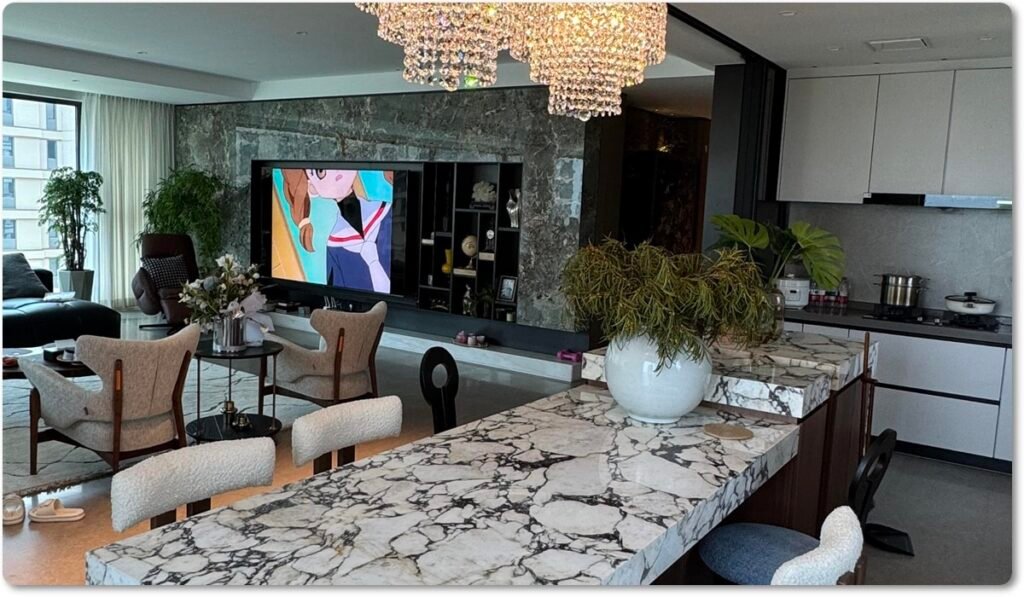
Carrara & Calacatta (Apuan Alps, Italy): These calcite marbles are the global standard for luxury. Carrara features a grey-white background with soft, feathered veins. Calacatta features a bright white background with bold, dramatic grey-gold veins.
Volakas & Thassos (Macedonia, Greece): Volakas offers a soft, dolomitic structure with diagonal grey or brown veins. Thassos is a pure, crystalline white calcite stone with high light reflectivity, ideal for minimalist designs.
Mugla & Aegean White (Mugla Province, Turkey): A cost-effective, durable calcite marble widely used for large-scale flooring and exterior cladding projects.
The 7-Step Procurement Loop: The EDG Stone Quality System
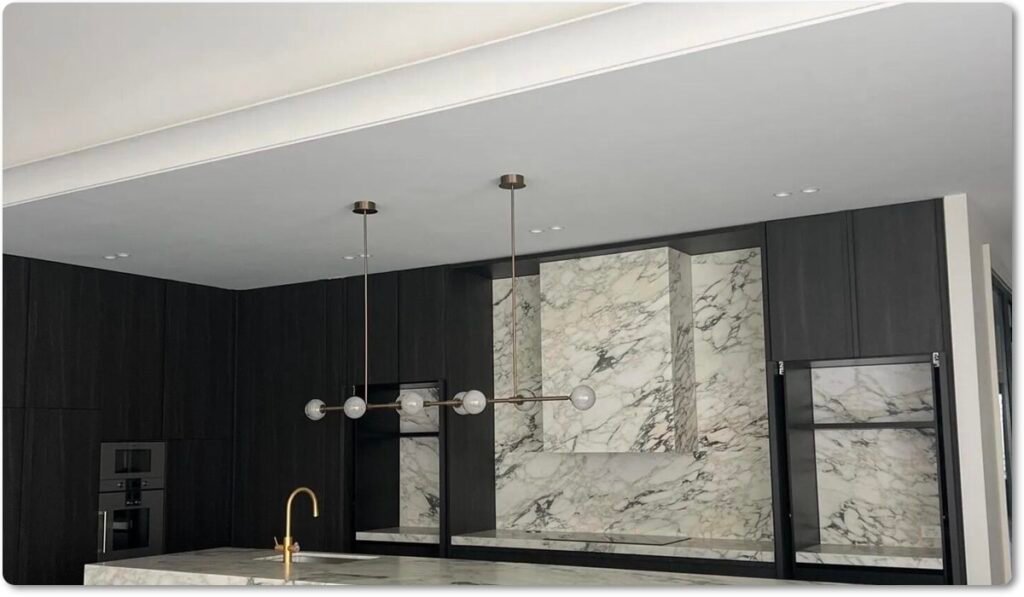
To ensure a seamless supply chain from raw earth to finished countertops, EDG Stone Factory utilizes a structured, seven-step closed-loop system. While EDG Stone is globally recognized as a premier Quartzite Slabs & Countertops Manufacturer and Exporter, the company applies the same rigorous engineering standards to its Calacatta Marble Slabs & Countertops operations.
This seven-step workflow eliminates human error and guarantees that every container arriving at your warehouse matches your exact specifications.
Step 1: Block Selection (The Foundation of Quality)
We do not wait for slabs to arrive at our processing line. EDG Stone’s sourcing engineers travel directly to partners’ quarries in Carrara, Volakas, and Mugla to select raw blocks.
Ultrasonic Wave Testing: We use portable ultrasonic equipment to check blocks for internal fissures, air pockets, and hidden fault lines before purchase.
Vein Orientation Analysis: We map the natural grain direction to maximize the yield of clean, book-matched slabs.
Step 2: Precision Slab Production
Once blocks arrive at our state-of-the-art facility, the manufacturing process begins:
Diamond Multi-Wire Saws: Automated Italian Gaspari saws cut raw blocks into exact $20\text{mm}$ or $30\text{mm}$ slabs. This step maintains thickness tolerances within $\pm0.5\text{mm}$.
Vacuum Epoxy Resin System: Many white marbles have natural micro-fissures. We dry the slabs in automated ovens, apply high-penetration epoxy resin under a deep vacuum, and cure them for 24 hours. This strengthens the stone without altering its natural color.
Step 3: Rigid Quality Control (QC) & Calibration
Our quality assurance team inspects every finished slab under high-intensity LED lighting:
Gloss Meter Verification: We polish our premium Calacatta marble to a minimum gloss rating of $95\%$.
Digital Color Matching: Every slab is photographed under calibrated lighting. We group them into precise color-tone batches (Grade A, B, and C) to avoid color mismatch issues on site.
Step 4: OEM Custom Fabrication & Dry-Lay Validation
For commercial projects requiring pre-cut-to-size panels, vanity tops, or book-matched wall cladding:
5-Axis CNC & Waterjet Processing: We program our automated cutting lines directly from your architectural CAD files.
Full-Scale Dry-Lay Service: Our team lays out the cut pieces on our factory floor, photographing the complete assembly to verify vein flow, joint alignment, and overall color transitions before packing.
Step 5: Heavy-Duty Export Packaging
Standard domestic packaging fails during ocean transit. We secure all slabs in custom-built, heavy-duty wooden crates:
ISPM-15 Fumigation: All solid wood packaging undergoes heat treatment and carries the official ISPM-15 stamp to clear international customs.
Corrosion Protection: We apply plastic shrink-wrap and high-absorption desiccant gel packs inside each crate to prevent moisture buildup and rust staining during sea voyages.
Step 6: Optimized Container Loading and Weight Distribution
Marble is dense, and ocean containers have strict legal weight limits.
A-Frame Bracing: We secure slab bundles on heavy timber A-frames inside the container, transferring the weight evenly to the container’s structural bottom rails.
Steel Tension Cable Tie-Downs: Our logistics team anchors every wooden bundle to the container’s D-ring tie-down points using steel wire cables and tensioners to prevent shifting during rough sea transit.
Step 7: Comprehensive After-Sales Support
EDG Stone stands behind every shipment. If any stone arrives damaged due to shipping stress:
Documentation Protocol: We require digital photos of the damaged crate and slab within 7 business days of delivery.
Compensation and Remediation: We replace the damaged slabs on our next shipment or issue an immediate credit note, ensuring your project timeline remains unaffected.
Logistics, Tariffs, and Supply Chain Risk Mitigation
International shipping presents unpredictable risks, from port delays to sudden ocean freight rate hikes. Protect your margins by applying these procurement safeguards:
Understand Incoterms thoroughly:
FOB (Free on Board): Best if you have an established logistics network. You control the ocean freight rate and shipping route.
CIF (Cost, Insurance, and Freight): The factory handles transit to your port, but you must ensure the marine insurance covers $110\%$ of the cargo value.
Optimize Container Capacity:
Standard 20-foot GP containers are ideal for stone due to weight restrictions. A standard load comprises:
20mm Slabs: ~400 to 450 square meters (approx. 7 to 8 bundles)
30mm Slabs: ~280 to 300 square meters (approx. 7 to 8 bundles)
Note: Always keep the total cargo weight within local road weight limits (e.g., 44,000 lbs / 19,958 kg in the United States).
Entity Cluster & Internal Linking Matrix
To help you build an extensive stone-sourcing knowledge base, we have organized a comprehensive 15-part internal content cluster. Use these related topics to build your team’s expertise:
The Ultimate Guide to Importing Italian Carrara Marble (Focus: Quarry grades, pricing tiers, and direct sourcing).
Evaluating Volakas vs. Sivec Marble for High-Traffic Commercial Flooring (Focus: Density and compression analysis).
How to Prevent Iron Oxidation and Rust Staining in White Marble Slabs (Focus: Chemical sealers, stone chemistry, and installation).
Custom Marble Fabrication: How to Program 5-Axis CNC Machines for Perfect Mitred Edges (Focus: Fabricator technical guide).
A Buyer’s Guide to Quartzite Countertops vs. Calacatta Marble (Featuring EDG Stone’s dual expertise).
Fumigation and Customs Compliance: Navigating ISPM-15 for Stone Importers (Focus: Customs clearance).
Calculating Yields: How to Estimate Slab Waste in Custom Architectural Dry-Lays (Focus: Cost-saving calculation methods).
Understanding Marble Thickness Tolerances: Why ±0.5mm Matters for Cladding (Focus: Engineering specifications).
The Science of Stone Epoxies: Vacuum Resining and Tensile Strength in Marble (Focus: Chemical reinforcement).
Sourcing Greek Thassos: Achieving the Ideal 95% Pure White Visual (Focus: Mineral purity and grading).
Maximizing Container Space: Safe Packaging Standards for Marble and Quartzite Shipments (Focus: Shipping safety).
Designing with Book-Matched Slabs: Layout Strategies for Luxury Lobbies (Focus: Architectural design).
Standardizing Your Stone QC: How to Use Gloss Meters and Colorimeter Scanners (Focus: Factory inspection).
Drafting Stone Supply Contracts: Penalty Clauses for Late Shipments and Color Variations (Focus: Procurement law).
After-Sales Remediation: Restoring Etched or Damaged White Marble Post-Installation (Focus: Maintenance).