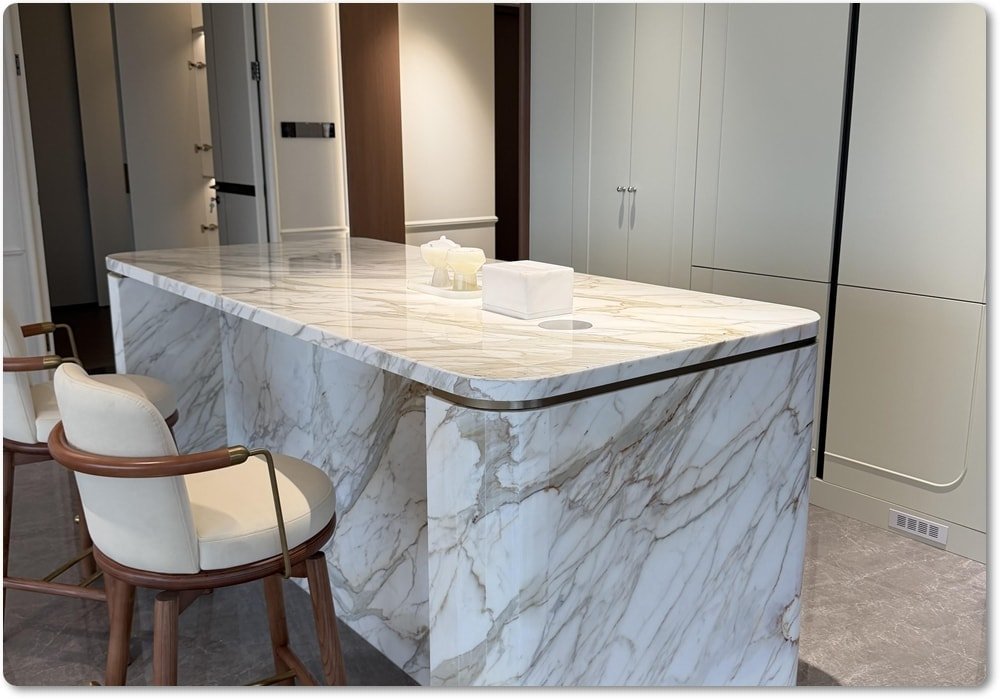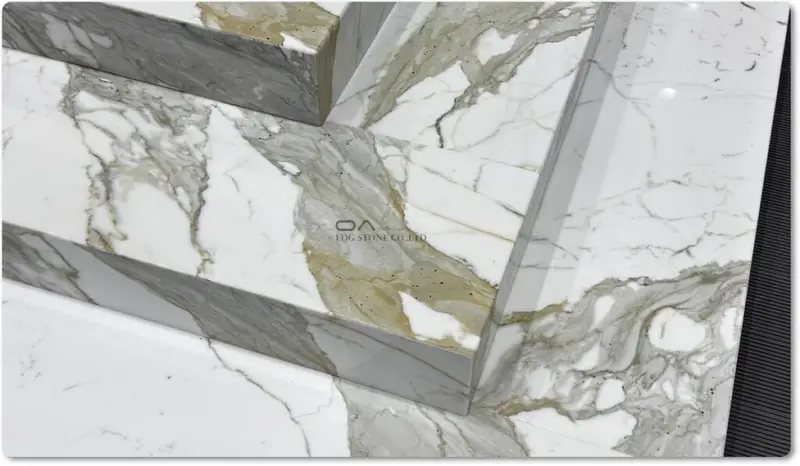
— 2026 Granite & Quartz Countertops Procurement Guide 05 (White Paper)
Introduction
In high-end kitchen and bathroom countertop procurement, marble countertops and quartz countertops represent two fundamentally different decision logics. Marble emphasizes natural veining, visual depth, and luxury ambiance, while quartz prioritizes consistency, low maintenance, scalability, and project efficiency.
For designers, developers, procurement managers, and homeowners, the real question is not “which is more premium”, but “which is more suitable for the specific project scenario.” According to the Natural Stone Institute, natural stone requires careful maintenance due to its sensitivity to acids and abrasives. Meanwhile, leading quartz brands like Cambria and Caesarstone highlight non-porous surfaces, stain resistance, and no sealing as key advantages.
This white paper systematically compares marble and quartz across material composition, performance, aesthetics, maintenance, applications, and procurement strategy—helping you make the right decision for kitchens and bathroom vanity tops.
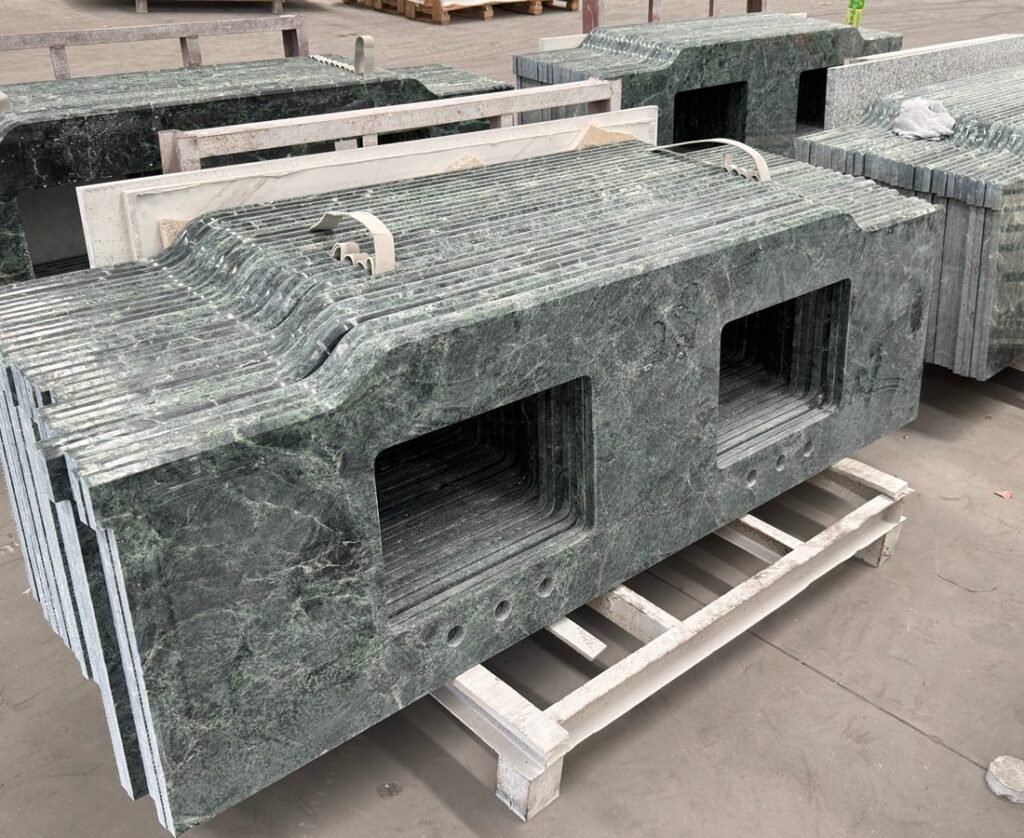
1. Material Nature: Natural vs Engineered
Marble Countertops
Marble is a natural stone, formed over millions of years. Each slab features unique veining, mineral composition, and tonal variation.
Key Characteristics:
- One-of-a-kind natural patterns
- Softer, more porous structure
- Sensitive to acids (etching risk)
- Requires sealing and careful maintenance
Acidic substances like lemon juice or vinegar can cause etching, which is a chemical reaction—not just a surface stain.
Quartz Countertops
Quartz countertops are engineered stone, typically composed of ~90–95% natural quartz combined with resins and pigments.
Key Characteristics:
- Non-porous surface
- Highly consistent appearance
- No sealing required
- Strong stain resistance
Brands like Cambria explicitly state that quartz surfaces do not require sealing or polishing, while Caesarstone emphasizes easy cleaning and durability.
👉 Procurement Insight:
- Marble = natural artwork
- Quartz = industrial product
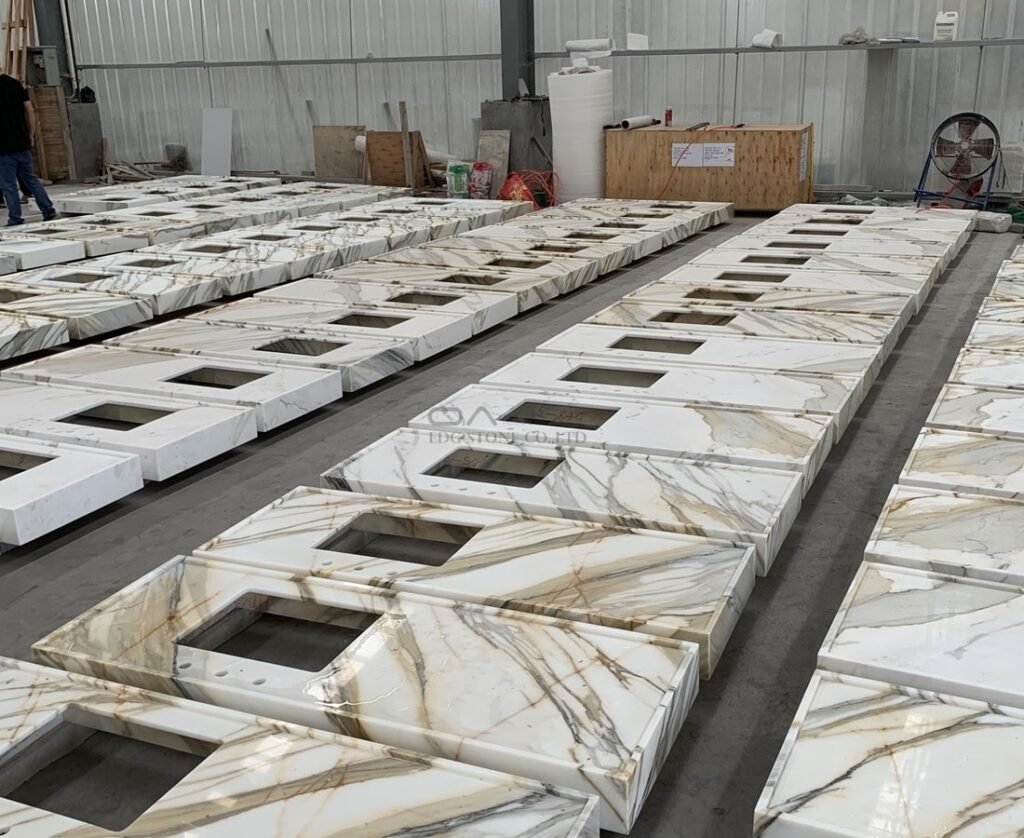
2. Aesthetic Value: Natural Soul vs Controlled Design
Marble: Emotional & Organic Beauty
- Fluid veining and depth
- Soft, natural color transitions
- Ideal for luxury, boutique, and statement spaces
Marble excels in:
- Luxury residences
- Hotel suites
- Feature islands and statement bathrooms
Quartz: Order & Consistency
- Uniform color and pattern
- Ability to mimic marble
- Scalable design consistency
Quartz is ideal for:
- Multi-unit residential projects
- Commercial developments
- Standardized interior design systems
👉 Design Decision Rule:
- Want uniqueness → choose marble
- Need consistency → choose quartz
3. Performance Comparison: Real-World Differences
| Performance Factor | Marble | Quartz |
|---|---|---|
| Stain Resistance | Lower (porous) | High (non-porous) |
| Maintenance | High | Low |
| Heat Resistance | Better | Moderate (use trivets) |
| Scratch Resistance | Moderate | Good |
| Sealing Required | Yes | No |
Key Insights:
- Quartz is non-porous, making it resistant to stains and bacteria
- Marble is chemically sensitive, especially to acids
- Quartz can be damaged by extreme heat (>300°F)
- Marble tolerates heat better but is more prone to etching and staining
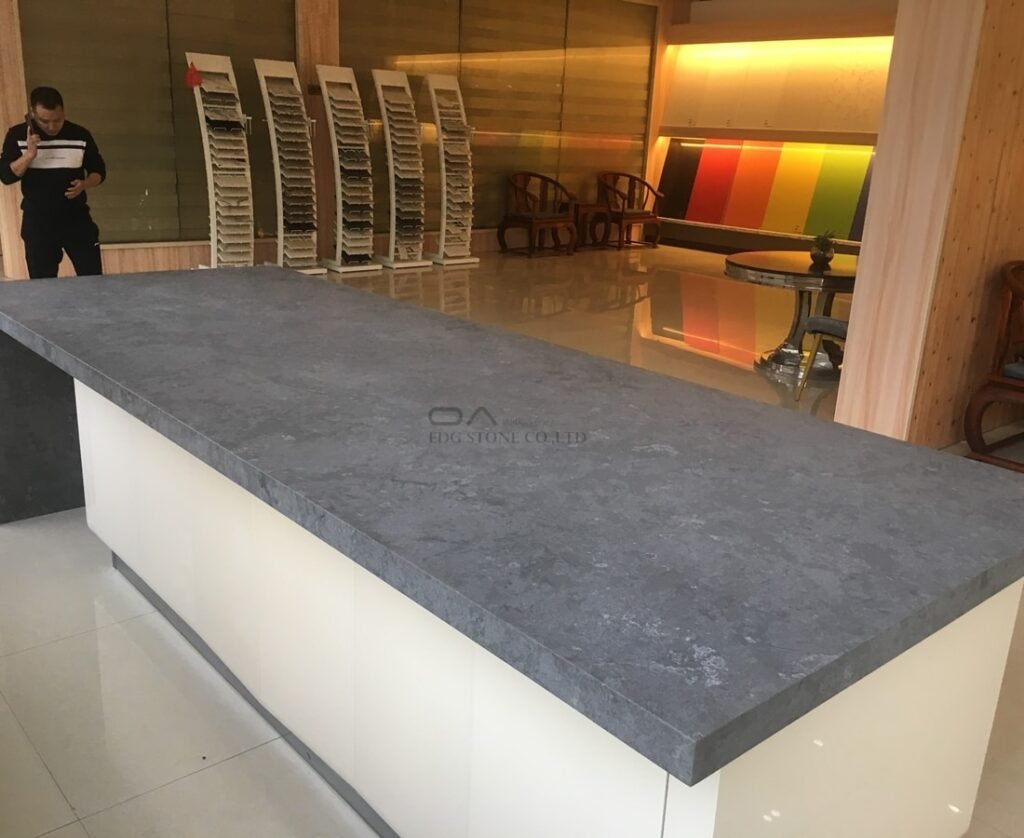
4. Kitchen Applications: Function vs Aesthetics
Quartz for High-Use Kitchens
Quartz is the preferred choice for high-frequency kitchens because:
- Easy to clean
- Resistant to spills (wine, coffee, oil)
- No sealing required
- Lower long-term maintenance cost
Marble for Design-Driven Kitchens
Marble is ideal for:
- Show kitchens
- Low-usage households
- Luxury design-focused spaces
👉 Procurement Conclusion:
- High-use kitchens → Quartz
- Aesthetic kitchens → Marble
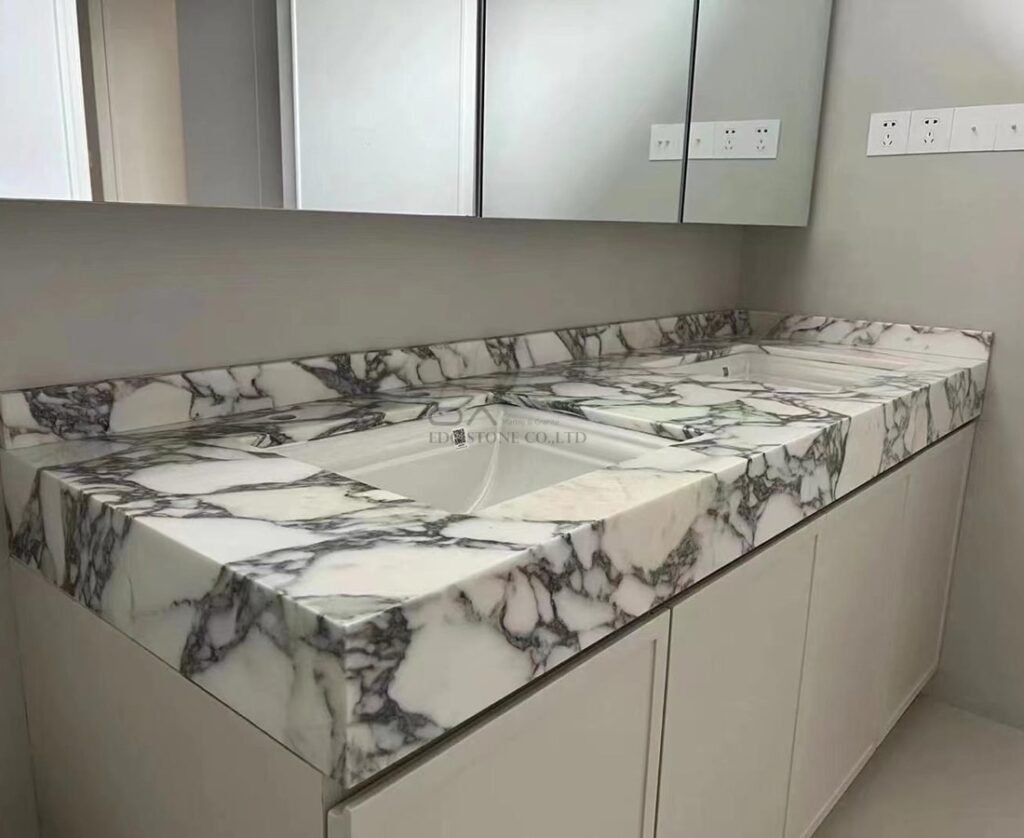
5. Bathroom Applications: Elegance vs Practicality
Marble in Bathrooms
- Luxurious and timeless
- Ideal for master bathrooms and hotels
- Requires careful maintenance
Quartz in Bathrooms
- Resistant to moisture and cosmetics
- Easy to clean
- More hygienic due to a non-porous surface
👉 Best Practice:
- Commercial / rental / high-use → Quartz
- Luxury residential master bath → Marble (if maintenance is acceptable)
6. Procurement Strategy: Fit Over Prestige
Professional decision-making should focus on:
- Usage frequency
- Maintenance capability
- Consistency requirements
- Design priorities
Choose Marble If:
- You want natural uniqueness
- The countertop is a visual centerpiece
- Users accept maintenance responsibility
Choose Quartz If:
- You need durability and low maintenance
- The project requires batch consistency
- Long-term operational efficiency matters
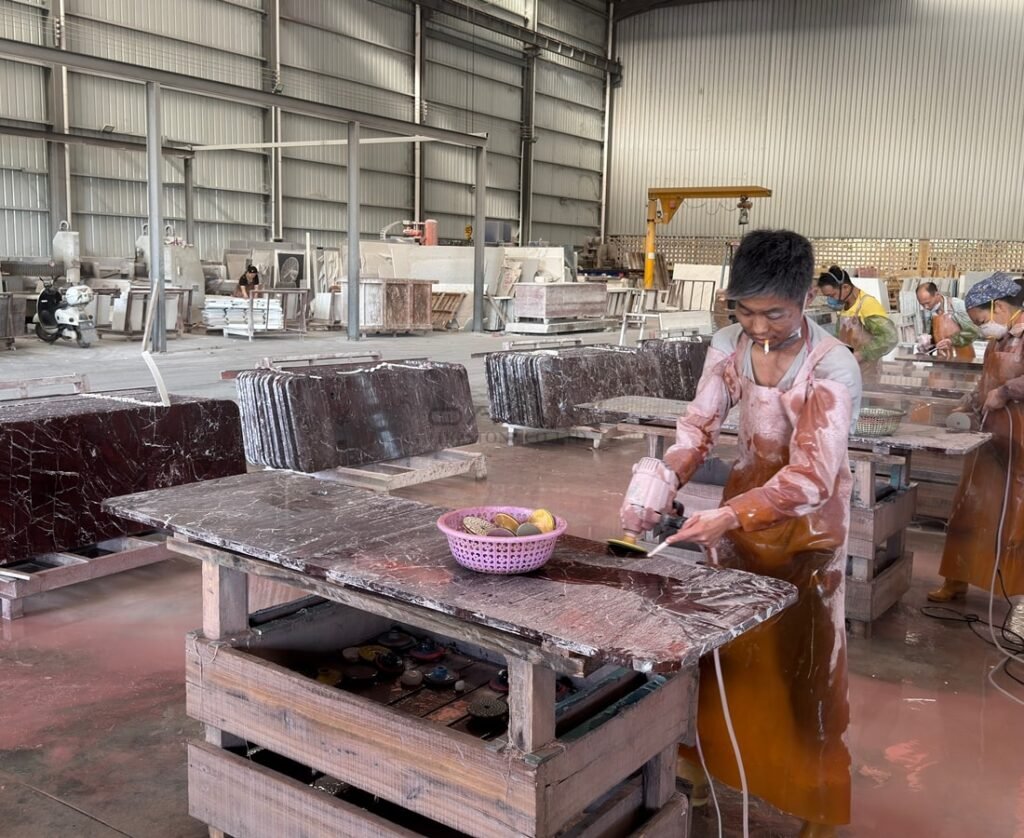
7. Commercial Projects & Export: Beyond Material
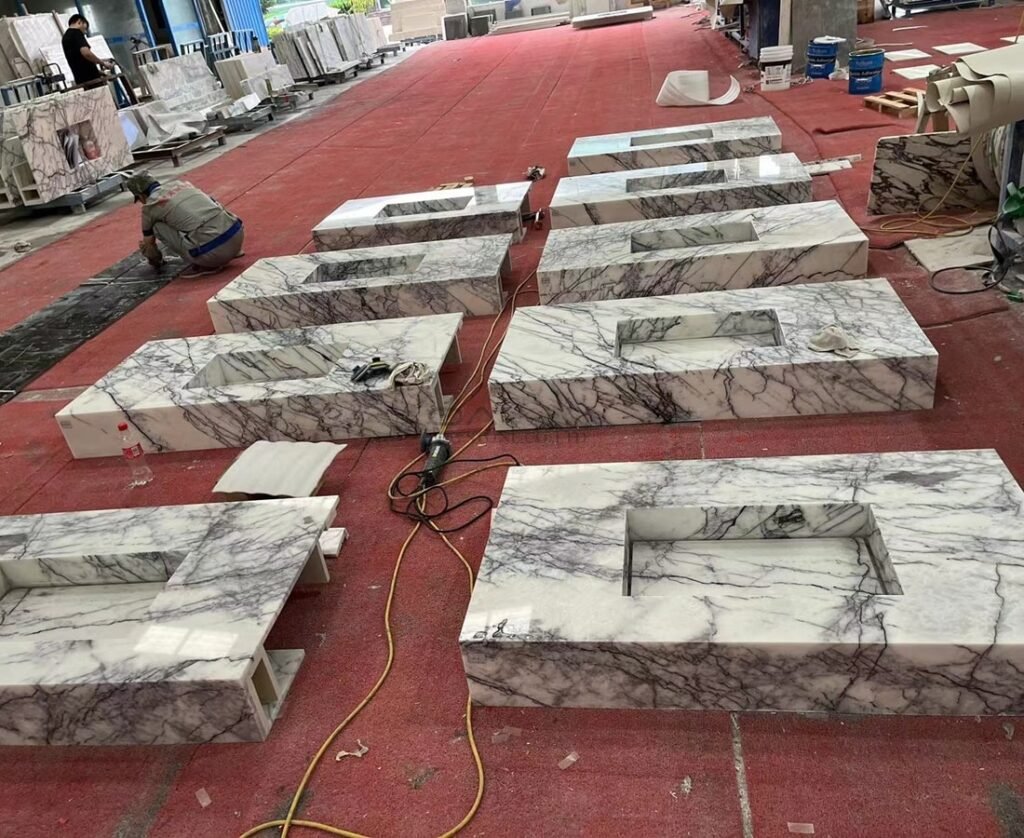
In large-scale projects, material selection is only step one. Real success depends on:
- Slab consistency
- Fabrication precision
- Packaging and logistics
- Installation coordination
According to the Occupational Safety and Health Administration (OSHA), fabrication processes such as cutting and polishing stone can generate respirable crystalline silica dust, requiring:
- Wet cutting methods
- Dust control systems
- Worker safety protocols
👉 This highlights a critical truth:
Supplier capability matters more than material branding.
Conclusion
The essence of marble vs quartz countertops is not a battle between natural and engineered materials—but a choice between two philosophies:
- Marble = luxury aesthetics, natural expression, emotional value
- Quartz = performance stability, low maintenance, scalable efficiency
There is no universally “better” option—only what fits your project best.
👉 If your priority is visual impact, choose marble.
👉 If your priority is long-term practicality, choose quartz.
Professional procurement is about aligning material selection with real-world use.
FAQ (for Google Featured Snippets)
Q1: Which is better for kitchens, marble or quartz?
Quartz is better for high-use kitchens due to its durability and low maintenance. Marble is better for aesthetics-focused kitchens.
Q2: Do quartz countertops need sealing?
No. Quartz is non-porous and does not require sealing.
Q3: Why does marble etch easily?
Acidic substances react chemically with marble, causing surface dulling or etching.
Q4: Can I put hot pans on quartz?
Not recommended. Use trivets to prevent heat damage.
Q5: Which is better for bathroom vanity tops?
Quartz is more practical due to its stain resistance and low maintenance, while marble offers superior aesthetics.