Shipping natural or engineered stone slabs by ocean freight is a high-stakes activity: slabs are heavy, brittle in certain load geometries, and vulnerable to movement, impact, and moisture. A bad crate design or poor reinforcement can turn a pallet of pristine slabs into an insurance claim. This long guide explains the state-of-the-art in crate engineering and reinforcement technologies for stone slabs, with step-by-step design recommendations, safety and regulatory checks, testing ideas, and a procurement checklist for manufacturers, factories, wholesalers, and logistics teams.
Why does good slab creation matter (short case)?
Stone slabs are heavy and have a low tolerance for bending and impact. During ocean shipment, they are exposed to vibration, shock, lateral forces from container movement, stacking pressures, and humidity. Effective crates keep slabs vertical or properly angled, prevent micro-movement, protect edges and faces, and ensure safe handling at port and on final delivery. Good crating reduces claims, speeds customs release, and protects brand reputation.
Five core design principles for slab crates
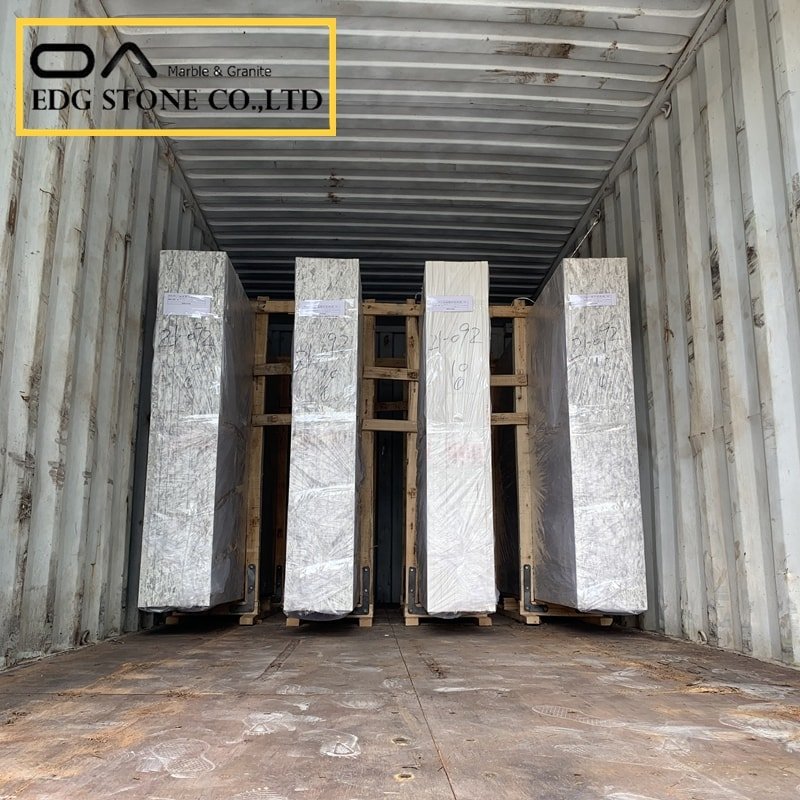
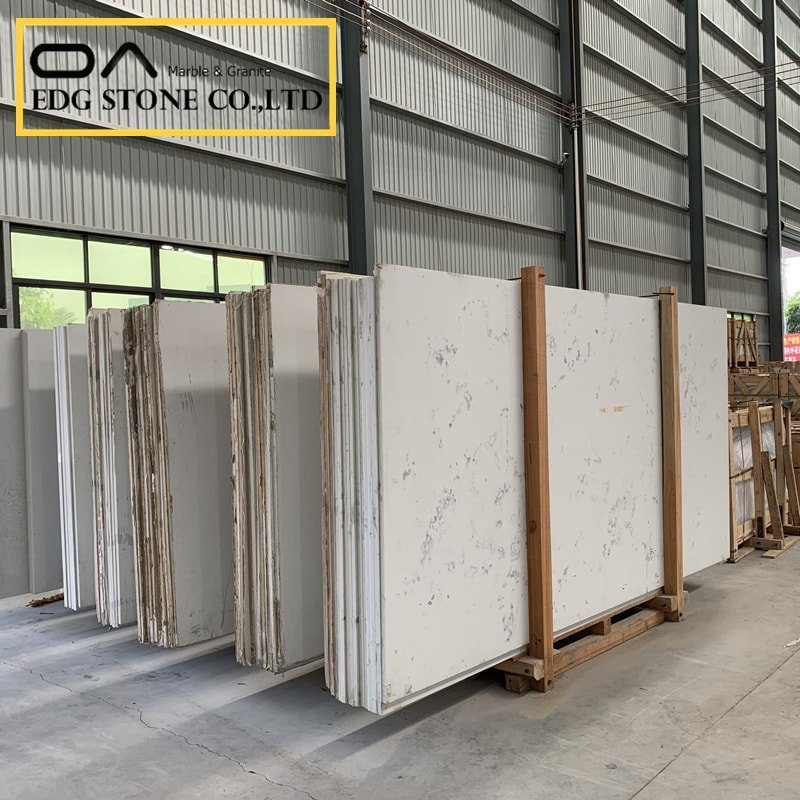
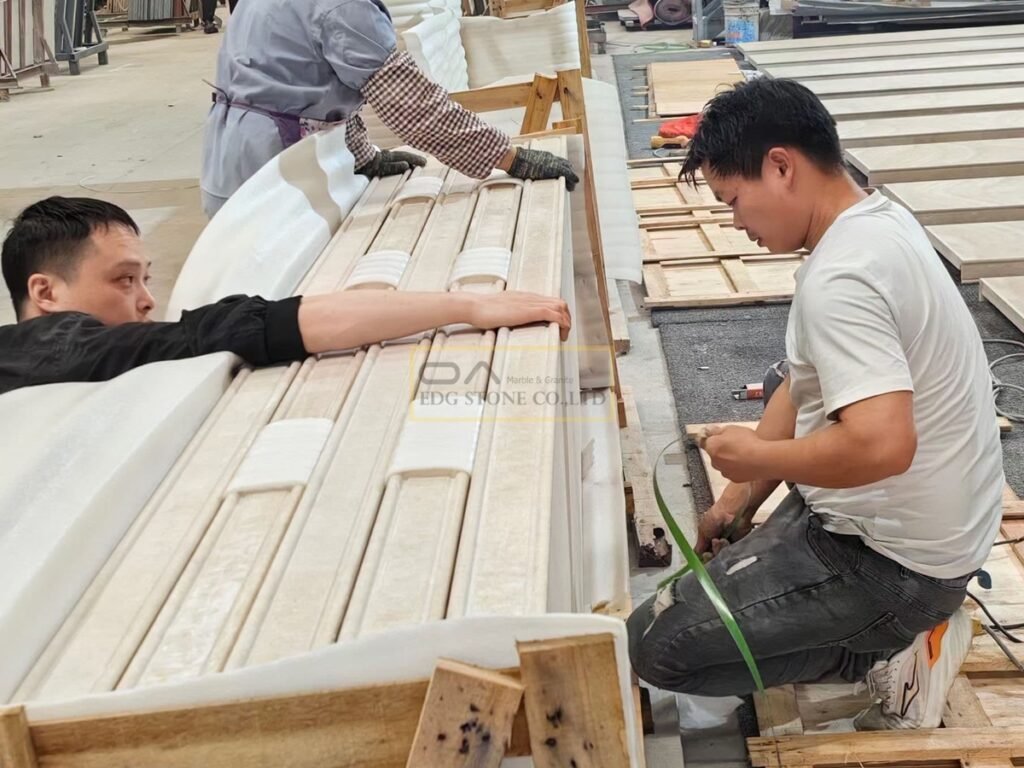
Support orientation: store slabs vertically on A-frames or specially designed racks; avoid horizontal stacking without engineered supports. Vertical orientation reduces bending stress and concentrates loading onto contact pads rather than the slab body.
Rigid reinforcement: combine timber framing (ISPM-15 treatment when crossing borders) with metal reinforcement—steel struts, channel, or angle iron—where loads or cantilevered geometry demand extra stiffness.
Non-slip contact & cushioning: use polyurethane or high-density foam pads between slabs and anti-slip interlayers to increase static friction and absorb shock.
Secure blocking & lashing: block slabs front and rear and use loop lashings, diagonal lashings, and continuous cross bracing to handle longitudinal & lateral forces.
Moisture & phytosanitary compliance: protect slabs from seawater splash and condensation, and ensure any solid wood packaging is ISPM-15 treated and marked for international shipment. For U.S. imports and many other markets, untreated WPM can be rejected.
ISPM-15 & phytosanitary rules — non-negotiable for ocean crates
If your crate uses solid wood packaging (common for large slab crates), the wood must be treated and stamped in accordance with ISPM-15 requirements for international shipments. Authorities like USDA/APHIS enforce this strictly—non-compliant wood packaging can be detained or denied entry, causing delays and additional handling costs. Include ISPM-15 certification and marking on all wooden crate components that are not plywood/engineered composites explicitly exempted by local rules.
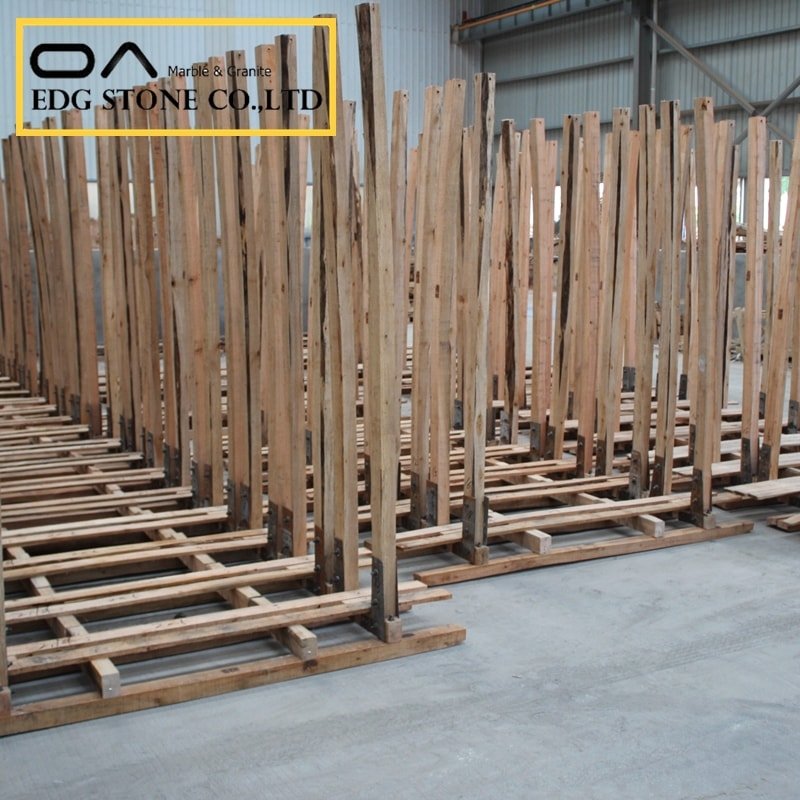
Crate types and when to use them
A-frame crates (vertical framing)
Best for: full-height slabs and larger slabs that are handled by crane or forklift on A-frame racks.
Design points: full-height timber or steel A-frames with lateral bracing, foam contact pads, and top cross-members to prevent cantilever flex. Use loop lashings around the slab train to secure longitudinally. The Container Handbook details loop lashings and shoring methods for slabs in containers.
Full enclosed wooden crates (palletized)
Best for: smaller slab sets, tile panels, or when extra protection from weather/mechanicals is required.
Design points: interior padding (foam, plastic film), heavy timber base, internal bracing, and metal reinforcement strips. Ensure the crate base distributes weight evenly to avoid point loads causing slab cracking.
Steel-reinforced hybrid frames
Best for: export runs where repeated handling or long route stresses are expected.
Design points: welded steel frames around a timber form, or timber with steel angle reinforces at corners and along load paths; provides superior stiffness and reusability.
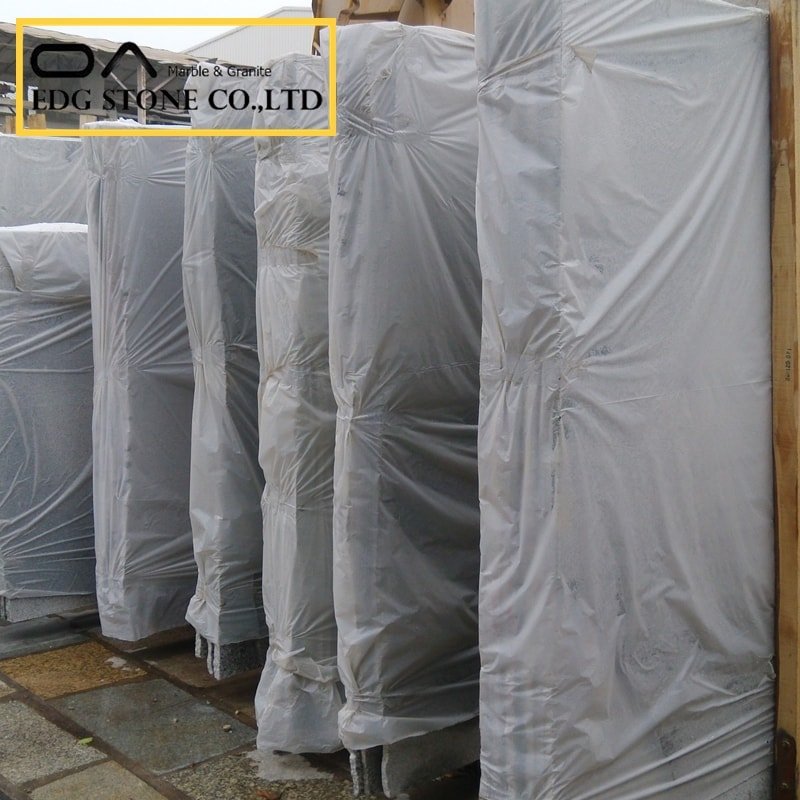
Reinforcement technology & methods
Steel framing & angle iron
Integrating steel angles, channels, or I-beams into wooden crates provides high stiffness with controlled weight increases. Steel is especially important for long slabs or crates subject to stacking and forklift impacts. Reinforcement should be placed to carry compressive loads into the crate base and into the container floor rather than through the slab faces.
Cross bracing & diagonal shores
Cross bracing prevents racking under lateral acceleration (ship roll, lurch). Diagonal shores transfer forces from top to base quickly and stop the crate from deforming. Where possible, design bracing with replaceable members so damage does not require a full crate rebuild.
Blocking & filler pieces
Use hardwood blocks or engineered composite blocks to create stable wedges that prevent sliding. Filler pieces should be treated for moisture and sized to remove any play—voids equal movement.
Anti-slip mats & friction liners
Anti-slip mats between slabs increase friction and reduce dynamic slip. Commercial heavy-duty rubber mats or polyurethane layers are preferred. These also work to separate slab faces from abrasive contact.
Strap systems & lashing
Use certified steel or polyester straps tightened to a specified torque. Loop lashings passed over slab bundles and anchored to crate or container points handle longitudinal forces; use edge protectors to prevent strap damage to slab edges.
Corrosion & moisture mitigation
For coastal ocean journeys, protect metal reinforcement from corrosion (galvanize or paint) and use desiccant pouches in closed crates to minimize condensation risk. Also, apply plastic sheeting or vapor barriers between slabs and the crate interior if moisture ingress is a risk.
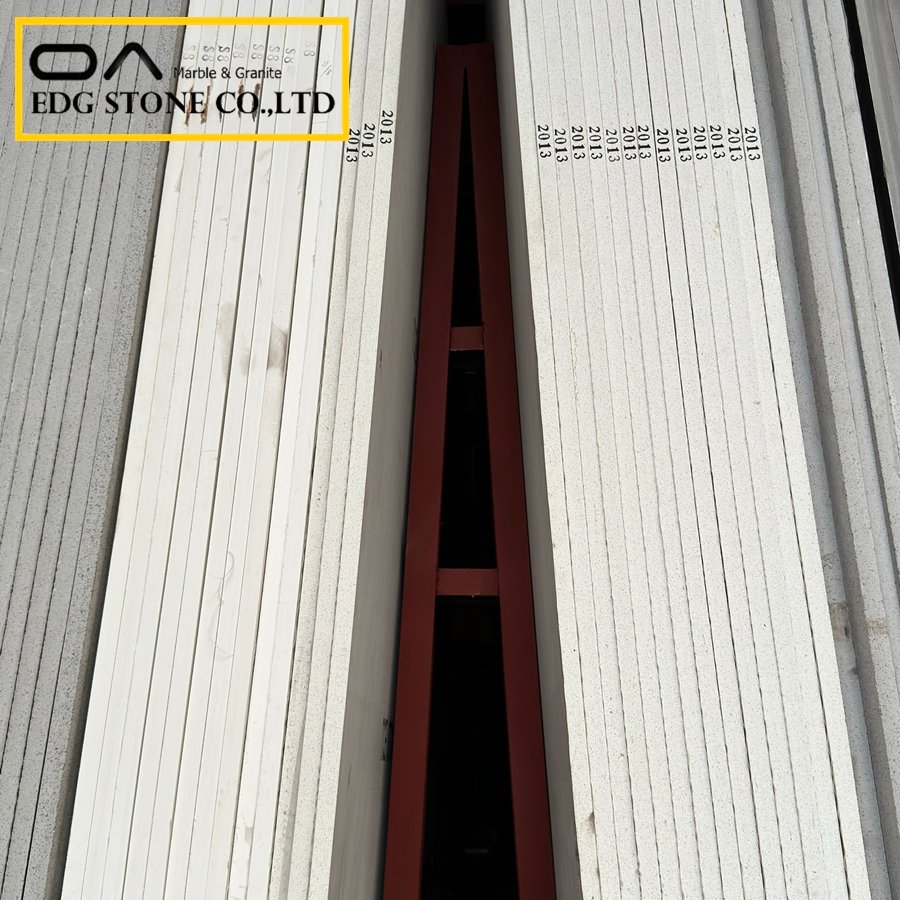
Internal packing sequence — a recommended step-by-step
Inspect slabs for flatness and edge defects; sort by thickness/size so like pieces are bundled.
Pad the base of the crate with anti-shock foam and place a continuous timber soleplate that spreads point loads.
Install the vertical support / A-frame or interior spacer panels and place the first slab on foam pads with protective strips on edge contact points.
Interleave an anti-slip mat and foam between each slab. Keep slabs tightly packed—any gap equals potential movement.
Block the slab train at the front and rear using timber/composite wedges, compress wedges to take up any play.
Apply loop lashings (pass around slab tops and secure to crate) and add cross bracing.
Add metal reinforcement (angle iron along outer ribs, steel straps across critical load paths).
Seal & mark crate, add ISPM-15 mark if wood used, and attach handling instructions (FRAGILE, DO NOT STACK) and weight/center of gravity marks.
Various packing guides from stone packaging specialists recommend matching slab orientation and blocking to avoid unloading incidents; many operations emphasize a disciplined sequence to prevent slab collapse inside containers.
Container loading & securing — container specifics
Use loop lashings for longitudinal securing and additional chain/strapping for transverse loads; loop lashings are a time-proven method for slab bundles in container shipments.
Avoid overhangs beyond sill lines; overhang increases leverage and the chance of edge failure during movement.
Fill voids with blocking or dunnage so the crate is snug in the container and cannot shift under inertial loads.
Plan lifting & access so the receiving party can remove bracing without sudden slab movement—OSHA and industry safety guides provide sequences for safe bracing removal.
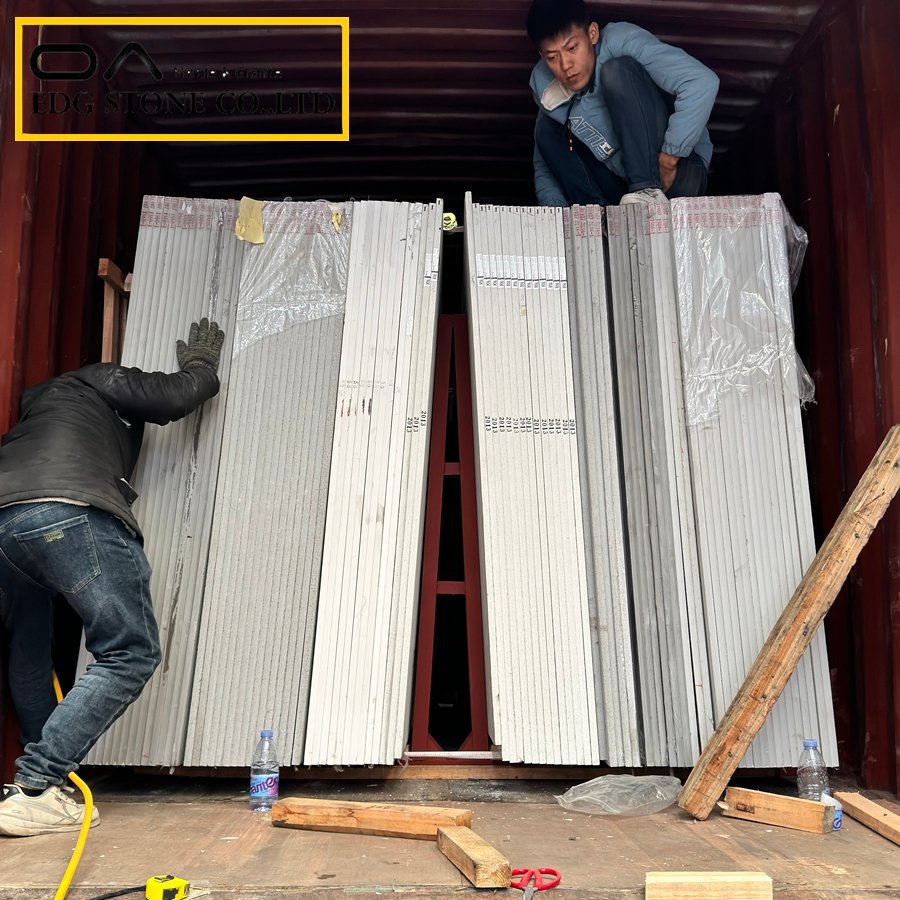
Testing, inspection & acceptance criteria
Pre-shipment checklist (factory)
Visual and dimensional inspection of all slabs; photos and signing.
Integrity test of crate: shock test (simulated drop on sampling basis) and vibration testing, where possible, for high-value loads.
Check ISPM-15 stamps and crate marks; ensure packaging documentation accompanies export paperwork.
On-arrival inspection (receiver)
Inspect crate exterior for damage; take timestamped photos before opening.
Open bracing in prescribed sequence to avoid progressive collapse—remove side braces first, then top cross members, as recommended in slab handling protocols.
Check for slab microcracks, chipped edges, or stress signs with a simple mallet tap test and visual check per supplier defect criteria.
Document damage immediately and open a claim within the carrier’s time windows; carriers often have narrow windows for notice of loss.
Safety & personnel protocols
Handling slabs is inherently hazardous. Follow industry safety guidance for moving slabs, removing internal bracing, and working around suspended loads. Use rated lifting clamps, vacuum lifters for flat slabs, and ensure rigging is rated for the load. Natural Stone Institute and OSHA materials outline safe slab handling procedures and emphasize training and sequence control for unloading. Safety is an essential part of crate design: a crate that forces unsafe handling sequences is a liability.
Cost vs benefit: reinforced steel hybrid crates vs basic wooden crates
Reinforced hybrid crates cost more upfront but can reduce damage rates, lower insurance premiums, and be reused across export runs—especially attractive for high-value engineered stone or repeat factory shipments. For single small runs, a well-built wooden crate with proper blocking is cost-effective. Consider the total cost of ownership (crate cost + damage risk + insurance + rework) rather than the unit crate’s lowest price.
Sourcing & procurement checklist (for manufacturers/factories/freight teams)
Use an ISPM-15 treatment provider for any solid wood components and procure certification/stamps.
Specify steel reinforcement points, cross-bracing design, and strap specs in the purchase order.
Require photos and weight/COG data before shipment.
Request a pre-shipment securement checklist signed by packers.
Define claims procedure and hold the packer/freight forwarder responsible for packing defects under agreed SLA terms.
Ask for a reuse or recycling plan for crates to reduce cost and carbon footprint.
Emerging tech & materials to watch
Engineered polymer pads with high friction coefficients that are lighter and more durable than rubber.
Reusable steel modular frames that slide into timber skins—combine stiffness and reduced total lifecycle cost.
IoT shock & tilt sensors placed inside crates to log any extreme events in transit and support claims.
FAQ — Google hot searches (5 questions + answers)
What is the best way to create stone slabs for ocean freight?
Use vertical orientation (A-frame or racked), ISPM-ISPM-15-compliant timber or engineered bases, anti-slip interlayers, rigid blocking, steel reinforcement for long slabs, loop lashings, and sealed crates where moisture is a concern.Do wooden slab crates need special treatment for export?
Yes—solid wood packaging for international shipments must comply with ISPM-15 (heat treatment or fumigation) and be stamped accordingly to meet phytosanitary rules.How do you prevent slabs from cracking in a container?
Prevent cracking by eliminating gaps (no movement), supporting slabs vertically, distributing weight across a continuous soleplate, using foam pads and anti-slip liners, and applying robust blocking and lashings to control both longitudinal and lateral forces.When should steel reinforcement be used in a slab crate?
Use metal reinforcement for long slabs, stacked crates that will be stacked in containers, or when repeated handling and re-use are expected. Steel adds stiffness and protects against fork and crane impacts.What safety precautions should teams take when unloading slab crates?
Follow an established bracing removal sequence, use rated lifting gear (vacuum lifters, clamps), ensure trained personnel manage each step, and consult industry slab handling protocols to avoid slab shift or collapse.
Semantic Closure: How / Why / What / Options / Considerations
How — Crate stone slabs by orienting slabs vertically on A-frames or racks, eliminating voids, using anti-slip layers, and applying both timber and steel reinforcement so the crate carries load into the base, not through fragile slab faces.
Why — Ocean freight subjects crates to multi-axis forces; robust design and reinforcement prevent movement, reduce fractures and claims, and ensure on-time delivery and customs clearance.
What — The right crate combines ISPM-15-treated wood, engineered soleplates, foam/PU pads, loop lashings, diagonal bracing, and optional steel frames; add moisture control and shock sensors for high-value shipments.
Options (detailed) — Simple timber crates for single runs; steel-reinforced reusable frames for repeat exports; fully enclosed crates for moisture-sensitive stone; IoT sensors for event logging; engineered polymer pads for improved friction.
Considerations (detailed) — Always require ISPM-15 marking for WPM, plan safe unloading sequences, test a prototype crate with vibration/drop samples for critical SKUs, and include crate spec, photos, and handling instructions in POs so factories, forwarders, and receivers have a single source of truth. Prioritize people’s safety—the crate must enable safe bracing removal and rigging procedures.