
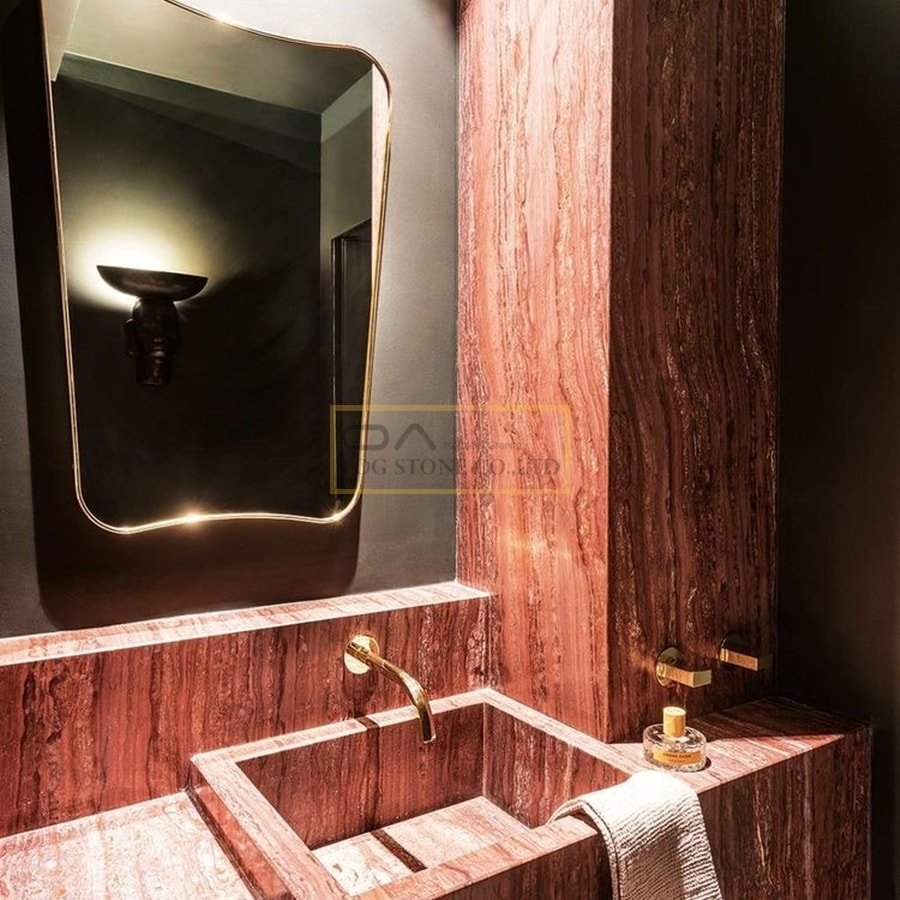
Why “monolithic” matters — the design & performance case
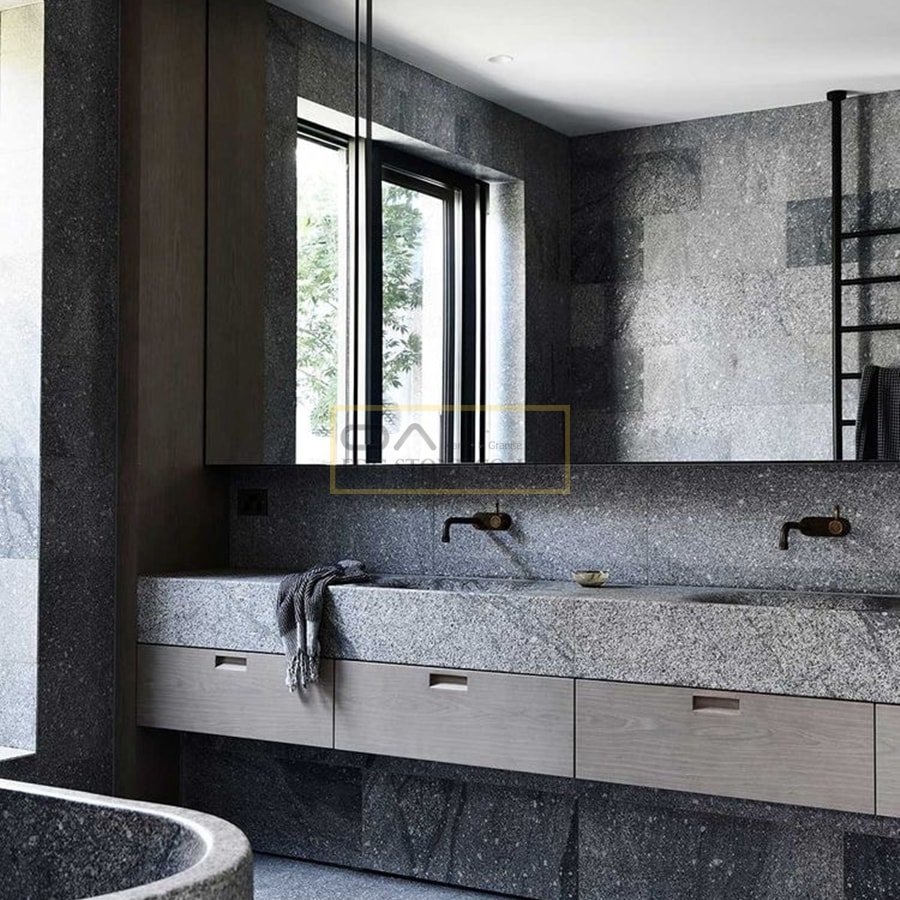
A monolithic vanity top (also called an integrated vanity top or integrated sink top) is manufactured so the countertop and basin are a single continuous piece, eliminating seams between sink and surface. This continuity provides:
True waterproof junctions (no caulking seams that weaken or collect grime).
Easier cleaning and improved hygiene—bacteria and dirt have fewer crevices to hide in.
Cleaner visual lines for modern, minimalist bathrooms and high-end hospitality projects.
Flexibility for custom engineering: continuous waterfall edges, integrated overhangs, and custom slope/radius details for efficient drainage.
These design and hygienic benefits are why designers and specifiers increasingly choose monolithic tops for upscale residential bathrooms, hotels, and healthcare washrooms.
Who should consider monolithic vanity tops?
Homeowners renovating primary bathrooms who want a seamless, luxury look.
Architects and interior designers specifying for boutique hotels, spas, or hospitality.
Contractors and dealers seeking factory-supplied, low-MOQ options for consistent quality.
Retailers and wholesalers (manufacturer/factory / wholesale channel) who want to carry ready-made sizes (60” single sink, 72” double sink, etc.) and custom fabrication lines.
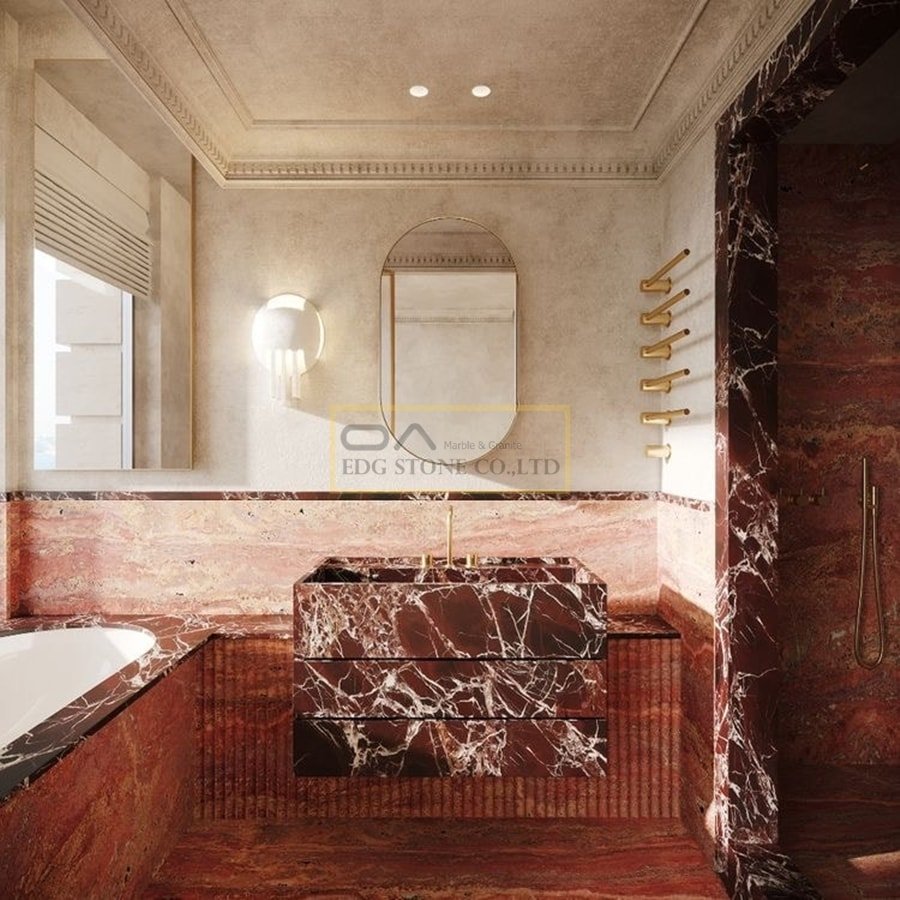
Materials & how they compare
Monolithic vanity tops can be manufactured in several materials. Each has different fabrication routes, regulatory implications, and value propositions:
Engineered quartz (popular for monolithic tops)
Pros: Wide color range, non-porous (when properly finished), durable, stain-resistant.
Cons: Fabrication produces respirable crystalline silica — strong workplace controls are required during cutting and finishing. OSHA and national health agencies have published standards and guidance for silica exposure for stone fabricators and installers.
Solid surface (e.g., acrylic/polymer)
Pros: Thermoformable for seamless bowls, easily repaired, consistent color and finish.
Cons: Heat and abrasion resistance lower than natural stone or quartz; manufacturing uses polymers subject to chemical regulations (EU REACH/consumer disclosure).
Cultured marble / cultured stone
Pros: Often used for molded, factory-built integrated lavatories; compliant to specific product standards (CSA I-something / IAPMO) and the International Plumbing Code references these standards for integral lavatories.
Cons: Fewer premium aesthetic options compared with natural stone or high-end quartz.
Natural stone (marble, quartzite)
Pros: Premium look, unique veining, and aesthetics.
Cons: Requires seams for large runs unless fabricated as large slabs or custom-molded; natural stone is porous and needs sealing; fabrication also produces silica dust when cutting.
Common Size & Configuration Choices (Search-friendly phrases)
Vanity Top with Sink 60 inch — an industry standard for single-sink larger vanity tops (60″ tops often used in master bathrooms).
Double Sink Vanity Top 72 — a common spec for dual-basin monolithic units for shared bathrooms.
Vanity tops with integrated sinks and vanity tops with built-in sinks — high-intent commercial and residential search queries.
Vanity tops Lowe’s or other big-box retailer searches reflect consumer intent and should be matched with product pages and SKU landing pages.
Market context & demand signals
The global bathroom vanities market is large and growing — reports estimate the market value in the tens of billions USD with a consistent CAGR in the high single digits across recent forecasts. This growth is driven by renovation activity, premiumization, and demand for modular and custom vanities — creating a favorable context for monolithic vanity top adoption in both retail and trade channels. (Representative market sources: Grand View Research; IMARC/industry reports).
Regulatory & safety considerations (must-cite)
Worker & fabricator safety — breathable silica risk
When fabricating quartz and many natural stones, cutting, grinding, and polishing create respirable crystalline silica. OSHA enforces exposure limits and controls for respirable silica and has resources specifically for countertop fabrication; many jurisdictions (e.g., California) have issued guidance and workplace initiatives to reduce silica illnesses. Businesses in fabrication/installation must follow engineering controls (wet cutting, LEV, vacuums) and training.
Consumer & marketplace compliance — labeling & chemical rules
In the U.S., California’s Proposition 65 lists crystalline silica and requires warnings for exposure in certain situations; many stone suppliers include Prop 65 notices to comply with state law and protect installers/consumers.
In the EU, chemical control frameworks (REACH) require disclosure and restrict certain substances in consumer products and industrial chemicals — manufacturers exporting to Europe should confirm raw material compliance and supplier declarations.
Plumbing & accessibility rules
The International Plumbing Code (IPC) and International Residential Code reference product standards for integrated lavatories and plumbing fixture installation; local AHJ (authority having jurisdiction) will enforce fixture sizing, waste outlet sizing, and product standards.
Accessibility standards (2010 ADA Standards for Accessible Design) require lavatory heights, knee/clearances, and installation specifics (e.g., maximum rim/counter height 34″ in many public or commercial contexts). Designers specifying monolithic tops for public/commercial spaces must confirm ADA clearances and install details.
Designing for buildability: manufacturing & factory notes
Factory-supplied monolithic tops: Ask for factory templates for integrated bowls (radius, slope, drainage location) and request documentation of waste outlet sizing and overflow details (some codes require specific waste outlet sizes and strainer devices).
No-MOQ / quick-turn options: Many global manufacturers offer low MOQ for standard sizes (60″, 72″) plus custom runs — use “manufacturer/factory / wholesale” keywords on product pages to capture B2B buying intent.
Quality checks: Confirm flatness, edge profile consistency, sink slope, and finish hardness (Mohs for stone) on samples.
Installation & specification checklist (for spec writers & buyers)
Confirm product material and finish, and request sample slabs or mockups.
Verify the manufacturer provides waste outlet and overflow specs that meet local plumbing code (IPC/IRC references).
For public/commercial projects, confirm ADA compliance for rim height and knee clearance (front of rim or counter must be ≤34 inches where required).
Confirm factory instructions for seam treatment (if any), recommended adhesives, and field-joining methods for runs longer than slab length.
Ensure fabricator and installer follow silica control plans and PPE requirements when working with engineered quartz or natural stone.
Maintenance, durability & lifecycle
Quartz & solid surface: Non-porous surfaces are easier to maintain; avoid high heat on composite tops and follow manufacturer cleaning guidance.
Natural stone: Requires sealing and periodic maintenance; be explicit on sealing intervals in product datasheets.
Repairability: Solid surface and cultured marble can be repaired for scratches or chips. Engineered quartz may need professional restoration for serious damage.
Semantic Closure: How / Why / What / Options / Considerations
How — Monolithic vanity tops are made by molding or fabricating the countertop and basin together in the factory (solid surface/cultured marble) or by precision CNC routing and bonding with invisible jointing and finish work for stone/quartz. Proper factory templates and QA protocols ensure tight tolerances and drainage performance.
Why — Eliminating the sink seam improves hygiene, waterproof performance, and aesthetics — reducing maintenance and improving perceived value. For hospitality and healthcare, the hygiene argument is often decisive.
What — Options range from single integrated basins in 60″ tops to double integrated basins in 72″ runs; materials include quartz, solid surface, cultured marble, and natural stone. Buyers must weigh heat resistance, repairability, and lifecycle costs.
Options (detailed) — Off-the-shelf sizes (60”, 72”) for retail/installation vs. full custom factory fabrication with bespoke radii, drainage slopes, and waterfall edges. Consider integrated vessel-shelf hybrids for signature designs.
Considerations (detailed) — Regulatory compliance (ADA & IPC), silica safety for on-site fabrication, REACH/chemical disclosure for exported products, and warranty scope for integrated drains and overflows. For procurement, specify factory test reports, sample approvals, and installer silica control plans.
Case example
A boutique hotel specified 72″ monolithic quartz tops with double integrated basins to achieve seamless aesthetics and minimal maintenance across 40 suites. The manufacturer provided CAD templates and factory-calibrated waste locations; installers followed an engineered silica control plan during final adjustments, and the hotel achieved lower long-term cleaning costs and a consistent luxury finish.
FAQ
What is a monolithic vanity top, and how is it different from a regular vanity top?
A monolithic vanity top is a single-piece countertop where the basin is integrated into the same material and finish; regular vanity tops often have separate sinks that are dropped in or under-mounted, creating seams or joints.Are monolithic vanity tops available with double sinks and in 72-inch sizes?
Yes — many manufacturers and factories supply monolithic vanity tops in 72-inch double sink configurations (often labeled “Double Sink Vanity Top 72”) and in other standard sizes like 60 inches for single sink layouts.What materials are used for integrated vanity tops, and which is best?
Common materials include engineered quartz, solid surface (acrylic), cultured marble, and natural stone. “Best” depends on priorities: quartz for stain resistance and aesthetics, solid surface for thermoforming and repairability, and natural stone for premium appearance.Do integrated vanity tops comply with ADA and plumbing codes?
They can — designers must specify rim/counter height and knee/clearances to meet ADA (max counter/rim height commonly 34 inches in accessible installations) and confirm waste outlet sizes and product standards per plumbing codes. Always verify local code requirements and manufacturer data.Are there safety or environmental rules when buying quartz or stone monolithic tops?
Yes — fabrication/installation of quartz and many stones creates respirable crystalline silica; OSHA and local agencies require controls and training. Manufacturers exporting to the EU must ensure chemical compliance (REACH), and U.S. sellers often provide Prop 65 warnings in California regarding crystalline silica exposure in fabrication.