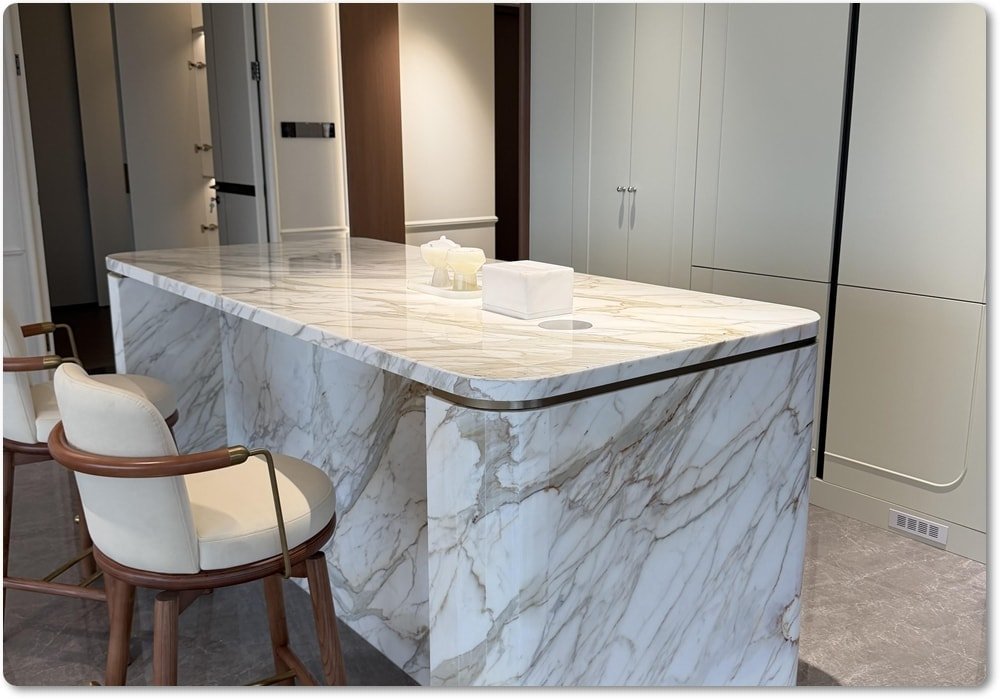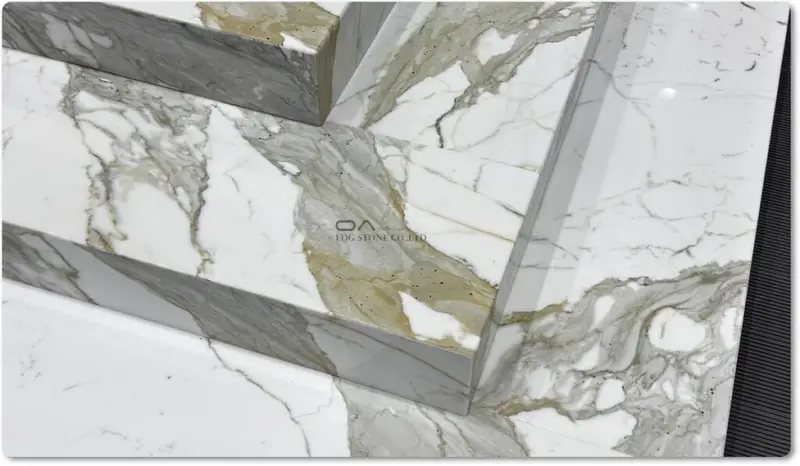

Large-format stone tiles are replacing smaller floor tiles: Why North American designers are switching?
Introduction — the shift in one sentence?
Over the past five years, North American interior designers and architects have been steadily replacing traditional small-format floor tiles with large-format natural stone and gauged porcelain panels—driven by aesthetics, performance advances in materials and adhesives, clarified industry standards, and changing client preferences for minimal seams and “seamless” surfaces.
What is “large-format” and “gauged porcelain/panels” (standards you can rely on)?
The Tile Council of North America (TCNA) and ANSI define large-format tiles as tiles with an edge greater than 15″ (381 mm). Gauged porcelain tiles or panels/slabs are manufactured panels with controlled thickness (often <6–6.5 mm for thin gauged panels, up to thicker gauged pieces) and are covered by ANSI A137.3 and associated installation specs (A108 series), which standardize testing, grading, and installation recommendations for large panels and slabs. These standards have given designers the confidence to specify large-format materials for floors and walls at scale.

Why designers prefer large-format stone tiles — five core reasons?
1) Cleaner, more continuous surfaces — minimal grout, maximum impact
Large-format tiles reduce the number and visible width of grout lines, creating a more continuous visual plane that reads closer to natural stone slabs or poured surfaces. For open plan spaces, this visual continuity enlarges perceived space and creates cleaner sightlines—critical in contemporary architecture and hospitality design. Industry trend reporting from major tile shows has flagged the aesthetic appetite for large formats and reduced grout joints.
2) Technical maturity: installation standards and better mortars
Two technical advances enabled scale adoption:
• Standards & guidance: The TCNA/ANSI publications (incl. the 2023/2022 guidance and the inaugural TCNA Handbook for gauged porcelain tiles/panels) provide unified test methods and installation guidance that reduce risk for design teams and contractors.
• Mortars & medium-bed mortars: Manufacturers of tile mortars now supply medium-bed (or “large-format tile”) mortars and modified thinsets that support thicker setting beds (from conventional 3/32″ up to 1/4″ after embedment for standard thinsets, and medium-bed mortars that can accommodate beds up to 3/4″)—allowing installers to achieve full-bed coverage and minimize lippage for large panels. These mortar advances are essential to reliable large-format installs.
3) Substrate flatness and workmanship standards reduce failures
Large tiles amplify substrate irregularities. TCNA and industry guides require stricter substrate flatness for tiles ≥15″ (for large-format applications, a typical flatness tolerance is 1/8″ in 10′ with no more than 1/16″ variation in 24″), and installers now routinely use self-leveling underlayments and rigorous prep workflows to meet these tolerances. The net result: fewer callbacks and better long-term performance when best practices are followed.
4) Sustainability and material efficiency
Thin-gauged porcelain panels can be produced with less raw material per m² and, when integrated with local supply chains and recycled-content manufacturing, deliver a lower embodied carbon profile for certain applications versus heavy quarried slabwork. The industry is actively marketing carbon-smart tile options and large-format panels that reduce transport volume per cover area—an eco-driven selling point for corporate and institutional clients. Coverings and trend pieces note “carbon-conscious” tile as a 2025 focus.
5) Market & availability — manufacturers are scaling production
Global manufacturing and large-format ceramic/porcelain panel capacity have expanded rapidly (see market research for large-format ceramic panels and porcelain growth), and North American imports and domestic production volumes—tracked by the TCNA—show robust production and distribution channels that make large formats commercially accessible for bigger projects. The TCNA 2024 market update documents shipment/consumption trends and helps specifiers evaluate supply risk.
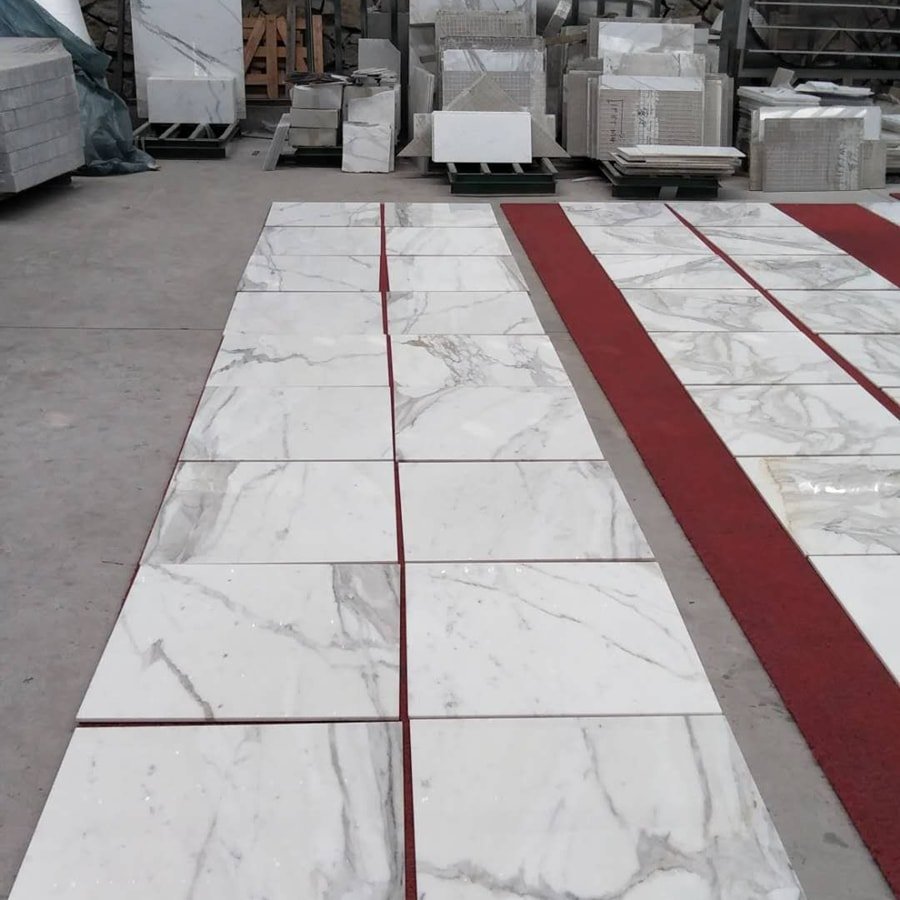
Where are large-format stone tiles being used (typical applications)?
Residential floors (open plan living, kitchens) — creates a continuous floor plane, fewer grout lines, better for underfloor heating.
Luxury bathrooms & wet rooms — full-height walls and large-format floors reduce grout and simplify cleaning; careful sealing/installation required for natural stone.
Hotel lobbies, retail, corporate entries — large slabs project monumentality and reduce visual clutter.
Feature walls & fireplace cladding — bookmatched panels or continuous veining maximize drama.
Façade cladding & ventilated rainscreens — thicker gauged slabs and mechanically fixed systems are increasingly specified for lightweight stone-look façades (subject to local code & structural review).
Each application requires a matching installation methodology, movement joints, and substrate prep to the tile size and type. Technical standards and handbook details (TCNA/ANSI) provide prescriptive methods.

Installation considerations designers must know (practical checklist)
Substrate flatness: Ensure floor/wall tolerances meet the TCNA requirement for large-format tiles (1/8″ in 10′ or as the manufacturer prescribes). Use self-leveling underlayments where necessary.
Mortar selection & bed thickness: Use medium-bed mortars for panels with warpage or non-flat substrates; ensure minimum/maximum embedment thickness follows mortar manufacturer guidance (conventional thinset embedment 3/32″–1/4″; medium-bed up to 3/4″).
Lippage control: Use proper trowel size, double buttering when needed, and mechanical leveling systems for very large panels. Refer to ANSI A108 / TCNA detail guidance for acceptable lippage thresholds.
Movement joints: Don’t bridge movement joints; follow TCNA EJ details. Allow for thermal and structural movement—especially when installing over radiant heat or different substrates.
Sealing & maintenance: For natural stone, specify appropriate sealing and maintenance regimens; for gauged porcelain, verify edge finishing and handling procedures.
Mock-ups & samples: Always require mock-ups and a small field mock installation to validate tolerances and aesthetic expectations before full installation.
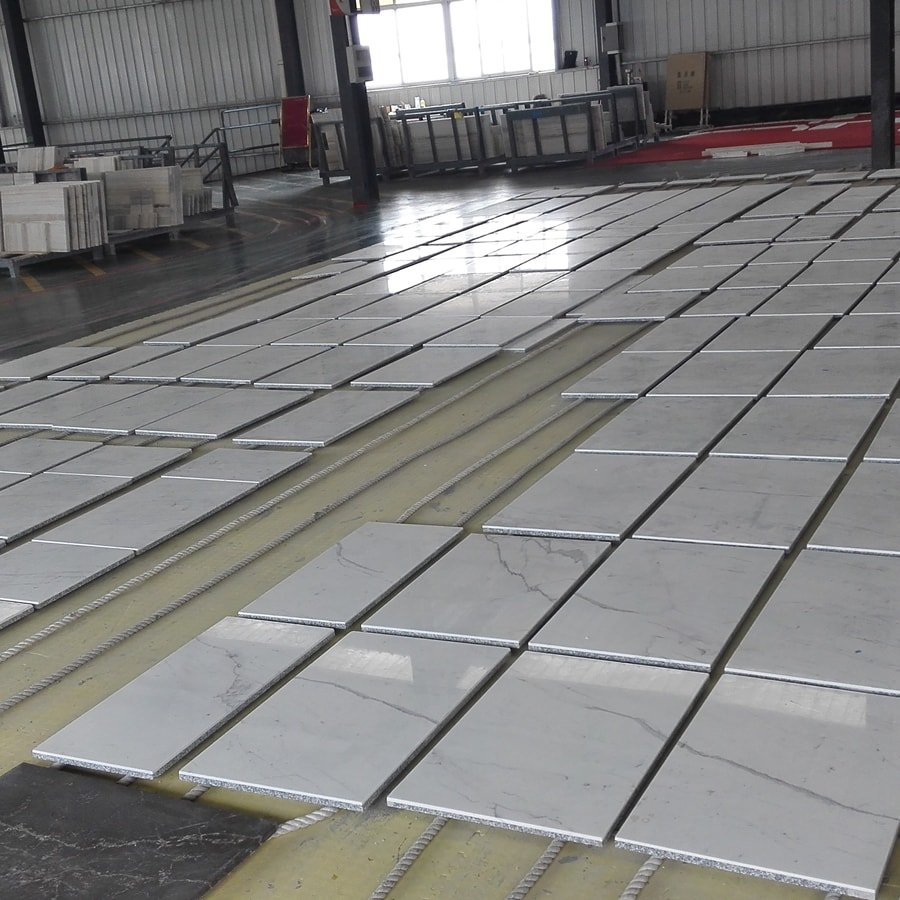
Risk management: When NOT to use large-format panels?
Uneven or poorly prepared substrates where achieving 1/8″ in 10′ flatness is impractical.
Extreme substrate movement (e.g., flexible older wood framing without stiffening).
Very small rooms where large panels exceed practical working size—splitting and waste may make smaller tiles more economical.
In these cases, designers should either increase substrate prep, choose smaller modules, or accept the additional cost of specialized installation.
Regulation, standards & the industry direction (why the rules matter?)
The tile industry has moved from fragmented recommendations to standardized guidance. ANSI A137.3 and the A108 series specifically address gauged porcelain and large-format installation procedures; the TCNA’s new publications give specifiers the prescriptive language needed to place risk on contractors and manufacturers appropriately. This standardization has legal and procurement implications: public projects increasingly reference ANSI/TCNA standard numbers in specs and contract documents to limit ambiguity and to ensure code-compliant installs. Clear standards reduce disputes and accelerate adoption.
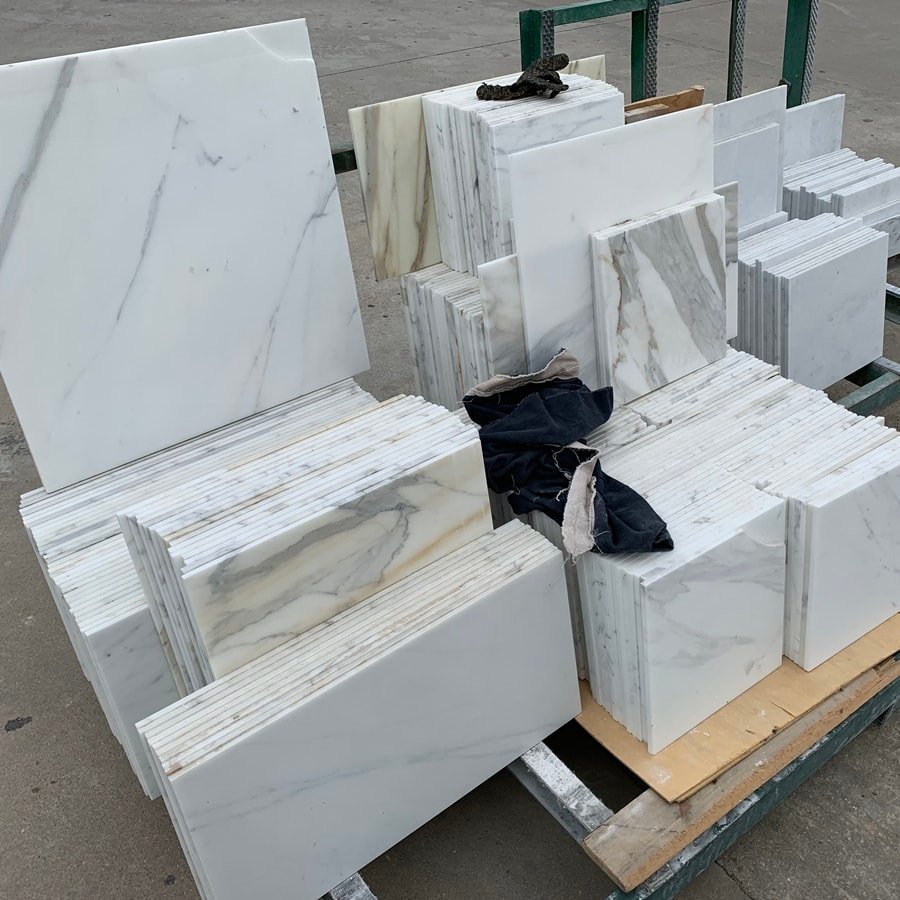
Market data and design momentum (brief data snapshot)
North American ceramic tile market: Industry reporting notes a sizeable ceramic tile market with continued projected growth, though short-term fluctuations in 2023–2024 consumption were reported by TCNA and trade press. Specifiers should monitor quarterly TCNA market updates for supply and pricing signals.
Large-format panel growth: Market analyses forecast growth in the large-format ceramic panel sector globally—driven by architectural demand for thin, large slabs and porcelain panel technologies. This aligns with the reported surge of large-format product innovations at major tile expos.
Semantic closure: How / Why / What / Options / Considerations
How: Designers are specifying full-bed medium-mortar installations, strict substrate flatness, and mechanical levelling for large panels—applying ANSI A108/TCNA guidance and medium-bed mortars to secure full contact and minimize lippage.
Why: Clients want fewer grout lines, visually larger and cleaner surfaces, perceived higher value, and the ability to create bookmatched or continuous-vein installations without seam clutter. Industry standards and improved materials remove prior risk barriers.
What to choose: For wet areas and floors, choose gauged porcelain panels or dense stone with proper sealing; for façades, choose engineered anchoring systems and thicker slabs designed for exterior loads. Follow manufacturer and TCNA guidance for each product type.
Options (detailed): Thin gauged porcelain (3–6 mm) for walls; thicker gauged slabs and 6–12 mm panels for floors; natural stone slabs >12 mm for heavy-duty floors; porcelain pavers for outdoor plazas. Each option requires matched adhesives and movement joint detailing.
Considerations: Life-cycle maintenance, repairability of large panels, waste during cutting/installation, transport logistics (size handling), and ensuring installers are experienced with large-format workflows. Require field mock-ups and include acceptance criteria in specs referencing ANSI/TCNA details.
Practical spec language example (copy/paste to project specs)
“Work shall conform to ANSI A137.3 and A108 installation provisions for gauged porcelain tiles and tile panels/slabs, and to TCNA Handbook details for substrate flatness, mortar bed thickness, mechanical anchoring, movement joints and lippage tolerances. Mortar manufacturer’s instructions for medium-bed or large format mortars shall be followed; provide mock-up and acceptance prior to full installation.”
Conclusion — design verdict
Large-format stone tiles are not a fad: they are a functional and aesthetic evolution enabled by standardized testing and installation guidance, specialized mortars, and expanding manufacturing capacity. For designers and specifiers, the opportunity is clear—deliver cleaner, higher-value surfaces that meet modern client expectations—provided you pair material selection with strict substrate prep, the right adhesives, and installer expertise.
Google Hot-Search FAQ (5 Q&A)
Q: Why are designers switching from smaller tiles to large-format stone tiles?
A: Designers prefer large-format stone tiles because they minimize grout lines, create visually continuous surfaces, reduce perceived clutter, and allow dramatic bookmatched or continuous-vein applications. Recent advances in installation standards (ANSI/TCNA), medium-bed mortars, and substrate preparation make large-format installs more reliable and lower risk for high-end projects.Q: What defines a large-format tile, and where can I find the standard?
A: A large-format tile is commonly defined by TCNA as a tile with at least one edge longer than 15 inches. Gauged porcelain tile/panels are governed by ANSI A137.3 and related A108 installation standards; the TCNA Handbook and ANSI documents provide the testing and installation guidance.Q: How thick should the mortar or thinset be for large-format or gauged porcelain tiles?
A: Conventional thinset embedment typically ranges from 3/32″ to 1/4″ after bedding. For large-format or warped tiles, medium-bed mortars are recommended and can allow bedding up to about 3/4″ (per mortar manufacturer guidance). Always follow the mortar manufacturer and TCNA/ANSI guidance for embedment and coverage.Q: What substrate flatness is required for large-format tile flooring?
A: Industry guidance for tiles 15″ or larger typically requires a substrate flatness of 1/8″ in 10′ with no more than 1/16″ variation in 24″, though always confirm with the manufacturer and project specs. Proper self-leveling underlayments are commonly used to meet these tolerances.Q: Are large-format stone tiles more sustainable than smaller tiles?
A: Large-format gauged porcelain panels can reduce material use per m² and lower transport volume when produced and shipped efficiently. The industry is promoting carbon-conscious tile production, and larger panels often align with these sustainability strategies—but lifecycle analysis depends on material, production methods, distance shipped, and end-of-life options.