1. Introduction: Why QC transparency matters now?
Buyers of stone slabs and custom countertops (granite, quartz, engineered stone) are increasingly remote, international, and quality-sensitive. Damage in transit, mismatched slabs, incorrect labeling, and improper packing cause costly rework, delayed installations, and claims. Real-time video quality inspection (RVCI) — live video of the packing / crating process combined with AI visual inspection — gives stakeholders a verifiable, time-stamped window into the factory floor and packing dock. This reduces disputes and increases buyer confidence while enabling faster acceptance and fewer returns.
2. Market & regulatory context (brief, cited)
The global countertop market continues to expand rapidly; recent market analyses estimate the global countertops market in the low-hundreds of billions (USD) with mid-single-digit CAGR through 2030 — illustrating rising volumes and the importance of scalable QC practices.
Regulatory pressure on stone fabrication and supply chains is also increasing. Workplace safety agencies emphasize the hazards of crystalline silica in stone fabrication, and inspections have become more stringent, especially for engineered stone. This affects factory workflows and underscores the need to limit on-site visits while maintaining inspection rigor — a clear driver for remote video inspection adoption.
In some jurisdictions, new consumer- and workplace-safety rules (and updated product-warning regimes such as California’s Prop 65 changes) are also changing how manufacturers label and deliver stone products. QC transparency helps manufacturers demonstrate compliance in both manufacturing and packing steps.
3. What is real-time video QC (RVCQ) for stone packing?
RVCQ = Remote Visual Inspection (RVI) + live streaming + optional analysis + secure recording. For stone packing, it typically includes:
Fixed or mobile cameras focused on slab faces, edges, packaging materials, and crate assembly;
Live streaming to buyer/inspector dashboards (secure links with time codes);
Recorded video stored in tamper-evident archives for audit.
AI visual inspection that flags cracks, chips, wrong slab IDs, packaging gaps, or incorrect orientation;
Integration into order/inspection workflows and TMS/ERP systems to automate pass/fail & document evidence.
Industry service providers (inspection labs, third-party QC firms) already offer remote inspection programs — from live guided walkarounds to fully digital, AI-enhanced QC checklists.
4. Use cases: where RVCQ delivers immediate value
A. Pre-packing slab verification
Verify slab identification (digital ID sticker, QR/barcode) and match to order photos.
Confirm absence of visible cracks/chips on slab faces and polished edges.
Capture multi-angle footage of each slab before packing.
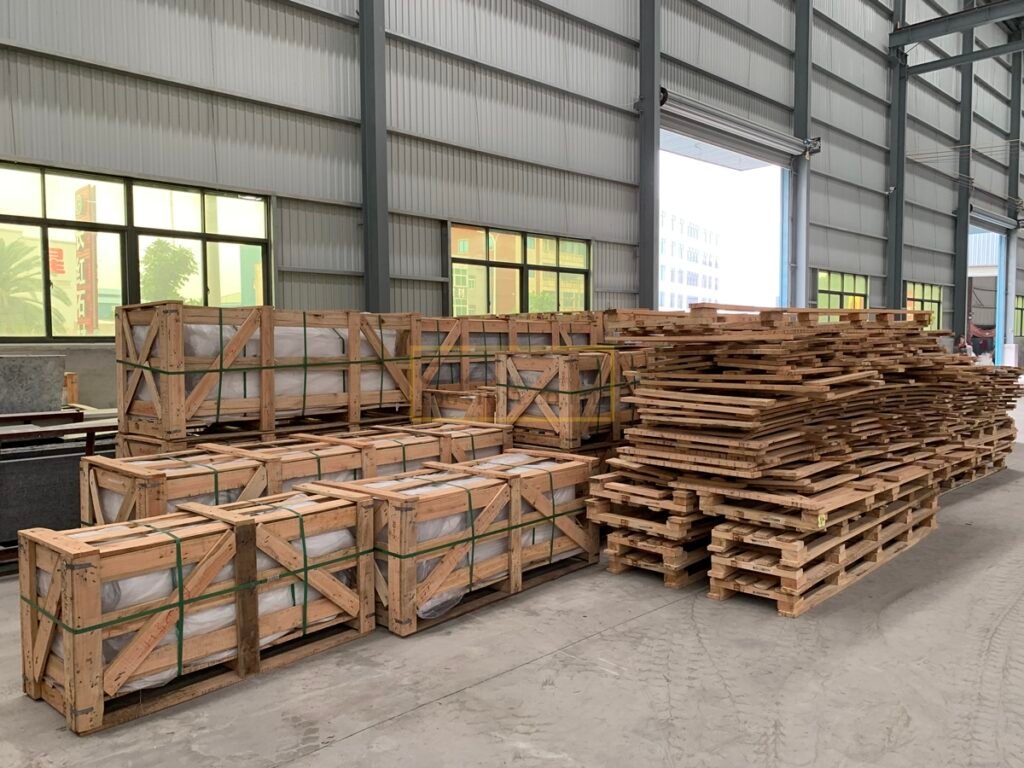
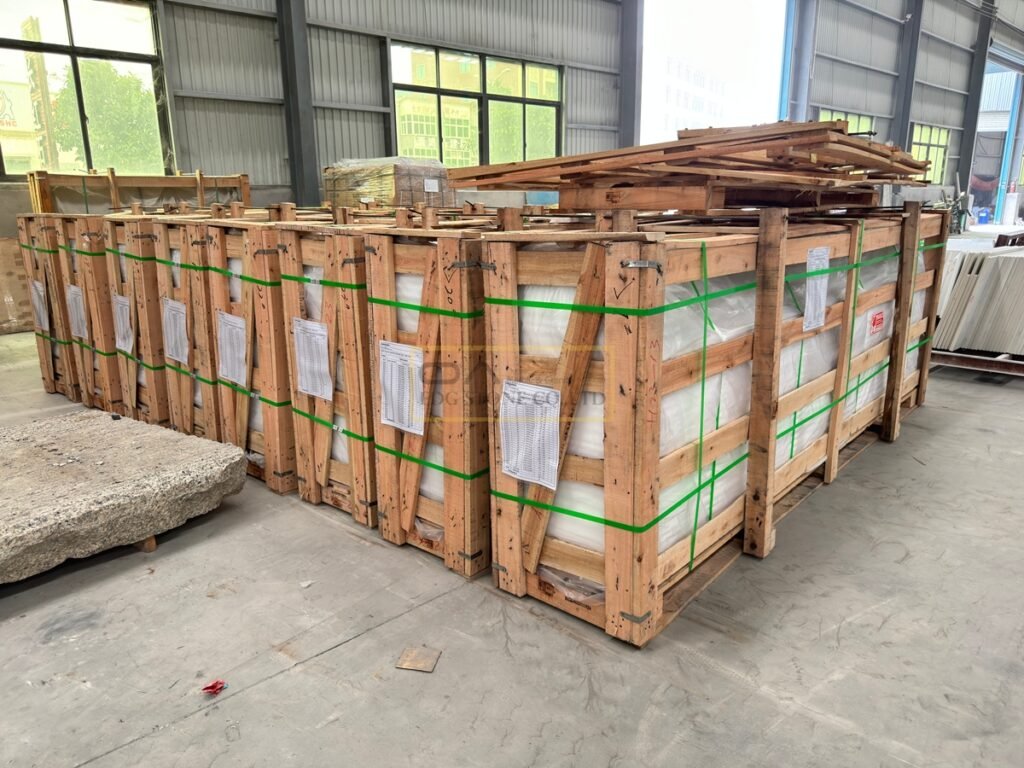
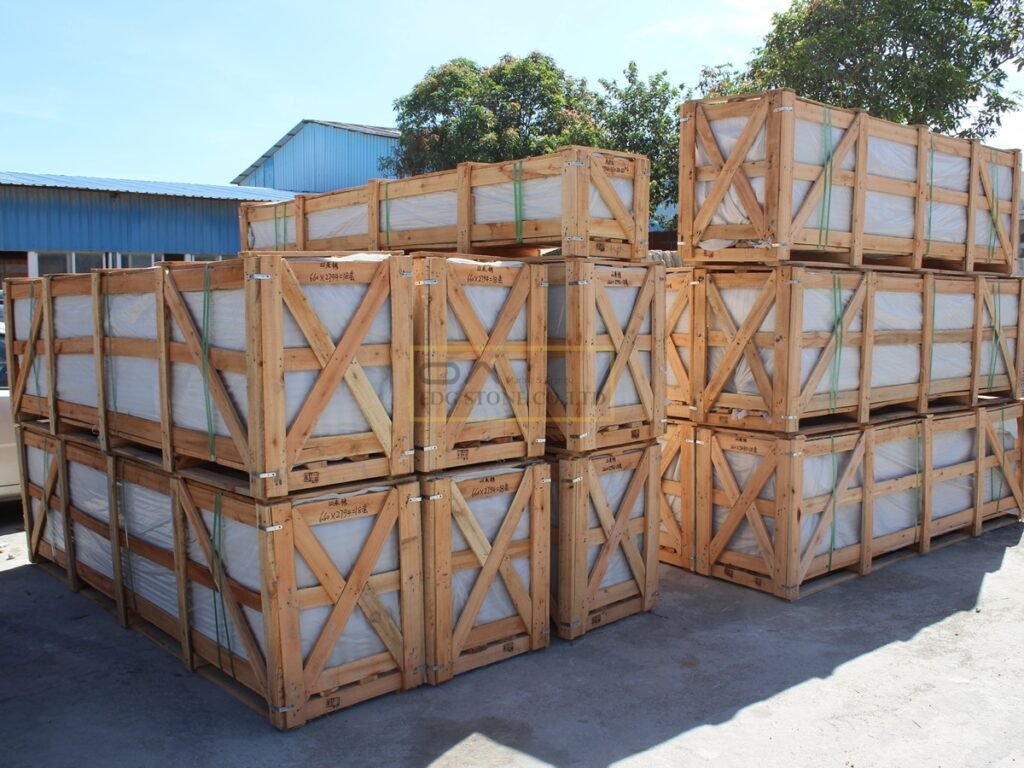
B. Packing / interlayering & crate assembly
Confirm use of specified cushioning materials (foam, rubber pads, wooden braces).
Verify correct slab orientation, clamp/forklift handling, and edge protection.
Ensure the crate closure process (bolts, latches) follows the buyer’s standard.
C. Loading onto containers/trucks
Verify container placement, lashing, and container seal number; capture seal-on video.
Record palletization, weight tags, and tracking numbers.
D. Last-mile verification & installation hand-off
Live-stream delivery handover, verify skids unloaded correctly, and crate integrity.
Capture installer uncrate footage as a pre-installation acceptance step.
These use cases directly reduce “received damaged” claims, speed acceptance, and provide robust evidence when disputes arise — saving weeks of negotiation and tens of thousands of dollars on complex orders.
5. Technology stack — what you need
Cameras & networking
4K fixed cameras for slab faces; wide-angle for crate assembly; mobile phones/tablets for close-up checks. Use wired or robust Wi-Fi and fallback 4G/5G uplinks for critical streams.
Video platform
Secure streaming + recording platform (end-to-end encrypted, with role-based access control). Use platforms geared to RVI, like Intertek’s or SightCall-type solutions.
AI & computer vision
Edge or cloud models trained to detect chips/cracks, mismatched IDs, missing protective elements, and packing anomalies. Proven AI platforms for visual QC exist; vendors advertise significant time savings and high defect detection sensitivity.
Data integrity & audit trail
Timestamping, secure storage, and cryptographic hashing (optionally anchored on blockchain) to produce tamper-evident evidence.
Integration
TMS, ERP, or order management system connections so video events update shipment status, QC pass/fail fields, and automatically trigger invoices or hold releases.
Human-in-the-loop
Live QC inspectors to verify AI flags and provide final acceptance; buyer access for live watching or recorded playback.
6. Process & SOP — step-by-step checklist (factory + buyer)
Pre-shift
Mount cameras at the slab inspection station and the packing station; verify time sync.
Confirm lighting (even, shadowless) for consistent AI detection.
Before packing each slab/part
Scan the slab QR/ID and verify against the order in ERP (video shows scanned label).
Run automated AI check for chips/cracks; human inspector reviews any flags.
Packing
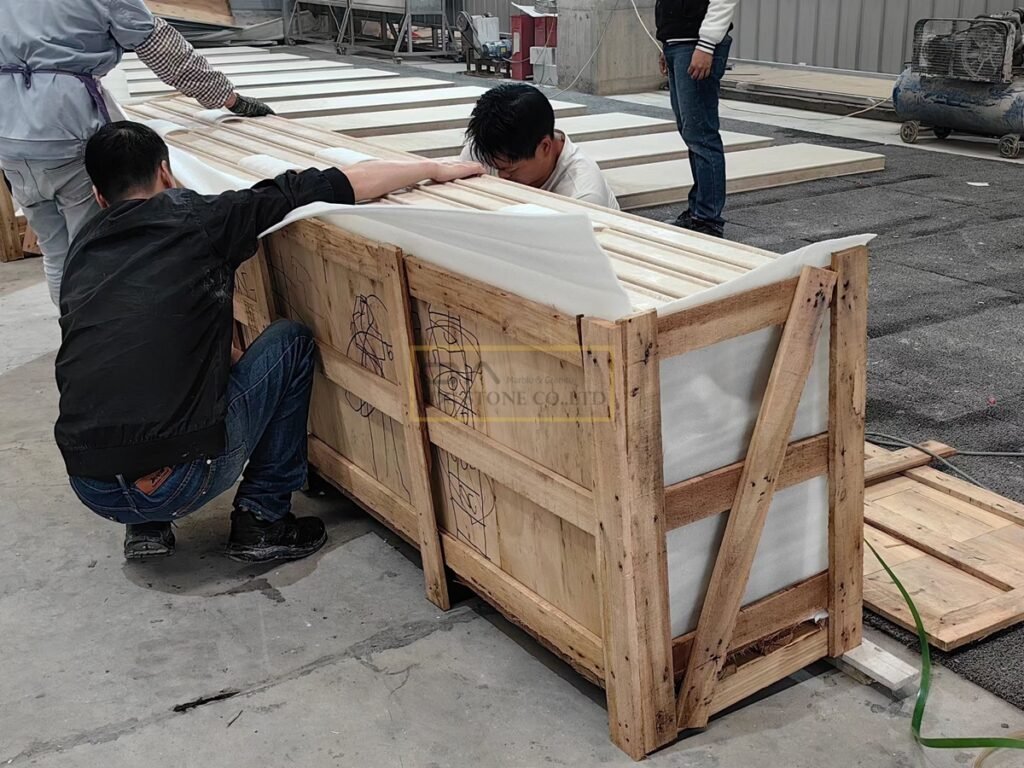
Record step-by-step: protective layer, edge protectors, wooden braces, crate closing, bolt torque check, seal number.
Generate a video-based packing certificate (timestamped) attached to the PO.
Loading & handoff
Video of container loading, seal number, driver ID. Buyer receives automated notification + playback link.
Post-delivery
Buyer watches uncrate footage (optional live). If issues are flagged, video review determines liability and next steps.
7. KPIs and expected ROI
Typical KPIs to monitor:
Damage claim rate (target: reduce by 30–70% depending on baseline).
Time to final acceptance (target: shorten by days or weeks).
Dispute resolution time & cost (target: reduce legal/administrative costs).
Packaging compliance rate (measured vs. SOP).
Case references show remote video and AI video analytics reduce manual inspection time and speed decision-making — a direct cost avoidance for high-value stone shipments.
8. Legal, privacy & safety considerations
Worker safety & silica: Fabrication shops remain subject to strict silica controls (OSHA & regional initiatives). Remote inspection reduces the need for on-site visits, but factories must still comply with dust controls and worker protections while filming.
Privacy: Inform staff and obtain required consents; redact audio or use cameras focused only on packing areas (avoid locker rooms, break areas). GDPR and local laws may require data-processing agreements when video crosses borders.
Data retention & access: Define retention periods, access control, and audit logs. Use tamper-evident storage and retain evidence for the contractual claims window.
Regulatory labeling: If goods are subject to product-warning rules (e.g., Prop 65 in California), ensure label visibility and capture in the QC video evidence.
9. 30/60/90-day implementation plan (practical)
Day 0–30 (Pilot)
Select 1–2 SKUs and one packing line. Install 2 camera angles (slab face + crate closure). Trial live stream to internal quality and a single buyer.
Day 31–60 (Scale & Train)
Add AI rules for common defects; train models on 100–500 slab images. Expand pilot to more SKUs. Create acceptance templates and contracts that reference video evidence.
Day 61–90 (Integrate & Automate)
Integrate with TMS/ERP; automate packing certificate generation; roll out to all export packing lines. Formalize SLA (e.g., buyer has 48 hours to object after watching the recorded uncrate).
10. Semantic Closure: How / Why / What / Options / Considerations
Why: Buying stone remotely increases the risk of mis-picks, shipping damage, and installation delays. Real-time video QC reduces disputes, accelerates acceptance, and protects both buyer and seller with objective evidence.
What: Concrete deliverables include: live or recorded pack videos for each shipment, AI-flagged defect reports, digital packing certificates attached to POs, and a searchable archive for claims.
Options: Light implementation (mobile-camera + recorded videos) to full implementation (multi-camera, AI/edge detection, blockchain anchored hash). You can choose tiered service levels based on value-per-shipment.
Considerations: Ensure SOP compliance, worker safety (silica controls), privacy & cross-border data rules, and plan for slab variability (bookmatching, batch consistency). Use video QC as evidence, not the sole determinant; always keep human inspection in the loop.
11. FAQ
Q1: Can I watch my stone countertops being packed live?
A1: Yes. Many suppliers now offer secure live-stream links or recorded videos showing slab inspection, packing, and container seal-on. This is especially common for high-value or custom orders and can be integrated as a contractual acceptance step.
Q2: Will live video QC reduce delivery damage claims?
A2: Yes — parties using live/recorded video and AI inspection typically see significant reductions in claims because objective evidence clarifies whether damage occurred before or during shipping.
Q3: Is AI reliable at detecting stone cracks and chips?
A3: Modern AI visual inspection models are highly effective at flagging visible chips, surface cracks, and packing anomalies, but they should be paired with human review to confirm edge cases and contextual judgments.
Q4: What equipment do factories need for real-time packing video?
A4: At minimum: one high-resolution camera for slab faces, one camera for packing/crating, a stable network uplink (Wi-Fi/4G/5G), a secure streaming/recording platform, and simple integration to ERP/TMS for documentation.
Q5: How much does real-time video QC cost?
A5: Costs vary by scale and features: mobile phone recorded proof is low cost; enterprise options with AI, multi-camera, encrypted archival, and integration are mid to high investment but typically pay back quickly on high-value shipments through reduced claims and faster acceptance.