
Patagonia Granite Slabs for Countertops, Floors, and Walls
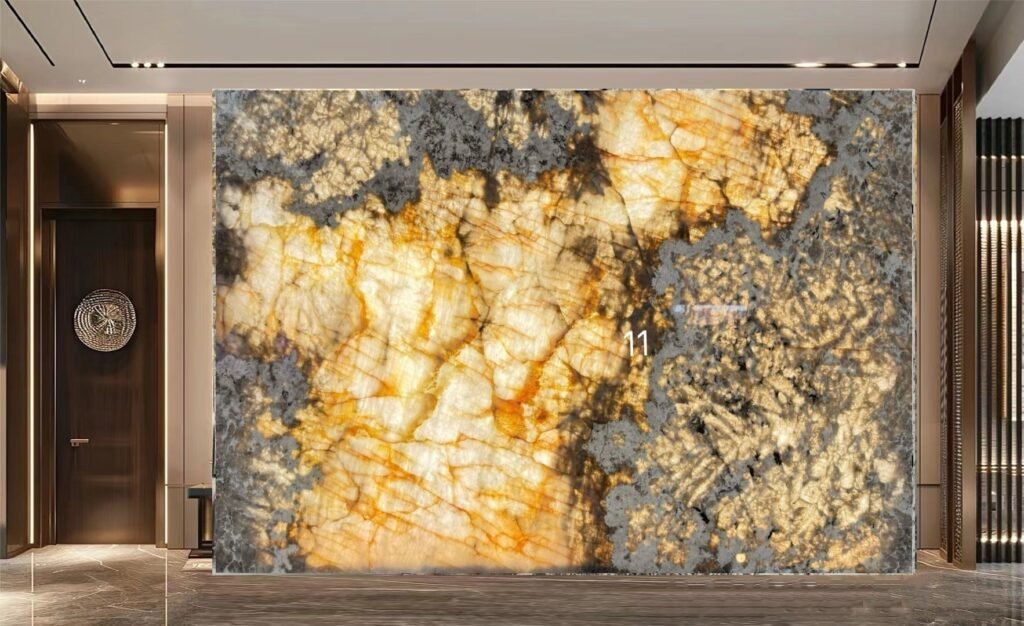
What is Patagonia granite?
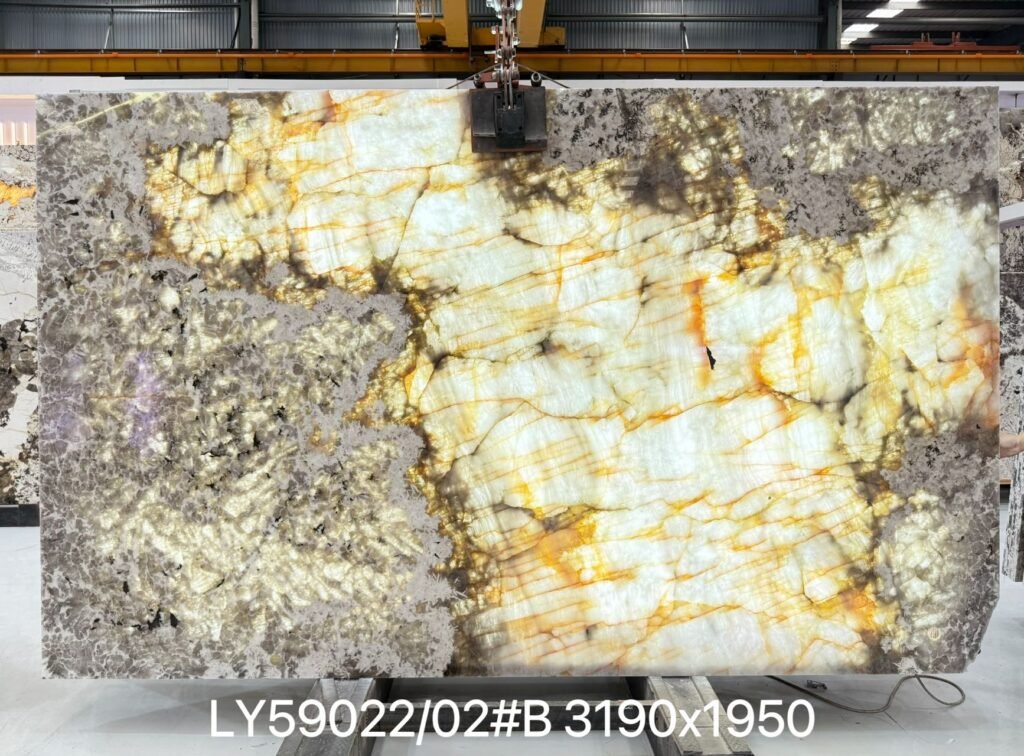
“Patagonia” is a commercially used name for a family of granites that often share a light beige or cream background with pronounced clasts, veining, and occasional translucent mineral pockets. Suppliers list Patagonia granite slabs in 2 cm and 3 cm thicknesses and market them for countertops, cladding, and flooring. Several stone distributors and galleries carry Patagonia-labeled slabs with standard slab dimensions (commonly around 120″ × 74″ or similar), and prices quoted per slab or per square foot reflect the stone’s visual appeal and availability.
Typical slab surface area for natural stone runs between about 45–60 sq ft per slab, depending on quarry and cut — a useful planning rule-of-thumb when estimating how many slabs you’ll need for a kitchen or large island. Always request the exact slab dimensions and the usable (yield) square footage from the supplier to avoid surprises.
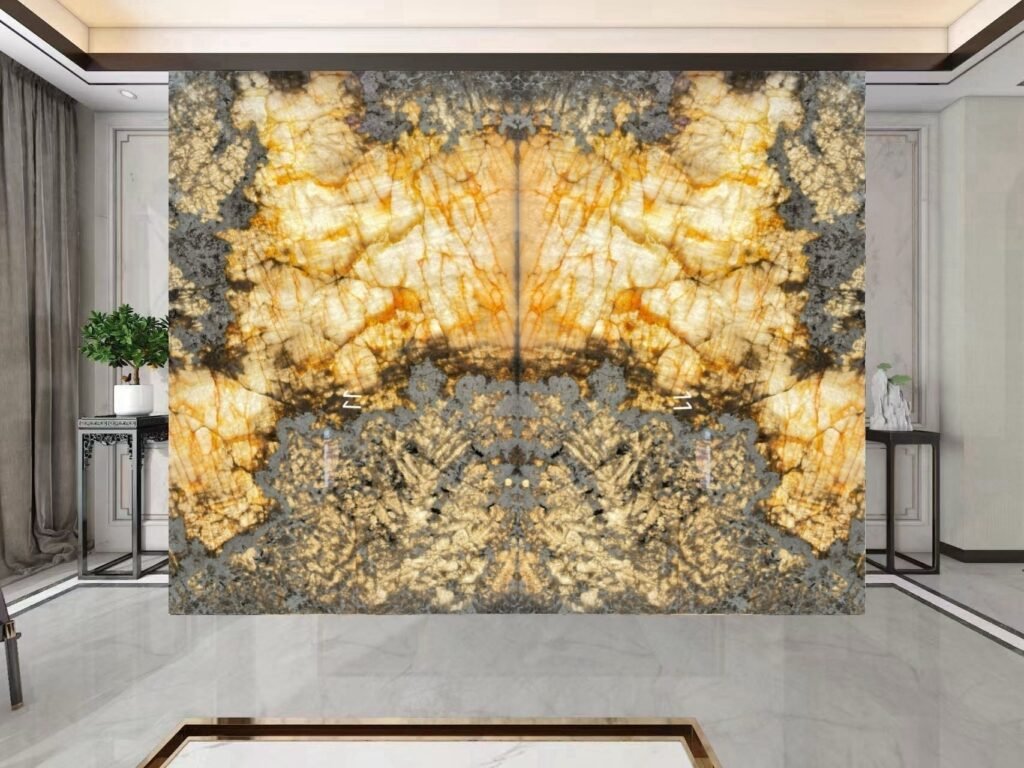
How much is a slab of granite? (wholesale, retail, per sq ft, and installed)
Granite pricing varies widely because stones are graded by rarity, pattern, and origin. Use the following ranges as practical market benchmarks (national U.S. averages and supplier listings as of current market surveys):
Wholesale / raw-slab listings (per slab): Single-slab listings for Patagonia-class granites commonly range from $1,000 to $7,000+ per slab, depending on size and rarity. Some slab retailers publish per-slab prices (for example, smaller or “island” slab specials can be listed under $700, while premium bookmatch or larger slabs exceed several thousand dollars).
Per square foot (material only): Common published ranges for granite material are roughly $10 to $75 per sq ft at the material-only level for standard granite; more desirable, exotic, or bookmatched slabs regularly quote at $75–$200 per sq ft in some markets. Retail stock sites and slab galleries often show Patagonia slabs in the $49–$107 per sq ft window for individual slabs displayed online.
Installed cost (materials + fabrication + labor): Industry cost guides show installed granite countertops commonly fall between $40–$200 per sq ft, depending on stone grade, edge profile, fabrication complexity, and labor. National average project totals for kitchens often fall between $2,000 and $5,500 for typical remodels, though high-end projects with exotic slabs and full-coverage backsplashes can climb higher.
Why such ranges? The price differences come from slab uniqueness (visual appeal), slab size (larger slabs equal fewer seams and higher value), finish (polished, honed, leathered), transport (imported stone adds freight and duties), and fabrication complexity (sink cutouts, mitered edges, bookmatching). We’ll unpack these next.
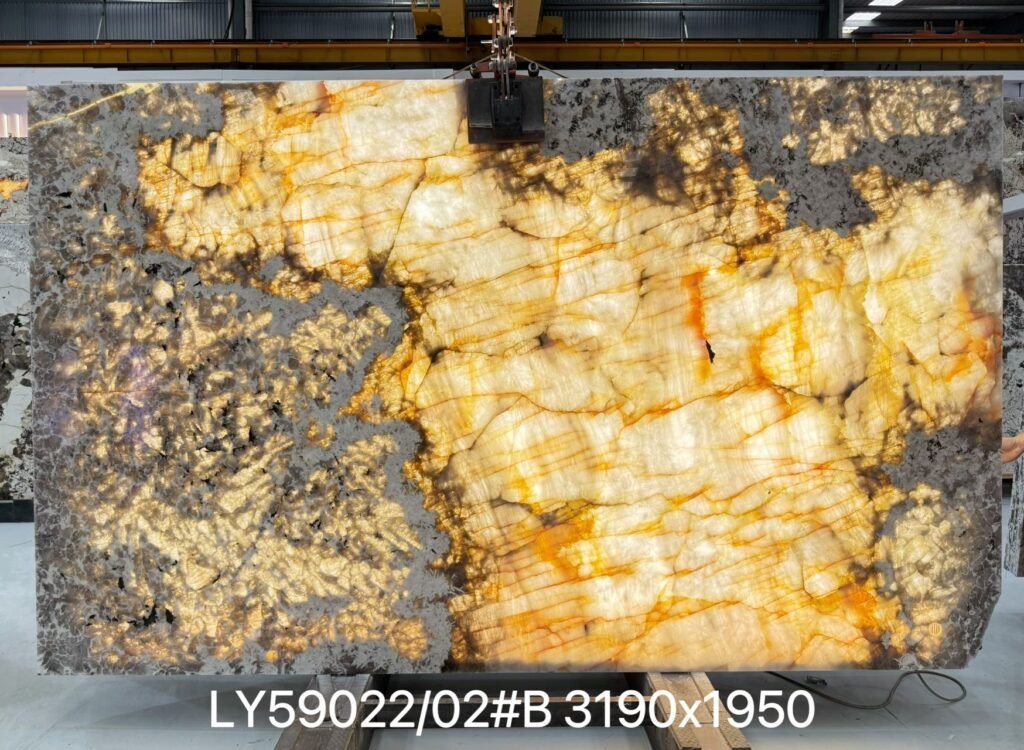
Cost drivers explained
Grade & Rarity: Exotic or heavily patterned granites command premiums. Patagonia-class stones with dramatic clasts or rare minerals are priced higher than uniform, common granites.
Slab Size / Yield: Larger slabs reduce seams but cost more per slab. Slab yield (usable sq ft after cutting) affects effective material costs; typical slabs yield ~45–60 sq ft.
Thickness & Finish: 2 cm vs 3 cm thickness differences affect price; polished finishes are common, but honed or leathered finishes may add cost.
Transport & Import Fees: Freight, customs, and handling for imported slabs (commonly from Brazil, India, China, Italy) add materially to landed costs. Suppliers often recommend sourcing slabs regionally to reduce shipping costs.
Fabrication Complexity: Custom edges, undermount sinks, mitered waterfall islands, and bookmatching increase fabrication hours and costs, pushing the installed price up.
Where to buy Patagonia granite slabs (market channels & tips)?
Specialist slab yards and stone galleries: Most consumers buy slabs from local stone yards that list individual slabs (photos, sizes, prices). Slab inventory sites sometimes show Patagonia slabs with per-slab pricing—use these to confirm color variation and to choose bookmatched pairs.
Online slab marketplaces/resellers: Several platforms and resellers list individual slab stock and pricing. Expect shipping quotes and local pickup options; slab thickness and finish should be verified before purchase.
Leftover/remnant markets: For smaller projects or budget-conscious buyers, remnant slabs and leftover stock can offer substantial savings — search local yards for “leftover granite slabs for sale” listings.
Buyer tip: Ask the seller for the exact slab photo (not just marketing imagery), slab dimensions, photos of both slab faces, and any visible fissures or areas of translucency. Confirm whether the slab is rectified or has natural edges and whether it comes with a grinding/polishing warranty.
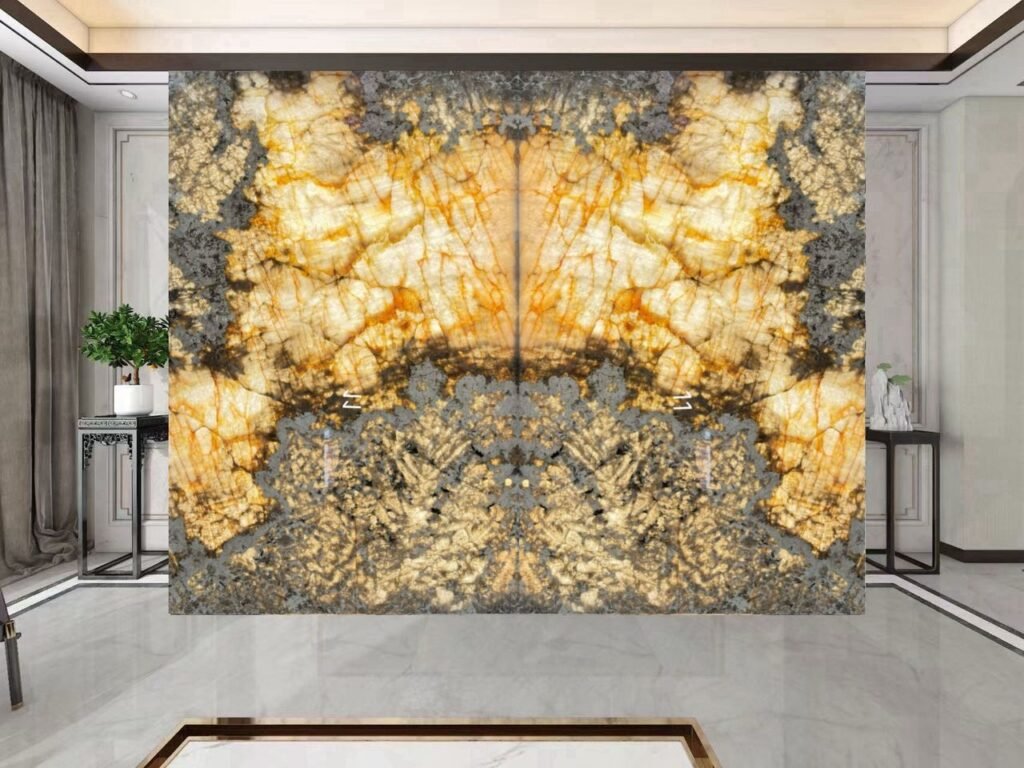
Fabrication and installation essentials
Professional fabrication required: Granite is heavy and brittle in thin unsupported sections — hire experienced fabricators who use diamond tooling, CNCs, and bridge saws. Proper reinforcement and substrate support are critical for large islands and overhangs.
Seaming & edge work: Minimize visible seams by planning slab layout carefully. For bookmatched walls or islands, ensure the fabricator can position slabs and perform precise seams. Edge profiles, bullnose, ogee, mitered waterfall edges — all add to cost.
Sealing & maintenance: Granite often requires periodic sealing to preserve stain resistance — check the manufacturer or supplier guidance for recommended sealers and maintenance intervals. Many natural stones benefit from annual to biennial sealing depending on use.
Safety & regulation: respirable crystalline silica
Cutting, grinding, and polishing natural stone can generate respirable crystalline silica (RCS), which is hazardous if inhaled. Fabricators and construction employers in the U.S. must follow OSHA’s respirable crystalline silica rules (29 C.F.R. § 1926.1153) requiring exposure controls, wet cutting, local exhaust, and worker training. Buyers should confirm that their chosen fabricator implements wet cutting, HEPA vacuums, and respirator programs to protect workers and meet local occupational health laws.
Sustainability, EPDs & purchasing transparency
Natural stone suppliers and industry groups increasingly publish Environmental Product Declarations (EPDs) and Health Product Declarations (HPDs) so architects and specifiers can evaluate life-cycle impacts. The Natural Stone Institute and several reporting bodies provide industry-average EPDs for cladding, flooring, and countertops; if green-building credits are relevant (LEED/BREEAM), request slab-specific or supplier EPD/HPD documentation. These disclosures also help buyers compare stone alternatives on transport impacts, embodied carbon, and end-of-life considerations.
Use cases: countertops, floors, and walls (practical notes)
Countertops: Patagonia granite’s dramatic appearance suits feature islands and vanity tops. For kitchens, request a honed or polished finish and plan for sink cutouts and appliance cutouts.
Floors: Granite tile derived from slabs must be tested for slip resistance in wet areas (choose honed or textured finishes for exterior or wet zones).
Walls & cladding: Bookmatched slabs create striking feature walls; for exterior cladding, verify structural anchoring and weatherproofing requirements with an engineer.
Long-tail purchase-intent keywords (3–5 suggested)
Patagonia granite slabs wholesale manufacturer
Patagonia granite slab price per square foot near me
Patagonia granite countertop slabs for sale factory
Buy Patagonia granite slabs bulk supplier
Patagonia granite slab leftover remnant sale
Use these in product pages, category landing pages, and marketplace listings to capture buyers actively searching to purchase.
Focus Keyword + 50 SEO tags
Focus keyword: Patagonia granite slab
50 SEO tags:
Patagonia granite, Patagonia granite slab, Patagonia granite price, Patagonia granite slab price, Patagonia granite per square foot, Patagonia granite cost, Patagonia granite slabs for sale, Patagonia countertops, slab of granite cost, slab of granite wholesale, how much is a slab of granite wholesale, how much is a slab of granite countertop, average cost of a slab of granite, leftover granite slabs for sale, granite slab price per sq ft, Patagonia granite near me, Patagonia granite manufacturer, Patagonia granite factory, Patagonia granite supplier, buy Patagonia granite slabs, Patagonia granite countertops price, granite countertops installed cost, cost of new granite countertops, patio granite slabs, granite floor slabs, granite wall slabs, granite bookmatch, granite slab sizes, granite slab yield, granite slab dimensions, granite slab wholesale bulk, granite remnant sale, granite slab shipping cost, granite slab installation cost, granite sealing guidance, granite fabrication safety, respirable silica stone, OSHA silica fabrication, granite EPD, natural stone EPD, HPD granite, sustainable granite sourcing, imported granite slabs, granite slab finish options, granite honed vs polished, granite edge profiles, granite countertop tips, want granite slab quote, granite slab discounts, granite slab showroom, granite slab gallery.
FAQ — 5 Google-hot queries
FAQ 1 — How much is a slab of granite wholesale?
Wholesale slab prices vary, but expect anywhere from $500 to several thousand dollars per slab, depending on size, grade, and origin; request exact slab photos and dimensions to get accurate wholesale quotes from suppliers or factories.
FAQ 2 — How much is a slab of granite countertop?
A slab listed for countertop use often ranges from $40–$200 per sq ft installed, depending on stone grade and fabrication complexity; material-only slab rates will vary by supplier and slab rarity.
FAQ 3 — Where can I find Patagonia granite slabs for sale?
Patagonia granite is sold through slab yards, stone galleries, and online resellers; ask for slab photos, thickness (2 cm or 3 cm), finish options, and freight estimates before buying.
FAQ 4 — What is the average price for granite countertops installed?
Nationally, many installed granite countertop projects fall between $2,000 and $5,500 for typical kitchen sizes, although high-end projects can exceed that range. Pricing depends on layout, edge detail, and slab choice.
FAQ 5 — Does Patagonia granite need sealing and special maintenance?
Natural granites typically benefit from periodic sealing to maintain stain resistance; frequency depends on finish and use (annual to biennial is common). Always follow the supplier maintenance advice for your specific slab.
Semantic Closed-Loop: How · Why · What · Options · Considerations
How: Patagonia granite slabs are quarried, cut into large blocks, and sawn into slabs at fabricators or finishing mills. Slabs typically come in 2 cm or 3 cm thicknesses and are polished, honed, or textured depending on the finish requested. For installation, slabs are templated, cut, finished, and installed by certified fabricators using diamond tooling.
Why: Buyers choose Patagonia granite for its distinctive, natural patterns and durability — granite resists heat and scratching better than many engineered surfaces and creates a high-value aesthetic for residential and commercial projects. Its uniqueness (each slab is one-of-a-kind) is a premium selling point in kitchens and feature walls.
What: Typical applications include kitchen and bathroom countertops, flooring, and large-format wall cladding. For durable floors and exterior cladding, choose appropriate finishes and verify structural support and anchoring.
Options (detailed):
Buy route: local slab yard, online slab marketplace, direct factory/wholesale purchase, or remnant market.
Slab selection: request slab dimensions, photos of both faces, thickness, and whether bookmatching pairs exist.
Finish & edge: polished for countertops, honed or textured for floors; choose edge details based on design and budget.
Considerations (detailed):
Cost planning: include freight, fabrication, and installation in the budget (material-only quotes understate the total cost).
Safety & compliance: require fabricators to follow OSHA silica controls (wet cutting, dust collection, and PPE) to protect workers.
Sustainability: Request EPD/HPD documentation if environmental reporting or green-building credits are required.
Long-term value: factor maintenance (sealing intervals) and potential for repairs—granite ages well and retains resale value.