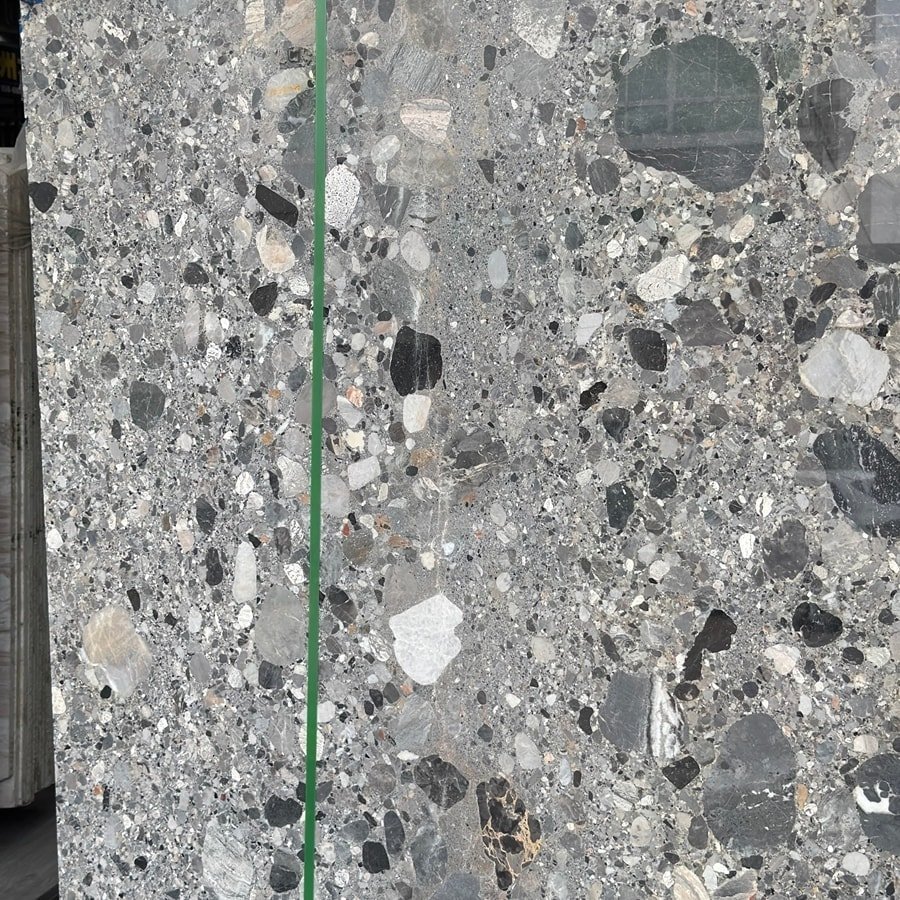
Material Characteristics and Attributes
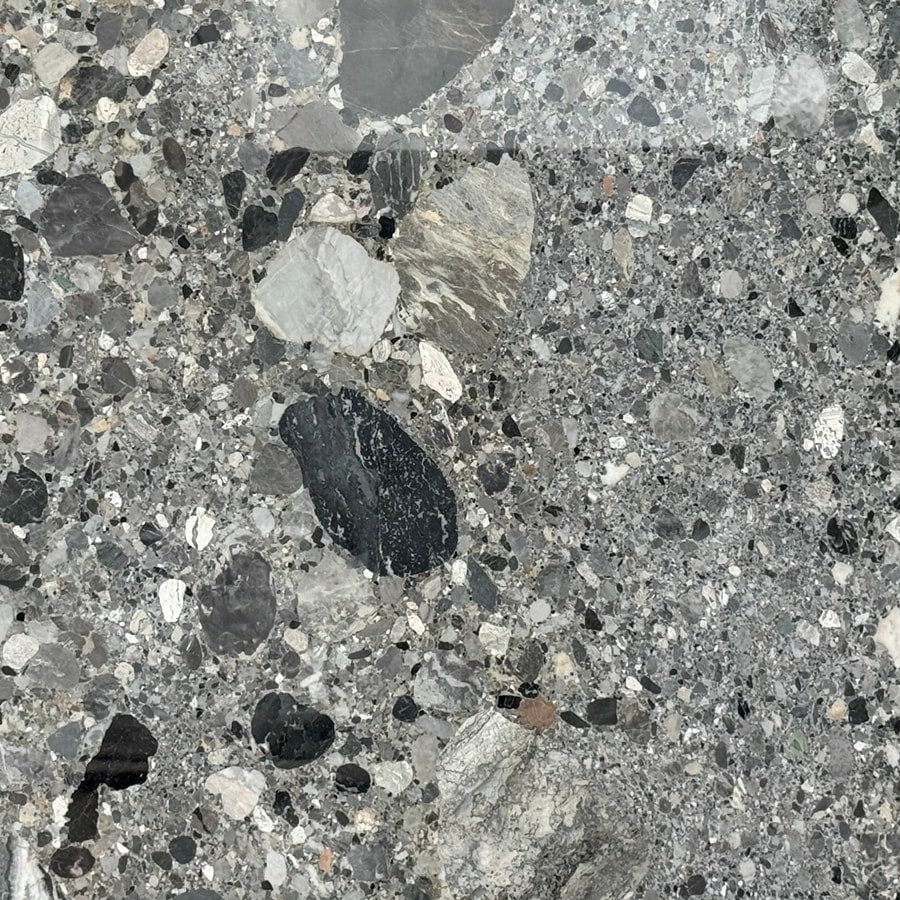
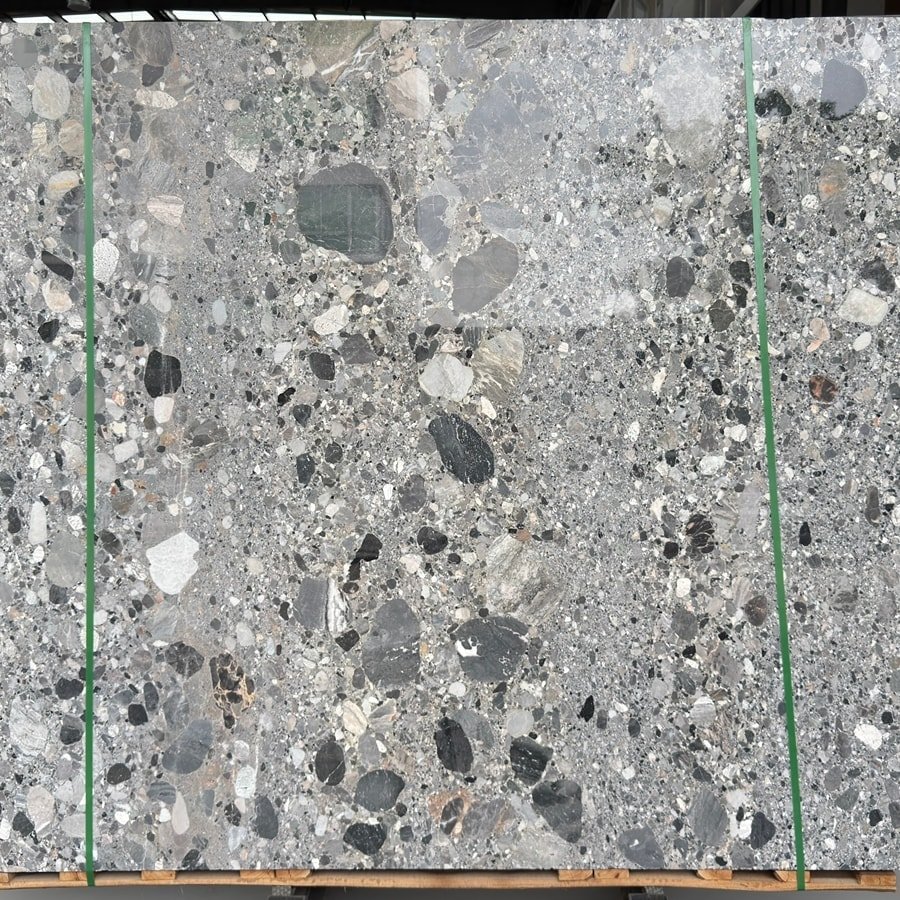
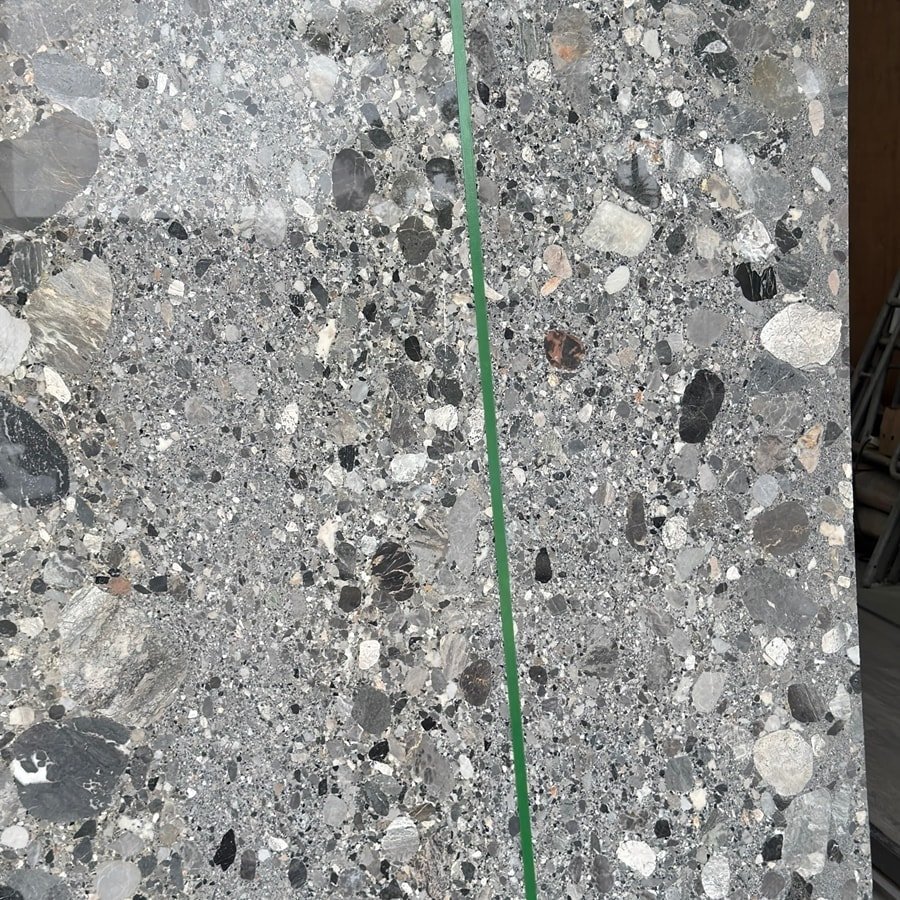
Grey Fossil Marble, often originating from North Africa or parts of the Mediterranean, is a fossiliferous limestone that has undergone enough metamorphosis to be classified as marble. Its base color is a deep, uniform charcoal grey, sometimes approaching a rich black. The entire slab is a fascinating archive of ancient life, densely interspersed with clearly visible, light-colored (white, beige, or grey) fossils. These organisms—often cross-sections of ammonites, orthoceras, and crinoids—create a high-contrast speckled pattern that tells a geological story.
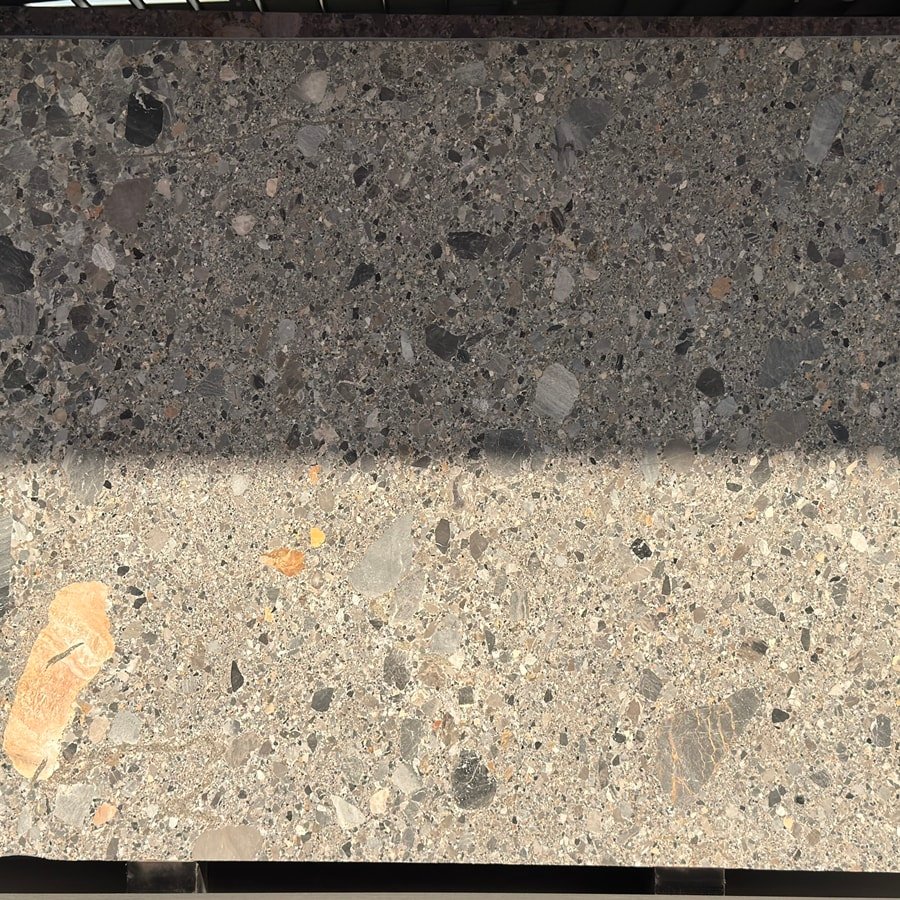
The density of the fossil inclusions gives the stone a unique texture and robust appearance. When highly polished, the black background gains immense depth, making the white fossils appear to float on the surface. This stone’s visual appeal is entirely dependent on the visibility and density of the fossil fragments. While it shares the calcite composition of other marbles (requiring sealing), the complex pattern is highly effective at camouflaging minor surface imperfections and etching.
Architectural Applications and Design Integration
Grey Fossil Marble is used to create unique and engaging spaces, playing on the themes of nature and deep history:
-
Feature Bathroom Vanity Tops: The fossils provide a perfect conversation starter and a strong visual focus in a luxury bathroom or powder room. The polished surface enhances the drama of the fossil contrast, pairing beautifully with chrome or dark metal fixtures.
-
Accent Flooring and Borders: It is used in smaller areas, such as entryways or central medallions in lobbies, often contrasted with a plain, lighter grey or white stone. The dense pattern and dark color help anchor the space and provide a dramatic effect.
-
Fireplace Surrounds and Wall Panels: The stone serves as a rich, dark frame that adds texture and visual weight to a living space. The fossil inclusions ensure that the surface is never monotonous, even from a distance.
-
Bespoke Retail Fixtures: Used for display plinths or check-out counters in high-end retail (especially jewelry or natural goods), it reinforces a narrative of natural quality and antiquity.
Designers employing Grey Fossil Marble are often seeking a narrative and organic texture that cannot be replicated by man-made materials. It works well in industrial, rustic-chic, and modern-eclectic design schemes. For B2B procurement, the key quality control factor is the fossil density and clarity. Designers often need to approve the slab layout (dry-lay) to ensure the distribution of the most spectacular fossils is correctly positioned on the finished pieces.