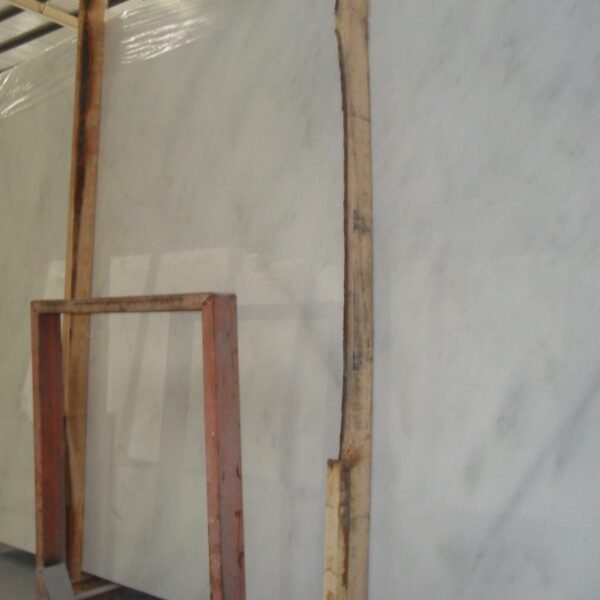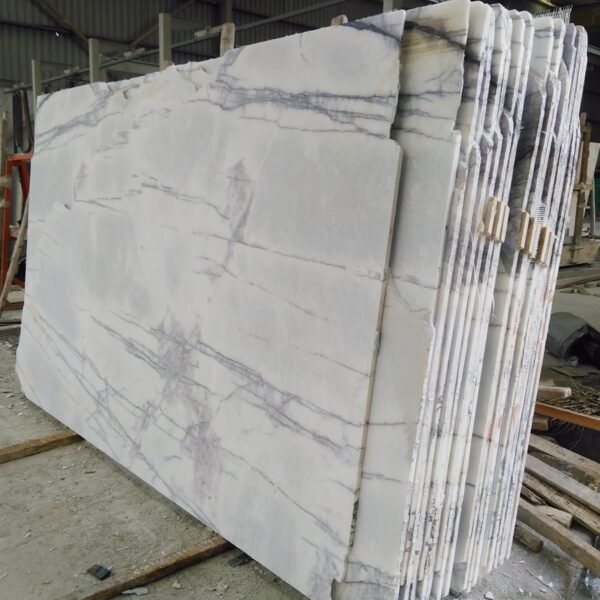
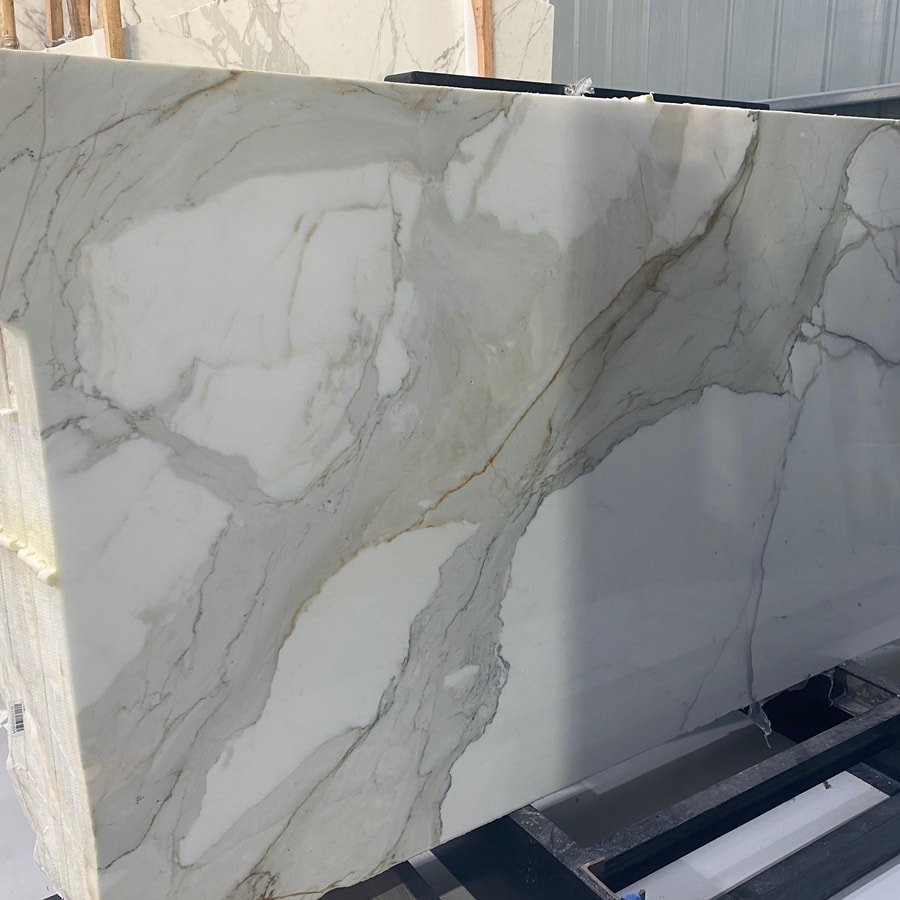
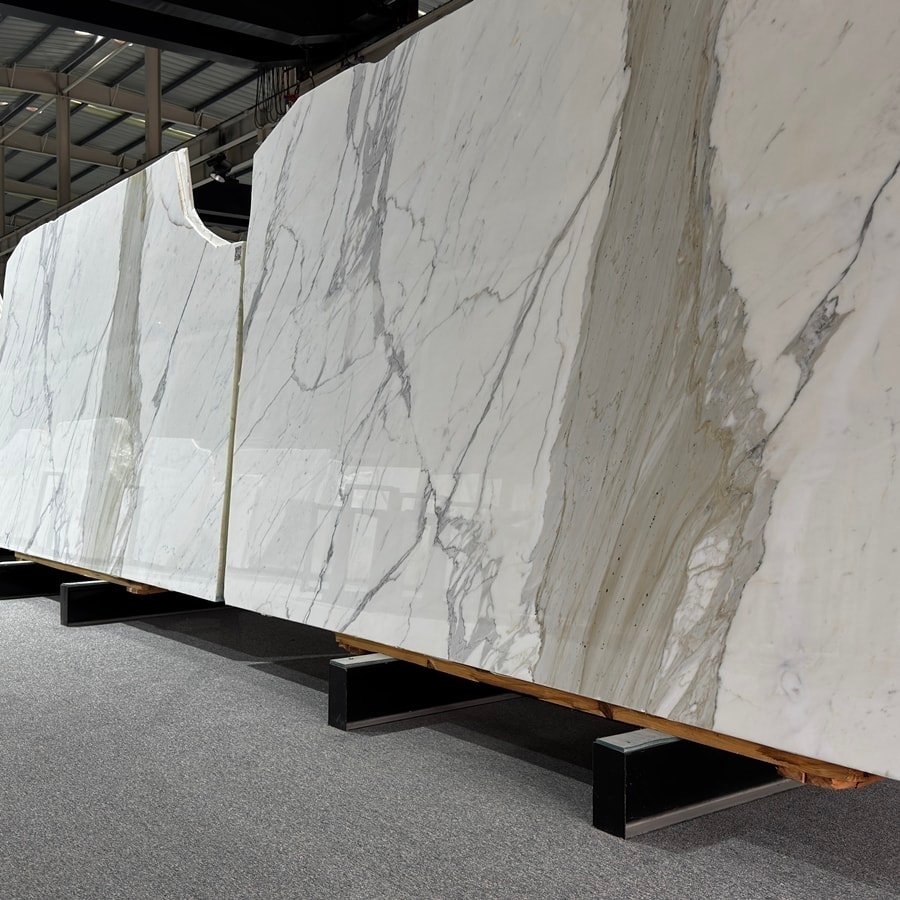
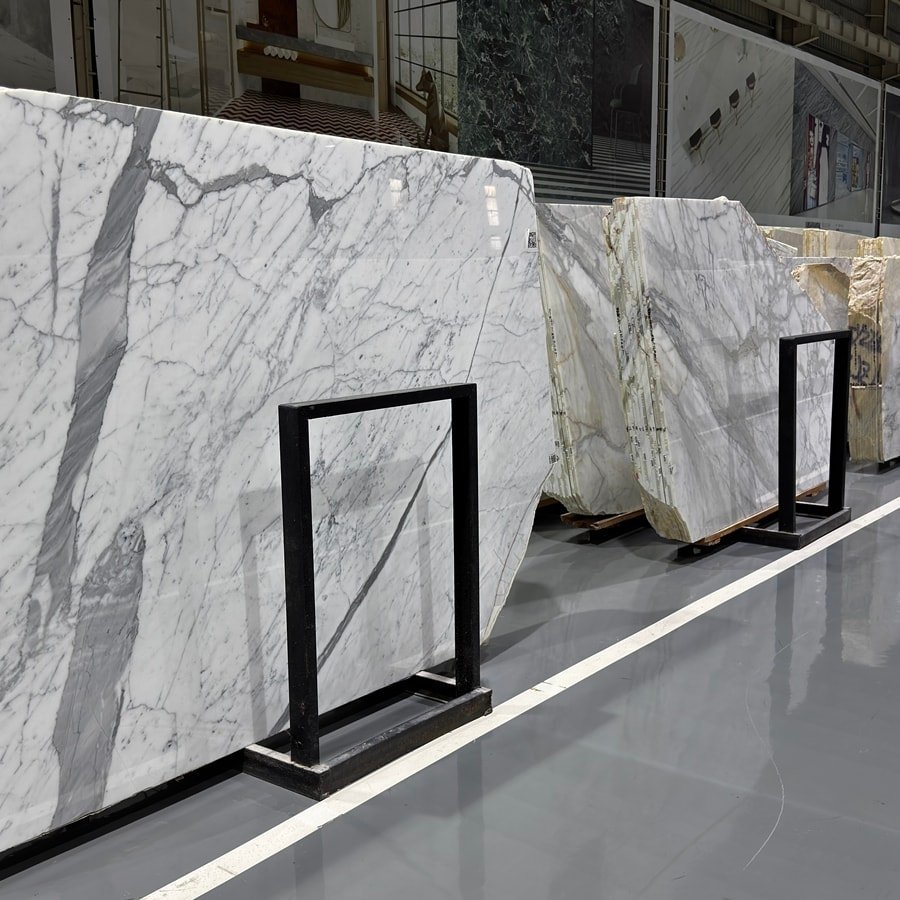
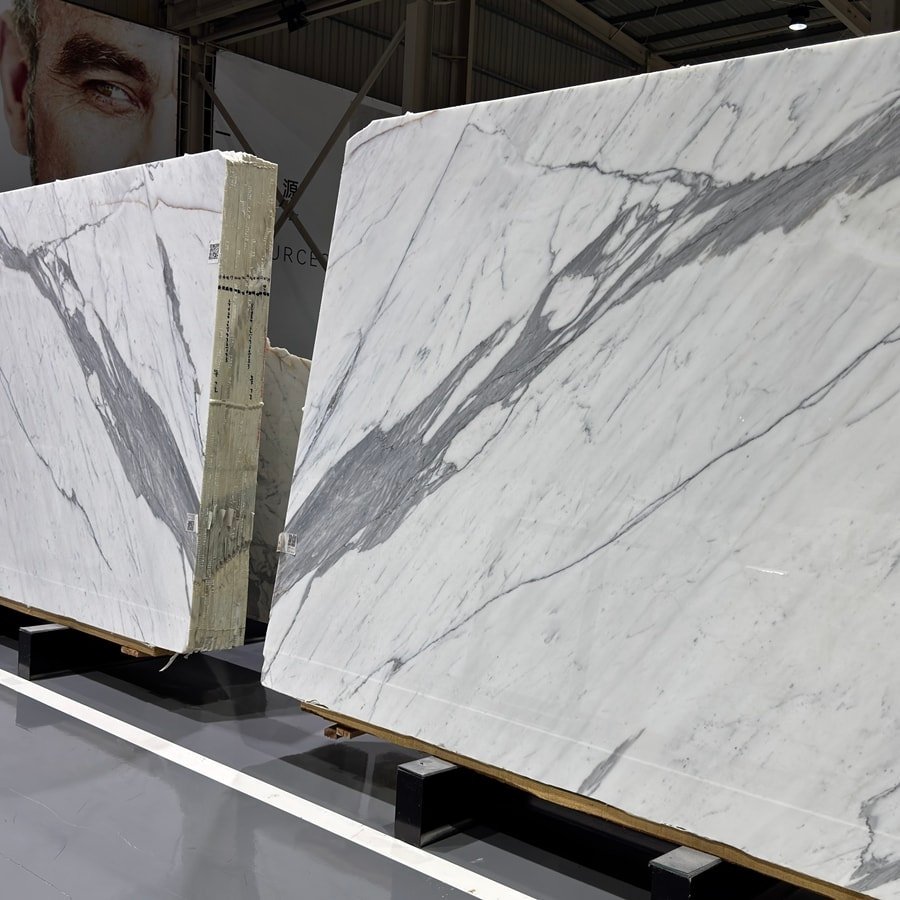
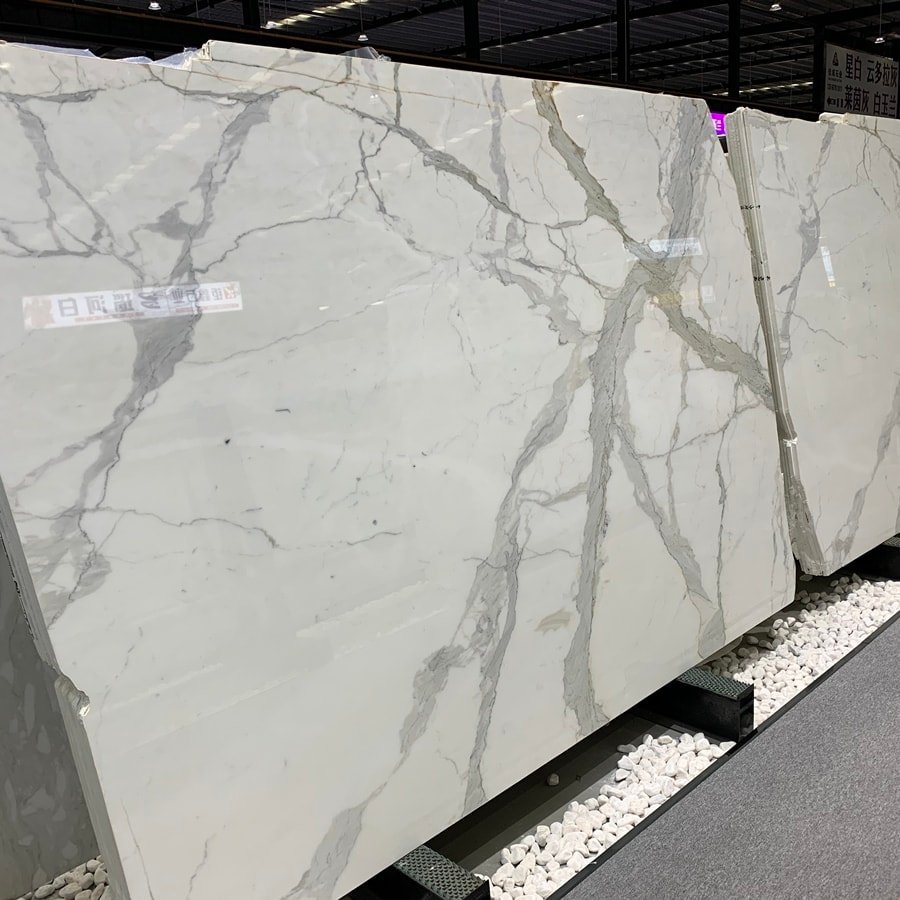
Calacatta White Marble is widely recognized as a premium, high-contrast marble distinguished by a bright white background and bold, often wide-ranging veins that can be grey, charcoal, or warm gold. Its strong graphic character makes it a favorite for focal installations where the stone becomes the design centerpiece. Physically, Calacatta shares common marble properties—calcite composition, moderate porosity, and relative softness compared to silicate igneous stones. Because of its aesthetic value, Calacatta slabs are typically selected for large-format applications that showcase vein dynamics, but these same qualities demand careful technical and maintenance planning.
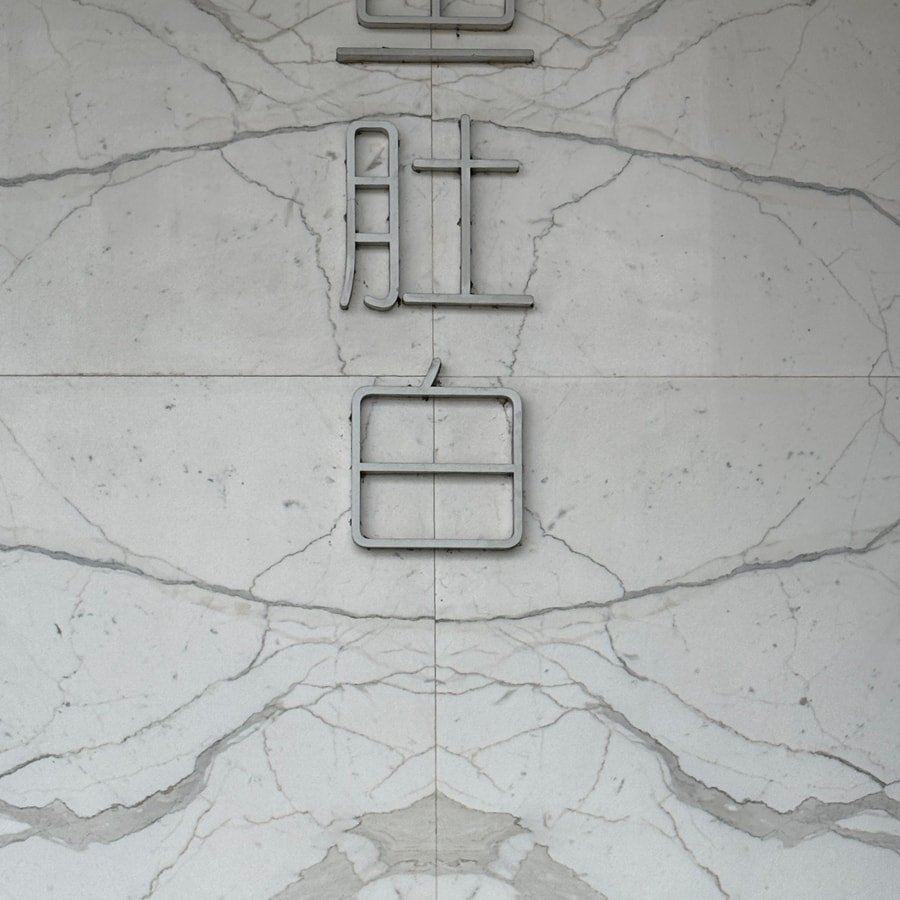
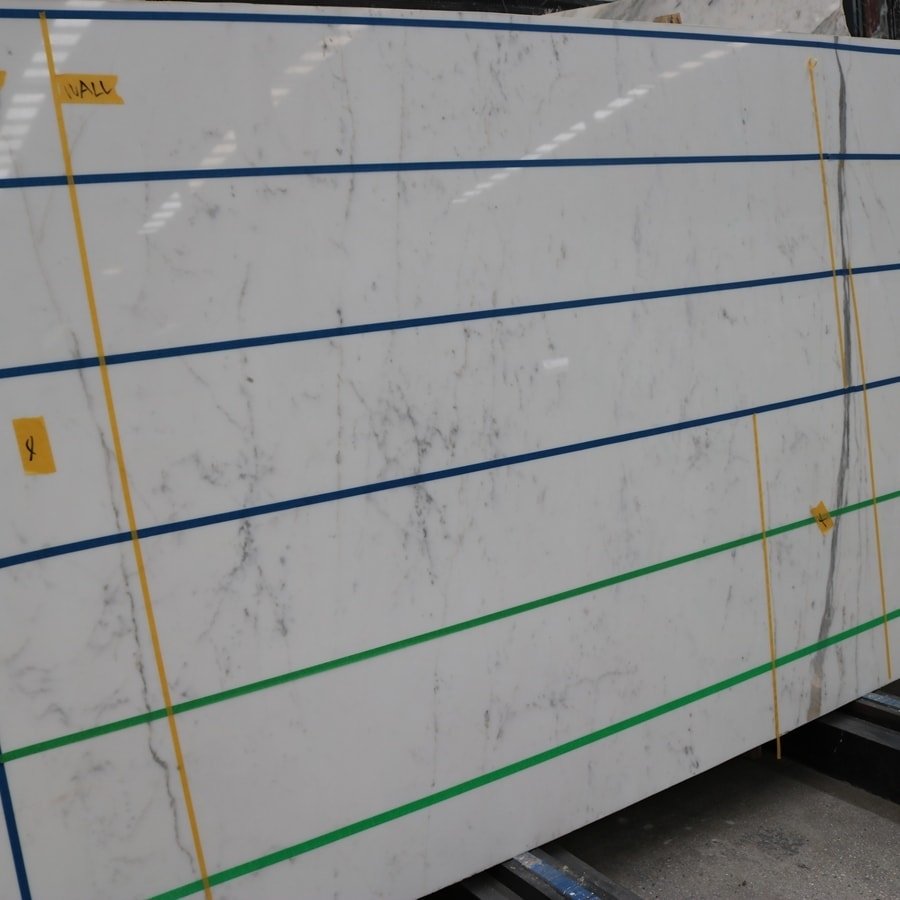
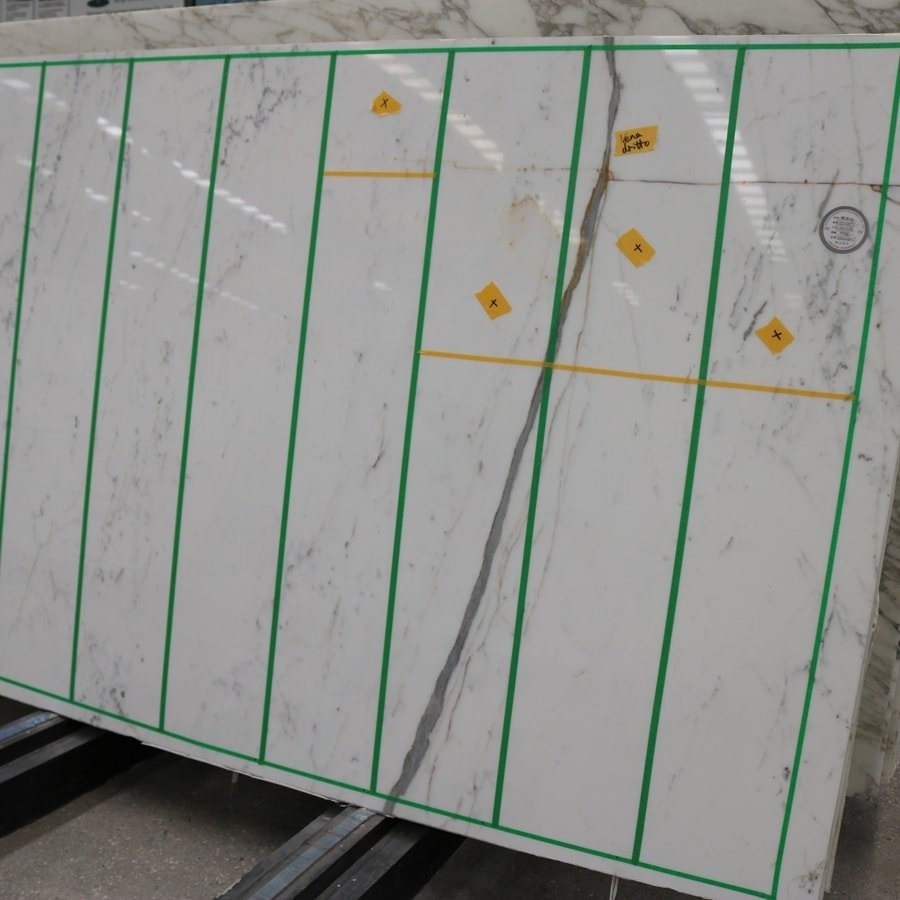
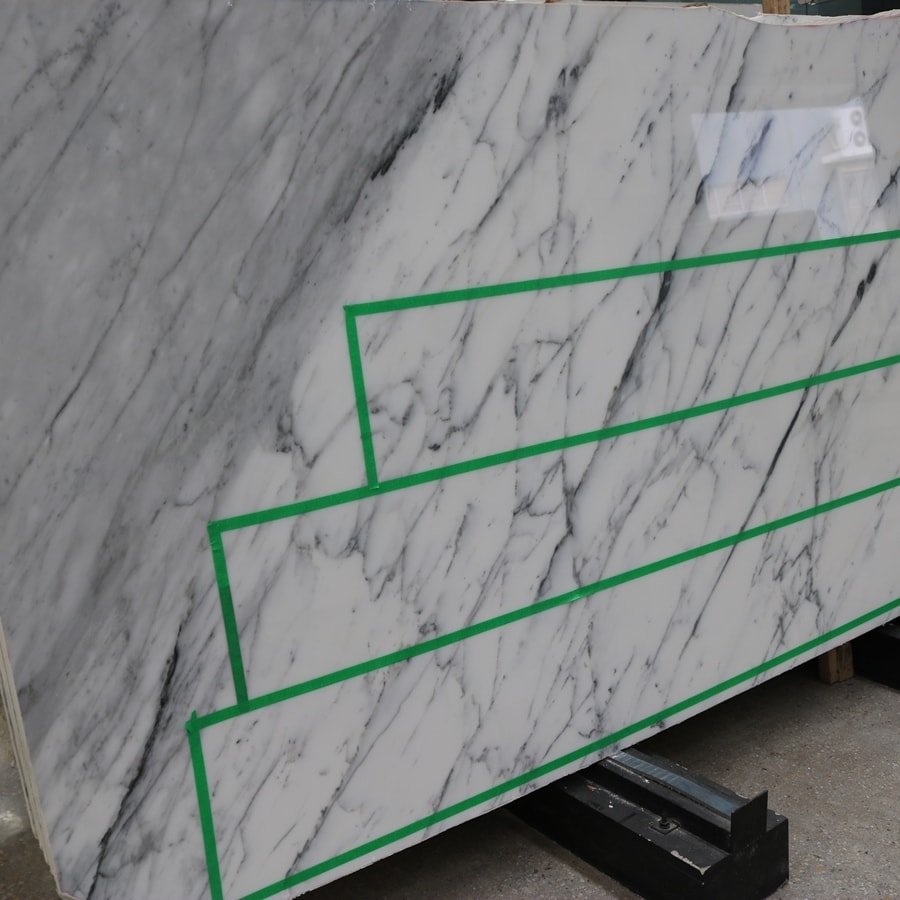
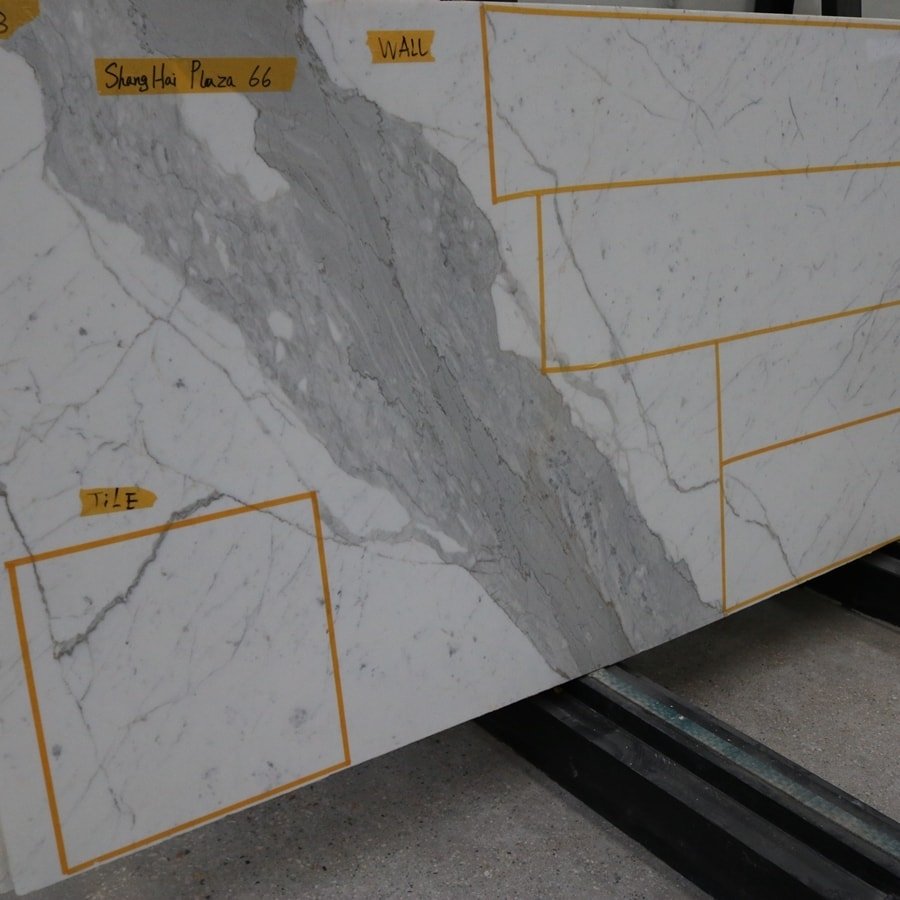
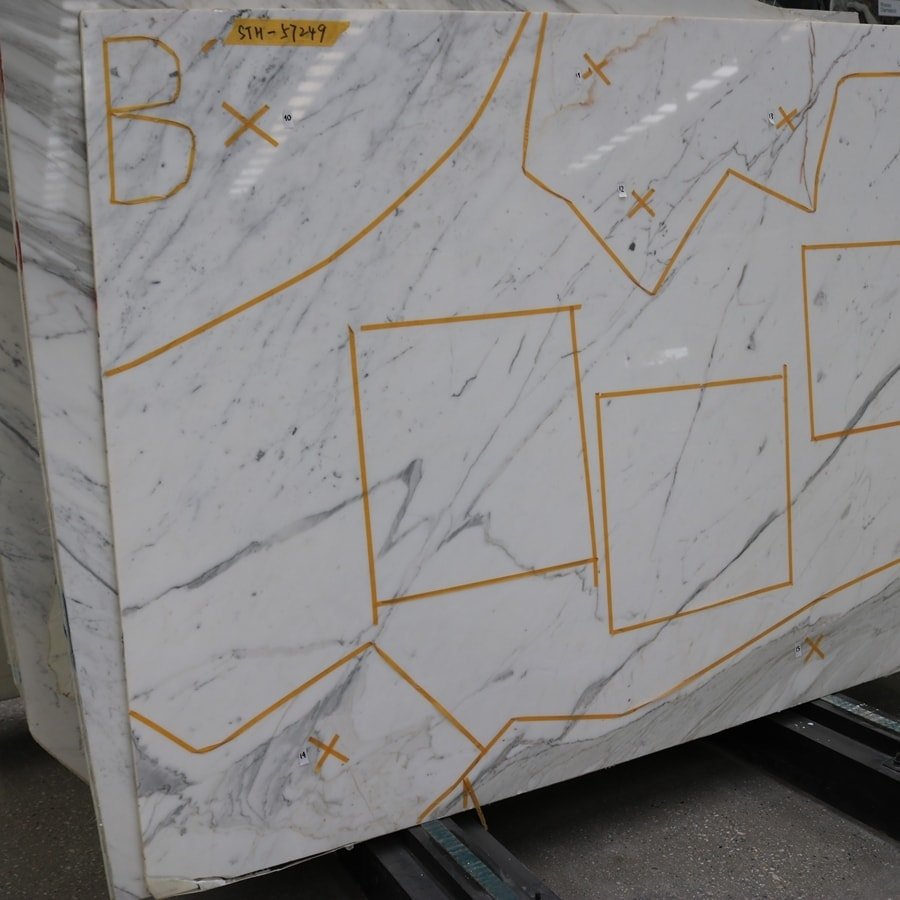
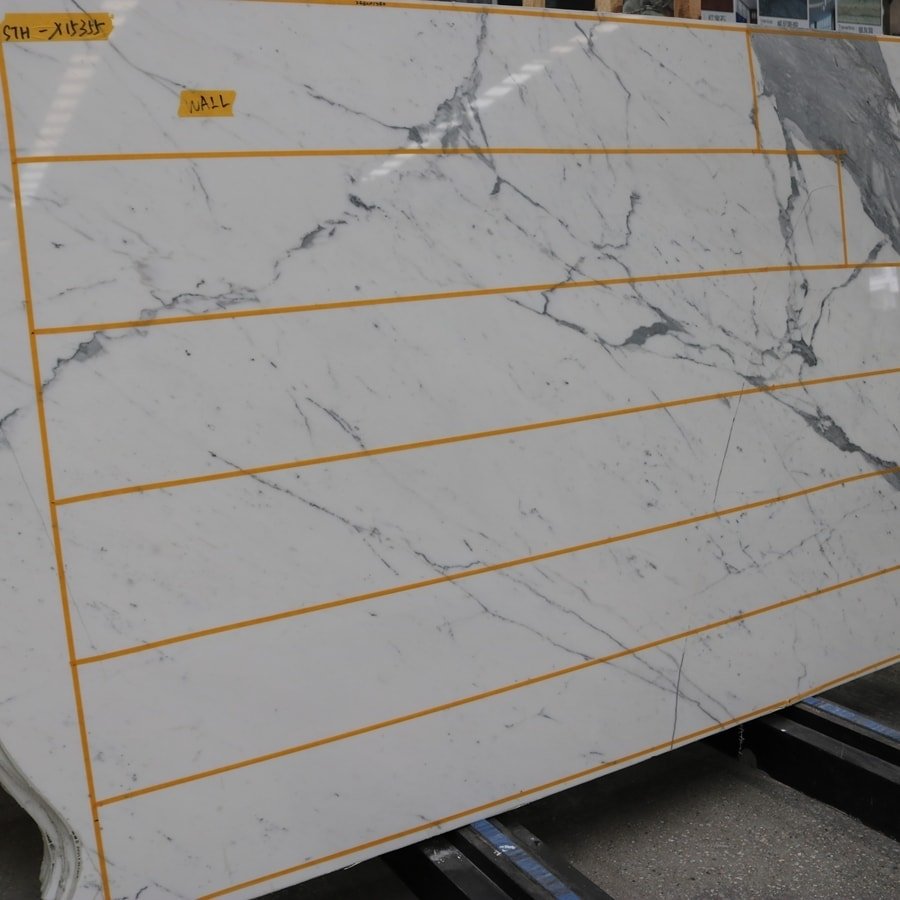
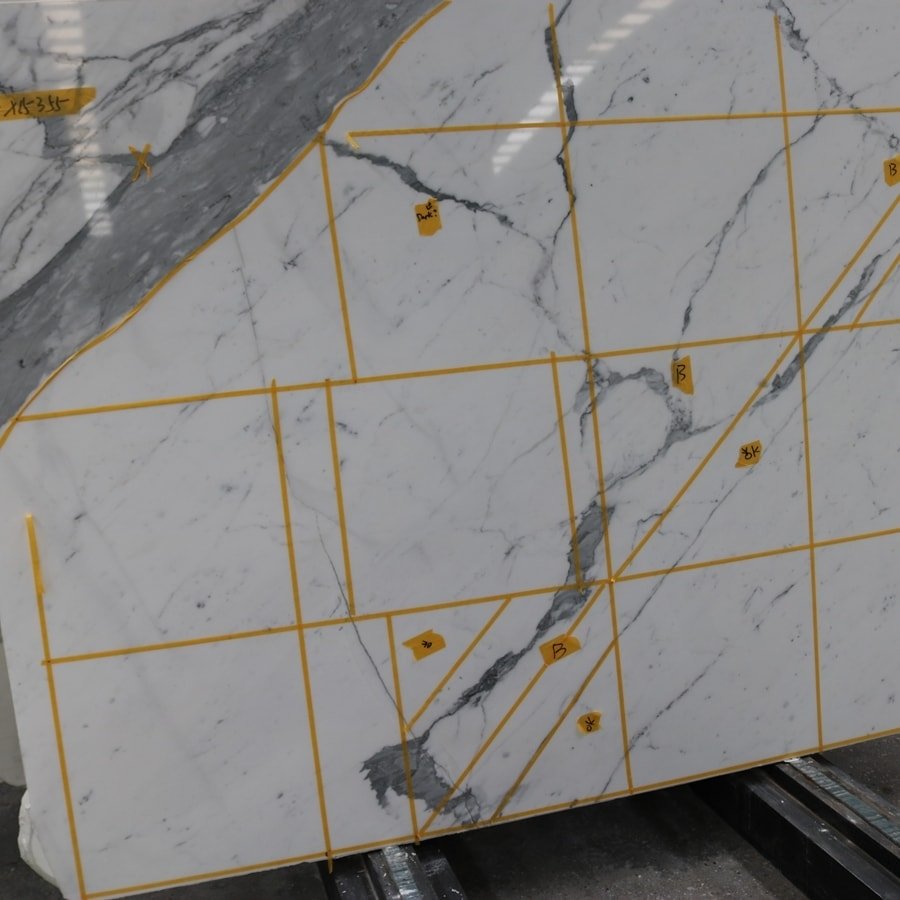
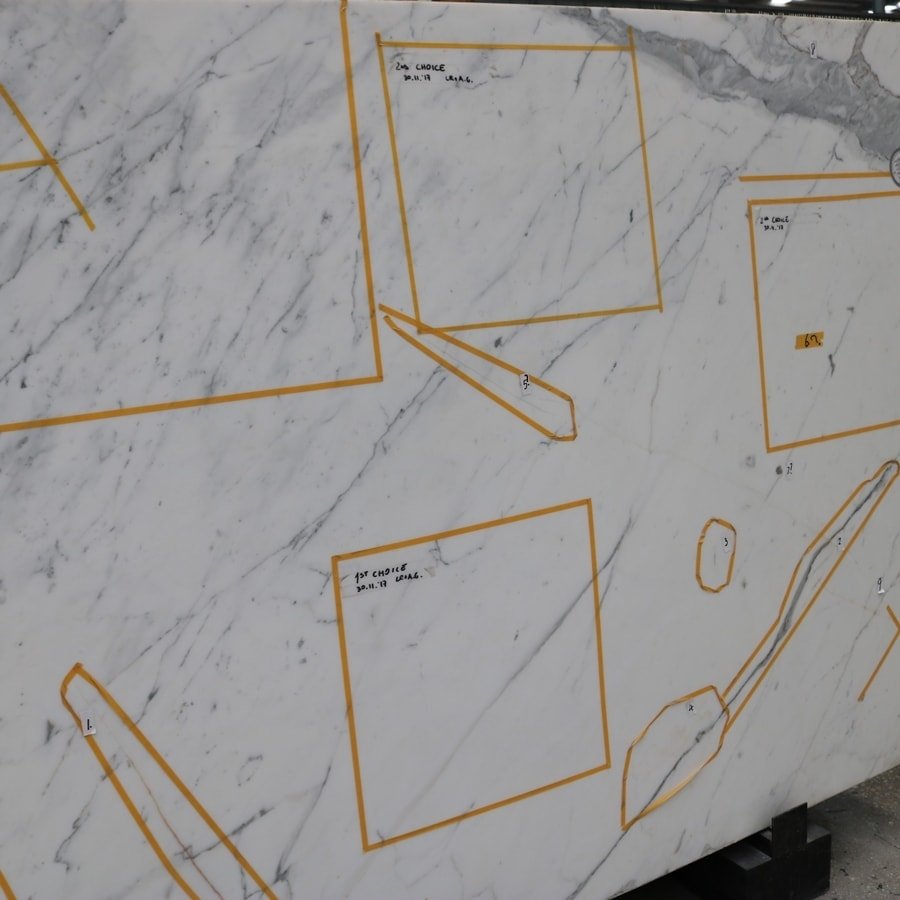
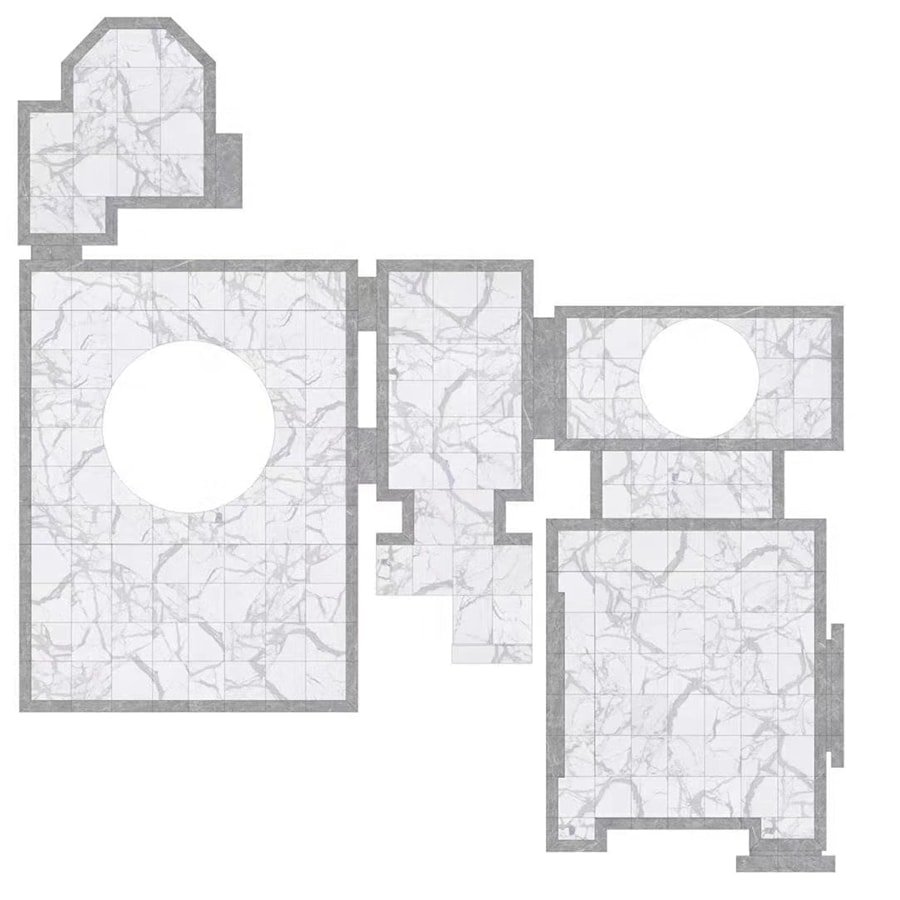
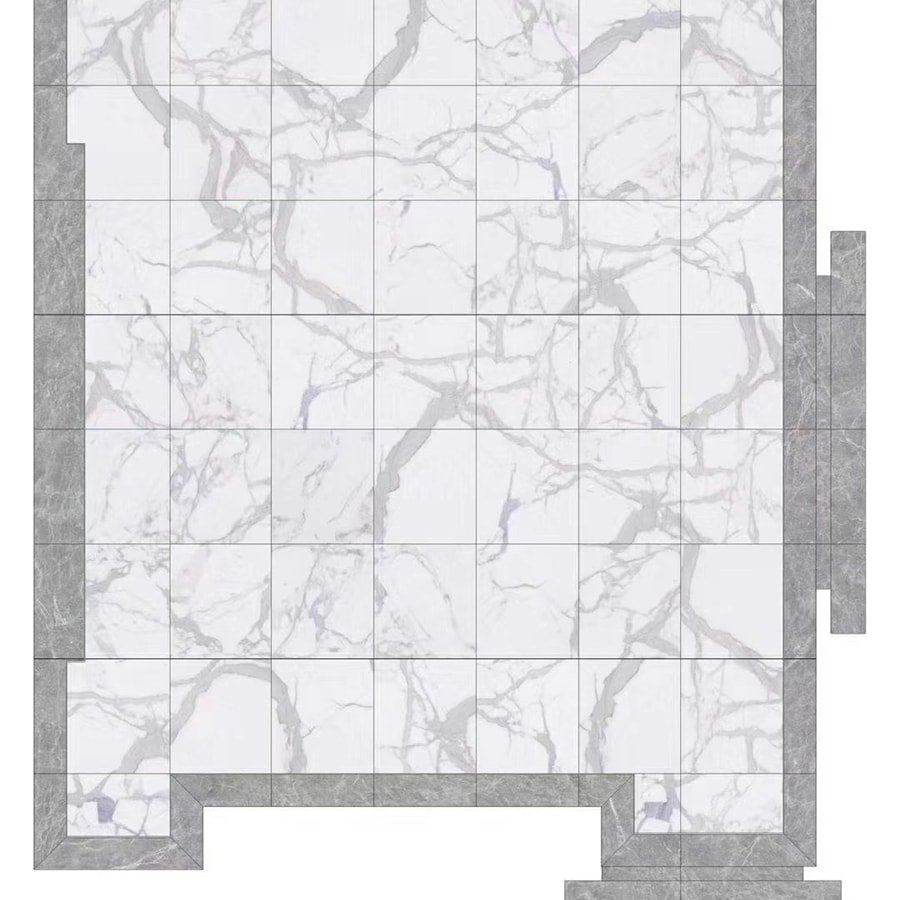
Designers often reserve Calacatta for high-visibility surfaces: kitchen countertops and waterfall islands, large-format wall cladding, fireplace surrounds, and sculptural millwork. A polished finish amplifies the white ground and contrast of the veins, creating a luminous, jewel-like surface. Book-matching and vein alignment are widely used with Calacatta to produce continuous, dramatic flows across panels—this technique transforms slabs into visual narratives and is especially effective in large-scale hospitality lobbies and private residences seeking a luxury statement.
Because Calacatta’s value derives from its visual drama, slab selection is critical: buyers seek consistency of background tone and the desired vein scale. The stone’s porosity necessitates penetrating sealers, because veins sometimes contain mineral concentrations that respond differently to polishing, expect some variation in gloss, and plan for consistent finishing techniques. The marble’s susceptibility to acidic etching means it requires protective protocols: in kitchens, designers often pair Calacatta islands with a harder, more forgiving work surface or accept that sealing and careful maintenance will be ongoing.
Calacatta can be used for flooring, but is best limited to formal rooms with moderate traffic or in combination with tougher materials where it serves as inlays, borders, or patterned fields. In bathrooms, it makes spectacular shower and vanity walls—again, provided maintenance is planned and cleaners avoid acids. For commercial installations, factor in the cost of replacing or repairing highly figured slabs: matching new slabs over time can be difficult as natural variation is intrinsic to the material.
Fabrication complexity rises with slab size and vein pattern. Experienced fabricators are required for bookmatching and for minimizing waste while maximizing aesthetic potential. Structural support and substrate preparation are crucial for large-format slabs to prevent cracking or bowing. Movement joints and proper anchoring systems are essential, particularly for vertical assemblies.
From sustainability and cost perspectives, Calacatta typically sits at the higher end of the market due to limited high-grade slab availability and high demand. Consider reclaimed or remnant options for smaller projects to economize and reduce quarrying impact.
In summary, Calacatta White Marble is a top-tier design stone chosen for its dramatic veins and luminous white ground. It creates standout interiors when used as feature cladding, countertops, and furniture; success depends on meticulous slab selection, professional fabrication, and a maintenance plan that respects the stone’s natural qualities.