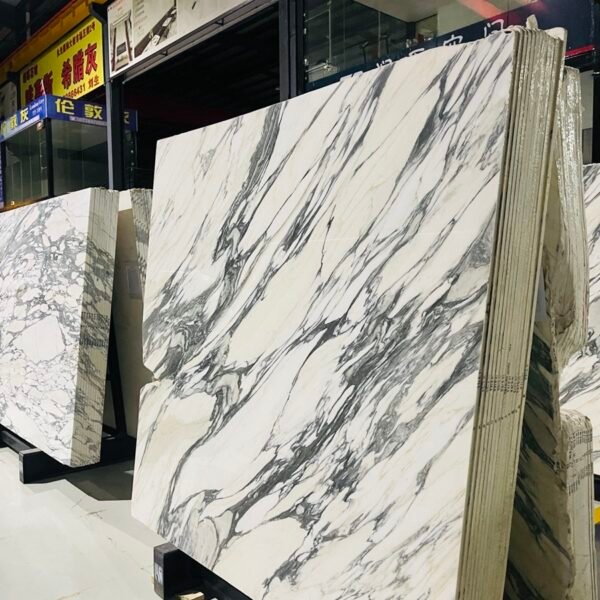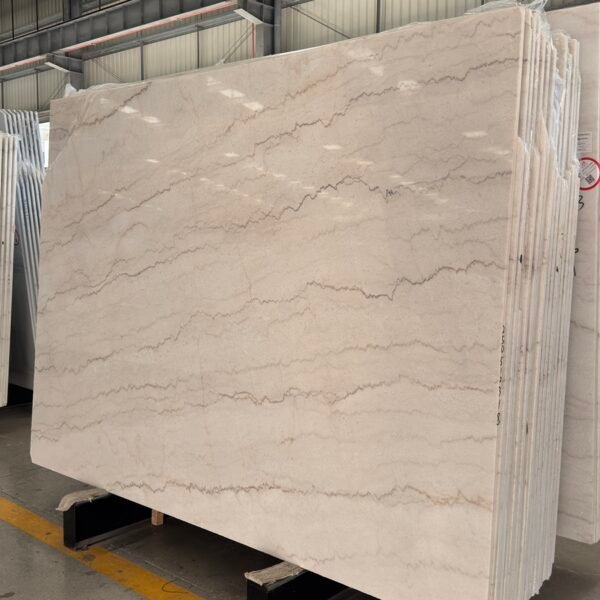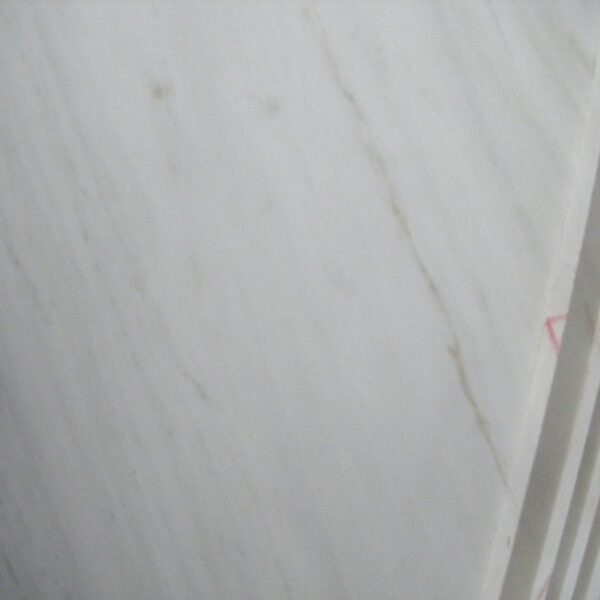
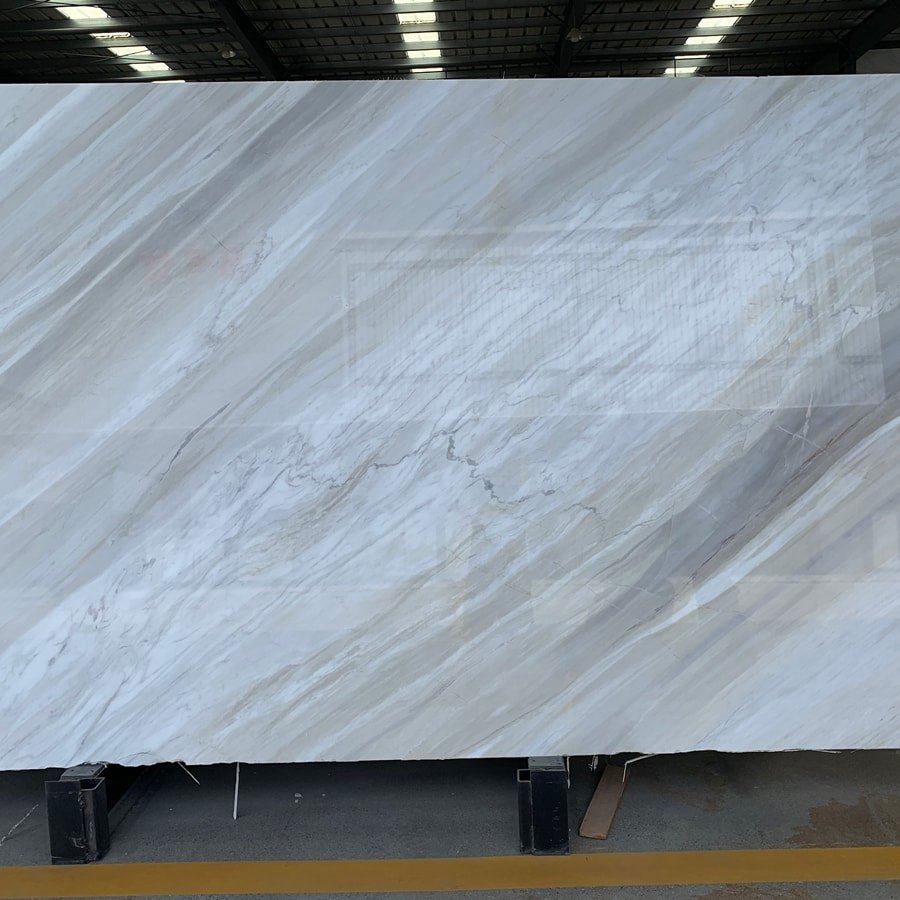
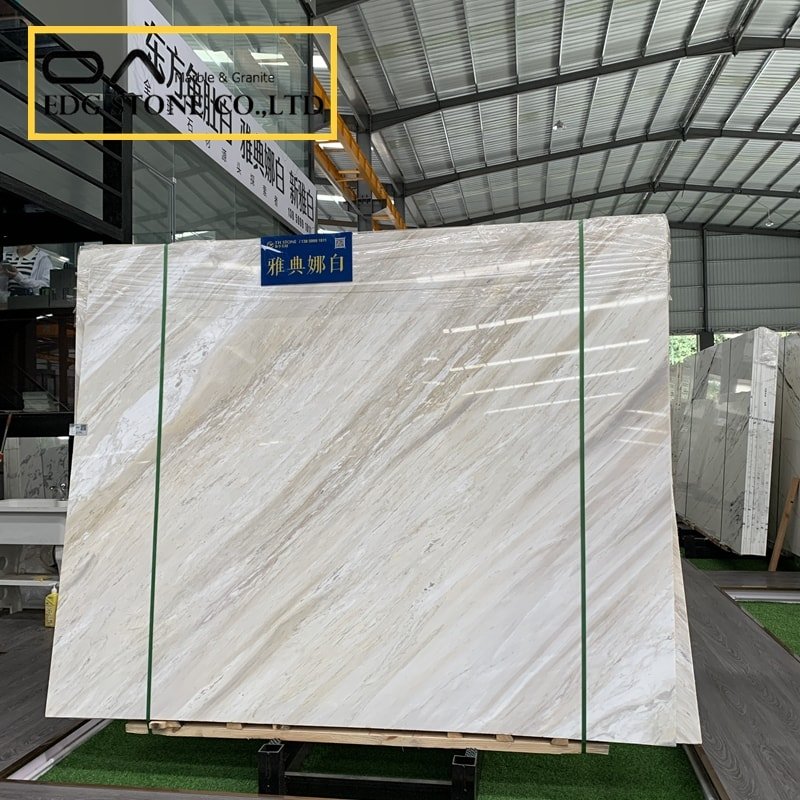
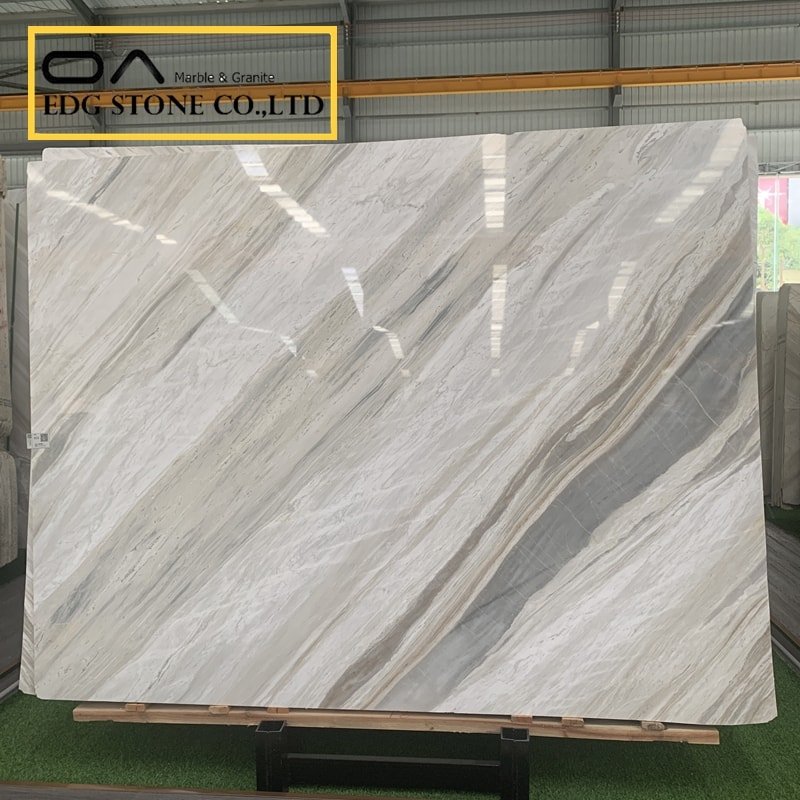
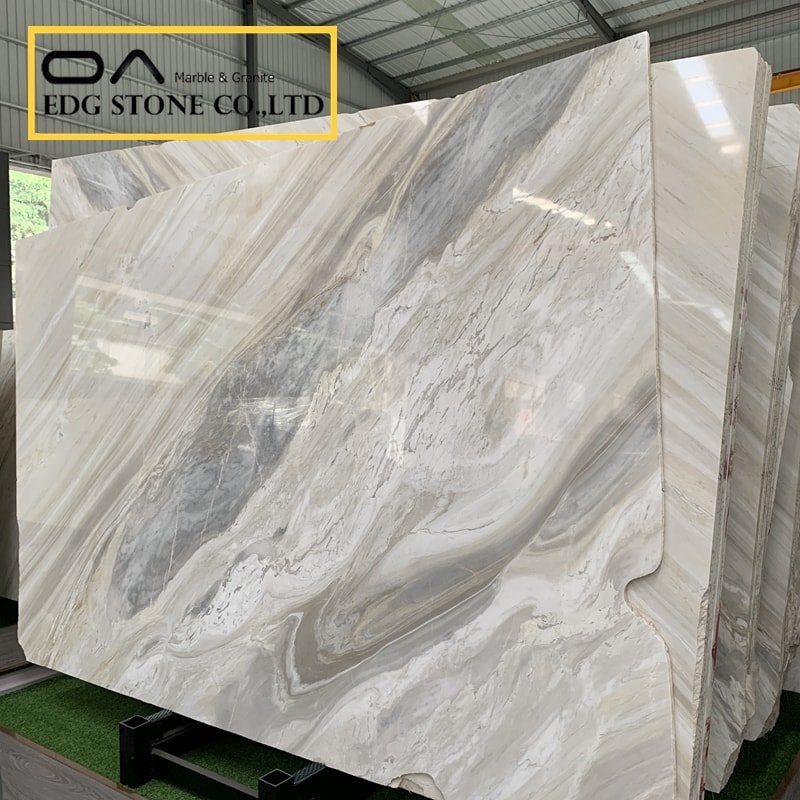
Athena White Marble is characterized by a light, warm white background and predominantly soft, flowing grey veins that produce an understated, sophisticated aesthetic. Physically, it sits within the common range for building marbles: softer than granites and engineered quartz, moderately porous, and receptive to standard finishes—polished, honed, or leathered. These properties determine how it’s used architecturally and how it must be handled during specification, fabrication, and maintenance.
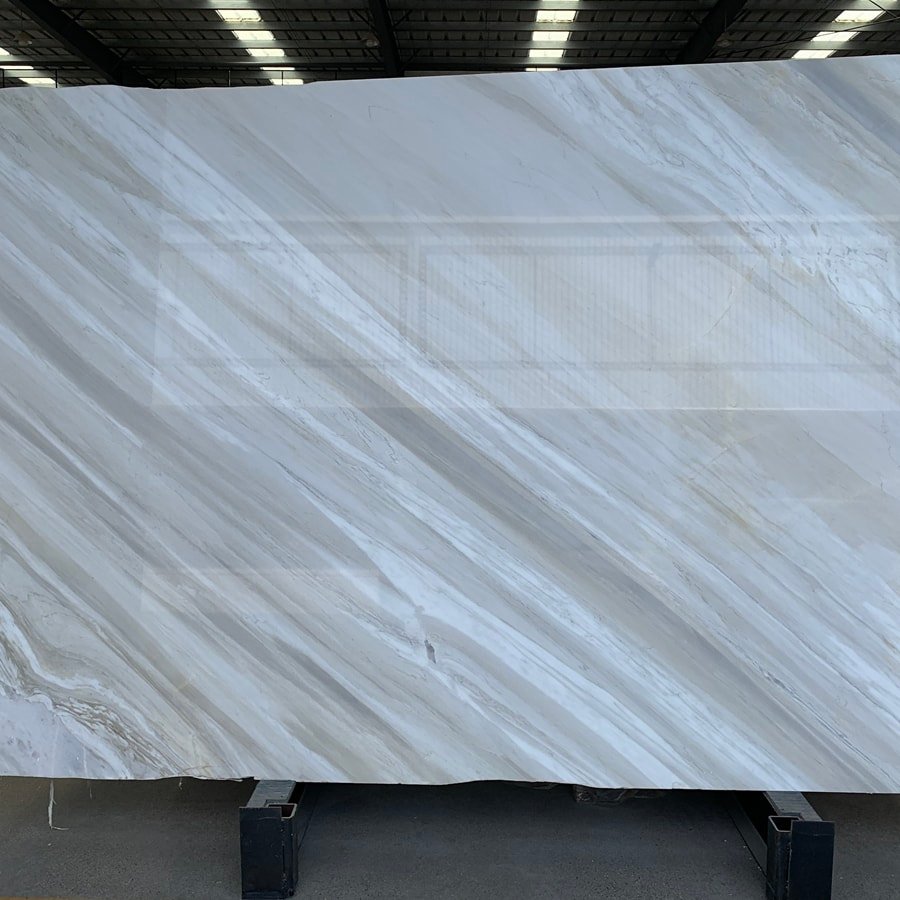
Aesthetic qualities are the primary driver for Athena’s selection. The marble brings luminous depth in polished finishes, amplifying interior light and creating an impression of spaciousness. Honed or matte finishes reduce reflectivity, revealing subtler veining and producing a refined, contemporary look. Athena’s veining is typically softer and less contrasty than dramatic Calacattas, which makes it highly versatile for modern and classical schemes where continuity and calm are desired.
Architectural applications where Athena excels include interior wall cladding, bathroom surrounds, vanity tops, fireplace hearths, and light-use flooring. Its softer surface makes it ideally suited for vertical and semi-horizontal surfaces where impact and heavy abrasion are limited. In bathrooms and powder rooms, properly sealed Athena marble provides a luxurious, tactile surface for vanities and tub surrounds—areas where the visual warmth of its background and gentle veining read beautifully. For commercial spaces, Athena works well in lobbies, reception walls, and feature columns where ongoing maintenance is planned and foot traffic is controlled.
From a technical perspective, Athena requires careful sealing to limit staining risk. Because marble is calcium carbonate-based, it is reactive to acids—lemon juice, vinegar, and some cleaning products can etch the surface. For kitchen countertops, Athena can be used, but is best applied on island perimeters, backsplashes, or areas less exposed to heavy cutting or acidic spills; many designers prefer engineered stones for primary food-prep surfaces for that reason. When used on floors, choose a honed finish and select tiles with a slip-resistant treatment for wet areas. In high-traffic commercial flooring, Athena is less durable than igneous stones; pre-assess expected wear and consider using it in patterned inlays or border bands rather than the entire walking field.
Fabrication and installation need skilled attention: marble’s veining should be book-matched or vein-aligned for continuous visual flow on large cladding planes. Anchoring systems for thin-bed cladding, substrate preparation, and movement joints must follow the manufacturer’s best practices to avoid cracking. Thermal expansion differences between marble and substrates must be accounted for in exterior sheltered overhangs or canopies; Athena is most often specified for interior use.
Sustainability and lifecycle considerations are favorable when Athena is locally quarried (reducing transport) or when reclaimed marble is used. End users should plan periodic resealing and gentle, pH-neutral maintenance regimes. Overall, Athena White Marble is a high-impact aesthetic choice: its soft veining and warm white ground create versatile, timeless interiors when specified with the right expectations for care and application.