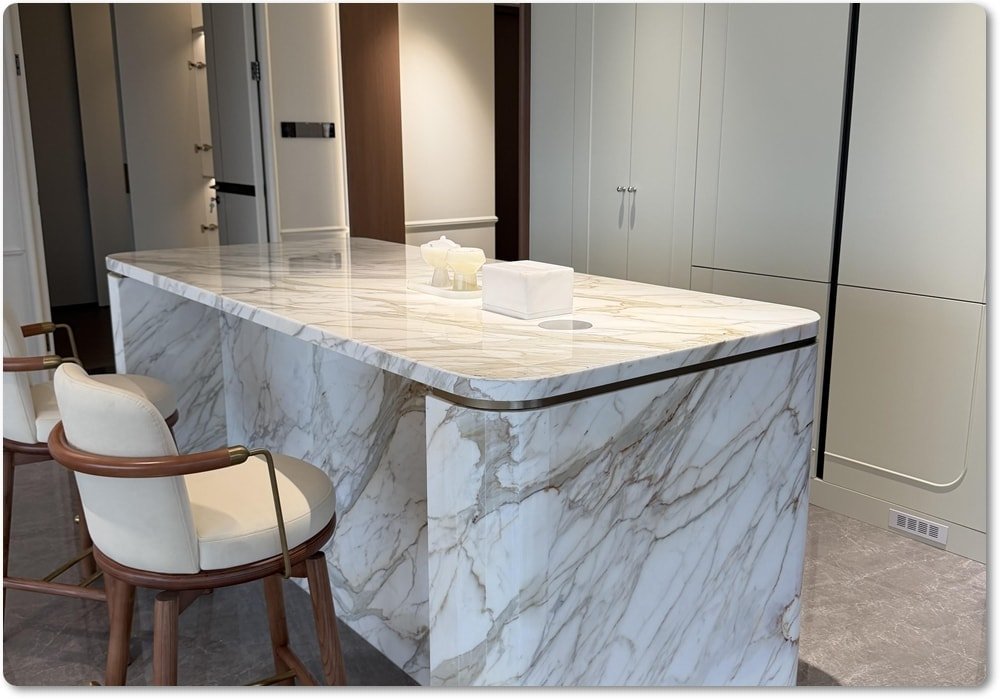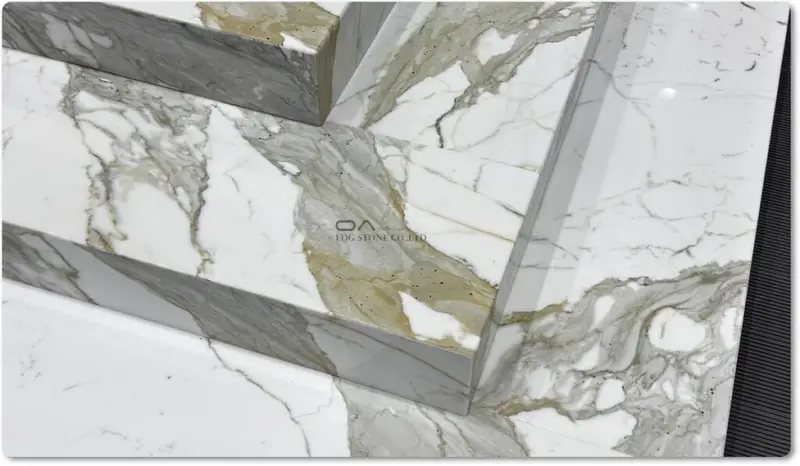
Quick Summary: Choosing a marble countertop manufacturer in 2026 requires more than comparing slab prices. B2B buyers should evaluate natural marble sourcing, slab grading, CNC and waterjet fabrication, CAD accuracy, edge and cutout quality, surface finishing, quality control, export packaging, warranty terms, documentation, production capacity, and project experience. A factory-direct manufacturer can provide greater control over material selection, customization, fabrication quality, lead time, and wholesale pricing. For international projects, buyers should also verify the manufacturer’s ability to meet the destination market’s technical, environmental, workplace safety, packaging, and documentation requirements.
2026 Buyer Insight: The marble countertop market is increasingly moving toward customized fabrication, natural, authentic stone aesthetics, large-format applications, digitally controlled production, detailed technical documentation, and stronger supply chain transparency. The best manufacturer is therefore not simply the lowest-cost supplier; it is the manufacturer that can consistently convert a specified stone slab into a dimensionally accurate, properly finished, safely packed, and commercially documented finished product.
Marble countertops remain one of the most recognizable premium natural-stone surfaces for residential kitchens, bathrooms, hotels, restaurants, luxury apartments, villas, retail spaces, and commercial interiors. However, buying finished marble countertops is fundamentally different from buying ordinary stone slabs.
The manufacturer determines how the raw slab is selected, how the natural veining is positioned, how accurately the countertop is cut, how the edges are fabricated, how sink and faucet openings are produced, how surfaces are finished, and how the completed pieces are protected during international transportation.
For wholesalers, importers, kitchen companies, bathroom suppliers, architects, contractors, developers, and hospitality procurement teams, selecting the right marble countertop manufacturer can therefore have a significant effect on project quality and total procurement cost.
This guide explains how marble countertops are manufactured, how to compare countertop manufacturers, what a professional factory should provide, how marble countertop warranties work, what determines factory pricing, and which manufacturing and regulatory trends buyers should consider in 2026.
1. What Is a Marble Countertop Manufacturer?
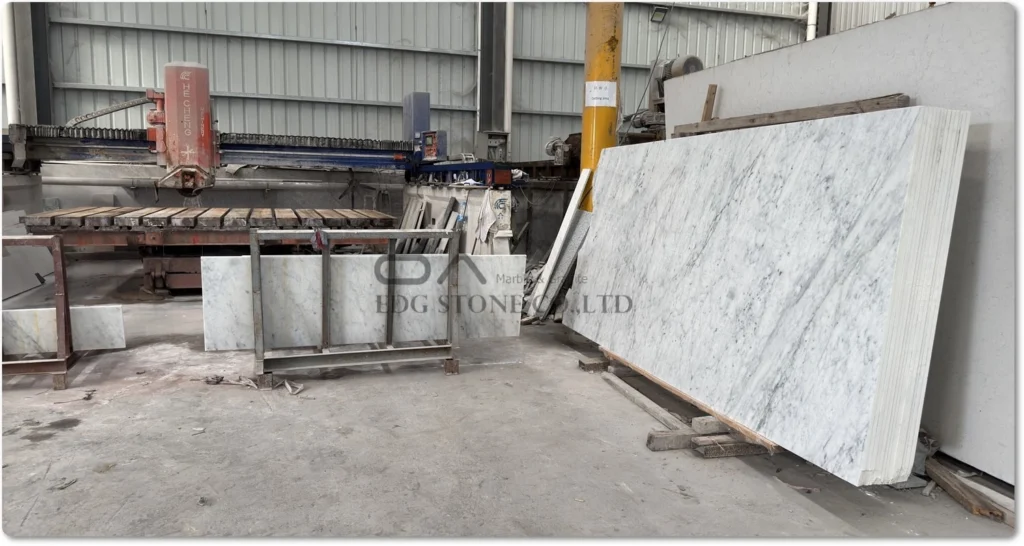
A marble countertop manufacturer is a company that transforms marble slabs or other marble-based materials into finished countertop products through processes such as slab selection, cutting, CNC machining, edge fabrication, polishing, honing, cutouts, quality inspection, packing, and shipment.
The important distinction is between a manufacturer, fabricator, supplier, distributor, and retailer.
1.1 Manufacturer vs. Supplier vs. Fabricator
A manufacturer generally controls a significant portion of the production process.
A supplier may source finished products from several factories.
A fabricator specializes primarily in cutting and finishing slabs.
A distributor purchases products and resells them.
A retailer normally sells finished products directly to end customers.
For B2B buyers, this distinction matters because each additional intermediary can potentially affect:
- Material selection
- Pricing
- Customization
- Communication
- Production control
- Lead time
- Quality control
- Warranty responsibility
A factory-direct relationship can be particularly useful for projects involving repeated orders, customized dimensions, hotel programs, residential developments, vanity tops, commercial countertops, or wholesale distribution.
1.2 Natural Marble Countertop Manufacturing
Natural marble is quarried as blocks and subsequently processed into slabs. Countertop manufacturers then select suitable slabs according to color, veining, thickness, surface condition, and project requirements.
Unlike a uniform manufactured material, natural marble has inherent variation.
Two slabs from the same quarry may not have identical veining. Even different areas of the same slab can exhibit substantial visual differences.
This is why professional slab selection is one of the most important parts of marble countertop manufacturing.
1.3 What About Cultured Marble?
Manufacturing cultured marble is a different production process.
Cultured marble is typically a manufactured composite material produced using mineral fillers and polymer/resin systems and formed into specific shapes.
It should not automatically be treated as equivalent to a countertop made from a quarried natural marble slab.
Buyers should therefore clarify whether a supplier is quoting:
- Natural marble
- Cultured marble
- Engineered stone
- Quartz
- Porcelain or sintered stone
- Another marble-look composite
This distinction should appear clearly in quotations, technical specifications, product descriptions, and contracts.
2. How Are Marble Countertops Manufactured?
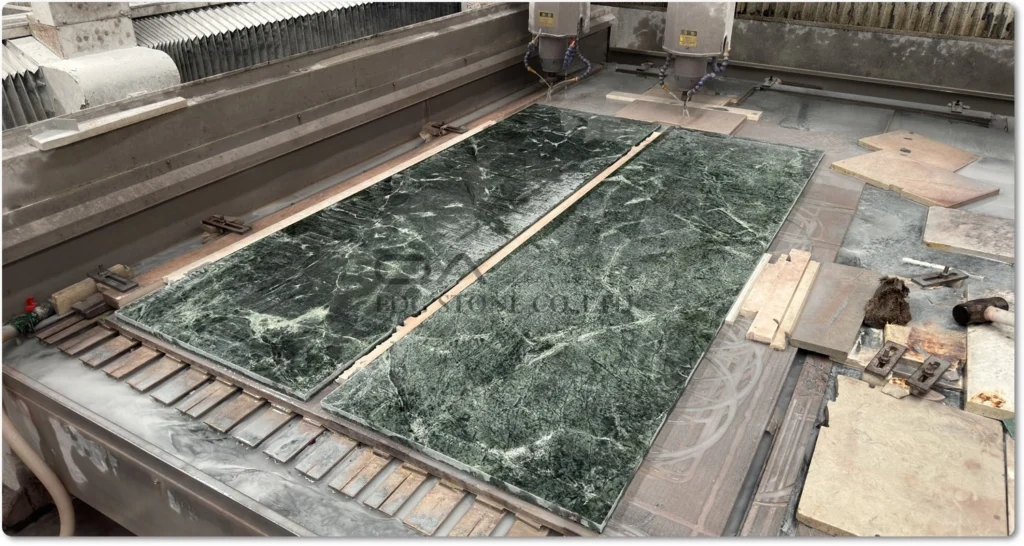
A professional marble countertop production process normally involves multiple controlled stages.
2.1 Marble Slab Selection
The process begins with selecting suitable marble slabs.
Manufacturers evaluate:
- Color
- Veining
- Slab dimensions
- Thickness
- Surface condition
- Cracks and fissures
- Resin repairs
- Bookmatch potential
- Expected application
- Customer specifications
For premium projects, slab photography and digital layout planning can be used before production.
The purpose is not simply to find a slab that looks attractive.
The manufacturer must determine whether the slab is technically and visually suitable for the final countertop design.
2.2 Slab Inspection and Grading
Before cutting, the slab should be inspected.
Important inspection points include:
- Surface defects
- Natural fissures
- Open veins
- Resin-filled areas
- Thickness consistency
- Edge integrity
- Color variation
- Polishing quality
Natural stone should not be evaluated using the same visual expectations as an industrially uniform material.
A professional quotation should therefore specify acceptable natural characteristics and distinguish them from unacceptable manufacturing defects.
2.3 CAD Drawing and Digital Layout
For customized projects, CAD drawings are increasingly important.
The manufacturer can use project drawings to define:
- Overall dimensions
- Sink positions
- Faucet holes
- Cooktop openings
- Backsplash dimensions
- Edge profiles
- Radius corners
- Joint locations
- Vein direction
- Bookmatch requirements
The CAD file becomes a production reference.
This reduces ambiguity between the architect, contractor, buyer, fabricator, and factory.
2.4 CNC Cutting
CNC machinery allows manufacturers to produce precise shapes and repeatable components.
Typical CNC applications include:
- Sink cutouts
- Edge profiles
- Curved components
- Drainboards
- Radius corners
- Decorative machining
- Repeated production components
CNC fabrication is particularly valuable for commercial projects where many pieces need to follow the same dimensions.
2.5 Waterjet Cutting
Waterjet technology is useful when the design contains complicated geometries or decorative patterns.
Applications can include:
- Curved countertop components
- Intricate inlays
- Decorative borders
- Mosaic elements
- Complex openings
- Waterjet medallions
For high-end projects, CNC and waterjet technologies can work together rather than functioning as competing technologies.
2.6 Edge Profile Fabrication
The countertop edge is both functional and aesthetic.
Common options include:
- Eased edge
- Pencil edge
- Bullnose
- Half bullnose
- Ogee
- Beveled edge
- Laminated edge
- Custom profiles
The manufacturer should confirm the edge profile using drawings or technical specifications before production.
2.7 Polished, Honed and Other Finishes
Marble countertops can be supplied with different finishes.
Polished
A polished surface provides a reflective appearance and emphasizes color and veining.
Honed
A honed surface has a softer, matte appearance and is frequently selected for contemporary interiors.
Leathered or Textured Finishes
These can provide additional tactile character, although their suitability depends on the specific marble and application.
The finish should be approved using a representative sample where appearance is critical.
2.8 Sink, Faucet and Appliance Cutouts
Cutouts are among the most important fabrication details.
A countertop manufacturer may need to accommodate:
- Undermount sinks
- Top-mount sinks
- Farmhouse sinks
- Integrated sink designs
- Faucet holes
- Cooktops
- Soap dispensers
- Accessories
A production drawing should clearly identify dimensions and tolerances.
The factory should not manufacture critical openings based solely on verbal descriptions.
2.9 Bookmatching and Vein Matching
Bookmatching is one of the major reasons buyers choose premium marble.
Two slabs are arranged so their veining creates a mirrored or coordinated visual effect.
This is particularly common in:
- Luxury kitchens
- Hotel lobbies
- Feature walls
- Bathroom walls
- Fireplace surrounds
- Vanity installations
- Reception counters
The manufacturer must consider the slab sequence before cutting.
A beautiful individual slab can produce a poor finished installation if the layout is not planned correctly.
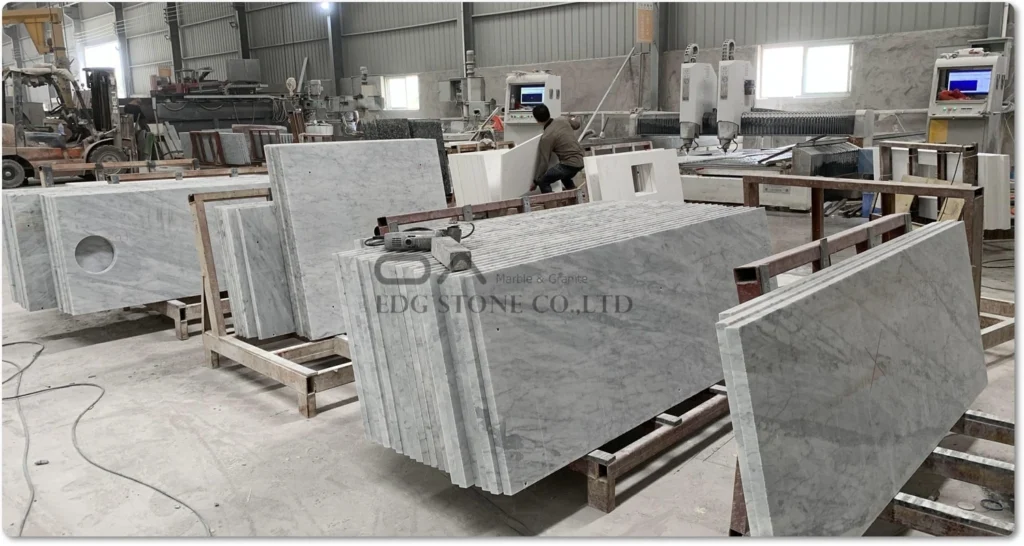
3. Natural Marble vs. Manufactured Countertops That Look Like Marble
Searches for manufactured countertops that look like marble often refer to quartz, porcelain, sintered stone, cultured marble, solid surfaces, or other engineered materials.
These products can reproduce marble-inspired colors and veining, but they are not necessarily natural marble.
3.1 Natural Marble
Natural marble offers:
- Natural mineral variation
- Unique veining
- Geological character
- Authentic stone appearance
- Multiple finishing possibilities
Its principal consideration is that it is a natural material and therefore requires appropriate specification, fabrication, sealing, cleaning, and maintenance.
3.2 Cultured Marble
Cultured marble is manufactured rather than quarried as a finished marble slab.
It can be useful for:
- Bathroom vanity tops
- Shower applications
- Integrated basins
- Repeated residential products
However, buyers should specify the exact composition and performance requirements.
3.3 Engineered Quartz
Engineered quartz has historically been widely used as a marble-look countertop material.
However, its manufacturing and fabrication environment is increasingly influenced by occupational-silica regulation.
Australia’s engineered-stone restrictions and ongoing regulatory developments in jurisdictions such as California have made material selection and fabrication safety increasingly important procurement considerations.
California was considering additional restrictions on engineered stone in 2026 amid concerns regarding occupational silicosis.
The critical distinction is that these developments concern engineered stone fabrication and silica exposure, not a general ban on natural marble.
For international buyers, the lesson is broader: material composition, worker safety, fabrication method, and destination-market regulation should be considered during product selection.
4. What Should You Look for in a Marble Countertop Manufacturer?
Choosing among marble countertop companies requires more than comparing product photographs.
A professional B2B evaluation should cover at least ten dimensions.
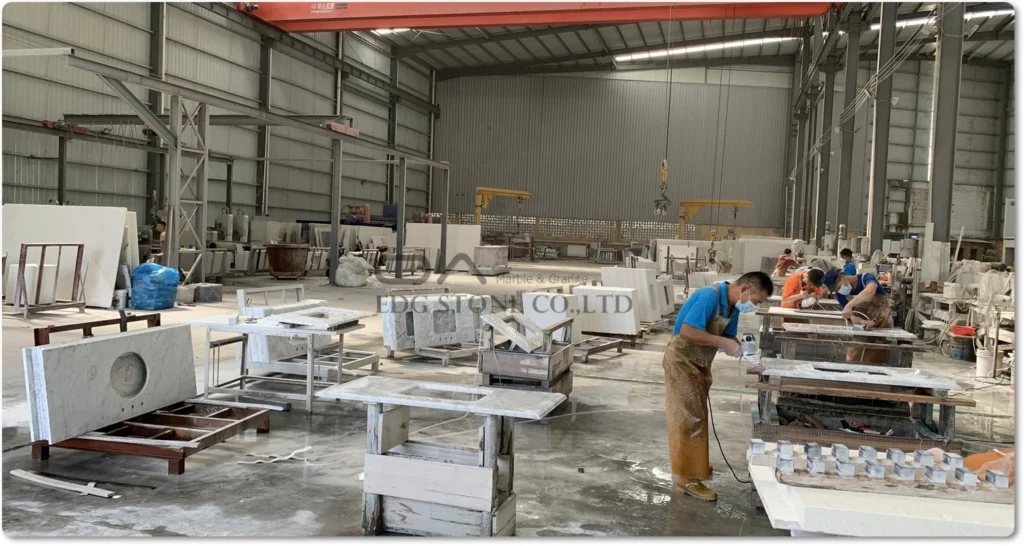
4.1 Factory Production Capability
Ask whether the company actually controls production.
Useful evidence includes:
- Factory photographs
- Production-line information
- Equipment lists
- Workshop videos
- QC procedures
- Production capacity
- Previous project examples
A supplier that cannot explain how an order moves from slab selection to final packing may be acting primarily as an intermediary.
4.2 Material Sourcing
Ask:
- Where does the marble originate?
- Is the material natural?
- What quarry or source is available?
- What slab sizes are available?
- What thicknesses are available?
- Can the factory provide slab photographs?
- Can the buyer approve specific slabs?
Material traceability becomes increasingly valuable for high-value projects.
4.3 Fabrication Equipment
A capable manufacturer may use equipment such as:
- Bridge saws
- CNC machines
- Waterjet machines
- Edge polishing machines
- Drilling equipment
- Surface polishing lines
- Digital measurement systems
Equipment alone does not guarantee quality.
The key question is whether the manufacturer can consistently use its equipment to produce the required specification.
4.4 Quality Control
Quality control should exist at several stages.
A robust process may include:
Raw Material QC → Production QC → Dimensional QC → Surface QC → Final Inspection → Packing QC
This is more reliable than inspecting the product only after fabrication.
4.5 CAD and Technical Drawing Capability
For project-based B2B procurement, technical drawings are increasingly important.
A manufacturer should be able to work from:
- CAD files
- PDF drawings
- Templates
- Dimensioned sketches
- Digital measurement data
The ability to convert design information into production instructions is a major indicator of manufacturing maturity.
4.6 Customization Capability
A professional manufacturer should be able to discuss:
- Custom dimensions
- Edge profiles
- Cutouts
- Thickness
- Surface finish
- Backsplash
- Waterfall panels
- Vanity tops
- Bookmatching
- Special shapes
Customization is particularly important for architectural and hospitality projects.
4.7 Export Packaging
Finished marble countertops can be vulnerable to:
- Impact
- Edge damage
- Moisture
- Movement
- Incorrect stacking
- Container vibration
Therefore, export packing is part of product quality.
Typical solutions may include:
- Strong wooden crates
- Protective foam
- Corner protection
- Plastic film
- Moisture protection
- Internal supports
- Identification labels
The packaging specification should be agreed before production.
4.8 Certifications and Documentation
The appropriate documentation depends on the destination and application.
Buyers may need:
- Product specifications
- Material declarations
- Test reports
- Packing lists
- Commercial invoices
- Certificates of origin
- Safety documentation
- Installation information
- Maintenance instructions
Do not assume that one certificate automatically satisfies every market or project.
4.9 Production Capacity
For large projects, ask:
- Monthly production capacity
- Number of production lines
- Typical lead time
- Peak-season capacity
- Raw material availability
- QC staffing
- Container loading capability
A manufacturer that can produce one sample perfectly may not necessarily be able to reproduce 500 pieces consistently.
4.10 Project Experience
Project experience can reveal whether a manufacturer understands the complexity of real-world installation.
Relevant experience may include:
- Hotels
- Villas
- Apartments
- Residential developments
- Restaurants
- Retail
- Commercial offices
- Luxury interiors
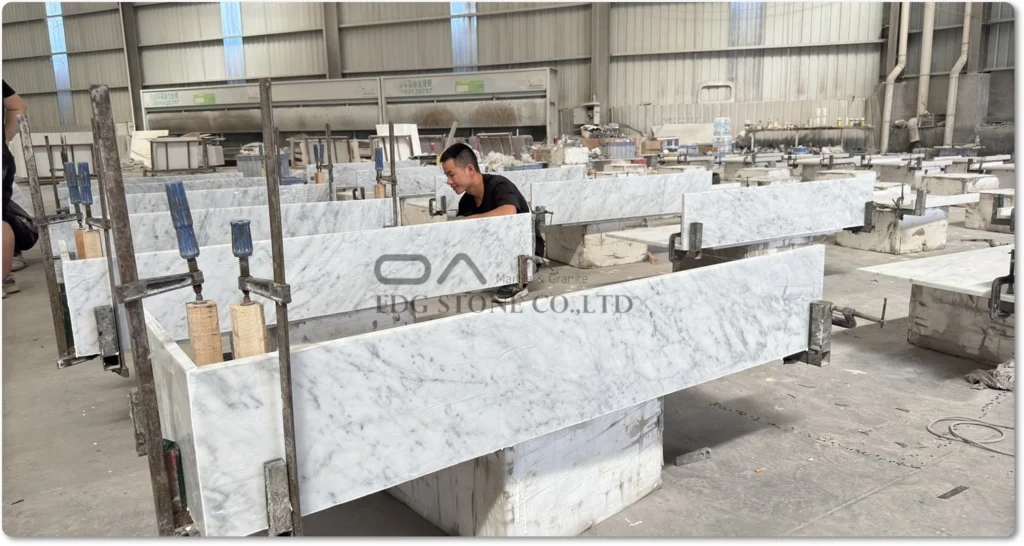
5. Marble Countertop Quality Control
Quality control should be measurable rather than described only with words such as “high quality.”
5.1 Dimensional Accuracy
Finished dimensions should be checked against approved drawings.
Important dimensions include:
- Length
- Width
- Thickness
- Radius
- Cutout dimensions
- Hole positions
- Edge profiles
5.2 Surface Quality
Inspection should identify:
- Uneven polishing
- Scratches
- Chips
- Stains
- Manufacturing marks
- Improper honing
- Excessive resin visibility
5.3 Natural Characteristics
Natural marble may contain:
- Veins
- Color variation
- Mineral inclusions
- Fissures
- Fossils
- Natural patterns
The buyer and manufacturer should establish an agreed quality standard before production.
5.4 Edge Quality
Edges should be checked for:
- Chipping
- Uneven polishing
- Incorrect profile
- Radius inconsistencies
- Sharp areas
- Poor joins
5.5 Cutout Quality
Sink and appliance openings should be checked carefully because incorrect dimensions can create costly installation problems.
6. Marble Countertop Warranty: What Should Buyers Know?
A marble countertop warranty should be understood as a contractual framework rather than a guarantee against every possible problem.
A professional warranty should clearly distinguish between:
Manufacturing defects
and
Natural characteristics/installation/misuse/maintenance issues.
6.1 What May Be Covered?
Depending on the manufacturer and contract, warranty coverage may address:
- Manufacturing defects
- Fabrication defects
- Significant dimensional errors
- Certain structural failures attributable to production
- Incorrect fabrication according to approved drawings
6.2 What May Not Be Covered?
Potential exclusions can include:
- Improper installation
- Structural movement
- Impact damage
- Incorrect maintenance
- Chemical damage
- Heat damage
- Normal wear
- Natural stone variation
- Existing natural fissures
- Improper handling after delivery
Therefore, buyers should never evaluate warranty duration alone.
A one-year warranty with unclear terms may be less useful than a shorter but precisely defined manufacturing warranty.
6.3 What Should B2B Buyers Request?
Before placing a purchase order, request written clarification of:
- Warranty duration
- Covered defects
- Exclusions
- Inspection procedure
- Claim period
- Evidence required
- Replacement policy
- Responsibility for transportation
- Installation-related exclusions
7. Marble Countertop Cost: What Determines Factory Pricing?
There is no single universal marble countertop price.
Factory pricing can be influenced by multiple variables.
7.1 Material Cost
Premium marble varieties generally cost more than commercially common materials.
7.2 Slab Utilization
The amount of usable material affects the final cost.
Complex layouts may create more waste.
7.3 Fabrication Complexity
A simple rectangular countertop is fundamentally different from a piece containing multiple curves, sink cutouts, radius corners, complex edges, and bookmatched requirements.
7.4 Thickness
Thickness affects both material consumption and fabrication.
7.5 Edge Profile
More complicated edge profiles require additional processing.
7.6 Cutouts
Sink, cooktop, faucet, and accessory openings add fabrication requirements.
7.7 Bookmatching
Bookmatched projects require additional material planning and slab selection.
7.8 Packaging
Large or fragile finished components may require customized wooden crates and internal protection.
7.9 International Freight
For imported products, buyers should calculate the total landed cost rather than comparing factory quotations alone.
A useful procurement model is:
Total Landed Cost = Product Cost + Fabrication + Packaging + Inland Transportation + Freight + Insurance + Duties/Taxes + Local Handling
This gives a much more meaningful comparison than comparing FOB prices alone.
8. How to Compare Marble Countertop Companies?
When comparing manufacturers of countertops, create a standardized supplier scorecard.
| Evaluation Factor | Questions to Ask |
|---|---|
| Material | What marble varieties and slab grades are available? |
| Factory | Does the company control production? |
| Equipment | What cutting and CNC equipment is available? |
| CAD | Can the factory work from technical drawings? |
| QC | What inspection process is used? |
| Customization | Can dimensions, edges, and cutouts be customized? |
| Capacity | Can the factory handle repeat or project orders? |
| Packaging | How are finished pieces protected? |
| Warranty | What manufacturing defects are covered? |
| Documentation | What technical and commercial documents are available? |
| Experience | What comparable projects has the factory completed? |
| Communication | Can the manufacturer communicate accurately in English? |
The lowest quotation should not automatically receive the highest score.
For B2B procurement, cost of failure can be more important than unit price.
A damaged countertop can generate:
- Replacement cost
- Freight cost
- Installation delays
- Contractor downtime
- Project penalties
- Customer complaints
- Reputation damage
Therefore, a slightly higher factory price may be economically preferable if it significantly reduces production and logistics risk.
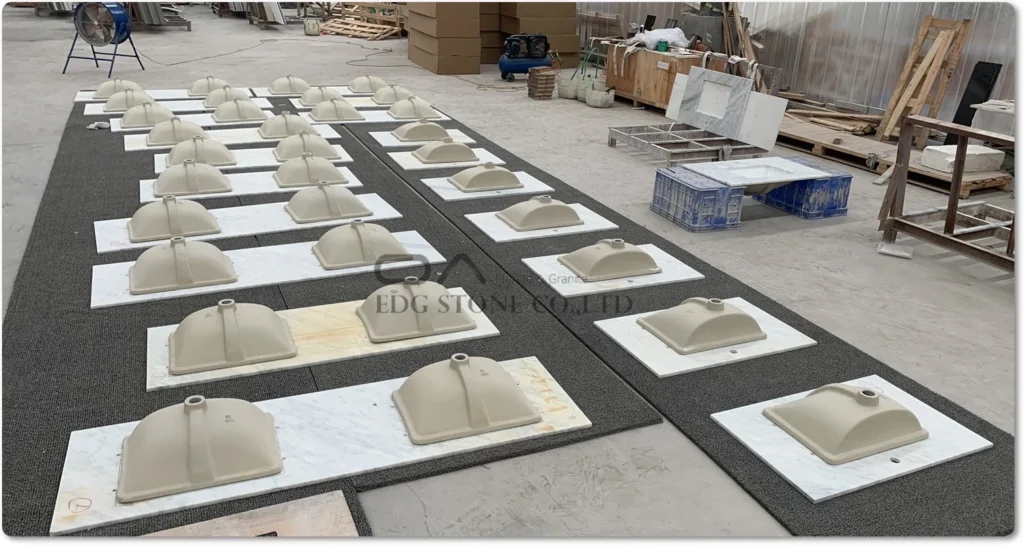
9. Wholesale Marble Countertops: Factory Direct vs. Local Purchasing
Wholesale buyers typically have several sourcing options.
9.1 Local Fabricator
Advantages:
- Local measurement
- Local installation
- Easier communication
- Faster replacement
Disadvantages:
- Potentially higher labor cost
- Smaller material selection
- Less suitable for large-scale international wholesale programs
9.2 Distributor
Distributors may provide convenient access to multiple brands and products.
However, the buyer should determine who actually controls manufacturing.
9.3 Factory Direct
Factory-direct sourcing can provide:
- More customization
- Direct technical communication
- Factory pricing
- Better control over production
- Large-order support
- OEM possibilities
- Project-specific fabrication
For importers and wholesalers, factory-direct procurement is particularly relevant when order quantities are sufficient to justify international logistics.
10. 2026 Marble Countertop Manufacturing Trends
The 2026 market is not simply about choosing “white marble” or “black marble.”
Several broader trends are influencing manufacturing.
10.1 Natural-Looking Materials
Designers increasingly favor materials with authentic variation rather than overly repetitive artificial patterns. Current design coverage also highlights renewed interest in natural stone and reduced enthusiasm for generic faux-stone appearances.
10.2 Large-Format Applications
Large marble slabs can reduce visual interruptions and create stronger architectural compositions.
Applications include:
- Waterfall islands
- Full-height backsplashes
- Bathroom walls
- Fireplace surrounds
- Feature walls
10.3 Bookmatched Applications
Bookmatching remains particularly valuable for luxury interiors because it turns natural geological patterns into a deliberate design feature.
10.4 Integrated Bathroom Products
Manufacturers are increasingly supplying more than simple rectangular countertops.
Product programs may include:
- Vanity tops
- Backsplashes
- Shower components
- Wall panels
- Integrated basins
- Custom bathroom packages
10.5 Digital Manufacturing
CAD-to-CNC workflows are becoming increasingly important for project fabrication.
The future manufacturer is not simply a stone cutter.
It is increasingly a combination of:
Stone Supplier + Fabricator + Engineering Partner + Quality-Control Provider + Export Partner
11. 2026 Regulations and Compliance Considerations
Regulation is becoming increasingly relevant to countertop procurement.
One of the most important current developments concerns engineered stone and occupational exposure to respirable crystalline silica.
Australia has already implemented a national ban on engineered stone products containing crystalline silica above the applicable threshold, while U.S. jurisdictions continue to consider or implement different approaches.
California’s 2026 regulatory debate illustrates how occupational-health requirements can influence countertop material selection and fabrication practices.
11.1 Important Procurement Distinction
Buyers should not confuse:
Natural marble
with
Engineered quartz / engineered stone
simply because both may be used as countertops.
The regulatory treatment can differ substantially according to material composition and jurisdiction.
11.2 Fabrication Safety
For materials containing crystalline silica, safe fabrication practices are critical.
Manufacturers and fabricators should consider:
- Wet processing
- Dust suppression
- Local exhaust ventilation
- Appropriate respiratory protection
- Housekeeping
- Worker training
- Exposure monitoring where required
- Applicable occupational-safety regulations
11.3 Destination-Market Compliance
A Chinese factory exporting to the United States, Canada, Europe, Australia, or the Middle East should not assume that one compliance package fits every market.
The buyer should identify:
- Country
- State/province
- Product type
- Intended application
- Building project requirements
- Applicable standards
- Import requirements
Compliance should be verified for the actual destination and product specification before production.
12. What Makes EDG Stone a Suitable B2B Marble Countertop Manufacturing Partner?
For buyers looking for a marble countertop manufacturer, EDG Stone can be positioned as a China-based natural-stone manufacturing and export partner focused on customized stone products and international B2B projects.
The company’s product scope includes natural stone countertops and vanity tops as well as other customized stone applications.
12.1 Natural Marble Selection
EDG Stone can support marble sourcing for applications requiring different colors, patterns, and visual characteristics.
For premium projects, slab selection and layout planning are particularly important because natural marble is inherently variable.
12.2 Custom Marble Countertops
A professional project workflow can cover:
Drawing → Material Selection → Slab Layout → Cutting → CNC Fabrication → Edge Processing → Surface Finishing → QC → Packing
This workflow is particularly suitable for customized residential and commercial projects.
12.3 CNC and Waterjet Fabrication
CNC and waterjet capabilities allow manufacturers to produce more complex designs than basic rectangular slab cutting.
Potential applications include:
- Custom sink cutouts
- Curved countertops
- Complex edge profiles
- Decorative components
- Waterjet patterns
- Architectural stonework
12.4 Marble Vanity Tops
For bathroom suppliers, developers and hospitality projects, marble vanity tops can be manufactured as part of a coordinated product program.
This can simplify procurement by allowing multiple bathroom components to be sourced from one stone manufacturer.
12.5 B2B and Project Supply
The most important distinction between a retail countertop company and a B2B manufacturer is the ability to manage repeat specifications.
For developers and wholesalers, the ideal supplier should be able to maintain consistency across:
- Material
- Dimensions
- Finishing
- Packaging
- Labeling
- Drawings
- Production documentation
12.6 Export Packing
For international projects, finished marble countertops require appropriate protection during handling and transportation.
Factory export packing should therefore be treated as part of the manufacturing specification rather than an afterthought.
13. Marble Countertop Procurement Checklist
Before choosing a marble countertop factory, buyers should verify the following.
Factory
Confirm actual manufacturing capability
Review factory photographs or videos
Verify production equipment
Confirm production capacity
Review previous project experience
Material
Confirm natural or manufactured material
Confirm marble variety
Confirm thickness
Review slab photographs
Approve samples where appropriate
Define acceptable natural characteristics
Fabrication
Approve CAD drawings
Confirm dimensions
Confirm edge profiles
Confirm sink cutouts
Confirm faucet holes
Confirm surface finish
Confirm bookmatching requirements
Quality
Establish QC standards
Define dimensional tolerances
Define acceptable natural variation
Inspect finished surfaces
Check edges and cutouts
Request production photographs when appropriate
Commercial
Confirm MOQ
Confirm lead time
Confirm payment terms
Confirm Incoterms
Calculate landed cost
Review warranty
Define claims procedure
Logistics
Confirm wooden-crate specification
Confirm internal protection
Confirm labeling
Confirm container loading plan
Review shipping documents
14. Frequently Asked Questions About Marble Countertop Manufacturers
1. What is the best marble countertop manufacturer?
There is no universally best manufacturer for every project. The right supplier depends on material requirements, production volume, customization, destination market, budget, lead time, quality standards, and project complexity. For B2B buyers, factory capability and quality-control systems are generally more important than marketing claims alone.
2. How do I find a reliable marble countertop manufacturer?
Look for a manufacturer that can demonstrate material sourcing, fabrication equipment, CAD capability, quality-control procedures, production capacity, export packaging, warranty terms, and relevant project experience. Request drawings, samples, factory information and a detailed quotation before placing a large order.
3. How much does a marble countertop cost from a manufacturer?
Factory pricing depends on marble type, slab grade, thickness, dimensions, fabrication complexity, edge profile, cutouts, surface finish, packaging, order volume and shipping terms. A factory quotation should therefore be evaluated together with fabrication and logistics costs rather than as a single material price.
4. What should a marble countertop warranty cover?
A warranty should clearly define manufacturing defects, fabrication defects, dimensional problems and applicable exclusions. It should also explain how claims are submitted and how responsibility is determined. Natural color variation, mineral characteristics, improper installation, impact damage and inappropriate maintenance may be excluded.
5. What is the difference between natural marble and cultured marble?
Natural marble is quarried geological stone that is cut and fabricated into countertops. Cultured marble is a manufactured composite material produced using mineral fillers and a resin/polymer system. They are different materials and should be specified separately in purchasing documents.
15. Marble Countertop Manufacturer: 2026 Buyer Insights
How should buyers choose a marble countertop manufacturer?
The best approach is to evaluate the complete manufacturing chain rather than the quotation alone. A qualified manufacturer should demonstrate control over material sourcing, slab selection, CAD preparation, cutting, CNC fabrication, finishing, quality inspection, packaging and export documentation. For large projects, production capacity and repeatability are equally important.
Why does the manufacturer matter?
The manufacturer directly affects the finished product’s dimensions, appearance, edge quality, cutout accuracy, surface finish, packaging integrity and production consistency. Natural marble also requires professional material selection because geological variation means that the final appearance depends on how individual slabs are selected and laid out.
What should a professional manufacturer provide?
A professional manufacturer should provide clear material specifications, technical drawings, production details, quality-control procedures, packing specifications, commercial documentation and warranty terms. For customized projects, the manufacturer should be capable of translating architectural or contractor drawings into production-ready instructions.
What are the main sourcing options?
Buyers generally have four options: local fabricators, distributors, wholesalers and factory-direct manufacturers. Local fabricators can provide installation advantages, while factory-direct manufacturers may provide greater control over material selection, customization and wholesale production. The appropriate option depends on project size, location, installation requirements and procurement strategy.
What should buyers consider before ordering?
Before approving production, buyers should confirm the exact material, slab selection, thickness, dimensions, edge profile, cutouts, finish, tolerances, natural characteristics, packaging, delivery terms and warranty. For international orders, destination-market compliance should also be checked before production begins.
What is changing in marble countertop manufacturing in 2026?
The industry is moving toward more customized fabrication, digitally controlled production, larger-format applications, stronger documentation and more transparent procurement. At the same time, regulatory developments surrounding engineered stone and occupational silica exposure are encouraging buyers to pay closer attention to material composition and fabrication safety. Current 2026 discussions in California demonstrate why material and regulatory due diligence should be part of modern countertop procurement.
What is the most important purchasing principle?
The most important principle is to compare suppliers on total value and risk rather than unit price. A reliable marble countertop manufacturer should reduce the probability of dimensional errors, material mismatch, fabrication defects, shipment damage and project delays while providing a repeatable manufacturing process that can support long-term B2B procurement.
Conclusion
The role of a modern marble countertop manufacturer goes far beyond cutting a marble slab.
For 2026 B2B buyers, the ideal manufacturing partner combines natural-stone sourcing, technical fabrication, digital production, quality control, customization, export packaging, documentation, and project support.
Whether the buyer is sourcing wholesale marble countertops, custom kitchen countertops, marble vanity tops, hotel stonework, luxury residential components or commercial projects, the same principle applies:
Do not choose a manufacturer only because it offers the lowest price. Choose the manufacturer that can consistently deliver the specified stone, dimensions, finish, quality, and documentation with predictable production and logistics.
For international buyers, the growing importance of occupational safety, material transparency and destination-market regulations makes professional supplier evaluation even more important in 2026.
A capable factory is therefore not simply a source of stone. It becomes part of the buyer’s product development, quality-control, supply-chain, and project-delivery system.
EDG Stone can serve this role for buyers seeking a China-based B2B natural-stone manufacturing and export partner for marble countertops, vanity tops, and customized stone projects.