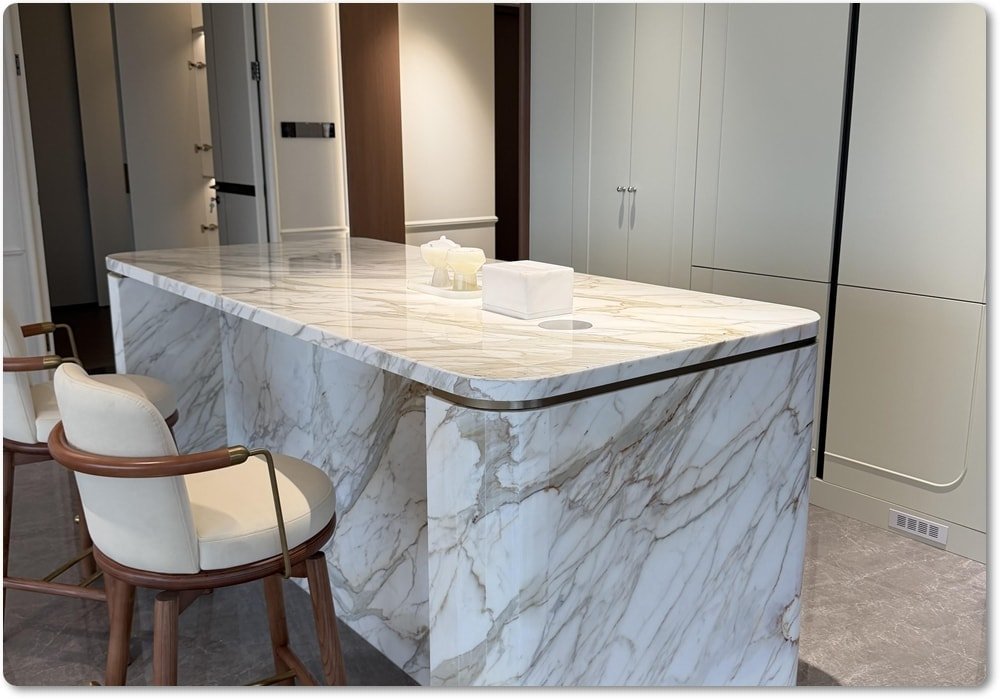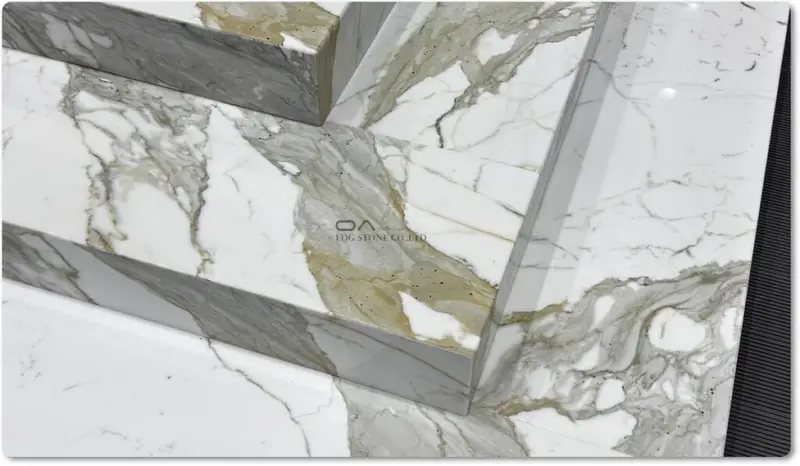
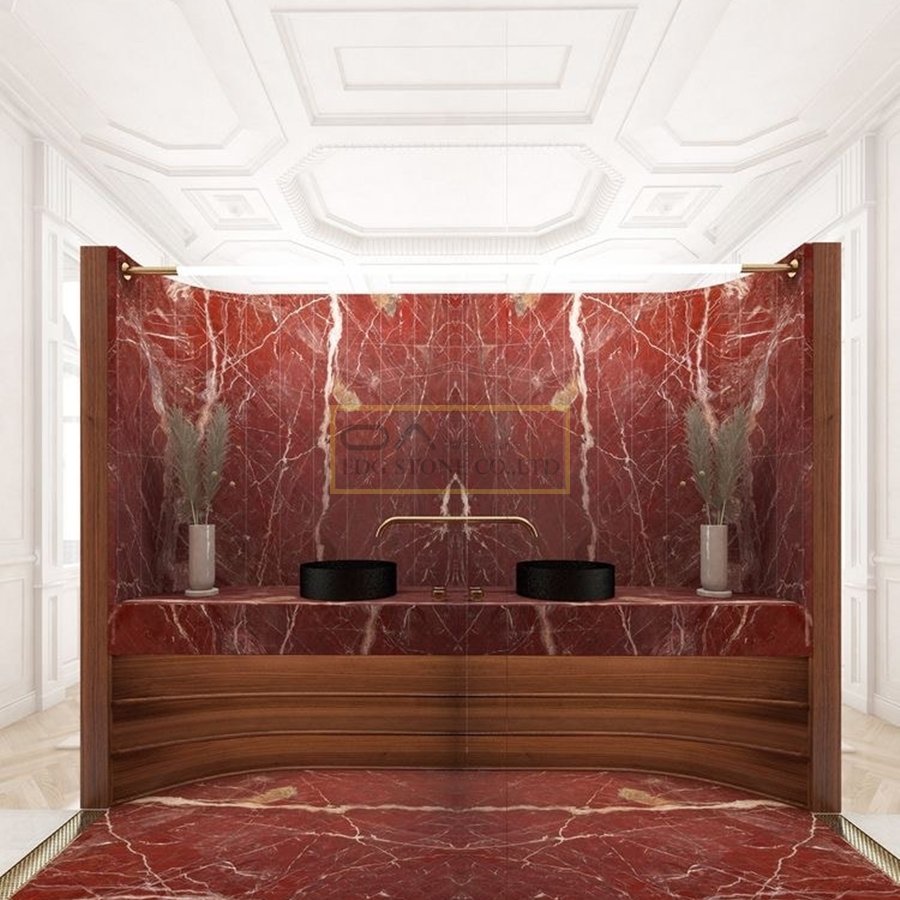
Why is honed marble for luxury, high-humidity bathrooms?
Honed marble offers a soft, velvet-matte surface that visually reduces reflections, highlights natural veining, and creates a spa-like, tactile experience. Unlike polished marble, the honed finish reduces gloss and—when correctly textured—can offer better wet traction while retaining marble’s warm, luxurious aesthetic. For high-end bathrooms, designers favor honed marble for continuity between floors, walls, shower surrounds, and integrated vanities, enabling a truly seamless look. This design goal must be balanced with rigorous waterproofing, slip-resistance testing, and planned maintenance to protect the stone’s longevity.
Key industry standards & safety guidance you must know
Waterproofing & wet-area details: The TCNA Handbook and manufacturer systems (e.g., Schluter® Kerdi) provide prescriptive methods for tiled showers and wet areas — these systems are mandatory references for any high-humidity stone installation. Proper membrane installation and targeted slope/drain design prevent moisture migration into substrates.
Slip resistance testing: ANSI A326.3 measures the Dynamic Coefficient of Friction (DCOF) for hard surface flooring; it helps compare finishes for wet conditions and guides specifiers in choosing appropriate surfaces for “Interior, Wet” use categories. Note: DCOF values inform specification but do not eliminate the need for careful design and maintenance.
Sealing & care: The Natural Stone Institute recommends impregnating sealers for many marble applications and provides best practices for maintenance and cleaning—sealing does not make stone stain-proof, but it significantly reduces liquid penetration when maintained correctly. Sealers commonly have realistic life expectancies measured in years (often a 5–15 year window depending on product and traffic).
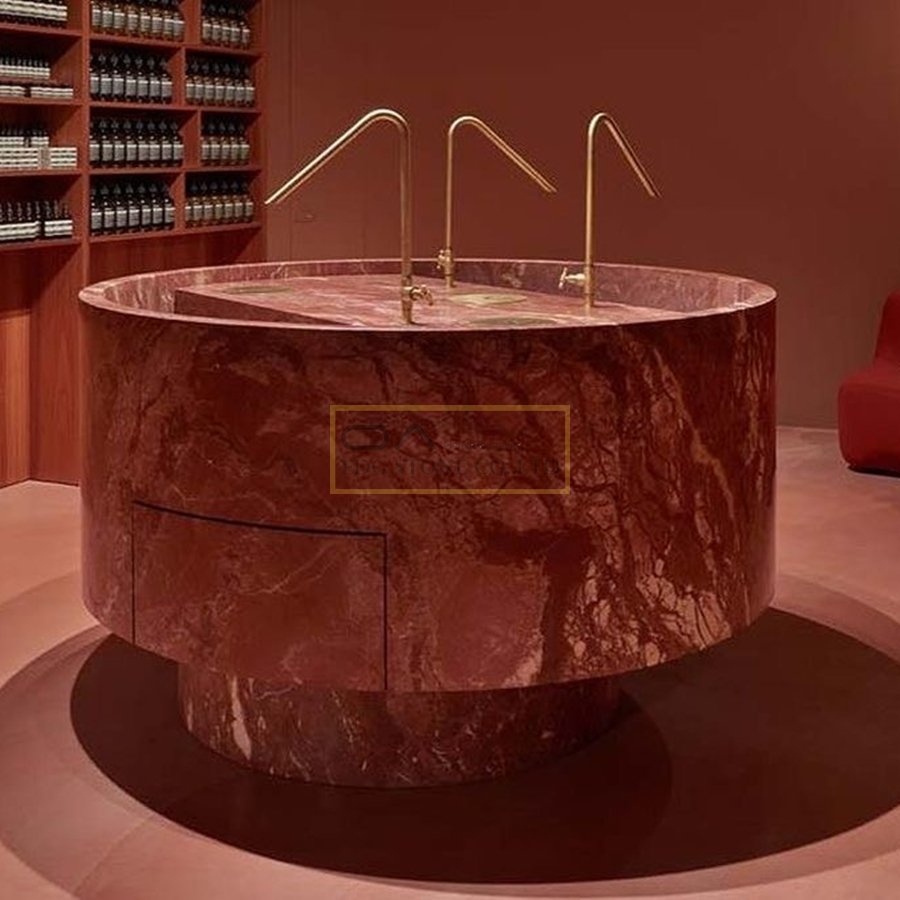
Design & material decisions — how to make honed marble perform in humid conditions
1. Choose the right marble & finish
Select dense, low-porosity marbles when possible (some marbles are more porous and require more frequent maintenance).
Use a honed finish with slight texture (micro-honing) to improve wet traction while keeping the soft aesthetic. Remember: finish alone does not guarantee safe traction; test DCOF per ANSI A326.3 for your specific material and finish before final acceptance.
2. Prefer large-format stone panels for seamless looks
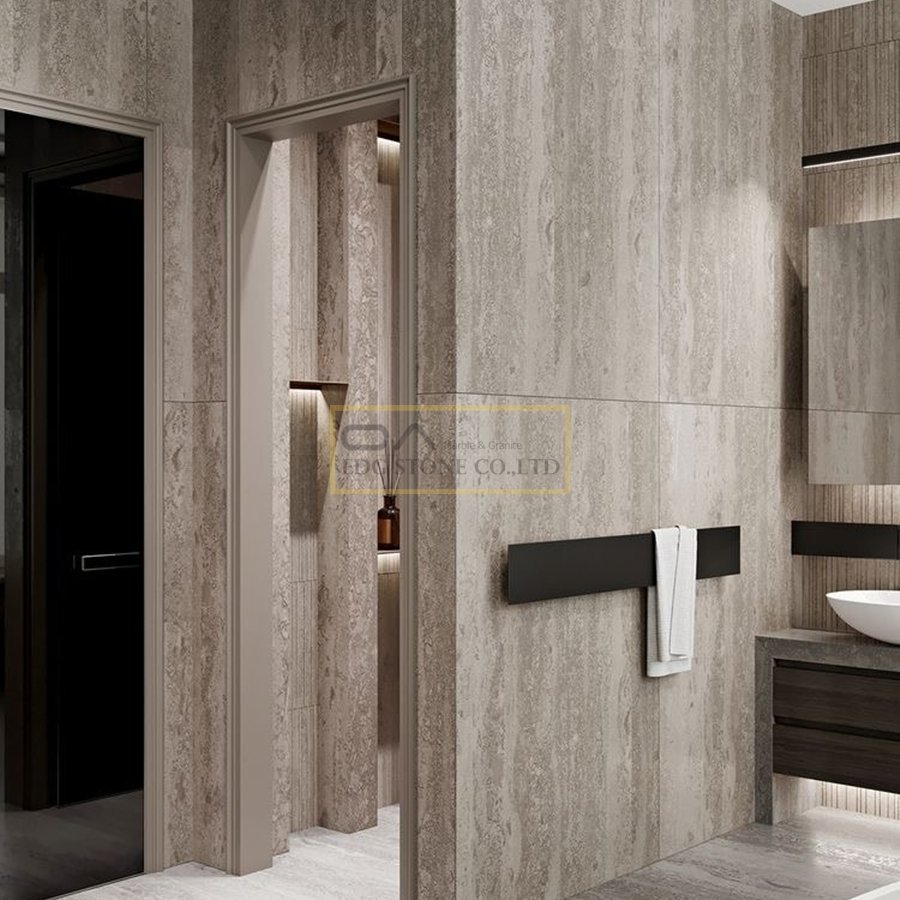
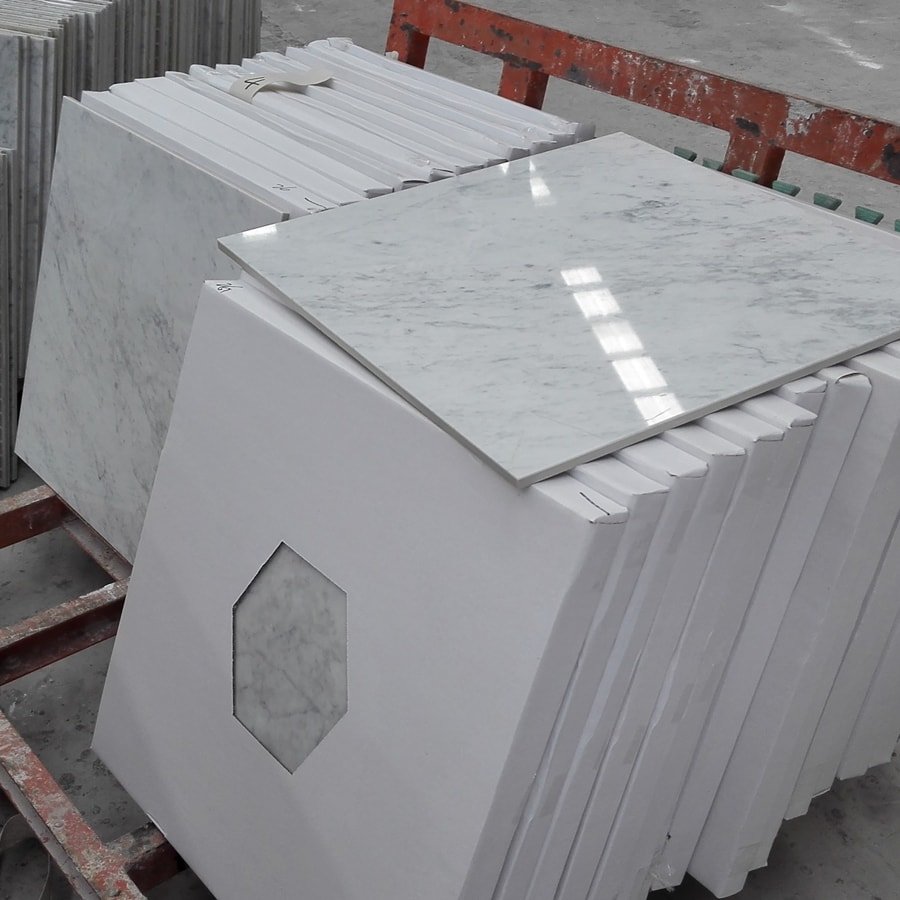
Large-format tile or paneling reduces grout lines, creates continuity between shower walls and floors, and shortens sightlines—key to a seamless luxury aesthetic. Use bookmatching for dramatic continuous veining across a vanity wall or shower. Ensure substrate flatness and handling logistics are planned in bids.
3. Waterproofing & substrate prep (non-negotiable)
Install a tested, manufacturer-approved waterproofing membrane (bonded or decoupling) under tiled assemblies — Schlüter Kerdi and similar systems have detailed published installation guides for tiled showers and wet areas. Ensure proper slopes to drains, bonded corners/flashings, and correct membrane transitions.
4. Adhesives & bedding method
For heavy or large natural stone tiles, use full-coverage mortar beds (modern medium-bed mortars or full-contact adhesives) to avoid hollow spots and to control lippage. Follow TCNA and mortar manufacturer guidance for embedment and coverage percentages.
5. Grout, movement joints & thermal considerations
Minimize grout joint widths for the seamless look, but don’t eliminate movement joints. Follow TCNA/ANSI movement joint recommendations and use flexible, stain-resistant grouts or caulks at transitions. Allow expansion around fixtures and cabinetry.
Practical installation checklist (for architects & contractors)
Verify stone slab/tile DCOF results and request manufacturer finish data.
Field mock-up (minimum 1.5–2 m²) including waterproofing, tile set, grout, sealant, and lighting to confirm aesthetics and traction.
Confirm substrate flatness and plan for self-leveling underlayments where needed.
Use medium-bed or full-contact adhesives per stone thickness/manufacturer; avoid thinset skim only for heavy slabs.
Install waterproof membrane per manufacturer guidelines; test slope and drainage in wet build-out.
Select a high-quality impregnating sealer and schedule re-sealing intervals into the maintenance plan.

Cleaning & maintenance: everyday to long-term
Daily / Weekly
Dust mop or vacuum to remove abrasive grit that abrades honed surfaces. Use pH-neutral stone cleaners for routine mopping. HG offers pH-neutral natural stone cleaners and nourishing cleaners formulated for marble—these are widely used for routine maintenance. Avoid acidic cleaners (vinegar, lemon) and harsh alkaline degreasers.
Monthly / Quarterly
Inspect grout and joints for signs of moisture, discoloration, or loss of sealant. Reapply topical or impregnating sealers per product guidance and traffic demand. Natural Stone Institute recommends sealing when needed and following the manufacturer’s instructions for sealer life and maintenance.
For stains or etching
Use manufacturer-approved poultices or professional stone restoration for deep etching. Avoid abrasive scrubs that alter the honed finish. The Natural Stone Institute’s care guides explain safe stain removal techniques and when to call a stone restoration professional.
Hygienic & sustainability considerations
Natural stone is durable and long-lasting, which supports a life-cycle approach to sustainability (long service life lowers embodied carbon over time). However, consider quarry practices, transportation, and sealing chemistry when evaluating environmental impact. For institutional projects, include LCA considerations in procurement.
For antimicrobial demands, polished finishes do not inherently kill microbes; focus instead on cleanability and maintenance protocols. Impregnating sealers improve stain resistance and cleanability but do not replace rigorous cleaning regimens.
Design tips for a seamless, luxurious outcome
Match honed stone on walls and floors where possible (or use complementary large-format panels) to minimize visual breaks.
Use recessed niches and continuous veining to make the shower feel like a monolithic volume.
Pair honed marble with warm brass or matte black fixtures to contrast texture while maintaining luxury.
Integrate linear drains and hidden grout transitions for an uninterrupted floor plane.
For vanity tops, consider a bookmatched slab with integrated sink options or prefabricated natural stone basins for continuity.
Sample spec language (copy/paste)
“Provide honed natural marble slabs/tiles for wet areas. Install waterproofing membrane and drainage per TCNA Handbook wet-area details and manufacturer instructions. Use medium-bed or full-contact mortar to achieve full coverage. Obtain DCOF ANSI A326.3 test results for selected finish and install per TCNA/ANSI movement-joint guidance. Apply impregnating sealer per manufacturer guidelines and include re-seal schedule in O&M manual.”
FAQ
Q: Is honed marble a good choice for a bathroom floor?
A: Yes — honed marble provides a matte, non-reflective surface that designers favor for luxury bathrooms. For wet areas, you must confirm slip performance via ANSI A326.3 DCOF testing, use proper waterproofing, and follow TCNA/ANSI installation methods.Q: How do I waterproof a marble shower?
A: Use a tested waterproofing system (bonded membrane or decoupling + membrane) such as EDG STONE® or another manufacturer-approved system; ensure continuous membrane coverage, proper slope, and sealed transitions. Follow TCNA wet-area details.Q: What cleaner is safe for honed marble in bathrooms?
A: Use pH-neutral stone cleaners designed for natural stone (HG Natural Stone Cleaner and HG’s nourishing formulas are examples). Avoid acidic or abrasive cleaners that can etch or dull the honed finish.Q: How often should I seal honed marble in a bathroom?
A: Sealer life depends on product and use; impregnating sealers often last multiple years, but inspect annually. The Natural Stone Institute guides sealing intervals and testing a sealer’s effectiveness.Q: Can I use large-format honed marble slabs to reduce grout lines?
A: Yes — large-format slabs and tiles reduce grout area and create seamless effects, but they require careful substrate prep, full-contact setting methods, and coordinated movement joints. Follow TCNA/ANSI installation guidance for large panels.
Semantic closure:
How: Install honed marble using manufacturer-approved waterproofing membranes, medium/full-bed mortars for full contact, and follow TCNA/ANSI/Schluter installation details. Perform pre-installation DCOF testing for wet categories (ANSI A326.3) and do a field mock-up.
Why: Honed marble offers a luxurious matte aesthetic, reduced reflectivity, and pairing with large-format panels creates seamless volumes desired in luxury bathrooms while maintaining stone authenticity and tactile warmth.
Natural Stone Institute
Choose dense stone, honed or micro-honed finishes, impregnating sealers, and pH-neutral cleaners. Require substrate flatness, membrane continuity, and movement joints in specifications.
Options: Large-format honed slabs for continuity; modular honed tiles where handling/logistics limit slab use; engineered stone or gauged porcelain that mimics honed marble where lower maintenance is prioritized.
Considerations: Life-cycle maintenance (sealing & resealing), slip performance verification, and contractual mock-up/acceptance criteria. Ensure installer training and specify product test data to reduce project risk and extend asset life.