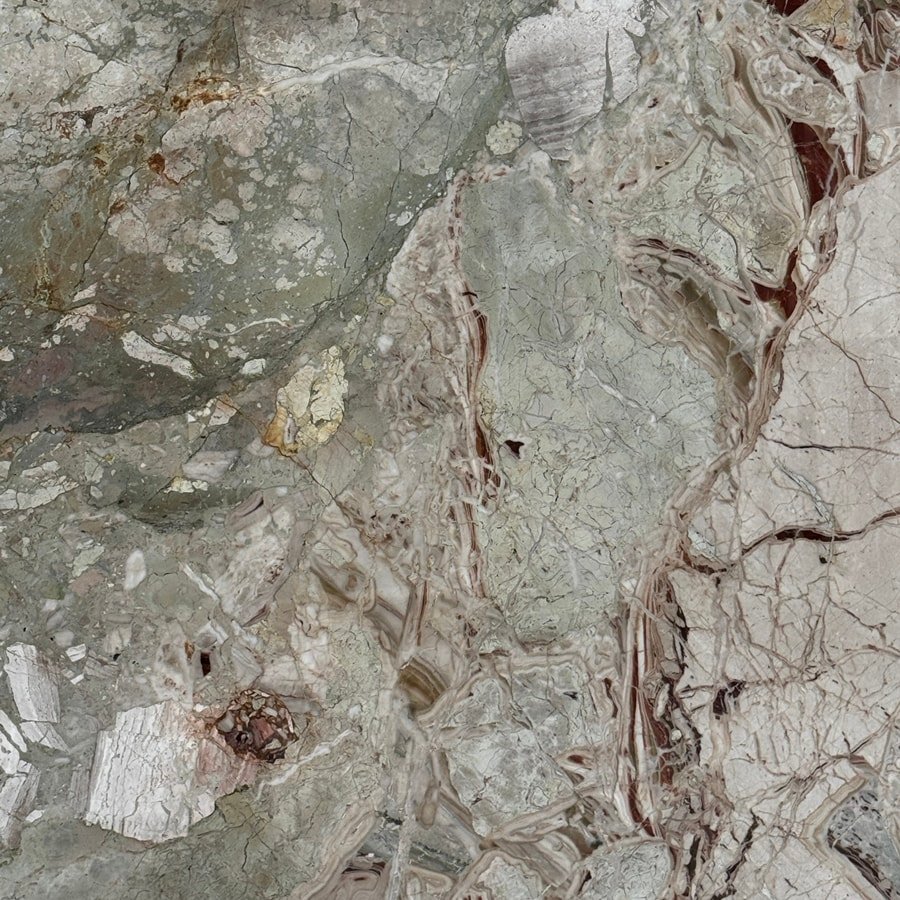
Monet’s Garden Marble evokes the soft, blended palettes of impressionist painting—hence its evocative name. Typical slabs present a layered field of soft greens, sea-glass blues, creams, and pale ochres, with organic veining that reads less linear and more painterly. This stone’s visual complexity makes it a favorite for designers seeking an artisanal, calming aesthetic without overt pattern repetition. Its calcitic nature allows for a high-polish sheen or a gentle honed finish; both reveal different qualities of the color play.
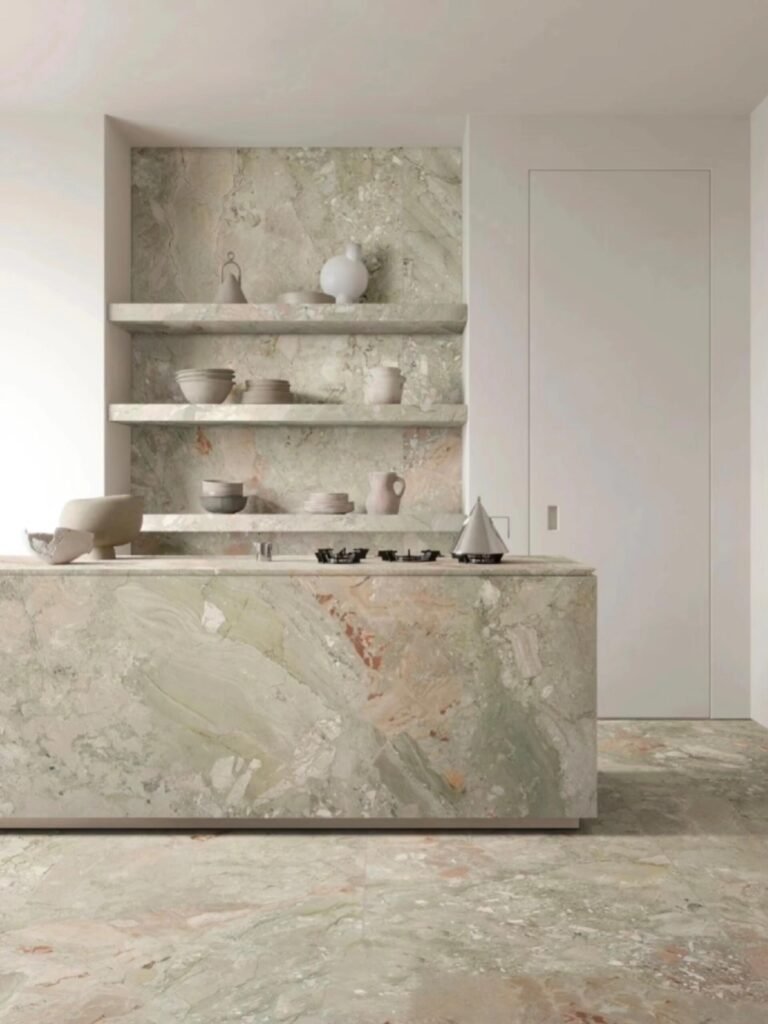
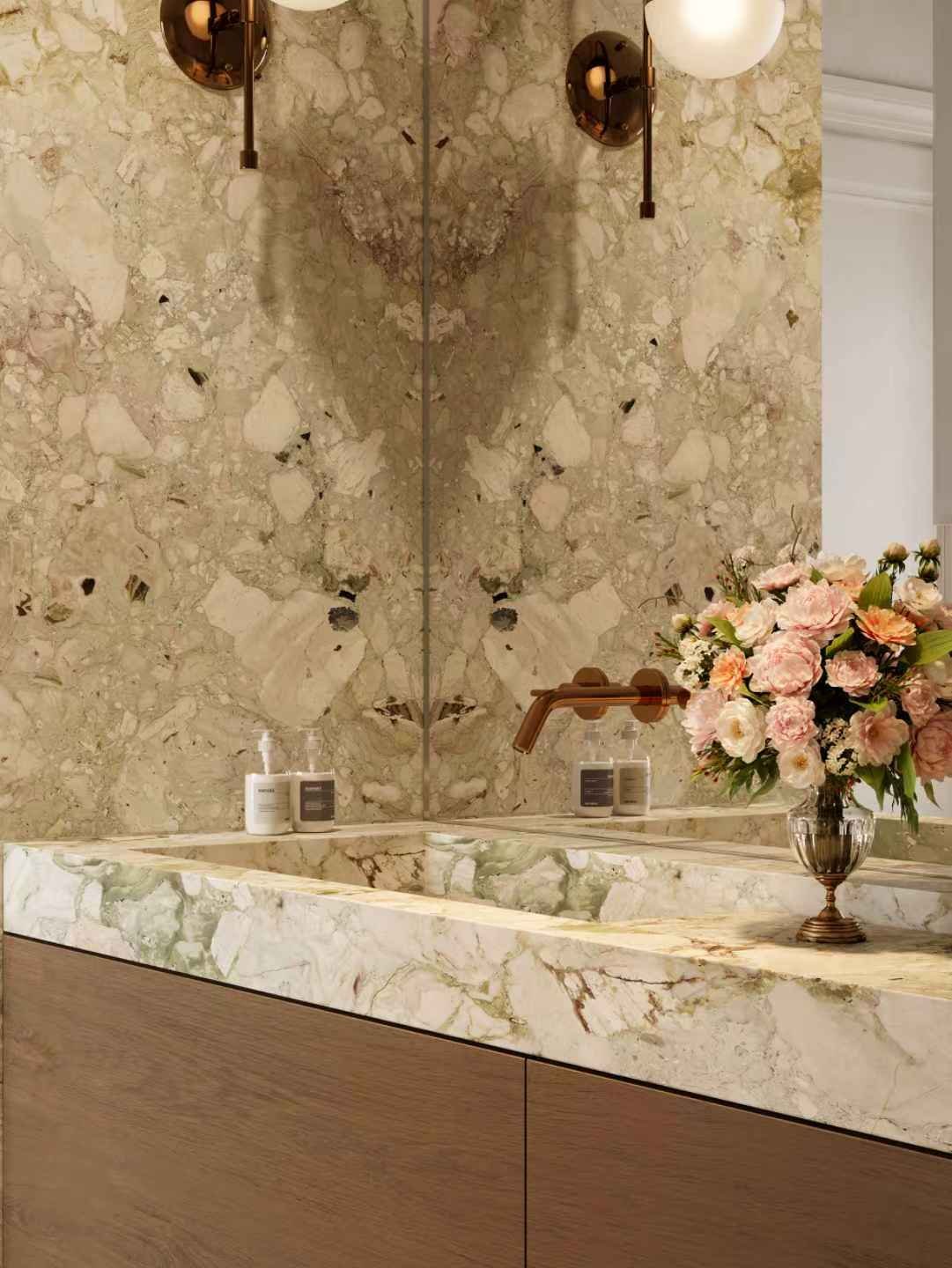
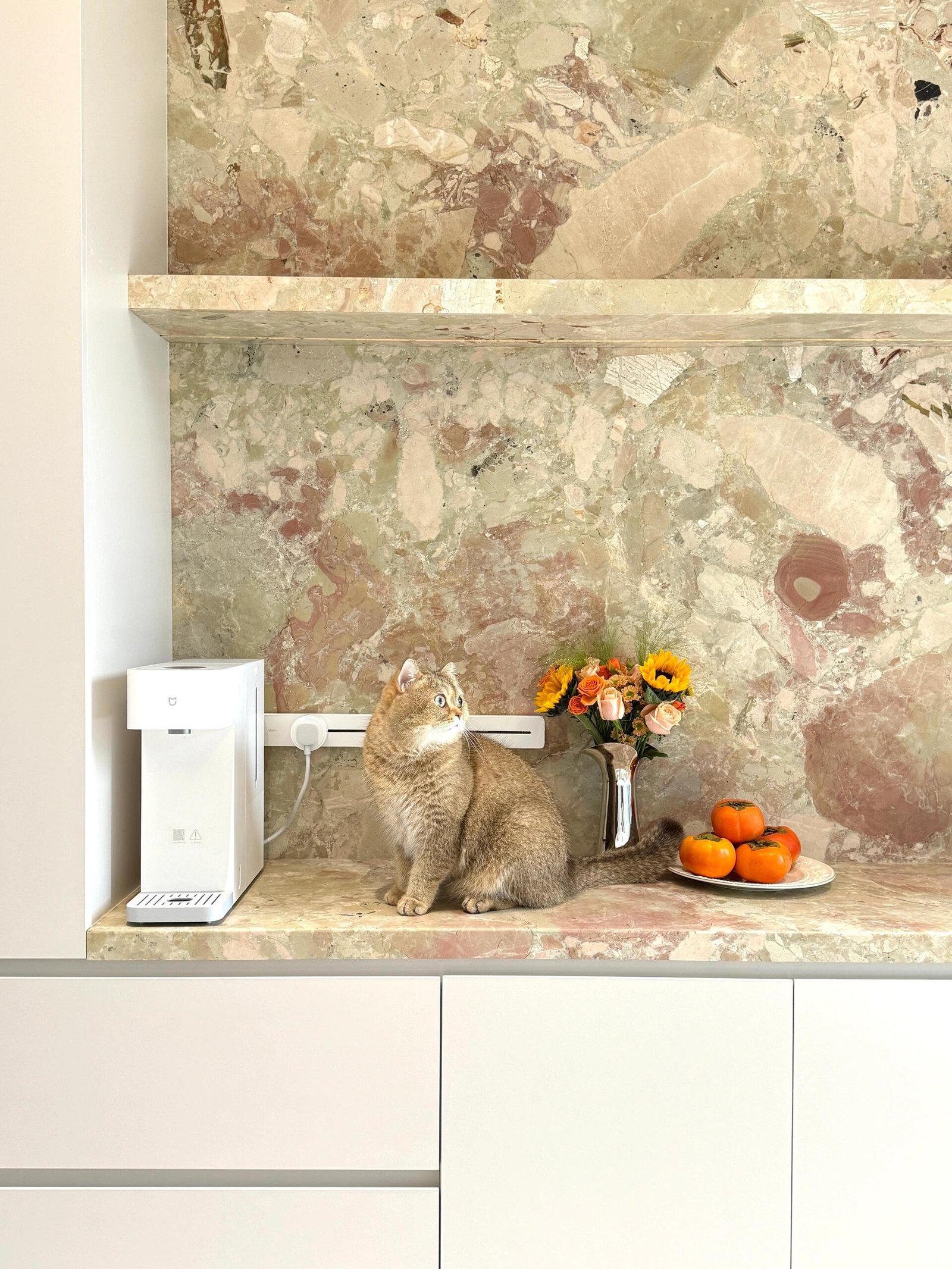
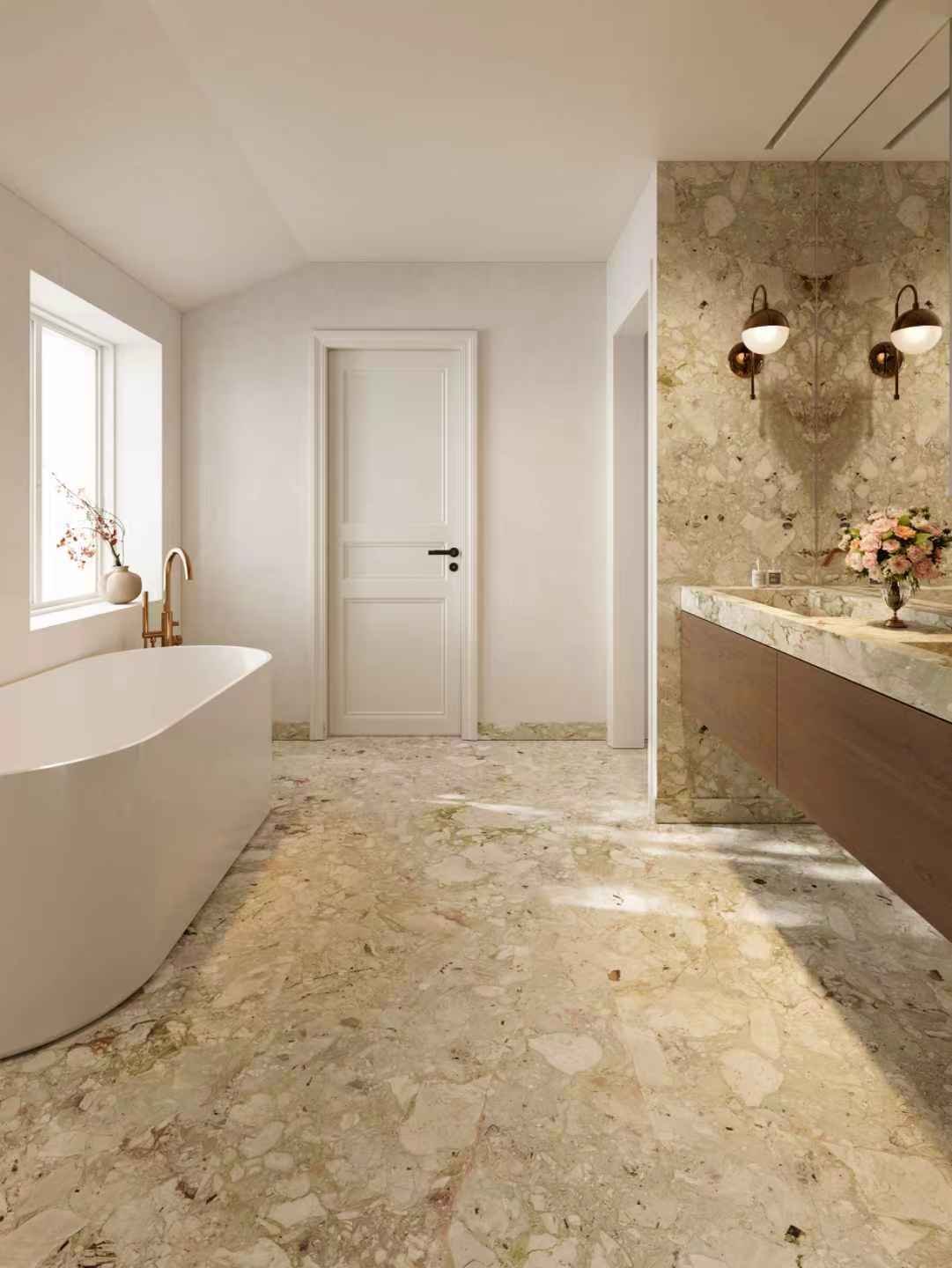
Given its palette, Monet’s Garden Marble is highly adaptable in residential and light-commercial interiors. It is especially effective in spa-like bathrooms, where its watery greens and blues foster a restorative atmosphere—ideal for vanity tops, shower feature walls (above the water line), bathtub surrounds, and floor accents paired with non-slip materials. In hospitality settings, the stone lends itself to boutique hotel lobbies, tranquil lounge areas, and upscale restaurant banquettes where a calm visual anchor is desired. As a tabletop or bespoke furniture surface, Monet’s Garden can animate a space without overwhelming it, particularly when used as a single, bookmatched slab as a focal point.
Finish choice tailors the personality: a high polish draws the colors into a luminous, reflective surface that amplifies veining contrasts; a honed finish produces a softer, matte appearance and masks minor wear—advantageous in family or semi-public spaces. Because the stone’s palette is nuanced, designers often pair it with warm woods (walnut, oak) or soft metals (brushed brass) to create balanced compositions. Pale neutral paints and strategic lighting that accentuates green-blue undertones will maximize its calming effect.
Performance-wise, Monet’s Garden Marble behaves like typical calcitic marbles—polishable and workable but more vulnerable to acids and abrasion than siliceous stones. Penetrating sealers are recommended to guard against staining; in wet areas, robust waterproofing behind the stone is essential. For flooring, limit use to low- to medium-traffic zones or motif inlays; high-traffic expanses are best implemented with harder stones. Regular, gentle cleaning with pH-neutral products preserves color and sheen.
Fabrication nuances matter because the stone’s visual appeal is often slab-dependent. Bookmatching can produce spectacular, almost painterly mirror images that elevate reception walls or large tabletops. Seam placement should follow natural vein flow to avoid visual interruption. For bespoke cabinetry or furniture, edge detailing—slight bevels, mitered corners, or thin-edge modern profiles—retains the stone’s delicate character.
Monet’s Garden Marble is more than a surface; it’s a material that introduces a subtle, artful mood into interiors. When specified with awareness of its maintenance needs and localized uses (accent walls, wet-room features, and bespoke furniture), it provides an enduring, refined presence that integrates color, light, and texture into a harmonious composition.