1. What is “Four Seasons Green Marble”?
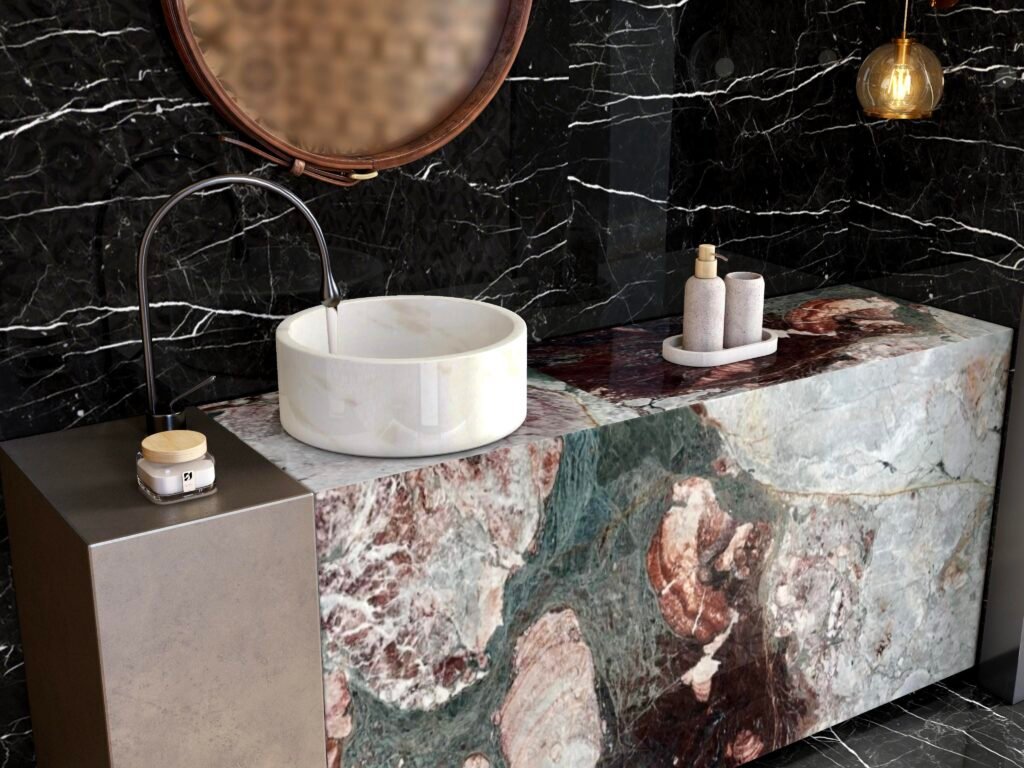
“Four Seasons Green” is a commercial name used by slab suppliers and tile makers to market a green, often multi-hued marble with flowing veins and swirls. The term is not a single geological type but a product label — the exact mineralogy, color saturation, and veining depend on the quarry (and sometimes on how a slab is cut and finished). Multiple suppliers list “Four Seasons Green” slabs in their catalogs, sometimes produced or rebranded in China, Spain, Brazil, or other stone-trading centers. For that reason, “Four Seasons Green” functions like a SKU: useful for procurement but requiring verification of origin and grade.
2. Origins & common quarry sources
Although some sites describe Four Seasons Green as quarried in European ranges (e.g., the Pyrenees and Iberia), other suppliers list Brazil, India, and China as places of origin — including manufacturers that cut, polish, and re-export quarried stone under the “Four Seasons” label. In practice, green marbles with names like Verde Alpi, Verde Guatemala, Ming Green, and others are the underlying families; “Four Seasons Green” can be a marketing/collection name rather than a single native quarry. Always ask for a quarry origin statement and recent slab photos before purchase.
3. Who supplies and exports Four Seasons Green?
There are three seller types you will encounter:
1) Branded European / design suppliers — companies that market slabs or porcelain tile collections under names like “Four Seasons Green” often position the product for architects and showrooms (example listings and product pages exist for this SKU). These suppliers commonly provide cut-to-size tiles and decorative panels with technical details for indoor/outdoor use.
2) International trading houses/factories (China, Brazil, India) — Many B2B portals show “Four Season Green Marble” slabs sold in bulk with MOQ and FOB pricing (Xiamen, Guangdong exporters, and other Chinese factories often list this SKU). These suppliers handle packing, crating, and worldwide shipping for wholesale buyers.
3) Local stone yards and fabricators — Regional dealers import slabs (branded or unbranded), stock them, and offer fabrication plus installation. For single-project buyers, local fabricators often present the best combination of sample handling, templating, and warranty.
When sourcing wholesale, you will likely contact trading companies (Alibaba, StoneContact, Longtops) or direct quarries if you need large volumes. Always verify references and request QC photos and slab tags.
4. Wholesale price ranges — realistic FOB/CIF examples and cost drivers
Wholesale prices for green marble slabs depend on origin, grade (A/B/C), slab dimensions, thickness (2 cm / 3 cm), finish (polished, honed), and whether the slab is cut/rectified. Prices listed on B2B marketplaces and supplier pages commonly display a broad range:
Commodity / lower-grade green slabs (bulk, Chinese factories or low-grade Indian slabs): approximate FOB ranges on listing pages commonly start at around $10–$25 per m² for low-end material, but these may be small-slab lots or heavily veined/blemished stock. Verify imagery and MOQ.
Mid-range exported slabs (consistent color, larger formats): common FOB quotes seen on trading platforms and exporter catalogs sit in $25–$60 per m², depending on availability and finish.
Premium / rare green marbles (Verde Guatemala, Verde Alpi–type or branded Four Seasons with curated veining): can range higher, often $60–$200+/m² at the factory or on specialized listings when the pattern is scarce or when slabs are large, book-matched, and grade-A.
Important cost drivers: freight (crated slabs are heavy), customs duties, port handling, and sample/inspection costs. Landed cost (CIF) can easily double the FOB slab price, and final installed price — which includes fabrication — will be substantially higher (often 3–6× the raw slab FOB, depending on region and complexity). Always obtain FOB and CIF quotations and compare them against locally stocked alternatives.
5. Types of green marble & how Four Seasons fits in
“Green marble” is a broad category — here are frequently encountered types:
Verde Guatemala / Guatemala Green — deep emerald/serpentine-type stone, often high-end.
Verde Alpi / Alpi Verde — Italian/Alpine green marble look, used in luxury interiors.
Ming Green / Emerald / Jade-look marbles — often quarried or fabricated in China, used for slabs and tiles.
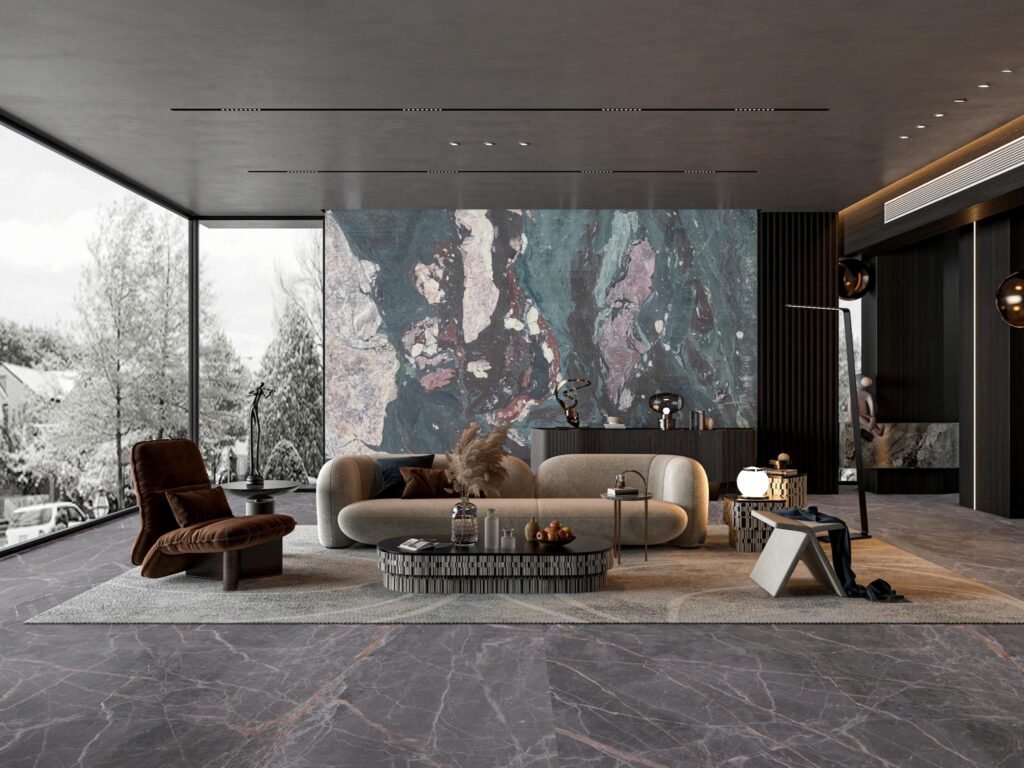
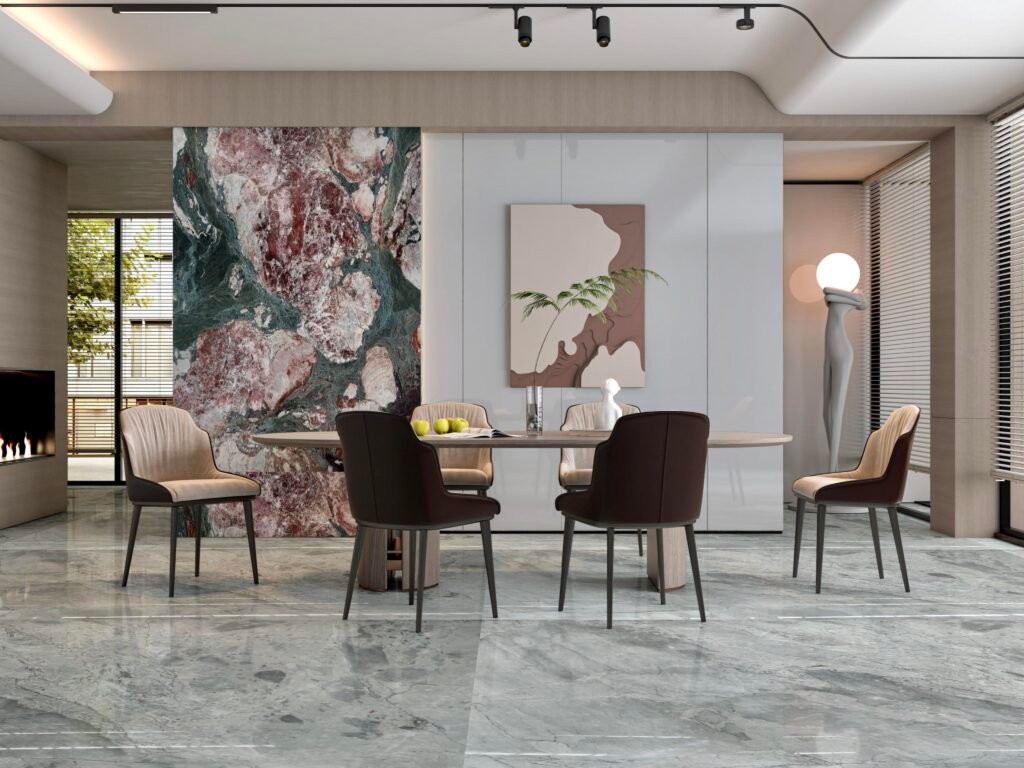
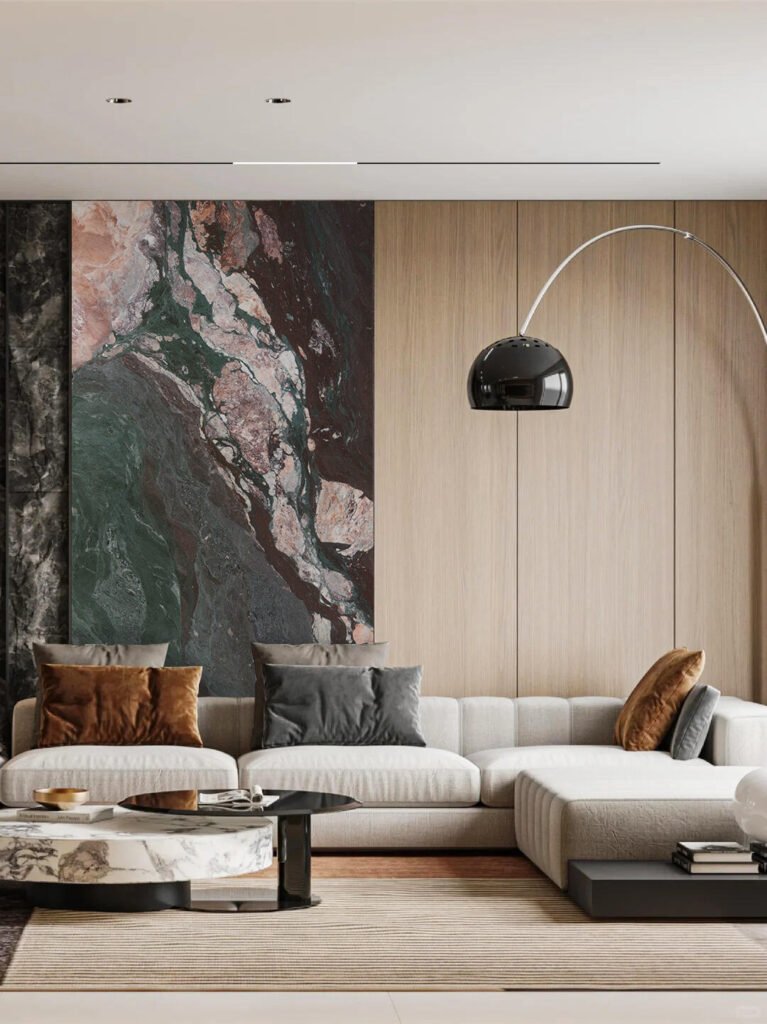
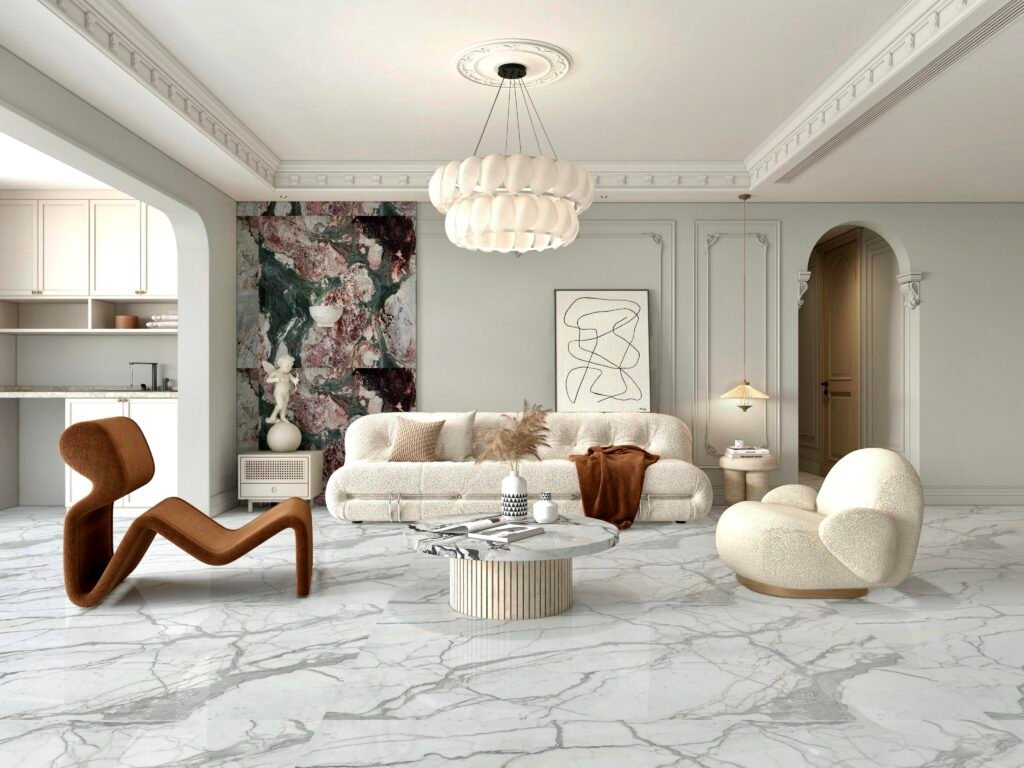
Four Seasons Green — market/collection name; visually varied and often sold as a decorative multi-tonal green slab for hotels, furniture, and feature walls. Different suppliers may use the same name for slightly different materials.
Green granite vs green marble: Granite is igneous, typically harder and more granular; marble is metamorphic and can be softer and more reactive to acids. For very high-traffic or outdoor paving, granite may outperform marble; for dramatic veining and high-polish interiors, marble is preferred.
6. Buying checklist — what to request from suppliers
Before you place a wholesale order, you will need the following:
High-resolution slab photos and videos (from both faces) and slab ID tags.
Origin & quarry declaration (where the block was quarried and processed).
Grade designation and yield estimate (how many m² per block and % of usable A-grade).
Technical sheet listing thicknesses, finish, water absorption, and density.
Packing & crate specs (plywood crates, foam, banding) and insurance terms.
Sample availability (large-format sample or a small slab piece) and lead time.
Third-party test reports if using the stone in food-contact or high-spec projects (metals migration, porosity, slip rating). This is essential for hospitality or kitchen surfaces.
DIY tip: For large furniture programs or hotels, arrange a pre-shipment inspection by a third-party QC firm to confirm slab consistency and crate integrity.
7. Regulations & industry trends shaping purchases
The natural stone industry is moving toward higher transparency and stricter material safety checks:
Environmental Product Declarations (EPDs) are becoming common for cladding and countertops; buyers of higher-volume projects increasingly request EPDs to support sustainability credentials. The International EPD System and industry programs publish verified EPDs for stone products.
Food-contact metal migration: the European Commission and regulators have reviewed lowering migration limits for lead and cadmium in ceramic and vitreous materials; although natural stone is less of a focus than ceramic glazes, projects involving food service surfaces should verify migration test results. This regulatory trend means purchasers should request metal-migration testing if the surface will have prolonged food contact.
Standards for large-format porcelain and sintered slabs (EN 14411 / ISO 13006): while these standards apply to porcelain and sintered products, stone suppliers and fabricators reference these norms when producing or integrating tile-like systems and for flooring/facade applications. For marble slabs, mechanical and frost-resistance tests and local building codes will guide suitability for exterior use.
Regulatory momentum toward lifecycle transparency (EPDs) and stricter food-contact limits means serious buyers should add documentation requirements to RFQs. This protects purchasing teams and helps avoid downstream compliance issues for hospitality or institutional projects.
8. Long-tail keyword ideas (purchase/manufacturer intent)
“Buy Four Seasons Green marble slab wholesale factory”
“Four Seasons Green marble supplier China FOB price”
“Four Seasons Green marble manufacturer export bulk”
“Four Seasons Green bookmatch slab supplier for hotels”
“Four Seasons Green marble tiles price per m² wholesale”
9. Frequently asked questions (page text — same content is repeated verbatim in the JSON-LD below)
Q1: What is Four Seasons Green marble, and where does it come from?
A1: Four Seasons Green is a commercial slab name applied by suppliers to a multi-hued green marble pattern. It may be quarried in different countries (examples include European and American quarries) and is also cut, finished, and sometimes rebranded by Chinese and international exporters — always ask the supplier for a quarry origin declaration.
Q2: How much does Four Seasons Green marble cost wholesale?
A2: Wholesale factory/FOB lists seen on B2B portals vary widely: expect low-end bulk slabs to start near $10–$25/m², mid-range slabs around $25–$60/m², and premium, rare slabs or book-matched panels above $60/m² depending on grade and slab size. Landed (CIF) and final installed prices are higher once freight, duties, and fabrication are included.
Q3: Is green marble more expensive than white marble?
A3: Not always — price depends on rarity and grade. Some exotic green marbles (Verde Guatemala, Verde Alpi) can be more expensive than common white marbles; conversely, commodity green slabs sold in bulk can be cheaper than premium white marbles like Calacatta. Evaluate on a slab-by-slab basis.
Q4: Can Four Seasons Green marble be used for kitchen countertops and food-contact surfaces?
A4: Yes, but marble is porous and can stain or etch with acids; if used for kitchen counters or tabletops, apply proper sealing and request heavy-metal migration test reports when food contact is a concern — especially for hospitality projects subject to EU or local food-contact rules.
Q5: How do I source Four Seasons Green marble in bulk for a project?
A5: Use B2B stone marketplaces or contact trading companies and quarries directly. Request slab photos, origin and grade declarations, sample pieces, FOB and CIF quotations, packing specs, and third-party QC inspection options before confirming a bulk order.
Semantic insights & purchase summary
How: Decide whether you need a branded European slab, an imported premium block (Verde Guatemala/Alpi style), or a cost-effective bulk slab from Asian exporters. For bulk procurement, request FOB quotations, photos, and a pre-shipment inspection.
Why: Four Seasons Green offers dramatic aesthetics that perform well in feature walls, hotel lobbies, and bespoke furniture. Its market name recognition helps showrooms and designers specify a look; procurement requires verification of origin and grade.
What to expect: Wide price variance. Low-end wholesale slabs show up at bargain FOB rates; premium, rare book-matched panels and large-format A-grade slabs command much higher prices. Expect landed and installed costs to be several times the factory slab price.
Options: Buy small quantities via a local stone yard (less risk, easier returns), or order container loads from trading factories for large projects (requires QC, sample approvals, and logistic planning). Consider working with an importing agent to manage customs and inspection.
Considerations (detailed): For hospitality and food-related applications, request heavy-metal migration testing and check local food contact rules; for sustainable procurement, request EPDs and lifecycle documentation. Crating, insurance, and skilled fabrication are non-negotiable cost elements — budget accordingly.
这是示例文本,单击 “编辑” 按钮更改此文本。