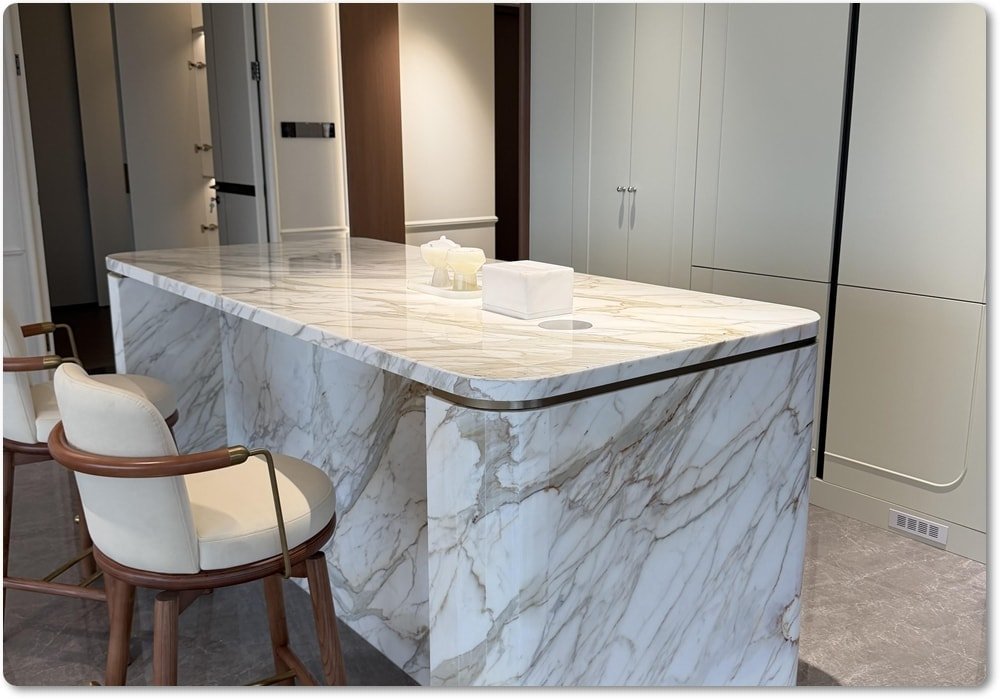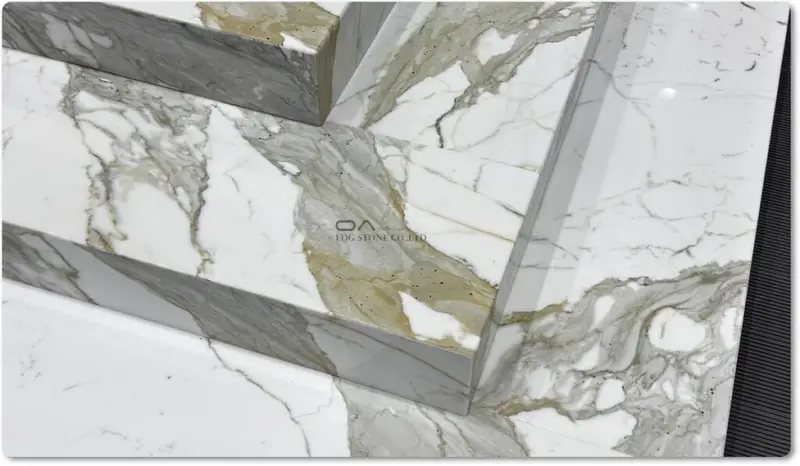
FENDI Elephant White Marble Dining Table Factory
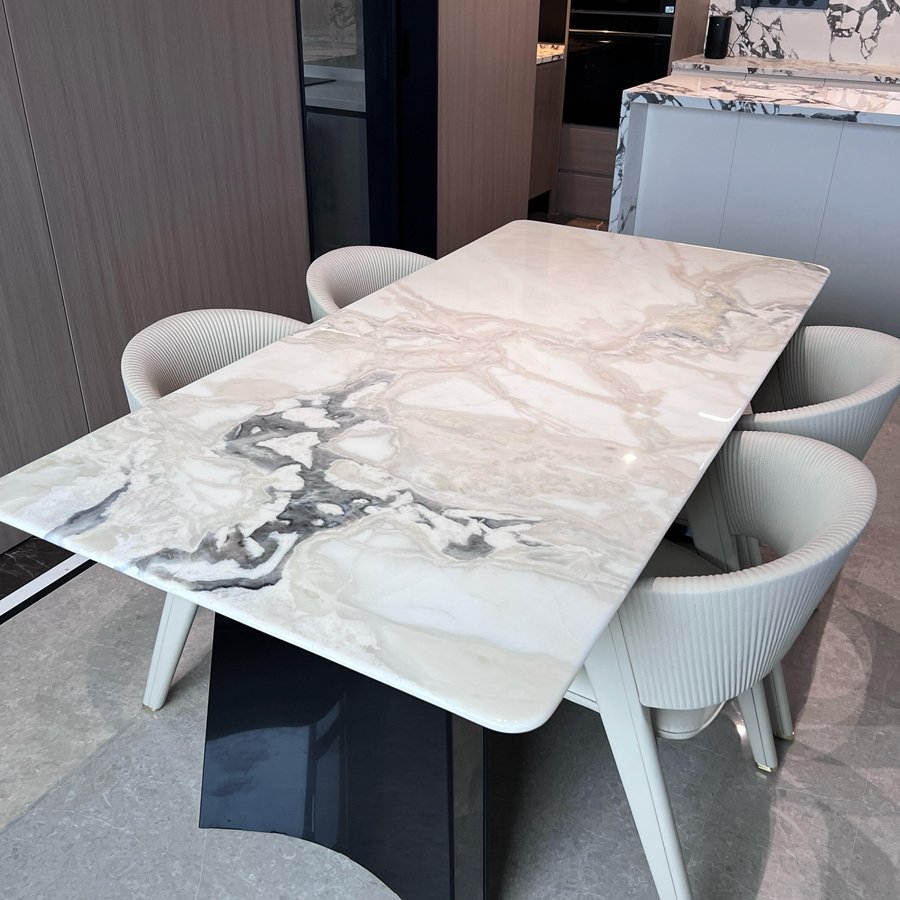
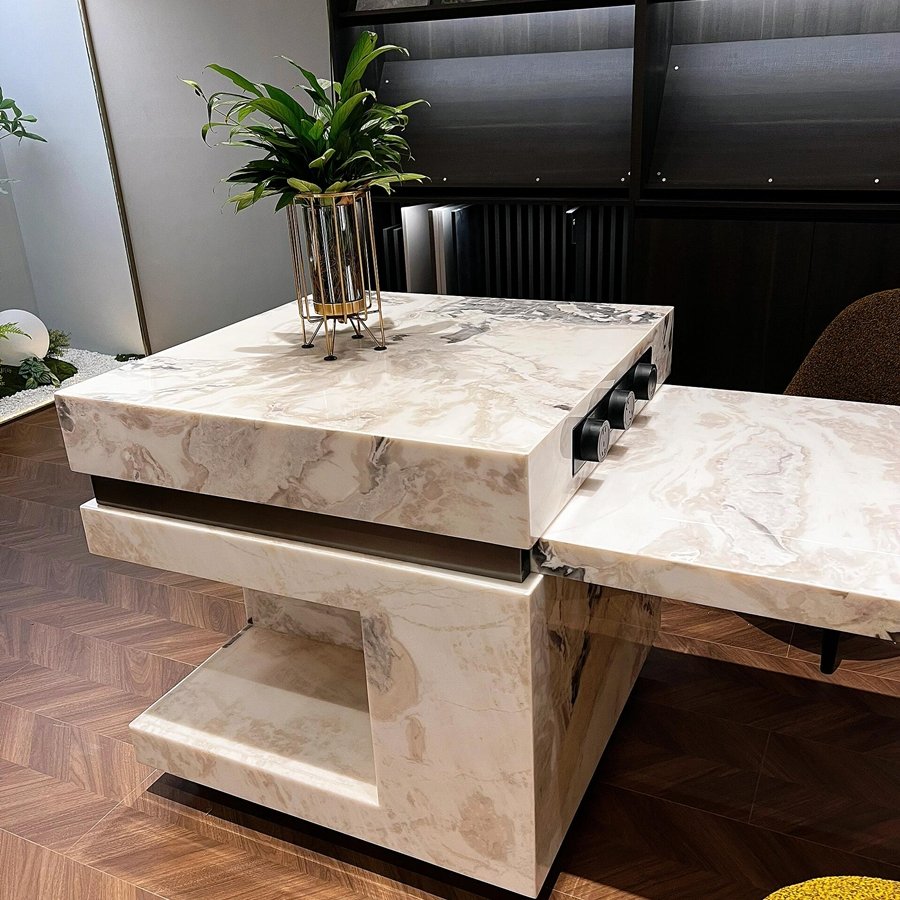
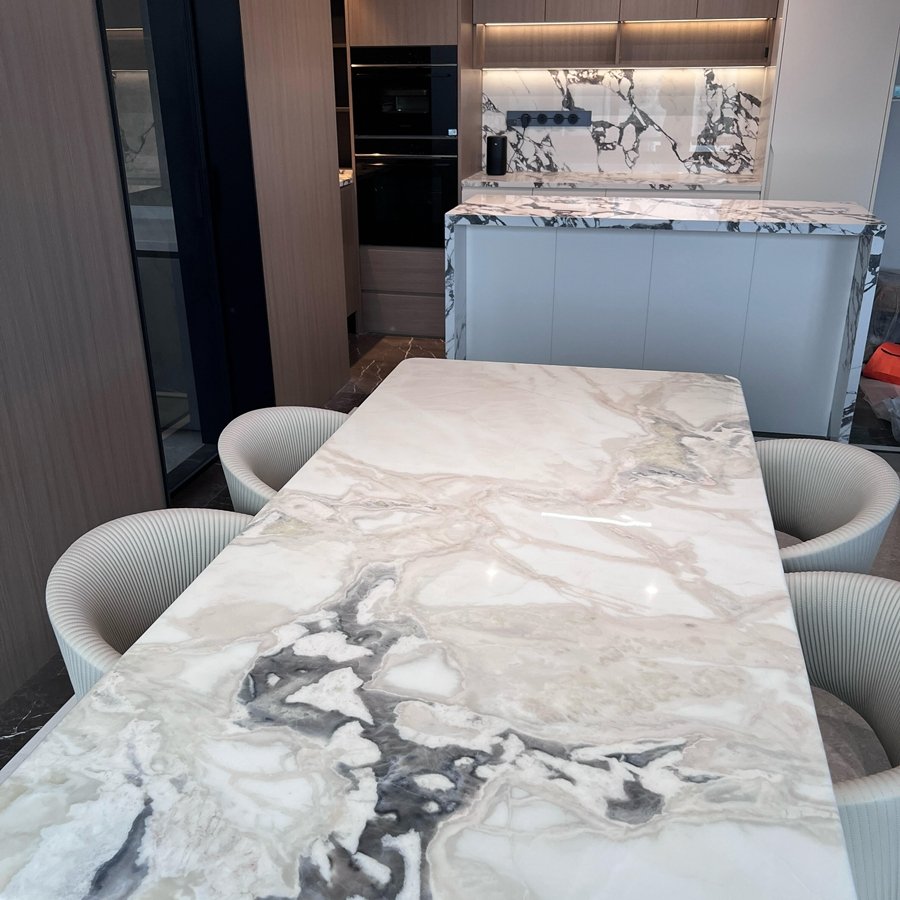
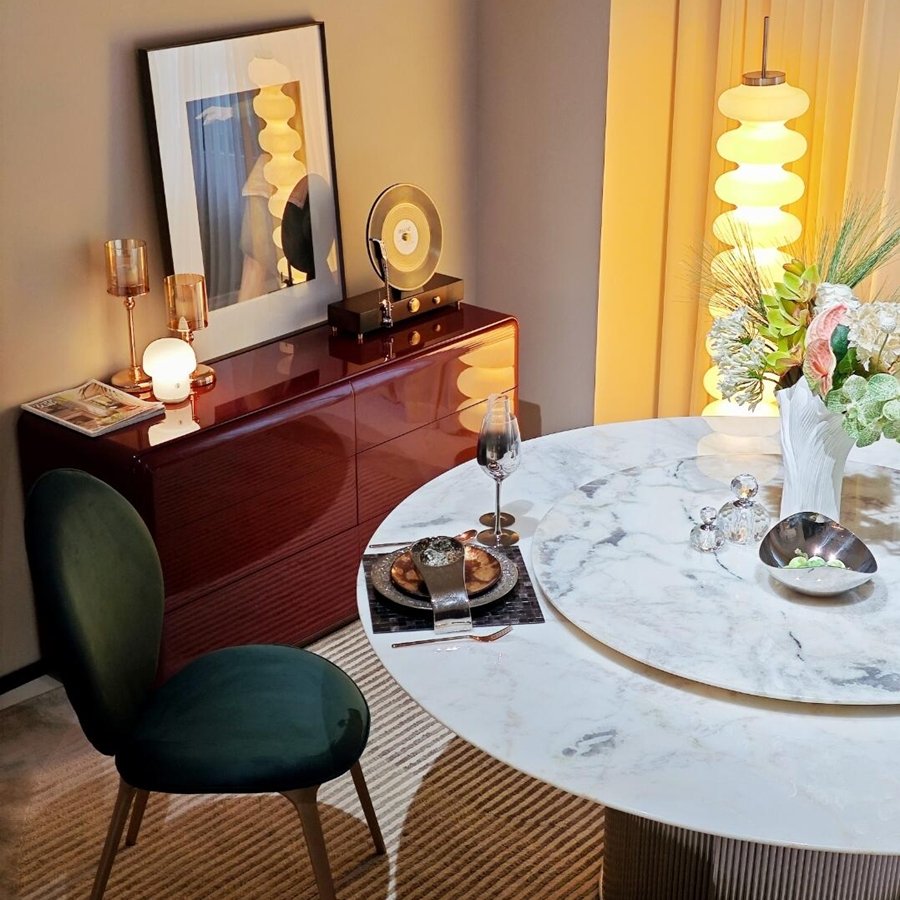
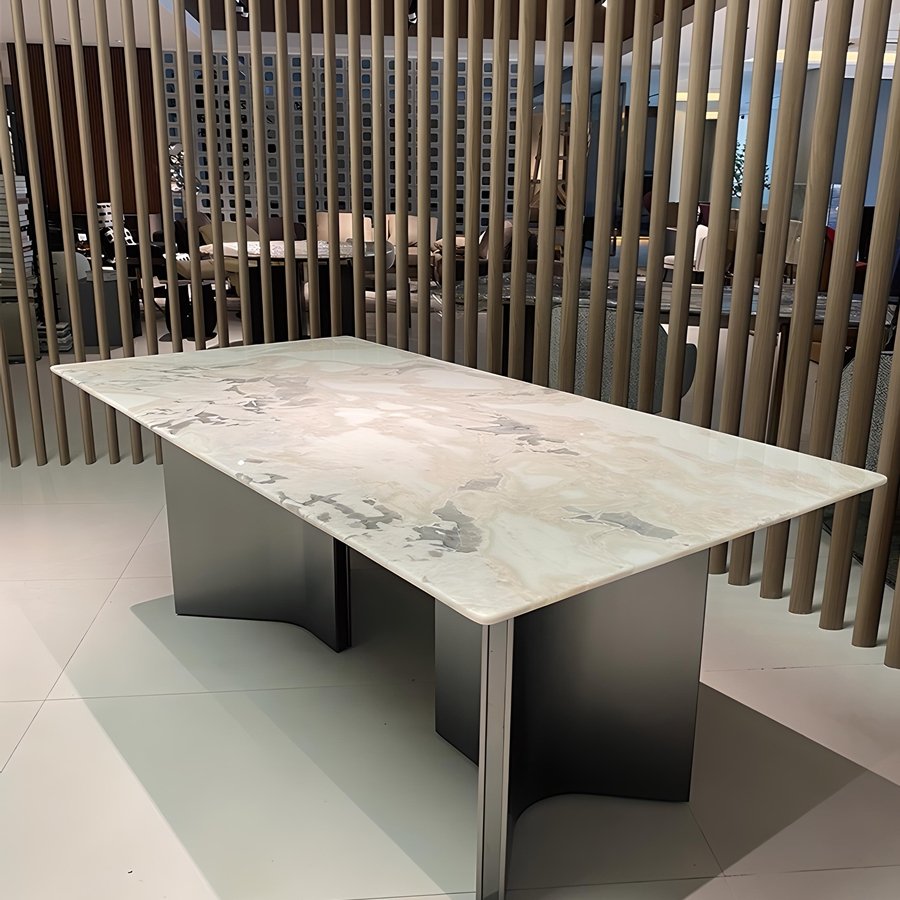
1) What is FENDI Elephant White Marble?
“FENDI Elephant White” is a market / trade-style name used by multiple suppliers to describe a high-quality white marble with subtle grey/cream veining and a bright, even background that reads very well as furniture-grade stone for luxury dining and coffee tables. Trade names such as Fendi White are not always a unique geological quarry name — rather, they are marketing names used by quarries and factories (Italy, China, Namibia, and others) for similar visual grades. That means provenance can vary by supplier and lot; always confirm slab origin and ask for slab ID photos before purchase.
Elephant White (often listed separately by suppliers) describes a white marble with a soft mesh or delicate veining that some factories call “Elephant White” for its tonal resemblance to elephant-skin texture — it is commonly quarried and processed in China.
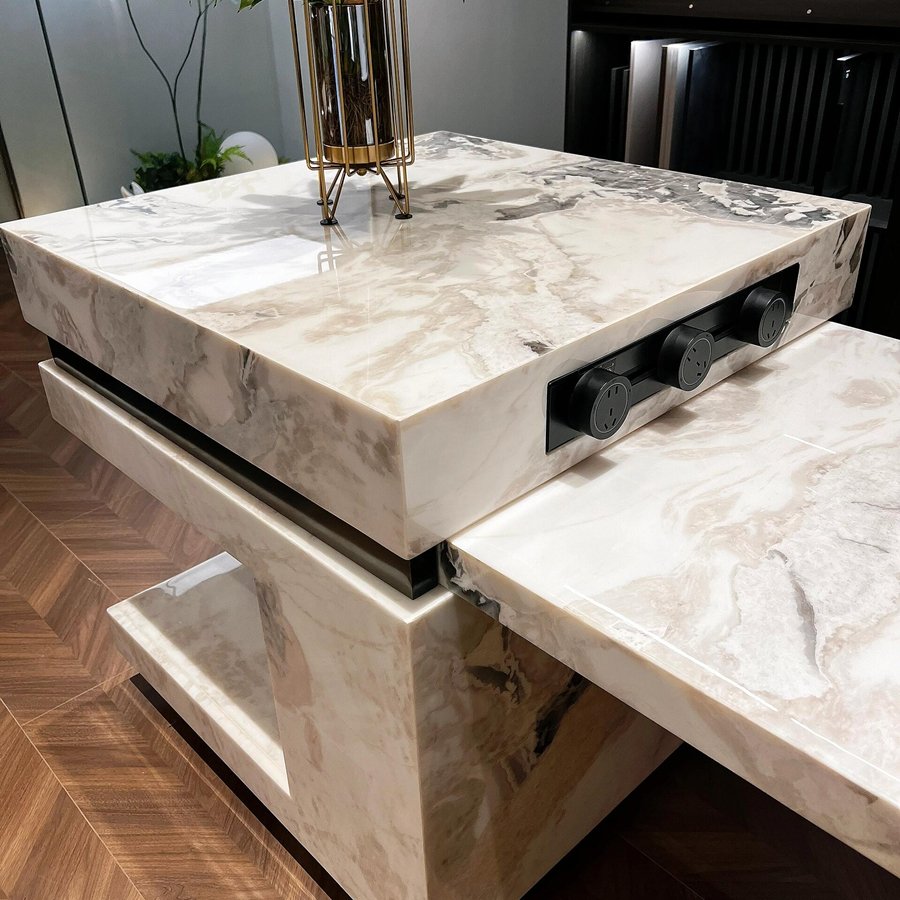
2) Why choose a factory for your FENDI Elephant White dining table?
Factory-direct sourcing (China or other major stone-producing regions) gives buyers concrete advantages when ordering large-format luxury tables:
Lower factory/FOB pricing versus retail showroom markups.
Customization at scale — factories can produce repeated identical tops (same bookmatched pair, CNC tolerances, edge profiles).
Bespoke engineering — integrated steel/reinforced backs, resin-soaked substrates, anti-crack reinforcement for large spans.
Control on lead times — with clear production schedules, templating, and logistics planning.
One-stop service — slab selection → cutting → polishing → reinforcement → crating → export. Many Chinese factories show production capacities and the ability to deliver large volumes and custom finishes.
3) Typical slab & finished tabletop specs
Common slab sizes
Jumbo slabs up to 3200 × 1600 mm or 3400 × 1800 mm for bookmatched table tops.
ThicknessDining tabletop core: 30–40 mm is common for massive luxury tabletops (solid stone or stone with plywood/steel backing). For thinner modern designs, 20 mm is possible with structural reinforcement.
FinishesPolished (high gloss), honed (matte), leathered/brush finish for tactile surfaces. Polished is most common for dining tables.
Edge profilesEased, bullnose, bevel, ogee, laminated thick-edge (double-thick bonded) for visual mass.
ReinforcementSteel frame, laminated backing (epoxy+mesh), resin impregnation for fragile veining or bookmatched seams.
4) Production workflow — quarry to dining table (factory process)
Quarry & block selection — inspectors select blocks with a uniform background and minimal defects. Request quarry photos & block IDs.
Sawing to slabs — gang saw or wire saw cuts large slabs; yield & kerf loss affect price.
Surface finishing — polishing, honed or leathered finish applied on multi-head polishing lines.
Quality grading & slab ID — slab labeled; full-slab photos taken (front/back).
Templating & CNC — factory receives table CAD/CNC file, performs cutouts, sink hollows (if any), and edge profiles.
Reinforcement & lamination — for large tabletops, factories laminate two slabs or back with engineered substrate and add steel frames.
Final inspection & crate packing — wood crating, edge cushioning, anti-shock straps, desiccant, and shipping labeling.
5) Design & customization options (practical recommendations)
Bookmatched centerpieces: large dining tables frequently use bookmatched slabs for mirror-symmetry across the tabletop. Ask for matched slabs from the same lot.
Center inlays: contrast stone rings, brass/metal fillets, or black resin inlays for accent lines.
Integrated bases: factories can deliver finished tops with mounting inserts, pre-drilled bolt patterns, and recommended base specifications to avoid on-site drilling.
Rounded corners vs sharp corners: rounded corners are safer for shipping and reduce chipping risk.
Finish options: for heavy-use dining tables, consider leathered/honed to hide micro-scratches; polished for visual depth and luxury.
6) Quality assurance: tests, certificates & inspection checklist
Ask factories for:
Material data sheet (density, water absorption, Mohs hardness).
Third-party test reports (SGS/Intertek) for porosity/density and — where required — radioactivity compliance.
Full-slab high-resolution photos (front/back, edges).
Sample policy: request a 150×150 mm finished sample to evaluate finish, veining, and edge profiles.
Pre-shipment inspection (PSI): engage a third-party inspector to check crate build, tabletop finish, and slab quality before loading.
7) Regulatory & market trends impacting supply
Chinese Mineral Resources Law & ecological restoration requirements
Recent revisions to China’s Mineral Resources Law (adopted late 2024 and set to take effect in 2025) increase oversight on mineral resource management and require greater ecological restoration planning from mining operators. This has immediate implications for smaller quarry operators, potentially reducing available block supply and shifting procurement toward larger, compliant suppliers with permitted operations. Buyers should verify quarry compliance documentation and expect tighter controls on quarry access and export of raw blocks in affected regions.
Market size & demand
The global marble industry is sizable and growing: recent market reports estimate the global marble market at around tens of billions USD with mid-single-digit CAGR forecasts through the next decade. Demand for luxury white marbles remains strong due to residential renovations, hospitality projects, and premium furniture demand. Use multiple market reports to triangulate price direction and demand risk for luxury stone categories.
(Implication for buyers: plan longer lead times, verify quarry permits, and include contractual flexibility for quarry-sourced lot substitutions.)
8) Pricing drivers, HS code & shipping notes
Pricing drivers
Block yield and slab quality (venation & consistency)
Finishing type and labor (polished vs specialty finishes)
Reinforcement/lamination and additional CNC work
Freight, crating, and customs duties
HS code & export
Marble slabs usually fall under HS headings for natural stone (e.g., HS 6802/680291 depending on finished form and country-specific classification). Always confirm the exact HS code with your freight forwarder or customs broker for duty and documentation. Use factory-provided packing lists and commercial invoices that list slab SKU, slab ID, and weight per crate.
Shipping & insurance
Use wooden crates with shock-absorbing foam. Consider air freight for sample and initial prototype; ocean freight for bulk orders with cargo insurance and clear Incoterms (FOB, CIF, DDP as negotiated).
9) Buyer checklist — vetting a factory (quick)
Ask for a business license and export records.
Request factory photos & production capacity (monthly slabs, polishing lines).
Inspect SGS/Intertek test reports for material properties.
Confirm templates & CNC capability; request a prototype for large bespoke tops.
Require PSI and agree on quality acceptance criteria in the contract.
Negotiate payment terms: deposit (30%) + balance via L/C or T/T on B/L; tie final payment to PSI pass.
11) Google-hot FAQs (visible) — top 5
What is the FENDI Elephant White marble dining table?
A luxury dining table made from Fendi/Elephant White marble slab, typically finished polished and reinforced for safe spanning; often bookmatched for visual symmetry.Can I buy a custom FENDI Elephant White marble dining table directly from a factory?
Yes — many factories offer OEM/ODM services including slab selection, CNC, edge profiling, reinforcement, and crating for export.How much does a FENDI Elephant White marble dining table cost?
Costs vary widely by slab grade, tabletop size/thickness, reinforcement, and finish. Factory FOB pricing is generally lower than showroom retail — request slab photos and a formal FOB quote to compare.What certifications should I request from a marble factory?
Ask for SGS/Intertek test reports (density, water absorption), factory business license, slab ID photos, and PSI documentation.Will Chinese mining law changes affect marble supply?
Yes. Recent revisions increase mining oversight and ecological restoration requirements, which can reduce available quarry blocks from non-compliant sources; buyers should confirm quarry permits and plan lead times accordingly.
Semantic closed-loop content block — How / Why / What / Options / Considerations
Why: Why factory-direct procurement is valuable — cost efficiency, repeatable customization, predictable lead times with a single contractual partner, and the ability to request technical documentation and PSI evidence that large projects (hotels, restaurants) require.
What: What buyers must confirm — slab origin, slab ID photos, certified tests (SGS/Intertek), reinforcement details for large spans, and shipping/crate specs. For bookmatched tabletops always require a labeled pair and matching template paperwork.
Options (detailed): Options include single-slab 40 mm solid tops, double-laminated 20 mm tops with steel backing, inset metal fillets, resin inlays, and integrated mounting plates. For hospitality projects, consider pre-drilled anti-theft bolts and factory-installed protective seals.
Considerations (detailed): Consider ecological compliance and legal due diligence for quarry origin (recent Chinese legal revisions require restoration plans). Build schedule buffers for regulatory approval delays and always use cargo insurance. Include a contingency for slab substitution in the contract (approved equal-grade clause) to avoid project hold-ups.
References & selected supporting sources
Product listings and trade-name variability (Fendi White examples): EDG Stone product page and Crinoidstone listing.
Elephant White marble supplier listings and origin notes (China): StoneContact / Essency product pages.
Chinese Mineral Resources Law revision and ecological restoration obligations (regulatory context): official Chinese government announcements and NPC coverage.
Marble market sizing and growth context (industry reports): Grand View Research and Mordor Intelligence reports.