Does Greece Have Natural Marble?
Greece is one of the classical birthplaces of monumental marble use, and emphatically, it still produces natural marble today. From the brilliant whites of Thassos and Pentelic to the veined elegance of Volakas and a growing roster of gray marbles, Greek stone remains prized for architecture, sculpture, and luxury interiors. This long-form guide explains the geology, the leading quarries, market dynamics, and the regulatory and safety landscape that modern buyers and specifiers must know.
1 — Quick facts snapshot
Greece is a long-standing producer of natural marble — famous varieties include Thassos, Volakas, Pentelic, and several gray marbles used worldwide.
Major quarry regions: Thassos island, Drama (Volakas), Mount Pentelicus (Pentelic), and other zones in mainland Greece.
Market context: Greece ranks among the top global exporters of marble, travertine, and alabaster; industry reports show significant export volumes and revenue in recent years.
2 — The geology & origin of Greek marble
What is marble?
Marble is a metamorphic rock formed when limestone is subjected to heat and pressure, recrystallizing the original carbonate minerals (typically calcite or dolomite). The result is an interlocking mosaic of calcium-carbonate crystals that polishes to a rich, often translucent finish.
Why does Greece produce notable marble?
Greece’s complex tectonic history — converging plates, uplift, and localized metamorphism — produced carbonate sequences that, when metamorphosed, give source marble beds with excellent homogeneity and aesthetic qualities. Historic quarrying and continuous geological exploration mean many Greek marble types have long, well-documented provenance. (See Thassos, Penteli, and Drama/Volakas sections below for regional detail.)
3 — The Allure of Greek Marble — notable types
Thassos Marble: A Greek Marble Masterpiece
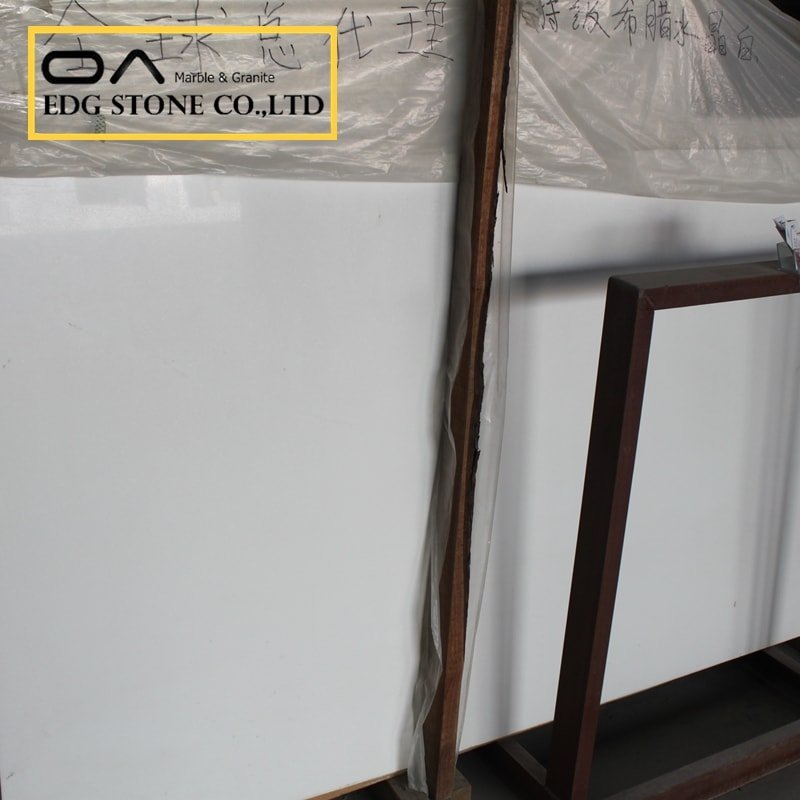
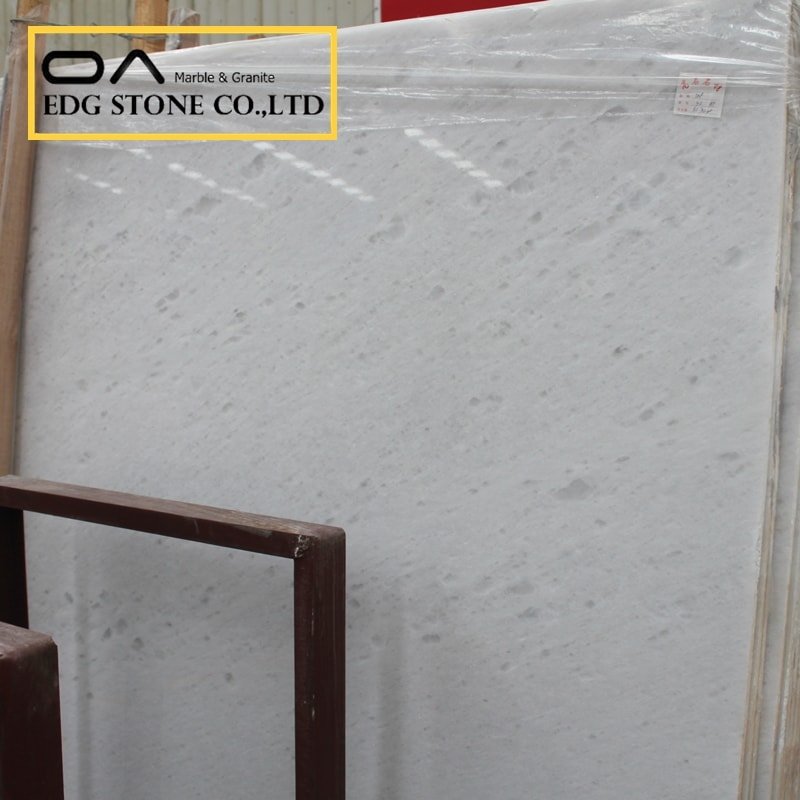
Appearance & character: Thassos is renowned for exceptionally pure, bright white marble with a crystalline sparkle and very high reflectivity. The stone ranges from near-pure white to variants like “Thassos Del Sol” that show subtle warm veins. It’s widely used for facades, cladding, sculpture, and interior elements where a luminous white is desired.
Volakas Marble: All about Volakas
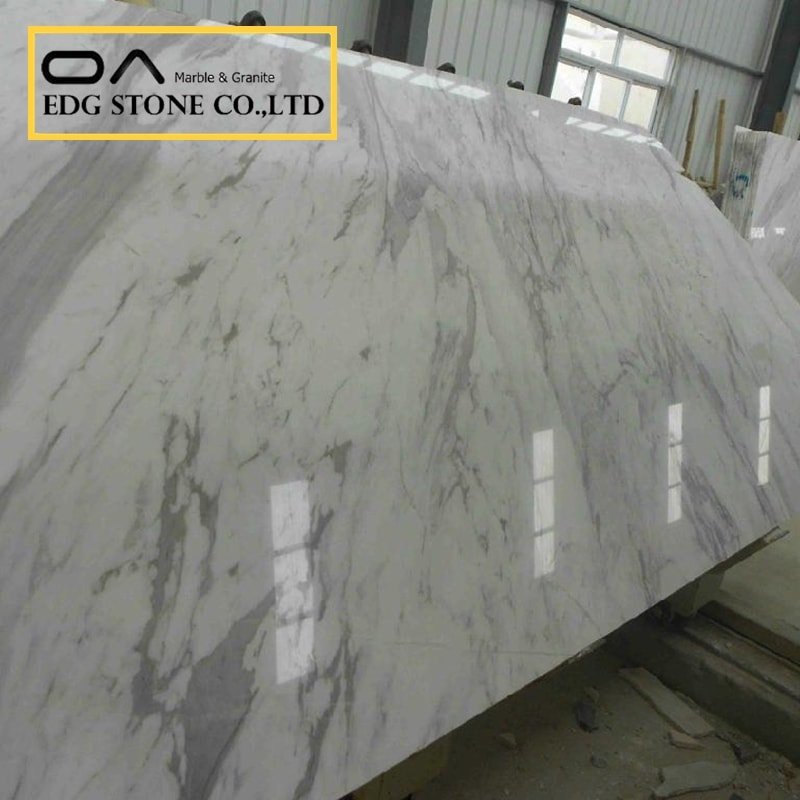
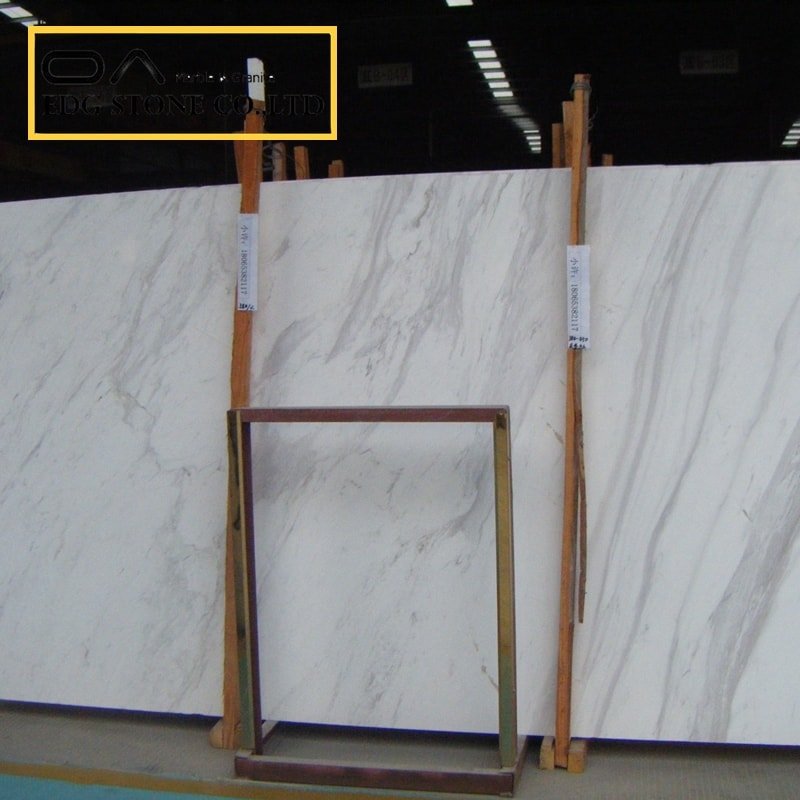
Volakas (often quarried near Drama) is a white Greek marble with delicate to pronounced gray and brown veins and clouding — sometimes referred to as the “Carrara of Greece” for its fine veining. Volakas has several commercial variants (for example, Volakas Classic and Volakas Haemus) and is widely used in countertops, floors, and architectural cladding.
Pentelic Marble: The Classical Choice
Pentelic marble — quarried from Mount Pentelicus near Athens — is famous historically: the Parthenon and many classical Athenian monuments used Pentelic marble. It is warm-white with a faint golden tint, prized for sculptural work and conservation projects.
The 5 Best Greek Gray Marbles You Should Know About
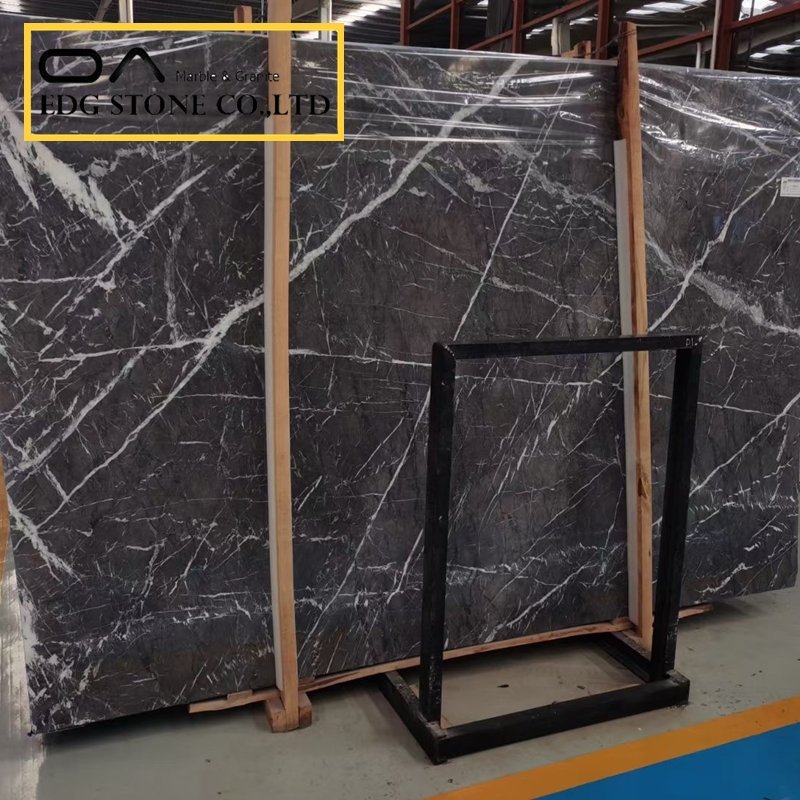
While lists vary by taste and supplier, noteworthy Greek gray marbles include:
Volakas (gray-veined varieties) — Drama.
Naxos Gray — island varieties with subtle movement.
Grevena Gray — regional quarried cemented marbles.
Kefalonia Gray — local island stone with atmospheric veining.
Thassos variants with gray veining — certain beds show gray mineral inclusions.
(Commercial names and availability change by lot — always request slab photos and specimen IDs.)
4 — Technical properties & finishes
Physical properties
Marble is a calcium carbonate rock with typical densities of ~2,600–2,800 kg/m³ depending on bed. It polishes to a high sheen; some varieties (Thassos) appear almost translucent in thin sections.
FinishesPolished (max gloss), honed (matte), leathered/textured (for tactile surfaces), and flamed (rare for marble). Choice of finish affects color perception and slip resistance.
ApplicationsBest for interior countertops, vanities, floors (with honed finish), wall cladding, façades, and artistic sculpture. For heavy traffic floors or aggressive outdoor climates, select appropriate honing and maintenance regimes.
5 — Thassos & Volakas: deeper looks
Thassos quarries & production
Quarrying on Thassos Island dates back to antiquity and continues today. Modern operations combine large block extraction with precision sawing; Thassos marble is marketed globally for its brilliant white field and high solar reflectance.
Volakas quarry & commercial profiles
Volakas quarries (around Drama/Falakro) operate at an industrial scale and produce multiple commercial blocks and finishes. Volakas’s ranges, including Haemus and Classic, provide white backgrounds with gray/brown veining, making it a popular interior stone with high yield in slab production.
6 — Pricing, exports & market dynamics
Trade & export snapshot
Recent industry summaries place Greece among the top global exporters of marble, travertine, and alabaster. Different reports show Greek marble export revenues and ranking — for example, one industry report indicated Greece exported about $137 million in marble in 2023, while other overviews highlight the sector’s strategic value to Greek manufacturing and exports. (Figures vary by data source; always consult up-to-date trade reports when budgeting).
What drives price
Rarity & color purity: Thassos and certain Volakas lots command premiums.
Slab size & yield: larger, low-vein slabs reduce seams and increase value.
Finish & fabrication complexity: bookmatching, mitered edges, and restoration-grade finishing add cost.
Logistics: quarry location, freight, and customs duties determine landed cost for overseas buyers. For wholesale and factory sourcing, negotiate CIF/FOB terms and request itemized quotes.
7 — Sustainability, regulation & worker safety
Environmental & permitting context in Greece
Quarrying in Greece is regulated by national mining and quarry law frameworks (e.g., the Mining and Quarrying legal framework and associated permitting processes). Environmental Impact Assessments (EIA) can be applied for larger operations, and extraction areas often require rehabilitation plans and local revenue sharing. (See national mining law references for permitting details.)
Worker safety & respirable dust — what buyers must know
Marble vs silica: Marble is primarily calcium carbonate and typically contains low crystalline silica (often <5%); however, cutting, grinding, or dry-sawing any stone generates respirable dust. OSHA and industry guidance, therefore, emphasize engineering controls (wet cutting, on-tool water feeds, local exhaust ventilation, HEPA filtration) and exposure monitoring to protect workers. The Natural Stone Institute and OSHA provide detailed procedures for minimizing risk during fabrication and installation.
Trade compliance & market access (EU/US)
Exporters and importers must follow EU mining permits and customs procedures; U.S.-bound shipments may require SDSs and, where applicable, consumer warnings (e.g., California’s Prop 65) for listed hazards like respirable crystalline silica (relevant primarily when silica-bearing materials are present or during installation with dry cutting). Buyers should request SDS and compliance documents from suppliers.
8 — Buying guide: manufacturer/factory / wholesale checklist
When sourcing Greek marble (especially in bulk or for specification projects), ask suppliers for:
Quarry origin & slab ID photos — full-slab, high-res images and slab numbering.
SDS and technical data — water absorption, density, flexural strength, and recommended sealer.
Proof of permitting & environmental compliance — queries about EIAs, restoration plans, and legal quarry permits.
Factory capabilities — CNC, bookmatching, edge profile, and finish options.
Worker safety evidence — wet cutting, dust collection, and training for fabricators.
Commercial terms — MOQ, FOB/CIF pricing, lead times, freight insurance, and payment terms.
References & project photos — recent installations and client testimonials.
Use purchase-intent long-tail keywords when searching or reaching out:
“Thassos marble slab manufacturer factory wholesale”
“Buy Volakas marble slabs bulk price per slab.”
“Greek Pentelic marble supplier FOB”
9 — Fabrication & installation notes
Fabrication tips
Marble is softer than quartzite or granite; diamond tooling with water cooling is standard. For premium visual effects (bookmatching), request that slabs be cut in a matched sequence and photographed.
InstallationEnsure solid, level substrates and adequate support for large slabs, especially for vertical cladding or heavy countertops with integrated sinks.
Sealing & maintenanceUse penetrating sealers suitable for calcium-carbonate stones and reapply per product guidance. Clean with pH-neutral stone cleaners; avoid strong acids that will etch marble surfaces.
10 — Design inspiration & case studies
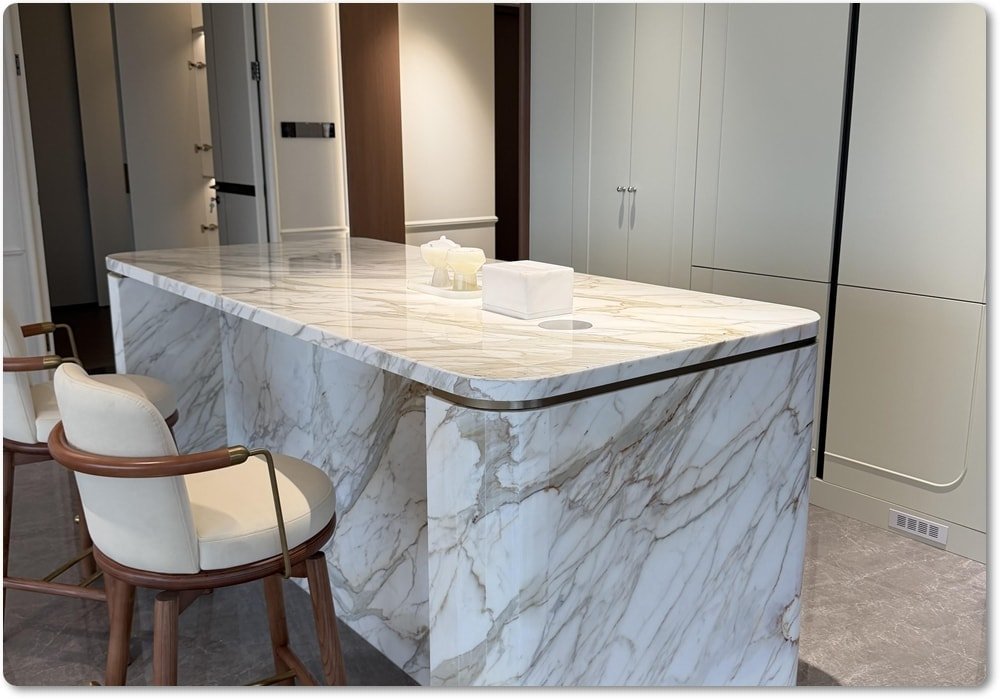
Residential: white Thassos bathrooms and vanity tops convey spa-like freshness; bookmatched Volakas kitchens create soft, veined islands that pair with warm wood.
Heritage & restoration: Pentelic marble remains essential for authentic restoration work on Athenian monuments.
Commercial: lobby claddings and retail counters often use bookmatched Thassos panels for high-impact, luminous interiors.
11 — FAQ (Google trending questions)
Does Greece produce natural marble?
Yes. Greece continues to quarry natural marble varieties, including Thassos, Volakas, and Penteli, for domestic use and export.What is special about Thassos marble?
Thassos is prized for its pure, brilliant white field and crystalline reflection — it’s been quarried since antiquity and remains a top choice for luminous interior and exterior finishes.Where is Volakas marble quarried, and what does it look like?
Volakas is quarried near Drama (Falakro region) in northern Greece; it features a white background with gray or brown veins and comes in commercial variants like Volakas Classic and Volakas Haemus.Is Greek marble suitable for countertops?
Yes — many Greek marbles (e.g., Volakas) are used for countertops, though marble is more porous than many engineered stones and requires sealing and careful maintenance.How do I buy Greek marble wholesale or factory direct?
Contact Greek slab houses or quarry exporters, ask for slab IDs and photos, request SDS and compliance documentation, and negotiate FOB/CIF terms; use purchase-intent keywords like “Thassos marble manufacturer factory wholesale.”
Semantic Closure: How • Why • What • Options • Considerations
Why: Why choose it — Greek marbles like Thassos and Volakas combine historical prestige, luminous aesthetics, and proven durability in architectural applications, making them ideal for high-visibility interiors and restoration projects.
What: What to expect — natural variability between slabs, potential for higher cost for premium, low-vein lots, and the need for proper sealing/maintenance when used as countertops. Verify lead times and slab yield before finalizing design decisions.
Options: Options include polished, honed, and textured finishes; bookmatching and backlit thin slabs for feature walls; and factory-laminated edges to simulate thicker stone. Consider matching accessory stones for thresholds and steps to minimize waste.
Considerations: Consider environmental permitting and rehabilitation obligations in quarry sourcing, worker-safety measures (wet cutting, dust controls) during fabrication, and compliance needs for target markets (SDS, Prop 65 warnings where applicable).
13 — Focus Keyword, 50 SEO tags
Focus keyword (primary): Natural marble in Greece
Long-tail / purchase-intent keywords (3–5):
Thassos marble slab manufacturer factory wholesale
Buy Volakas marble slabs bulk price per slab
Greek Pentelic marble supplier FOB CIF
Thassos white marble wholesale slabs manufacturer
Greek gray marble slabs supplier near me
50 SEO tags:
Does Greece have natural marble, Thassos marble, Volakas marble, Pentelic marble, Greek marble, Greek white marble, Greek gray marble, Thassos white marble slab, Volakas white marble slab, buy Thassos marble wholesale, Thassos marble manufacturer, Volakas marble supplier, Greek marble exporters, Greece marble quarry, Thassos quarry, Volakas quarry Drama, Pentelic Parthenon marble, Greek marble price, Thassos marble price per sq ft, Volakas slab price, marble trade Greece, marble exports Greece 2023, marble SDS Greece, marble silica content, marble safety data sheet, wet cutting marble, quarry rehabilitation Greece, marble factory direct, marble slab wholesale, bookmatched Thassos, Thassos bathroom ideas, Volakas kitchen counter, Greek marble countertops, white marble slabs Greece, gray marble Greece, marble for restoration, marble supplier near me, marble FOB CIF, marble slab photos, marble technical data, marble maintenance, marble sealing guide, marble finishes polished honed, marble installation tips, marble fabrication, marble thickness 2cm 3cm, marble import duties, marble freight insurance, marble case studies, marble design inspiration.