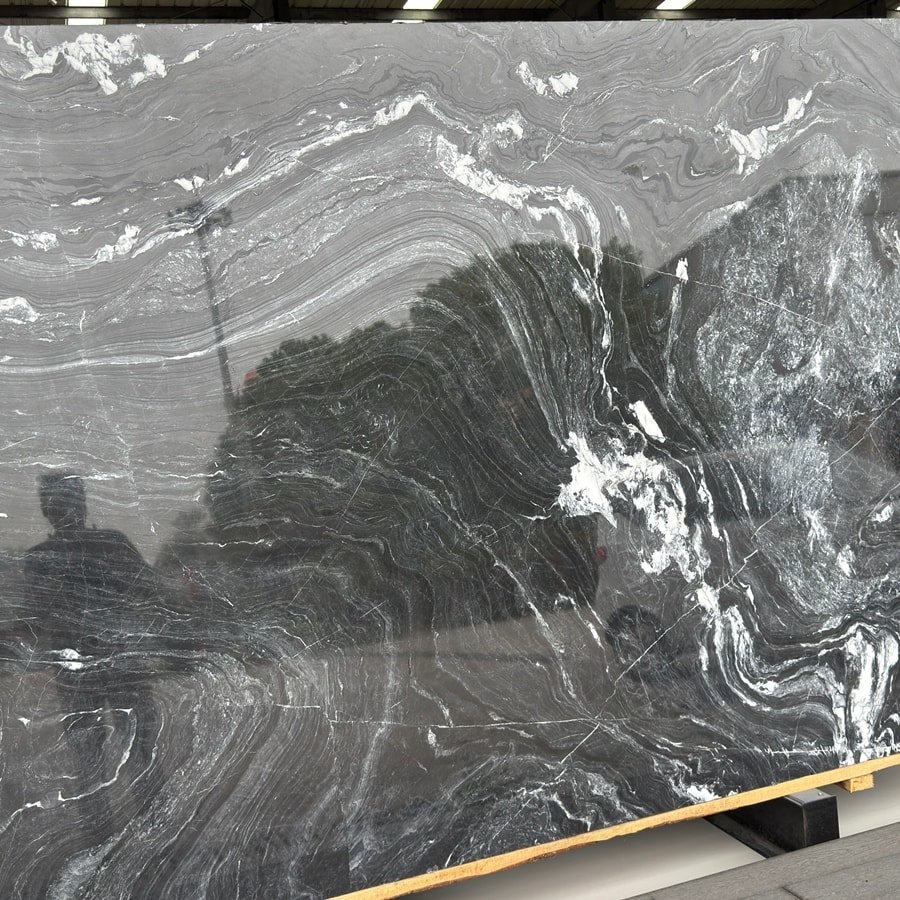
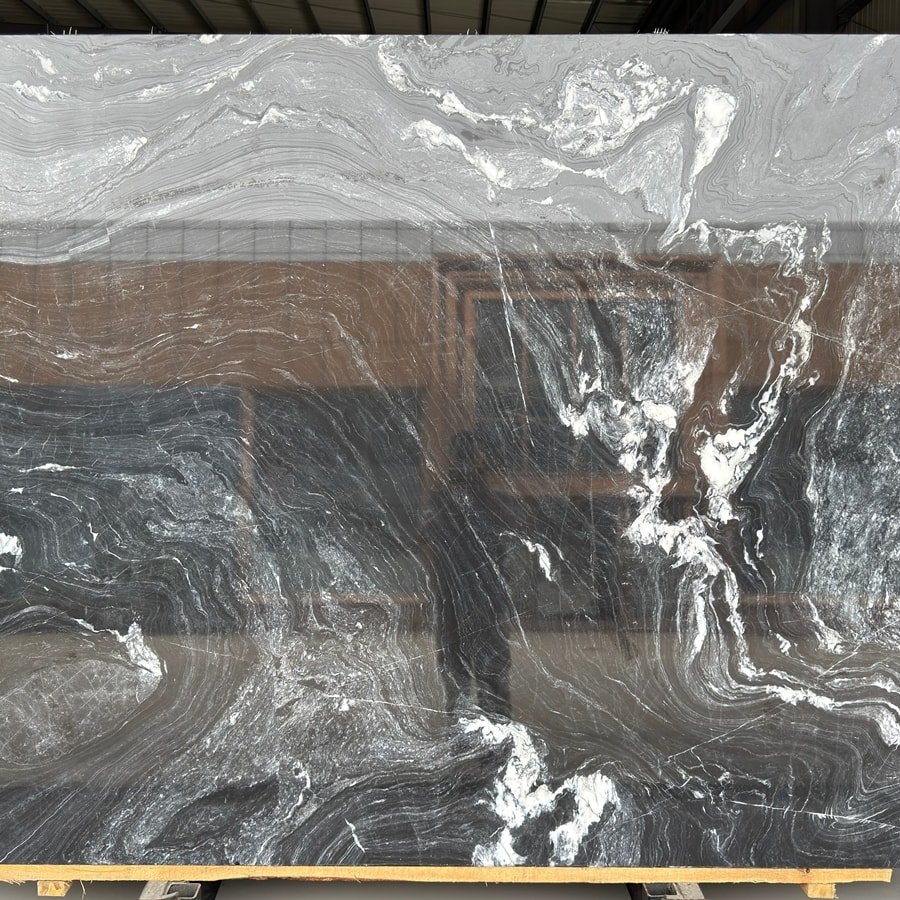
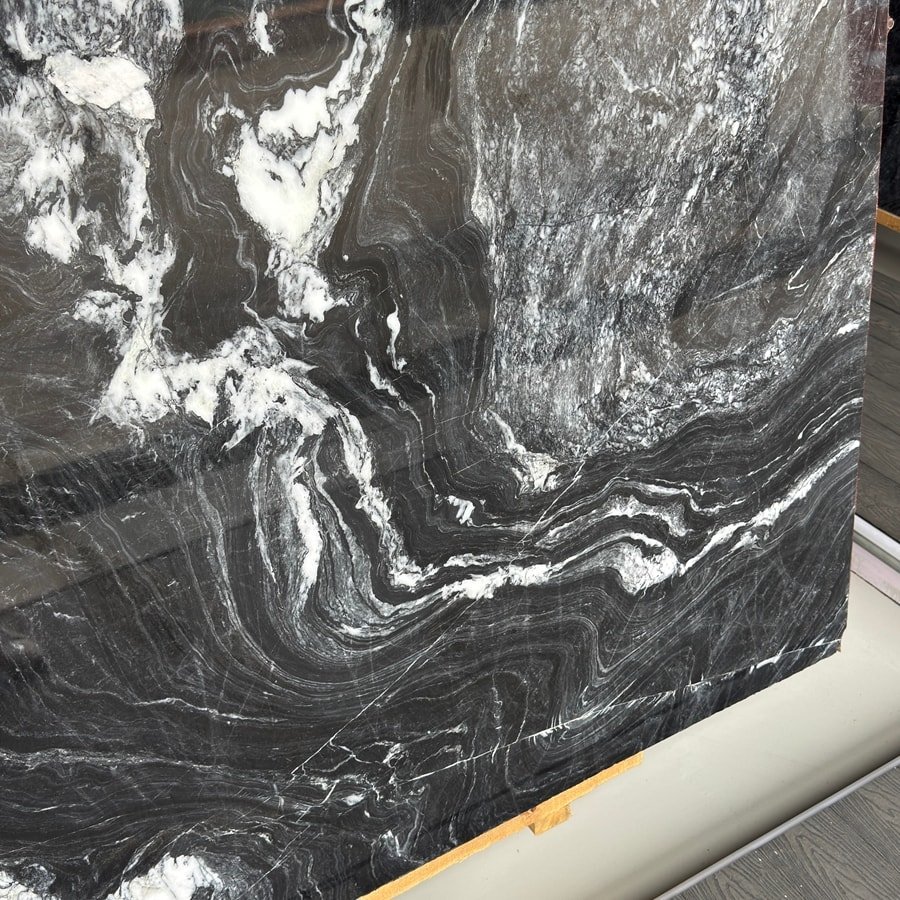
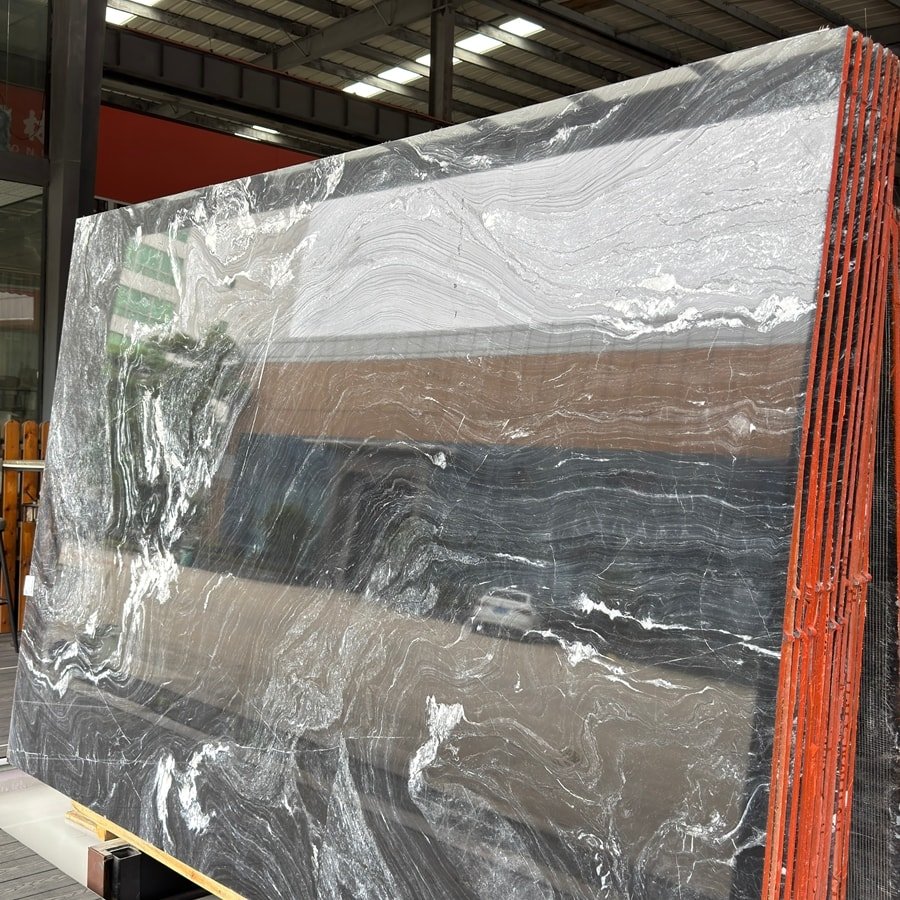
Gucci Black Marble is a premium, high-contrast natural stone prized for its intense black ground accentuated by fluid veins ranging from crisp white to warm gold. Its visual richness makes it a favored material for designers aiming to deliver luxurious contemporary statements. Physically, Gucci Black typically exhibits moderate to high density and low to moderate porosity, allowing it to take an exquisite polish that enhances depth and luster. While more resilient to abrasion and heat than softer limestones, it remains susceptible to acid etching and requires appropriate sealing and maintenance.
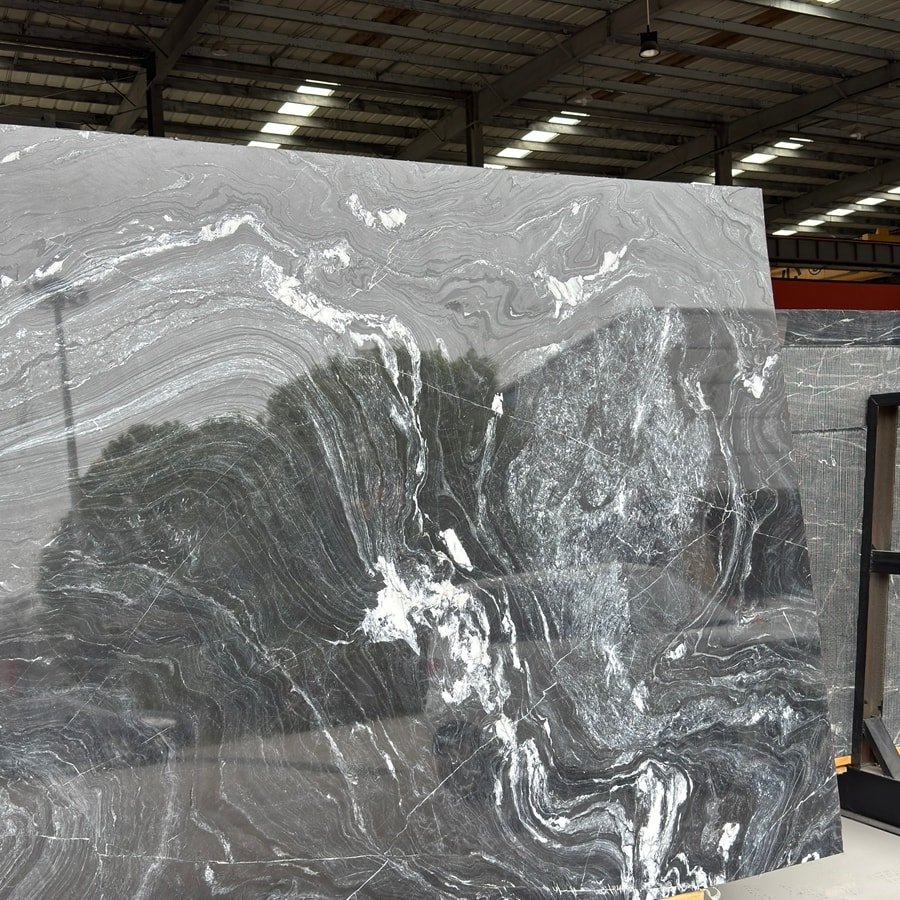
The stone’s appearance is its principal asset: dramatic veining and a deep, velvety background create depth and movement that read as both modern and timeless. This visual language suits applications where focal impact is essential. Gucci Black is commonly specified for monumental interior features — full-height feature walls, reception backdrops, and lobby cladding — where continuous slabs reveal sweeping vein patterns and enable striking bookmatched compositions that read as natural artwork. In corporate and hospitality settings, a single calibrated slab can function as an architectural centerpiece, anchoring circulation zones and arrival sequences.
In bathrooms and wellness areas, Gucci Black elevates vanities, shower walls, tub surrounds, and wet-room panels. Paired with warm metallic fixtures or matte black fittings, it produces an opulent, spa-quality atmosphere. Designers typically avoid heavy kitchen counter use unless a honed finish is chosen and rigorous sealing protocols are observed, since acidic spills and abrasive cleaning can dull polished surfaces. For horizontal surfaces that receive moderate use, selecting a honed or leathered finish reduces the visual prominence of wear while preserving the stone’s character.
Furniture and bespoke millwork benefit from Gucci Black’s sculptural qualities. Tabletops, bar fronts, reception desks, and mantelpieces fabricated from large slabs or bookmatched pairs become bespoke centerpieces. The marble also functions effectively as inlaid borders and flooring accents when combined with lighter marbles or limestone, adding refined contrast and spatial definition in entrance halls and dining rooms. Backlit panels can reveal subtle mineral translucency in portions of the slab, adding theatrical depth.
Structurally, Gucci Black demands skilled fabrication. Pronounced veining can indicate natural planes of weakness; expert fabricators, therefore, use reinforced substrates, appropriate slab thickness, and mechanical supports for long overhangs. Edging treatments vary from polished miters to bespoke geometric profiles, each amplifying the stone’s contemporary aesthetic. Transport and installation must mitigate slab stress and protect against fissures during handling.
For maintenance, regular sealing every 6–12 months is recommended, depending on exposure; daily wiping with pH-neutral cleaner prevents etching and maintains polish. For thin panels, laminated backing or stainless-steel framing can offer additional support; expansion joints and flexible adhesives accommodate thermal movement. When specified thoughtfully, the stone balances spectacle with long-term performance across luxury residential and select commercial environments and institutional projects.
Sourcing and sustainability are increasingly significant. Architects often request documentation regarding quarry practices, tracing, and low-impact processing. Reclaimed slabs and remnant use reduce waste while maintaining the stone’s visual integrity. In summary, Gucci Black Marble offers dramatic aesthetics coupled with versatile architectural use. With considered detailing, appropriate finish selection, and a disciplined maintenance regime, it elevates interiors with enduring luxury and visual authority.