Material Characteristics and Attributes
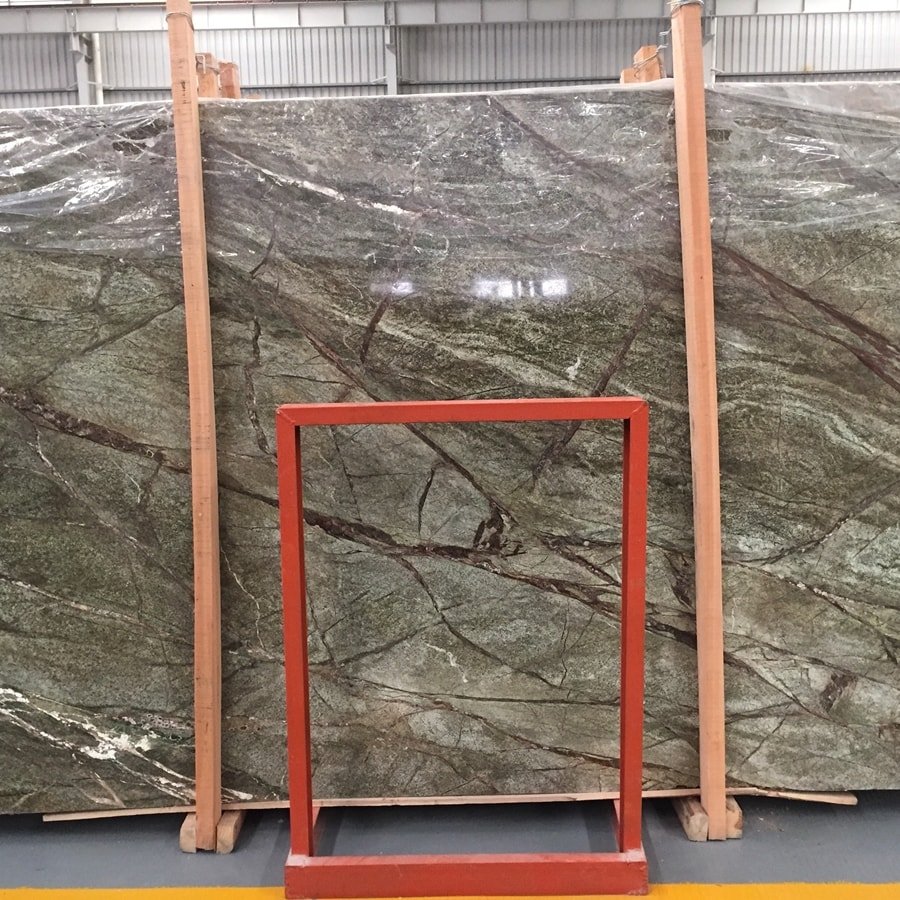
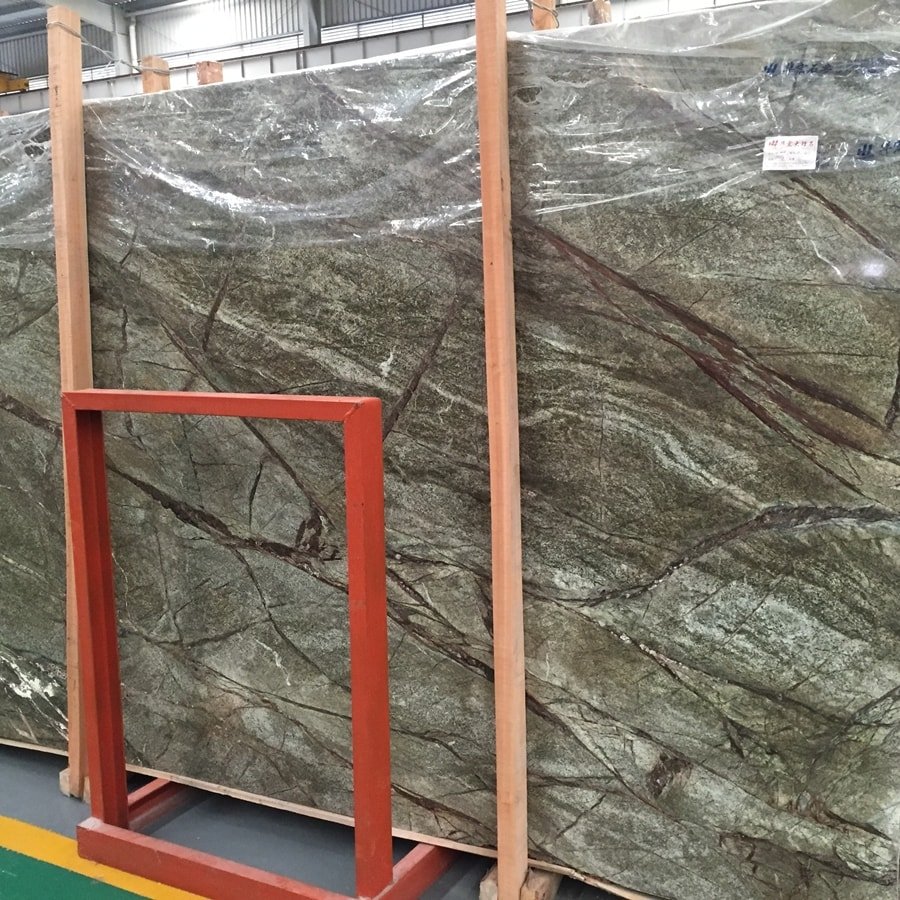
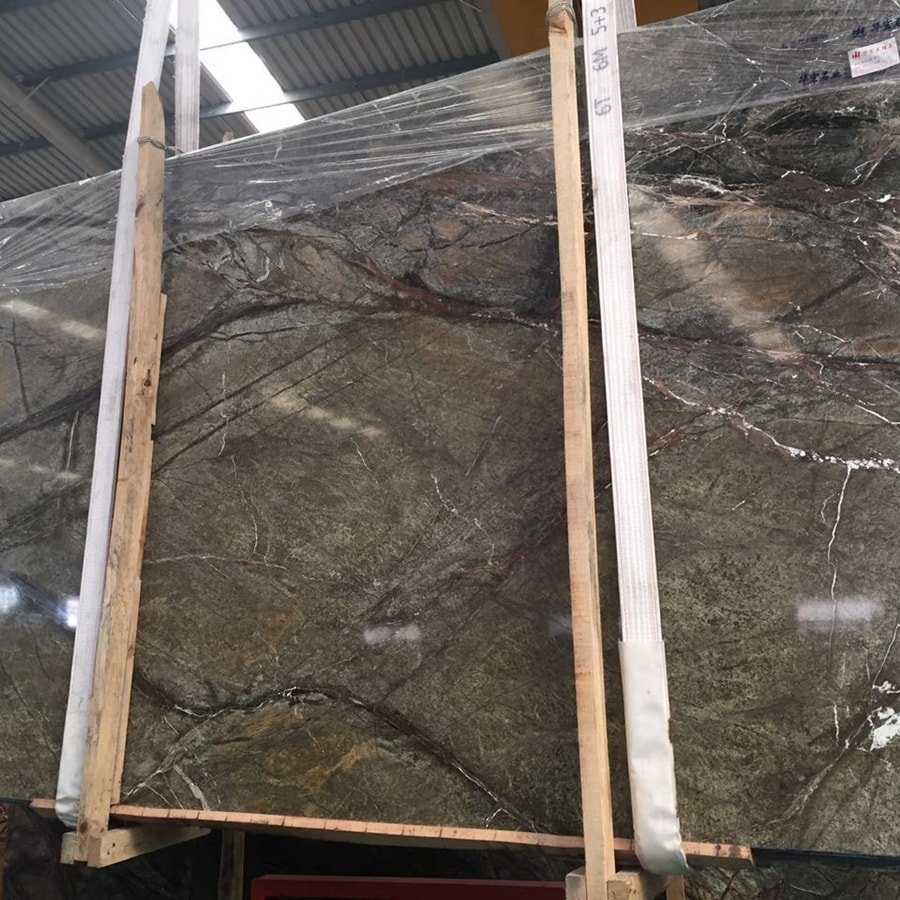
Tropical Rainforest Marble is a distinctive and highly textured stone, often classified as a Serpentinite or a highly variegated marble, celebrated for its unique, organic, and geological appearance. The base color is a chaotic mix of deep greens (moss, emerald), earthy browns, and patches of terracotta or red. The defining feature is the prominent, thick, and highly fractured “branch-like” veining in contrasting shades of white, cream, and darker grey/black, creating a dense, jungle-canopy or root-system pattern.
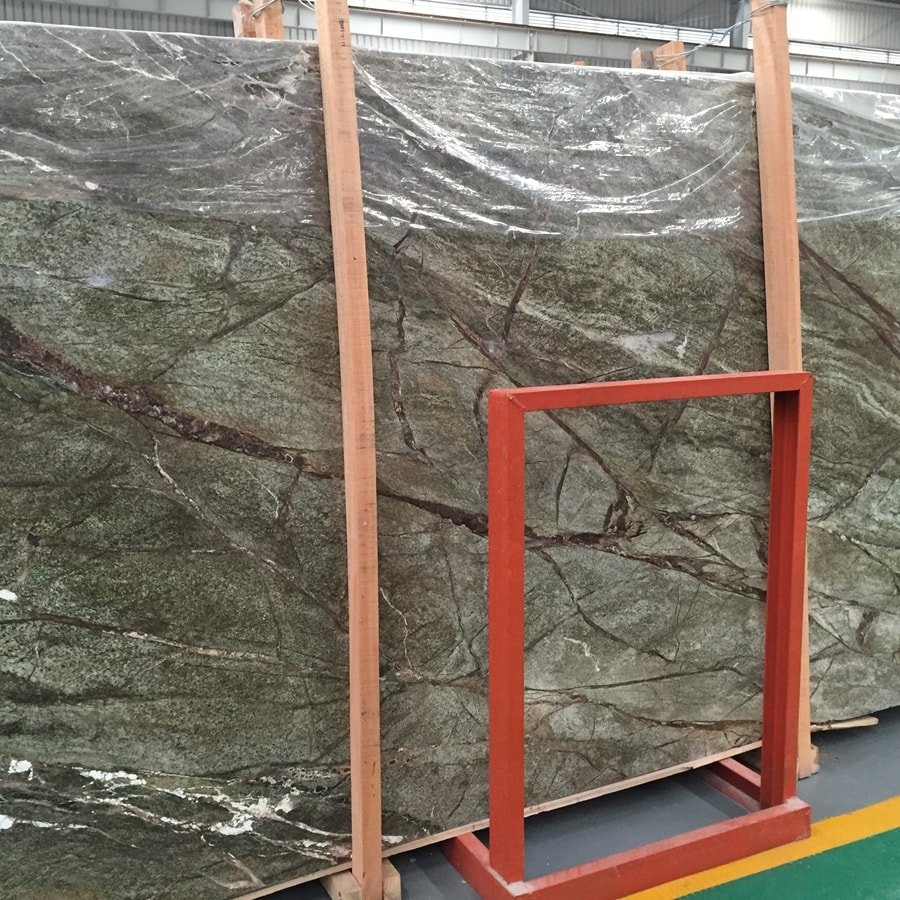
Structurally, it is generally dense but often highly fissured due to its complex geological formation, requiring extensive factory reinforcement with resin and mesh backing. This process ensures structural integrity. It accepts a smooth polish that maximizes the depth and richness of the colors and accentuates the dendritic pattern. Due to its dense, chaotic pattern and dark base, it is highly practical for camouflaging minor surface wear and imperfections.
Architectural Applications and Design Integration
Tropical Rainforest Marble is used to create unique, organic, and texturally rich spaces:
Feature Fireplace Surrounds: The stone’s high texture and earthy colors create a stunning, organic focal point, perfect for luxury lodges, mountain resorts, or rustic-chic living spaces.
Custom Bar and Vanity Tops: Used for monolithic counters, its dramatic, organic pattern makes it a visually magnetic, unique surface. The density of the pattern is highly practical for wet areas.
Accent Wall Panels: Used in small, targeted areas, it introduces immense visual texture and a strong connection to nature and geology.
Flooring Inlays: Used as a central feature or border in flooring, it provides a pocket of intense texture and color.
Tropical Rainforest Marble is a key material for rustic luxury, exotic, and organic-contemporary design schemes. Designers utilize its unique, dendritic pattern to introduce a powerful, natural texture. Procurement must focus heavily on the quality of the resin reinforcement and the desired color balance (green vs. brown/red) across the slab. Dry-lay approval is essential due to the high visual variation.