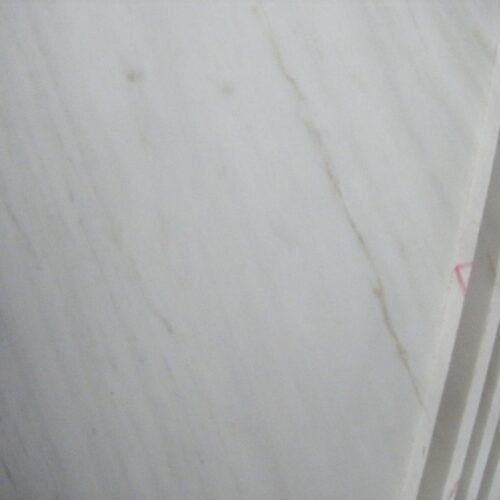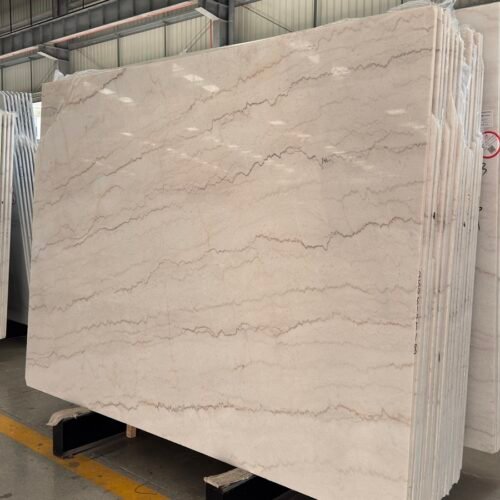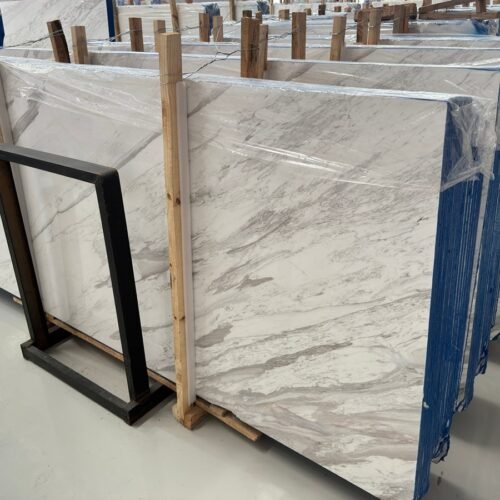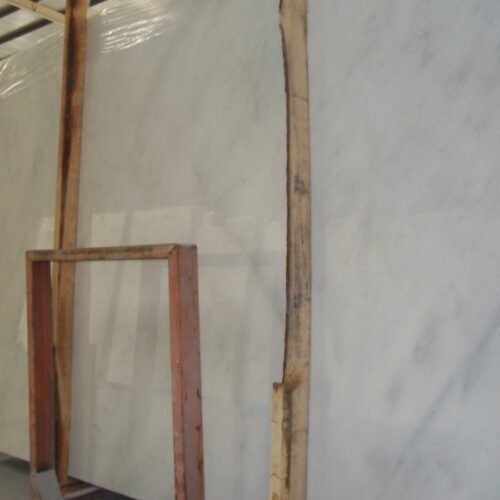
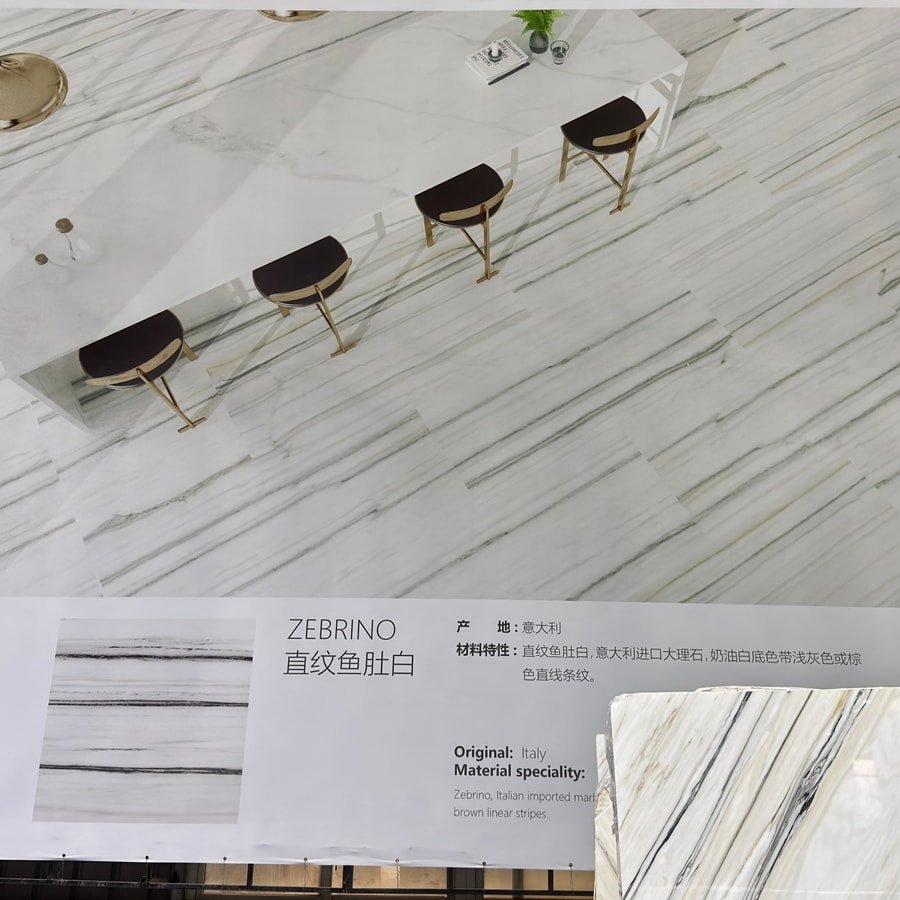
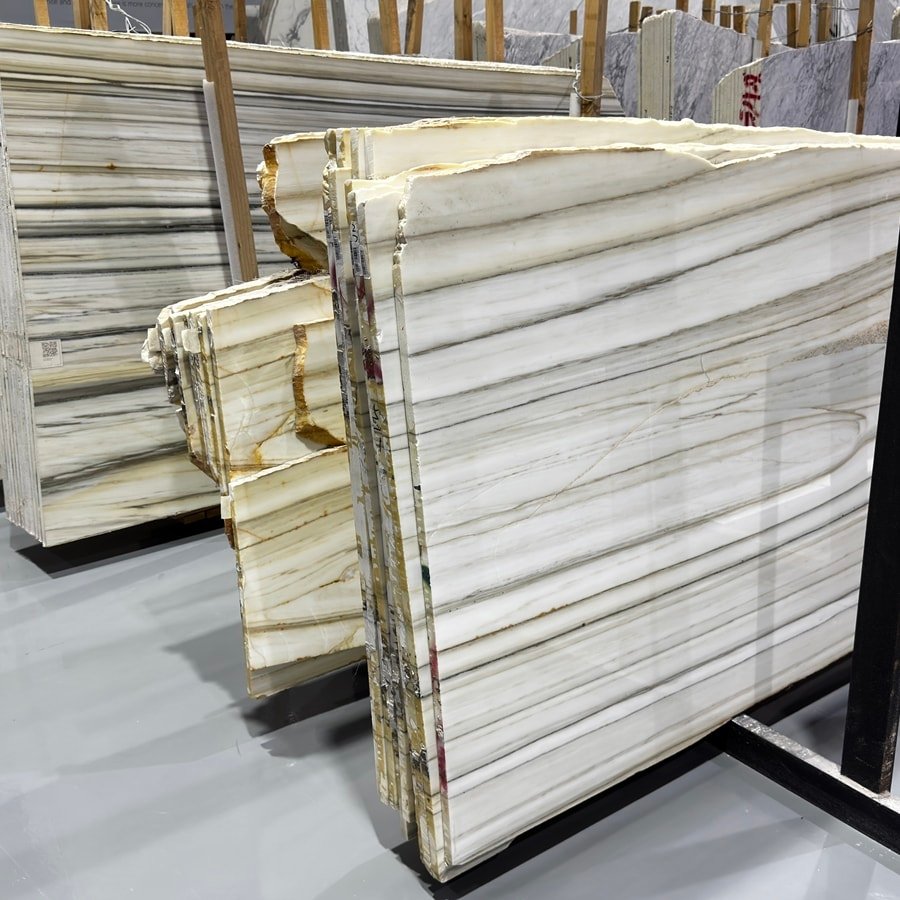
Zebrino White Marble takes its name from zebra-like striping—rhythmic, linear veins that traverse a pale matrix to create a bold, graphic stone. The patterning is inherently directional, lending itself to dynamic compositions. This marble’s dramatic linearity is a designer’s tool: when used with intent, it can produce striking, movement-filled interiors that read as contemporary and energetic.
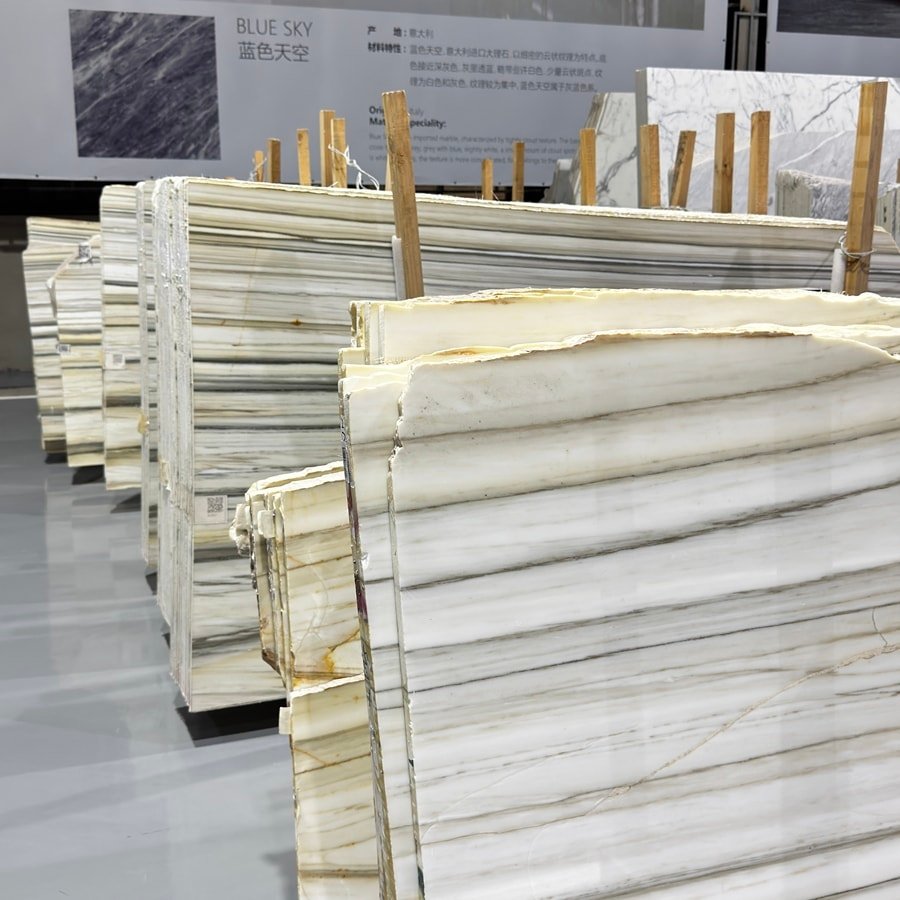
Material characteristics and appearance: Zebrino typically presents a bright white to soft grey background with regular, parallel dark veins—ranging from charcoal to near-black. The veins can be thin pinstripes or broader bands, producing banded visual effects reminiscent of natural geological layering. The stone polishes well, revealing a strong contrast between veins and ground, but remains a calcitic material with corresponding porosity and relative softness.
Best architectural uses: Use Zebrino where directional patterning can be controlled and celebrated—bookmatched lobby walls, continuous waterfall islands, stair risers with aligned veins, and large tabletops. Bookmatching intensifies the striped effect by mirroring veins across seams, creating theatrical, flowing panels. For flooring, Zebrino is best in formal, low-traffic areas or used as linear inlays and borders to manage wear.
Finish and functional choices: Polished finishes dramatize the striping, ideal for vertical applications and focal horizontal elements. Honed or satin finishes subdue contrast for more restrained schemes. For wet areas or stair surfaces, choose honed finishes with anti-slip treatment. For countertops, Zebrino can serve as a statement island surface; reserve primary food-prep areas for more forgiving materials unless the client commits to maintenance.
Fabrication and installation: Because veins may create thin or friable sections, slab inspection, possible resin stabilization, and careful cutting are critical. For bookmatching and long runs, procure adequate slab sizes and plan seams to maintain linear continuity. Substrate support and movement joints are necessary for large-format panels to avoid hairline cracking and to permit thermal expansion.
Maintenance and lifecycle: Penetrating sealers and pH-neutral cleaning are essential. Dark veins may highlight residue or polish variation, so cleaning protocols should address both light and dark panels. Schedule periodic resealing and repolishing cycles for high-visibility installations. For hospitality or retail projects, include maintenance cost estimates in lifecycle budgets.
Sustainability and sourcing: Confirm quarry provenance and any post-quarry treatments. Because Zebrino’s visual impact is high, designers can use smaller quantities judiciously—feature walls or limited accent surfaces—reducing embodied environmental impact while achieving strong visual results.
Design integration: Pair Zebrino with minimalist furnishings, warm woods, or brass accents, depending on the desired contrast level. Lighting plays a major role—accent lights along vein directions can amplify the striped movement.
Summary: Zebrino White Marble is a powerful, directional stone that functions best as an intentional, carefully planned focal material. With proper slab selection, expert fabrication, and a realistic maintenance plan, it delivers bold linear drama that anchors contemporary interiors.