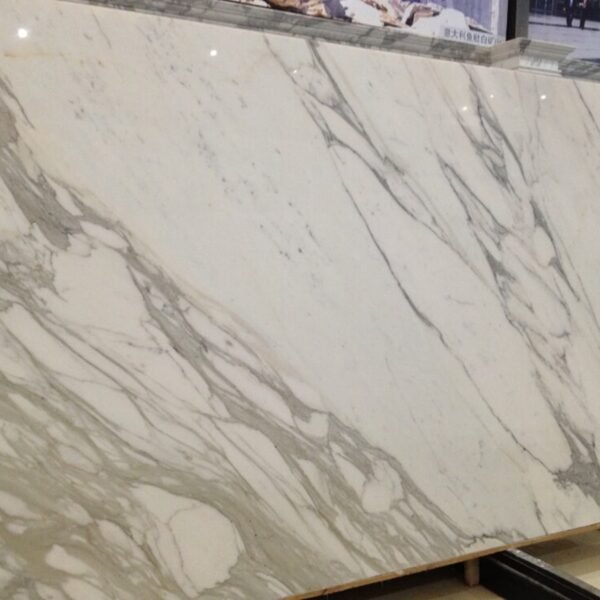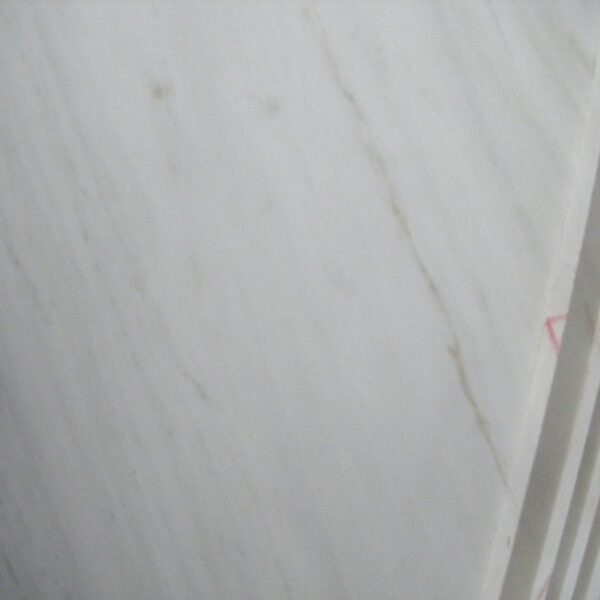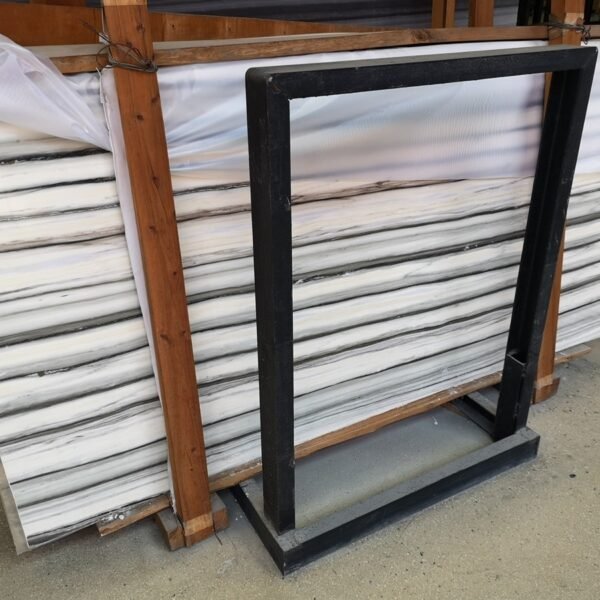

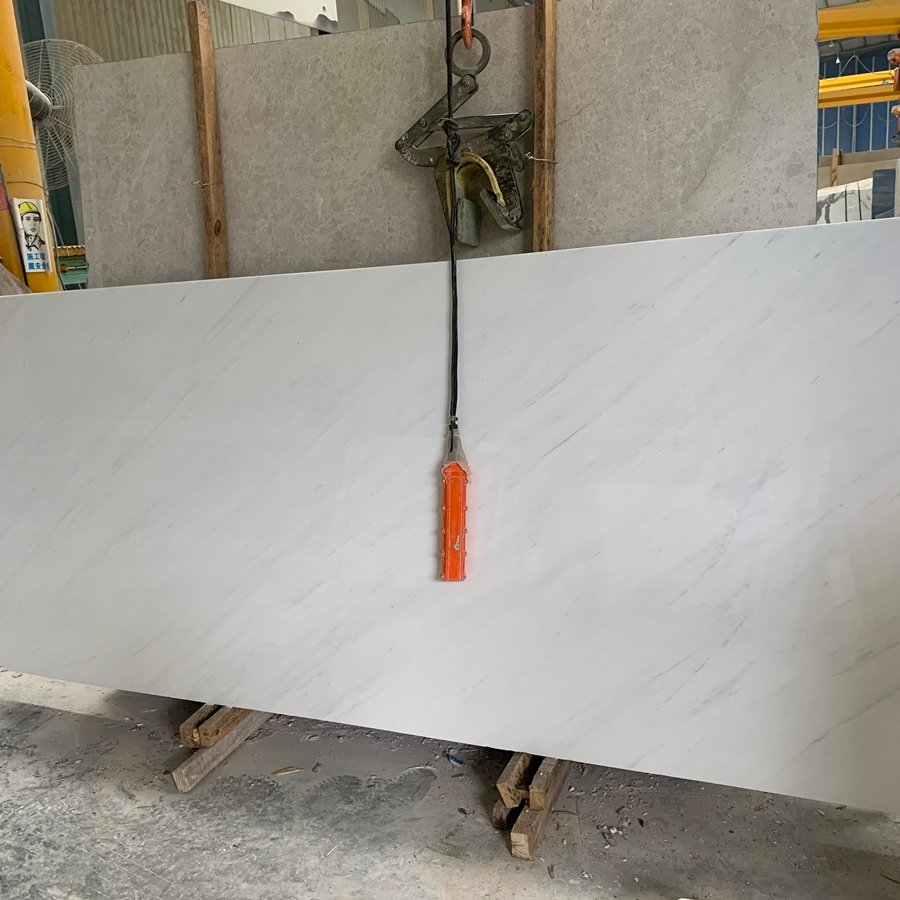
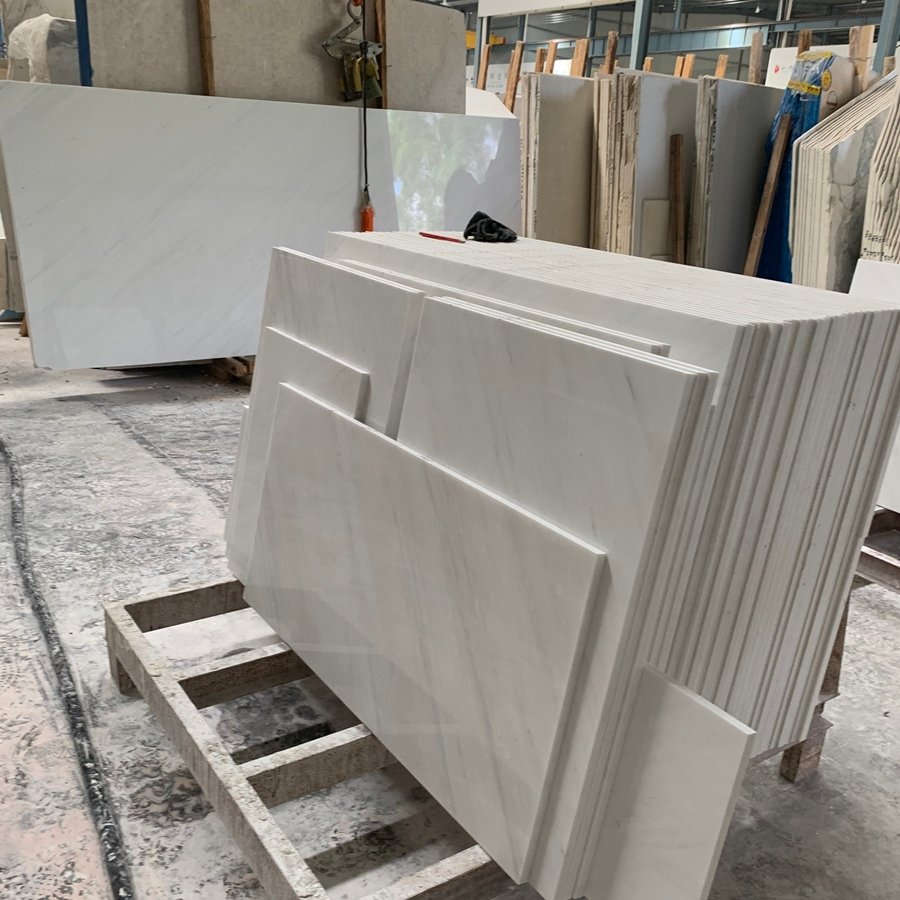
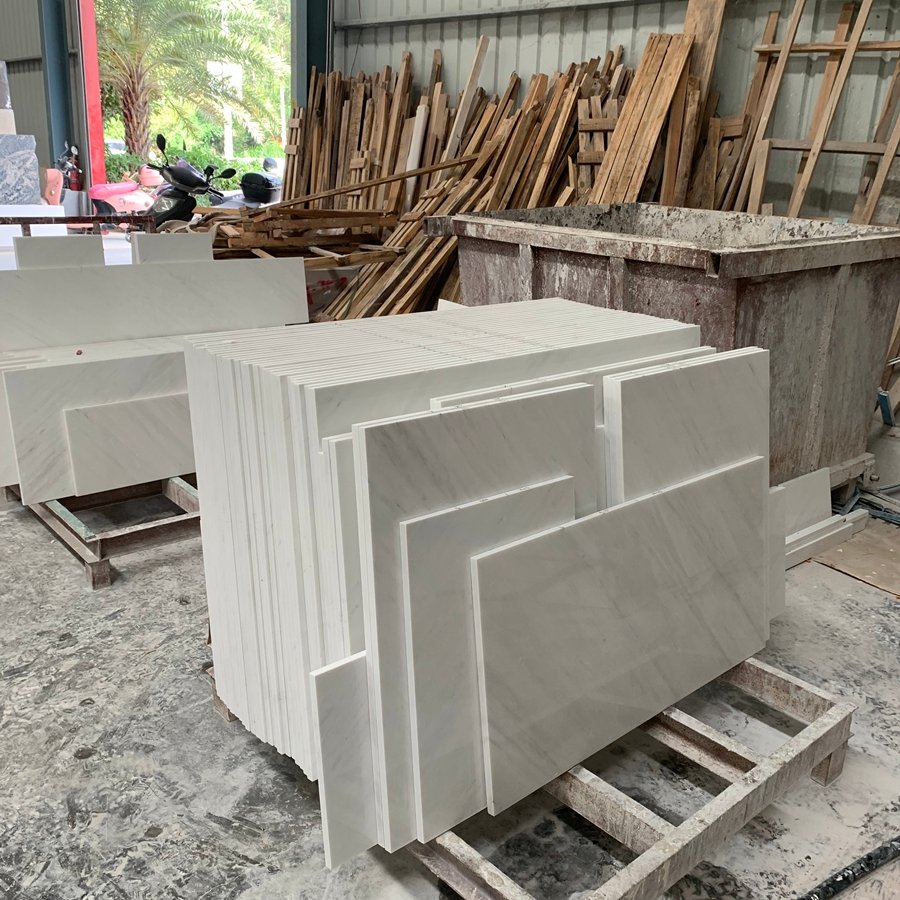
Ariston White Marble is notable for its clean, predominantly white matrix punctuated by regular, directional grey veins—attributes that lend a graphic, modern elegance. Physically consistent with many commercial marbles, Ariston offers good workability for fabrication, responds well to high-polish finishes, and can be honed or textured depending on the design intent. These characteristics guide its most effective architectural uses and inform practical considerations for specification, installation, and upkeep.
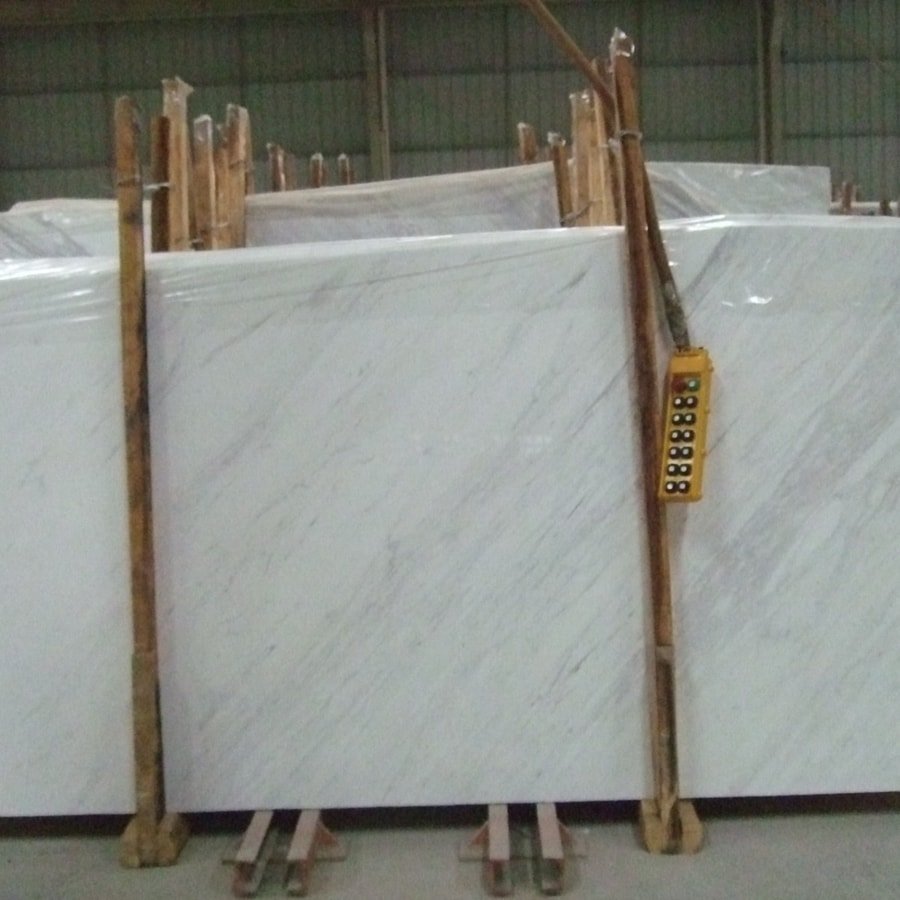
Designers select Ariston for projects demanding a crisp, architectural look. Its directional veining works particularly well in linear compositions—long kitchen islands, continuous wall cladding, or stair risers where the veins can be matched for a continuous flow. The marble’s surface reflects light when polished, brightening interiors and creating contrast with darker joinery or metal accents. When a more tactile, contemporary appearance is desired, a honed or brushed finish softens reflectivity and highlights the stone’s micro-structure.
Architecturally, Ariston is widely used for bathroom vanities, shower walls (with proper sealing), fireplace surrounds, feature lobby walls, and low-traffic flooring. In residential kitchens, it’s often chosen for waterfall island ends, accent countertops, or backsplash panels where cutting boards and heavy use are minimized. For commercial interiors, Ariston can serve as elegant cladding in boutique retail, hotels, and corporate reception areas—places where visual impact is essential and maintenance resources are available.
Because marble is softer and more porous than many alternatives, Ariston requires protective measures. Penetrating sealers mitigate staining but do not prevent etching from acidic agents. Cleaning protocols should employ pH-neutral cleaners and non-abrasive tools. In wet areas, honed finishes reduce slip risk and hide micro-scratches better than polished surfaces. For flooring applications in commercial zones, select tiles with a higher hardness rating and consider using Ariston in pattern insets or corridors with moderate traffic rather than main thoroughfares.
Fabrication best practices include using full-slab templates where possible, aiming for vein-matching to preserve visual continuity, and reinforcing long spans with appropriate substrate support. Mitigate movement stress with flexible sealants at perimeters and expansion joints. If Ariston is specified externally (rare), choose thicker slabs and specialized anchoring systems, and expect increased maintenance due to weathering.
Sustainability and lifecycle factors: procurement should consider source transparency, and reclaimed or remnant stock is an eco-friendly alternative for smaller projects. Cost-wise, Ariston tends to sit in the mid-to-high range depending on slab size and veining quality.
In conclusion, Ariston White Marble is an excellent choice when the design brief calls for crisp whiteness paired with controlled linear veining. It reads modern and architectural in large panels and delivers luxury in bathrooms, feature walls, and refined countertops when the owner and facility management commit to appropriate care and maintenance.